Chef Isabel
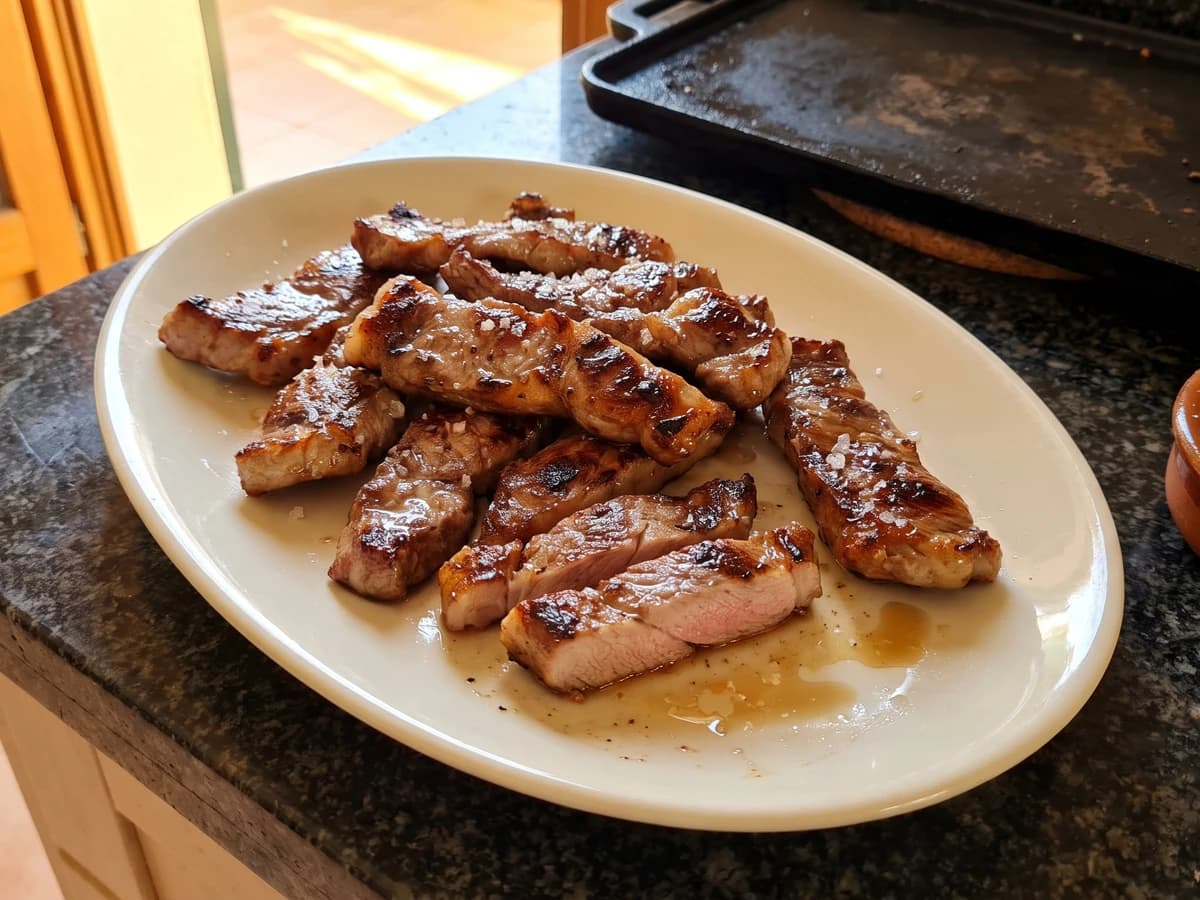
Abanico Ibérico a la Plancha
Extremadura's dehesa gives us this fan-shaped, marbled rib cut: salt it at the last moment, lay it on a fierce plancha, and count in seconds so the centre stays juicy.
A cooking platform built around craft, culture, and the stories behind what we eat.
Created by
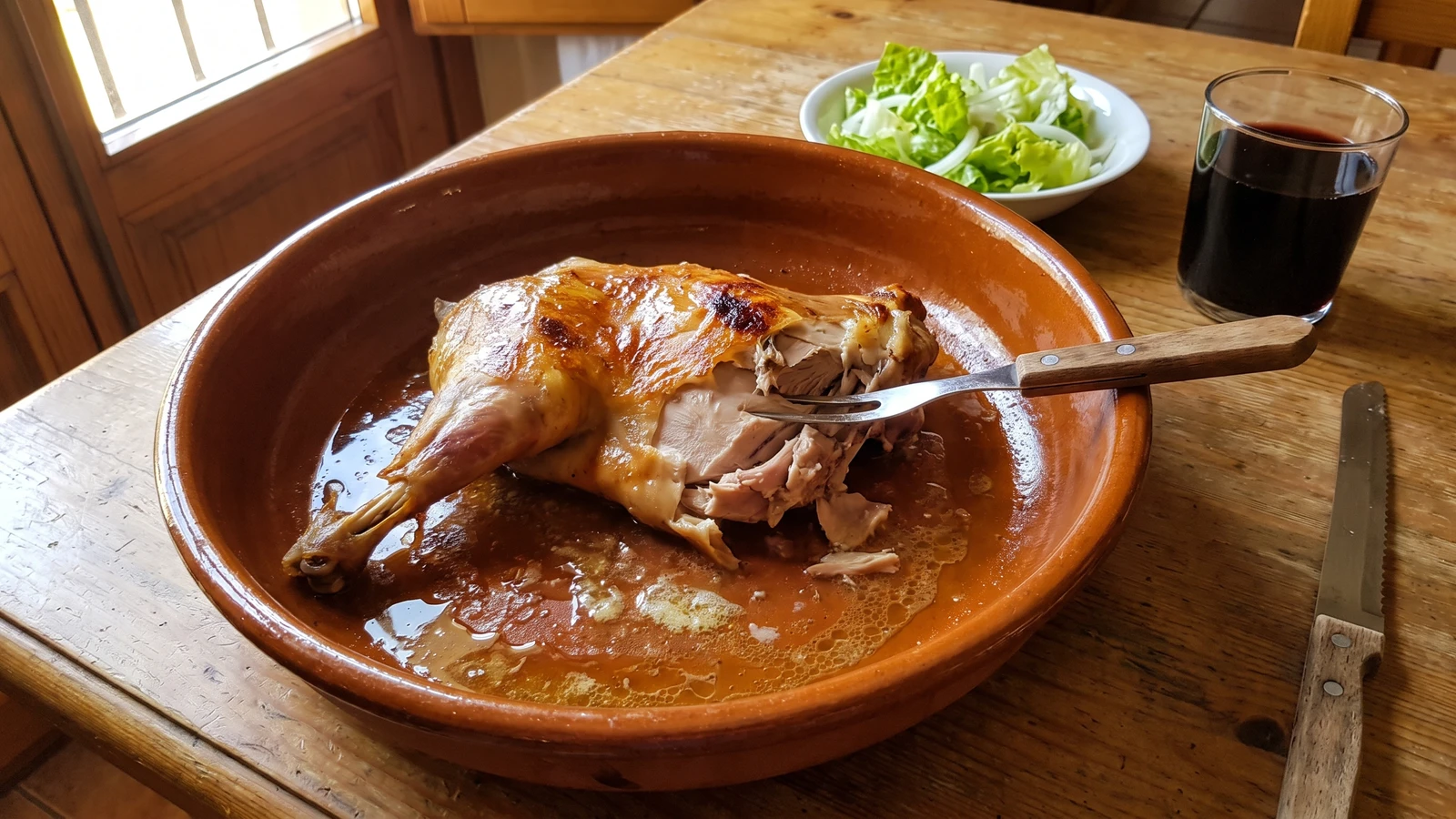
Lechazo Asado is Castilla y León at its plainest and most exact: milk-fed lamb, water, and salt in a clay cazuela, roasted slowly until the skin crisps and the meat loosens from the bone.
Lechazo asado is Castilla y León's milk-fed roast lamb, and it is plain in the way that makes a cook behave. A very young lamb, fed only on milk, goes into a cazuela de barro with water and salt. No garlic, no rosemary, no wine. The meat is pale and sweet, the bones small, the skin thin enough to crisp while the shoulder and rib meat turn soft.
The method that decides it is the turn. Roast it first flesh side up, with a finger of water under it, so the meat cooks gently and the juices do not burn. Then turn it skin side up and leave it long enough for the skin to tighten and brown. If the dish dries out, the pan juice turns bitter. If you drown it, you boiled the lamb. A finger of water. That is enough.
Far from Castilla y León, ask for milk-fed suckling lamb, bone-in and skin-on, the smallest your butcher can bring. If all you can buy is young spring lamb shoulder, use it, but know the truth: it will taste stronger and need longer, and it is cordero asado, not lechazo. No hace falta haber pisado España; you do need to buy the right animal as closely as your market allows. Pésalo, no lo adivines, salt by the weight, and siempre sale, si lo sigues. In my Margin beside this one I wrote only: water low, skin dry. It saves the roast.
Lechazo takes its name from leche, milk, because the lamb is slaughtered while it has fed only from the ewe; in Castilla y León that means pale, small-boned lamb from breeds such as Churra, Castellana, and Ojalada. Around Aranda de Duero, Burgos, Valladolid, Segovia, and the Ribera del Duero, asadores built their reputation on quarters roasted in barro in wood-fired ovens, with water and salt doing no more than protecting the meat. It is feast food for Christmas and family celebrations, often served with a sharp lettuce salad because the roast itself has no sauce to hide behind.
Quantity
2.5-3kg
bone-in and skin-on
Quantity
18g, or 7g per kg of lamb
divided
Quantity
400ml, plus 150ml hot water as needed
| Ingredient | Quantity |
|---|---|
| milk-fed suckling lamb (lechazo), half carcass or 2 quartersbone-in and skin-on | 2.5-3kg |
| fine sea saltdivided | 18g, or 7g per kg of lamb |
| water | 400ml, plus 150ml hot water as needed |
Take the lamb out of the refrigerator 1 hour before roasting. Pat the skin dry and weigh the meat, then use 7g salt for each kilogram of lamb. Rub the salt over the cut sides and the skin, keeping a little back for after the turn. Cold, wet skin will not crisp properly; give it this hour and the oven can do its work.
Heat the oven to 170°C conventional, or 150°C fan. Pour 400ml water into a wide cazuela de barro or heavy roasting pan and lay the lamb flesh side up, with the skin away from the water as much as the shape allows. The water should sit low in the dish, about a finger deep. It is there to protect the juices and keep the meat gentle, not to make a stew.
Roast for 1 hour 15 minutes, basting the exposed meat every 25 to 30 minutes with the salty pan juices. Check the dish each time; if the bottom is nearly dry, add 50-100ml hot water around the edge, never cold water onto the hot clay. Do not cover it. Foil gives you soft skin later, and this dish has very little to hide behind.
Turn the lamb skin side up and sprinkle the reserved salt over the skin. Raise the oven to 190°C conventional, or 170°C fan, and roast for 40 to 55 minutes more. Keep a low layer of water in the dish, but do not spoon liquid over the skin after the first turn. The skin should go deep gold and crisp at the edges, and the meat should pull from the bone with a fork. If you use a thermometer, look for 82-88°C in the thickest shoulder meat, away from the bone.
Rest the lamb 15 minutes, uncovered, so the skin stays crisp. Stir the pan juices and taste them; if they are too salty or concentrated, loosen with a spoonful or two of hot water. Cut through the joints and serve from the cazuela with the thin roasting juice spooned around, not over, the skin. A sharp lettuce and onion salad beside it is not decoration; it does the work against the fat.
1 serving (about 270g)
Culinary guides, cultural storytelling, and the editorial depth that makes cooking meaningful.
Discover Culinary ExplorerChef Isabel
Extremadura's dehesa gives us this fan-shaped, marbled rib cut: salt it at the last moment, lay it on a fierce plancha, and count in seconds so the centre stays juicy.
Chef Isabel
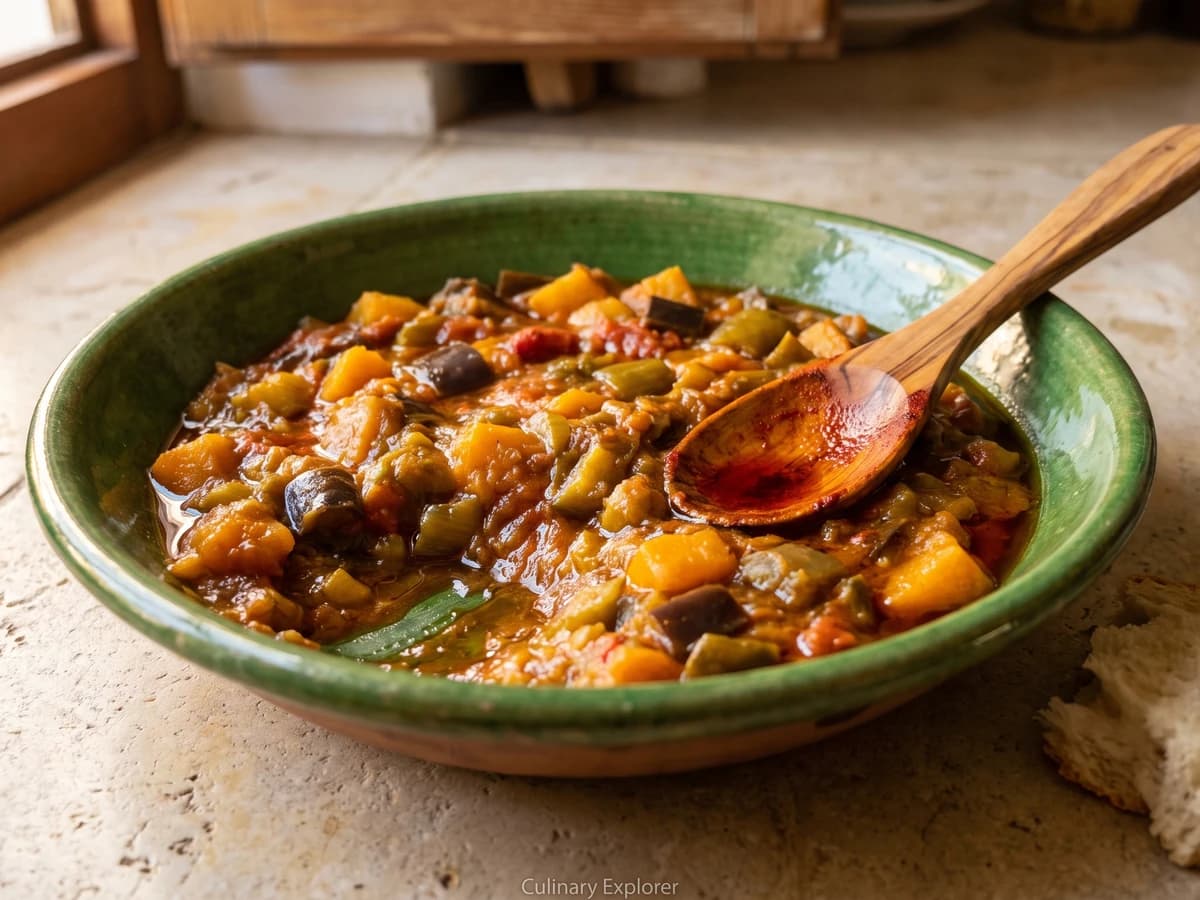
Alboronía is Andalucía's old pumpkin and aubergine stew, deepened with tomato, pimentón, and cumin, then cooked without hurry until the vegetables settle into a glossy, sweet, spoon-soft whole.

Chef Isabel
Aletría Murciana is Murcia's humble noodle guiso: fine fideos, pork ribs, potato, saffron, and a dark sweet sofrito. Get that base right and the pot knows where it's going.
Chef Isabel
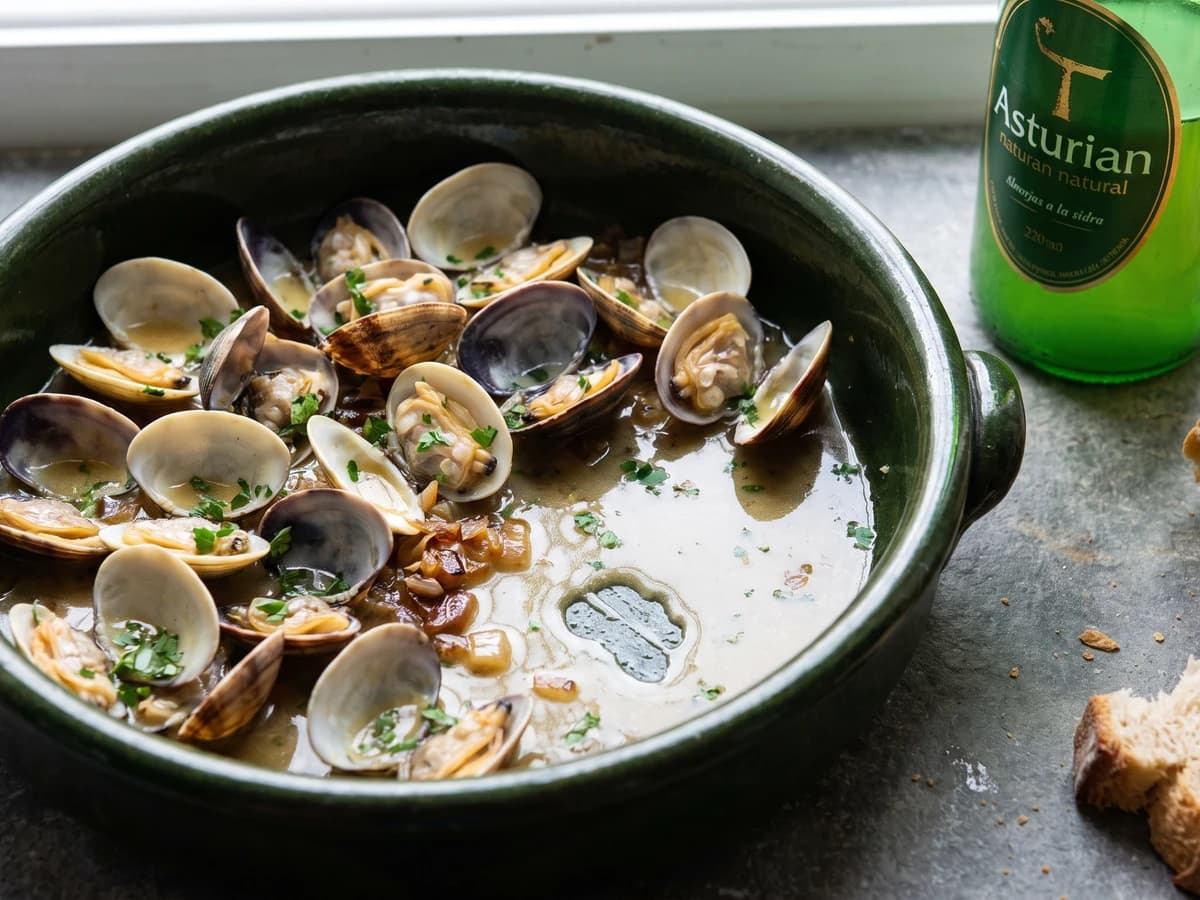
Asturias opens clams in tart natural cider over a slow onion and garlic sofrito, making a bright, briny sauce that asks for bread and rewards one rule: lift each clam as it opens.