
Chef Freja
Andelår med Rødkål
Slow-roasted duck legs with crisp, deeply golden skin, served with braised red cabbage and caramelized potatoes. The weeknight Danish duck that proves the best part of the bird is the one that takes its time.
A cooking platform built around craft, culture, and the stories behind what we eat.
Created by Chef Freja
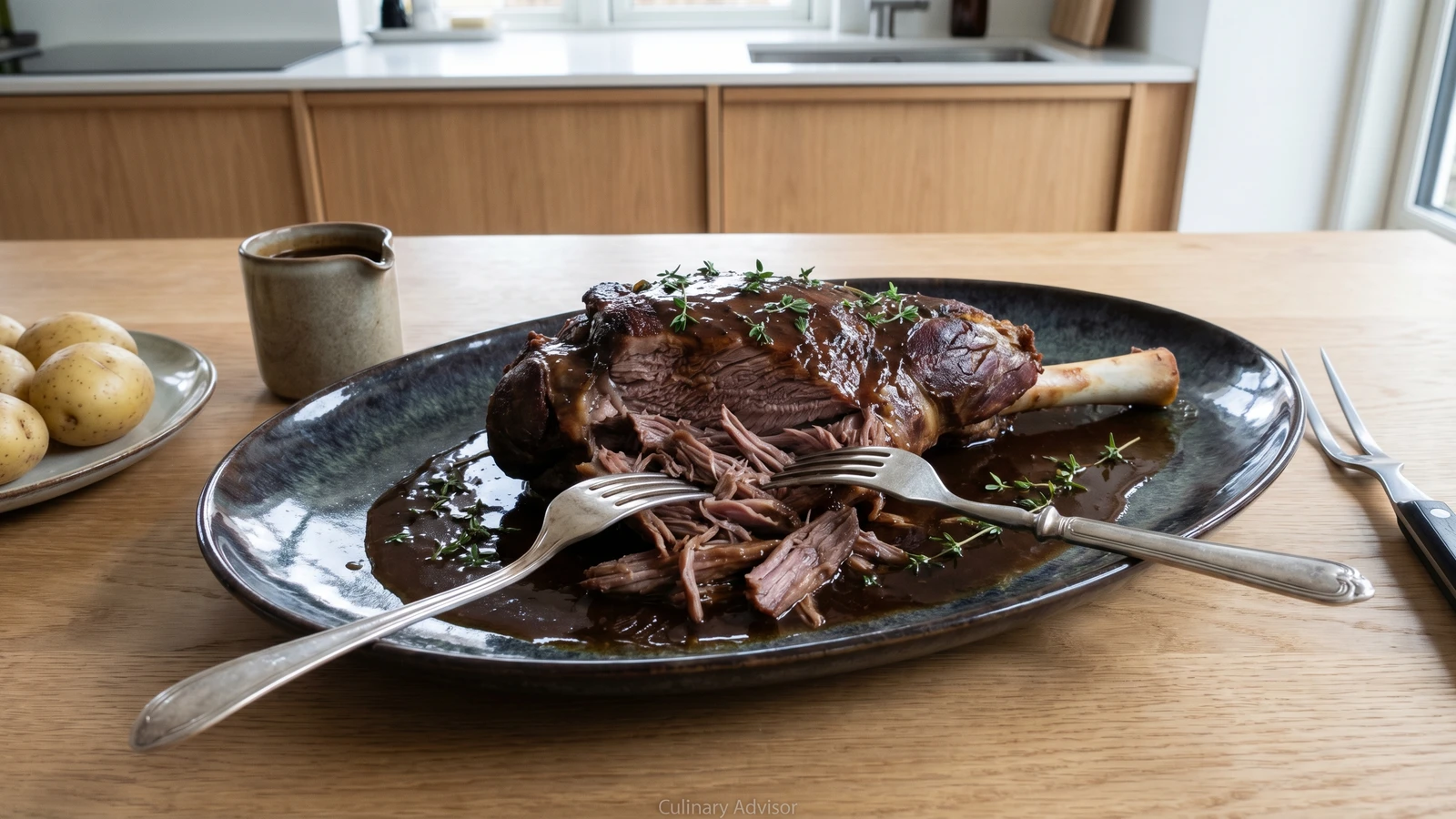
Danish lamb shoulder studded with garlic and thyme, braised with white wine for six hours until the meat falls apart in sweet, yielding shreds. Påskelam for the Easter table, asking nothing of you but patience.
Easter in Denmark is a long weekend that stretches into something slower. Four days off, sometimes five, when the whole country exhales. The light has changed. After months of low grey skies, April brings a warmth that's tentative but real, and the kitchen windows stay open for the first time since autumn. This is when påskelam arrives.
Lammebov is the shoulder, and it's the cut I always choose for the Easter table. Not the leg, which demands your attention and punishes you if you look away for too long. The shoulder is different. It's laced with fat and connective tissue that dissolves over hours of low heat into something silky and yielding. You put it in the oven in the morning and by late afternoon the meat falls from the bone in long, sweet shreds. The braising liquid becomes a sauce so concentrated and rich you'll want to drink it from a spoon.
Here's what I want you to know before you begin: this is a patient dish, not a difficult one. Thirty minutes of preparation, then six hours of quiet while the oven does the work. Pay attention to two things. The browning at the start, which builds the foundation of flavor for everything that follows. And the resting at the end, which lets the meat relax and the juices settle. Everything between those moments is the joy of waiting.
Lamb has been part of the Danish Easter table since at least the 18th century, when the Christian symbolism of the paschal lamb merged with the practical reality that spring lambs were the first fresh meat available after a long winter of salt and stores. In the marshlands of southern Jutland and on the islands of Fanø and Rømø, where salt-meadow sheep have grazed for centuries, påskelam carried a particular regional pride, the lambs feeding on wild herbs and sea grass that flavored the meat from the inside. The slow-braised shoulder is a more recent adaptation, suiting modern households where a whole spit-roasted lamb was no longer practical, but the principle has never changed: low heat, long time, and the kind of tenderness that only patience can give you.
Quantity
1, approximately 2.2 kg
Quantity
8 cloves
peeled, sliced into slivers
Quantity
a generous bunch, about 20g
Quantity
4 sprigs
Quantity
3
Quantity
2 large
quartered
Quantity
3 medium
peeled, cut into large chunks
Quantity
300ml
Quantity
300ml
Quantity
30g
Quantity
1 tablespoon
Quantity
2 tablespoons
Quantity
freshly ground, to taste
| Ingredient | Quantity |
|---|---|
| bone-in lamb shoulder | 1, approximately 2.2 kg |
| garlicpeeled, sliced into slivers | 8 cloves |
| fresh thyme | a generous bunch, about 20g |
| fresh rosemary | 4 sprigs |
| bay leaves | 3 |
| onionsquartered | 2 large |
| carrotspeeled, cut into large chunks | 3 medium |
| dry white wine | 300ml |
| chicken or lamb stock | 300ml |
| unsalted butter | 30g |
| neutral oil | 1 tablespoon |
| coarse sea salt | 2 tablespoons |
| black pepper | freshly ground, to taste |
Take the lamb shoulder out of the fridge a full hour before you start. Cold meat won't brown properly. It steams instead, releasing moisture that prevents the crust from forming, and that crust is the flavor foundation for the entire braise. While the lamb comes to room temperature, use the tip of a sharp paring knife to cut small deep slits all over the surface, about twenty in total. Push a sliver of garlic and a few fresh thyme leaves into each one. The aromatics need to be inside the meat, not sitting on the surface where the braising liquid will wash them away. Rub the whole shoulder generously with coarse sea salt and freshly ground pepper, working the seasoning into every crevice and fold.
Heat the oven to 150°C. Set a heavy roasting pan or Dutch oven on the stovetop over high heat. Add the butter and oil together. Butter alone burns before the meat takes color. Oil alone gives you the sear but none of the nutty richness. Together they give you both. When the butter foams and begins to smell of hazelnuts, lay the lamb in and let it sear without touching it. You want deep, dark color on every side, three to four minutes per surface. Don't rush this and don't crowd the pan. The Maillard reaction happening on that surface creates hundreds of flavor compounds that no amount of braising time can replicate. If you skip the browning, the finished dish will taste flat and one-dimensional. Lift the lamb out and set it on a plate.
Turn the heat down to medium. Add the quartered onions and carrot chunks to the same pan and cook them in the lamb fat for four to five minutes, stirring occasionally, until the onions soften and take on a little color. Pour in the white wine and let it bubble vigorously for a full minute, scraping the browned bits from the bottom of the pan with a wooden spoon. Those browned bits are pure concentrated flavor, and the wine lifts every trace of them back into the dish. Add the stock, the bay leaves, and the rosemary sprigs.
Return the lamb to the pan, nestling it down into the vegetables. The liquid should come about a third of the way up the shoulder. You're braising, not boiling. If the meat is submerged, the top won't develop the dark, lacquered surface that makes this dish as beautiful as it is tender. Cover the pan tightly with its lid or a double layer of foil, pressing it snug around the edges so no steam escapes. Transfer to the oven and set a timer for six hours. Walk away. Take a walk, read a book, set the table slowly. The oven does the work now, and the only thing the lamb asks of you is patience.
When you open the oven six hours later, the kitchen will smell extraordinary. The lamb will be dark and glossy on top, impossibly soft beneath. Lift it carefully onto a warm serving platter or board, using two large spoons to support it because it will want to fall apart in your hands. Cover loosely with foil and let it rest for at least twenty minutes. While it rests, strain the braising liquid through a fine sieve into a clean saucepan, pressing the softened vegetables gently with the back of a spoon to release everything they've absorbed. Discard the solids. Skim the fat from the surface with a wide spoon, or let it settle for a few minutes and pour carefully. Set the pan over medium heat and let the liquid reduce by about half. Fifteen to twenty minutes. It will thicken into a dark,glossy brun sovs that tastes of wine and lamb and thyme and time. Season with salt and pepper. You'll know when it's right.
The lamb should be so tender that two forks are all you need. Pull the meat from the bone in long shreds, discarding any large pieces of fat or gristle. The bone will come away clean. Arrange the shredded lamb on the platter, spoon some of the reduced sauce over the top, and scatter with a few fresh thyme leaves. Bring the rest of the sauce to the table in a warm jug so everyone can help themselves. This is påskelam: spring on a plate, cooked with love and nothing but time. Tak for mad.
1 serving (about 330g)
Culinary guides, cultural storytelling, and the editorial depth that makes cooking meaningful.
Discover Culinary ExplorerChef Freja
Slow-roasted duck legs with crisp, deeply golden skin, served with braised red cabbage and caramelized potatoes. The weeknight Danish duck that proves the best part of the bird is the one that takes its time.

Chef Freja
The whole roasted duck of juleaften, stuffed with tart apples and dark prunes, slow-roasted for four patient hours until the skin crackles like something earned and the meat underneath gives way without resistance.
Chef Freja
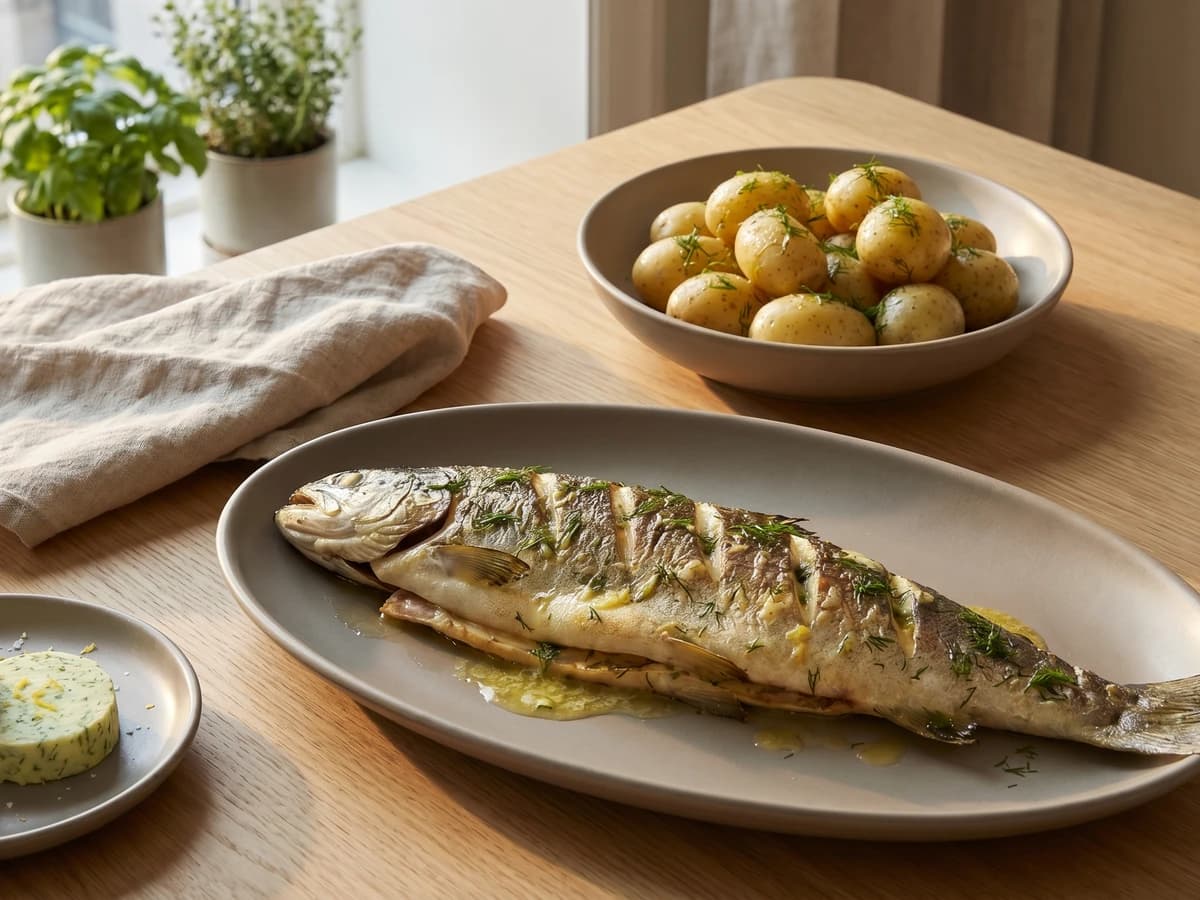
Whole sea trout baked with butter, lemon, and armfuls of dill, served beside the first nye kartofler of the season and a melting slab of dildsmor. The Danish summer table at its most generous.
Chef Freja
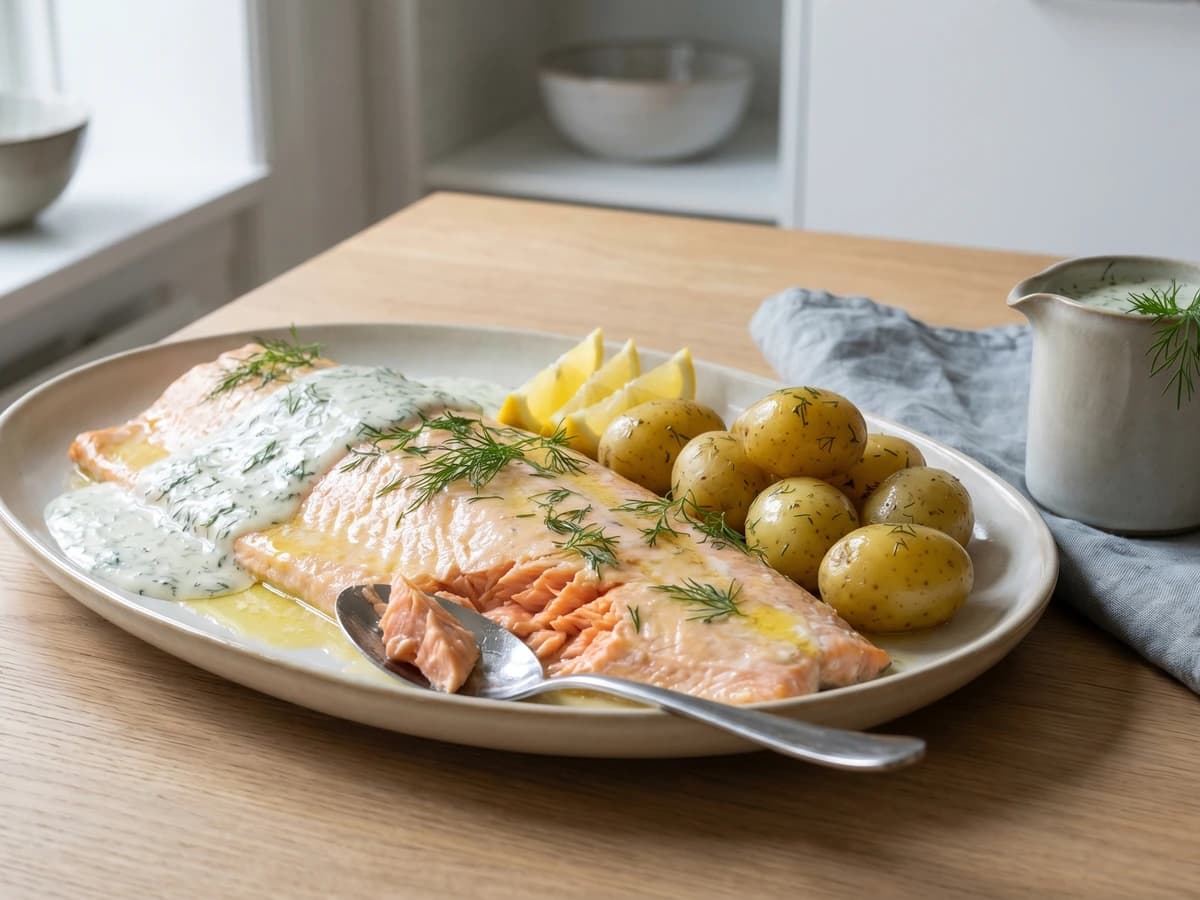
A side of salmon baked gently in butter and white wine, served warm with a bright dill cream sauce and the season's first nye kartofler. Late spring on a Danish table, cooked with love.