
Chef Lupita
Aguascalientes Beef Tongue Pozole (Pozole de Lengua)
Aguascalientes' Bajio pozole de lengua, built with cacahuazintle hominy, tender beef tongue, chile ancho and guajillo, with xoconostle brightness and table garnishes.
A cooking platform built around craft, culture, and the stories behind what we eat.
Created by
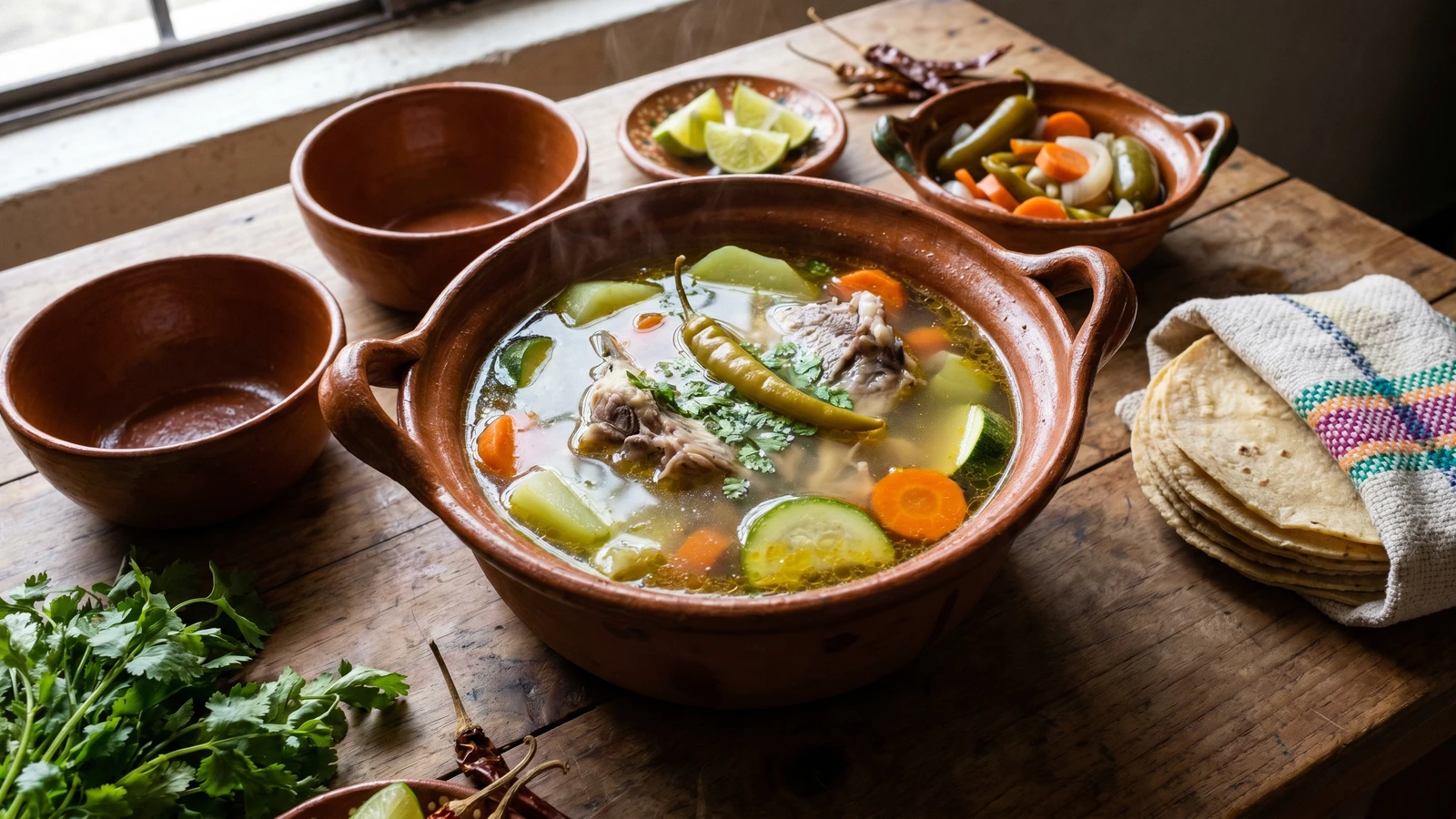
Jalisco's lakeshore caldo michi is a clear freshwater fish soup from Lake Chapala, built with carp or catfish, market vegetables, epazote, cilantro, and pickled chiles added at the table.
Jalisco, the Lake Chapala shore. That is where caldo michi belongs before anyone turns it into generic fish soup. In Ajijic, Jocotepec, Chapala, and the small towns around the water, the fish was whatever the lake and the market gave that morning: carp, catfish, tilapia, bass. You cook the market, not the fantasy in your head.
This broth is clear, not red and heavy. Tomato gives body, but it does not take over. Chayote, carrot, zucchini, and a little potato make it a home pot, the kind of soup a señora can put on the table in an hour because she knows the order of things. Hard vegetables first. Tender fish last. Epazote near the end. Don't stir the fish to pieces. Así se hace y punto.
The chile is at the table, not forced into the pot. Chiles en vinagre bring vinegar, carrot, onion, and jalapeño heat after the broth is served. That matters. Caldo michi is not proof that Mexican food must burn your mouth. It is Jalisco showing restraint: clean freshwater fish, vegetables cut with a practical hand, herbs, lime, and a clay bowl deep enough to feed someone properly.
My mother was from Jalisco, and in her notebook she wrote one line beside caldo de pescado: 'the vinegar wakes it up.' She meant the chiles en vinagre. She was right. Saber cocinar es saber vivir.
The word 'michi' comes from Nahuatl 'michin,' meaning fish, a reminder that central and western Mexico had lake-based fishing cuisines long before Spanish livestock and wheat entered the kitchen. Caldo michi is closely associated with Jalisco's Lake Chapala region, though cooks around Michoacán's Lake Pátzcuaro also claim related freshwater fish soups with their own local fish and herbs. The modern version, with tomato, carrot, chayote, zucchini, and bottled or homemade chiles en vinagre at the table, reflects 19th and 20th century market cooking around the lakeshore, where a quick broth could feed workers, fishermen, and families from the same pot.
Quantity
2 pounds
carp, catfish, tilapia, or bass, cut into large bone-in pieces
Quantity
1 tablespoon, plus more to taste
Quantity
2
divided
Quantity
2 tablespoons
Quantity
1 medium
finely chopped
Quantity
3
finely chopped
Quantity
3
chopped
Quantity
8 cups
Quantity
2 medium
peeled and cut into thick rounds
Quantity
1 medium
peeled, pitted, and cut into 1-inch pieces
Quantity
2 small
cut into thick half-moons
Quantity
1 small
peeled and cut into 1-inch pieces
Quantity
2
slit lengthwise but left whole
Quantity
2 sprigs
Quantity
1/2 cup
stems and leaves, chopped
Quantity
1 teaspoon
crushed between your palms
Quantity
1
Quantity
to taste
Quantity
for serving
Quantity
for serving
Quantity
for serving
| Ingredient | Quantity |
|---|---|
| freshwater fishcarp, catfish, tilapia, or bass, cut into large bone-in pieces | 2 pounds |
| kosher salt | 1 tablespoon, plus more to taste |
| limesdivided | 2 |
| manteca de cerdo or neutral oil | 2 tablespoons |
| white onionfinely chopped | 1 medium |
| garlic clovesfinely chopped | 3 |
| ripe Roma tomatoeschopped | 3 |
| water or light fish stock | 8 cups |
| carrotspeeled and cut into thick rounds | 2 medium |
| chayotepeeled, pitted, and cut into 1-inch pieces | 1 medium |
| zucchinicut into thick half-moons | 2 small |
| waxy potatopeeled and cut into 1-inch pieces | 1 small |
| fresh chile güero or jalapeñoslit lengthwise but left whole | 2 |
| fresh epazote | 2 sprigs |
| fresh cilantrostems and leaves, chopped | 1/2 cup |
| dried Mexican oreganocrushed between your palms | 1 teaspoon |
| bay leaf | 1 |
| freshly ground black pepper | to taste |
| chiles en vinagre (optional) | for serving |
| warm corn tortillas (optional) | for serving |
| lime wedges (optional) | for serving |
Rinse the fish pieces quickly under cold water and pat them dry. Rub with 1 teaspoon salt and the juice of 1 lime, then let them sit while you start the broth. Do not soak the fish. You are freshening the surface, not washing away the flavor of the lake.
Heat the manteca de cerdo in a heavy pot or clay olla over medium heat. Add the onion and cook until it turns glossy and soft, about 4 minutes. Add the garlic and cook for 30 seconds, just until it smells alive. Add the tomato and a pinch of salt. Cook until the tomato collapses and its juices thicken against the bottom of the pot. This is the small foundation of the caldo, not a salsa roja.
Pour in the water or light fish stock and scrape the bottom of the pot. Add the carrots, chayote, potato, whole slit chiles, bay leaf, oregano, and 2 teaspoons salt. Bring to a gentle simmer and cook for 15 minutes, until the carrot is just starting to soften. The broth should stay clear enough to see the vegetables. A hard boil makes it cloudy and rough.
Add the zucchini and the epazote. Simmer 5 minutes more. Epazote is not decoration. It gives the broth that green, medicinal edge that belongs with freshwater fish. Use too much and it dominates. Use none and the pot tastes unfinished.
Lower the fish pieces into the broth in a single layer, bone side down when you can. Keep the heat gentle. Cook 8 to 10 minutes, depending on the thickness, until the flesh turns opaque and lifts from the bone with a spoon. Do not stir like you are making beans. Move the pot by its handles if you need to settle the fish. Broken fish makes a messy caldo.
Taste the broth and adjust with salt, black pepper, and a squeeze of lime. Stir in the chopped cilantro right at the end so it stays green. Remove the bay leaf and the epazote stems if they are woody. The finished caldo should taste clean: lake fish, tomato, vegetables, herbs, and salt. Not chile heat. Not garlic shouting over everything.
Ladle the fish, vegetables, and clear broth into deep bowls. Put chiles en vinagre, lime wedges, and warm corn tortillas on the table. Each person sharpens the bowl with the vinegar from the pickled chiles. That is the Jalisco lakeshore way. Cada estado, su propia cocina.
1 serving (about 600g)
Culinary guides, cultural storytelling, and the editorial depth that makes cooking meaningful.
Discover Culinary ExplorerChef Lupita
Aguascalientes' Bajio pozole de lengua, built with cacahuazintle hominy, tender beef tongue, chile ancho and guajillo, with xoconostle brightness and table garnishes.

Chef Lupita
Veracruz's Gulf coast rice from Alvarado, built with seafood stock, tomato, chile chipotle, epazote, shrimp, fish, jaiba, and pulpo, served loose and brothy in a clay cazuela.

Chef Lupita
Costa Chica's wet salt-beef stew, built from chile costeño, guajillo, tomato, manteca, yuca, plantain, and masa dumplings, the ranching pot of Cuajinicuilapa and Pinotepa.

Chef Lupita
Michoacán's P'urhépecha atápakua is a masa-thickened sauce and stew at once, built with pork, chile guajillo, and hierbabuena added only at the end.