
Chef Lupita
Aguascalientes Beef Tongue Pozole (Pozole de Lengua)
Aguascalientes' Bajio pozole de lengua, built with cacahuazintle hominy, tender beef tongue, chile ancho and guajillo, with xoconostle brightness and table garnishes.
A cooking platform built around craft, culture, and the stories behind what we eat.
Created by
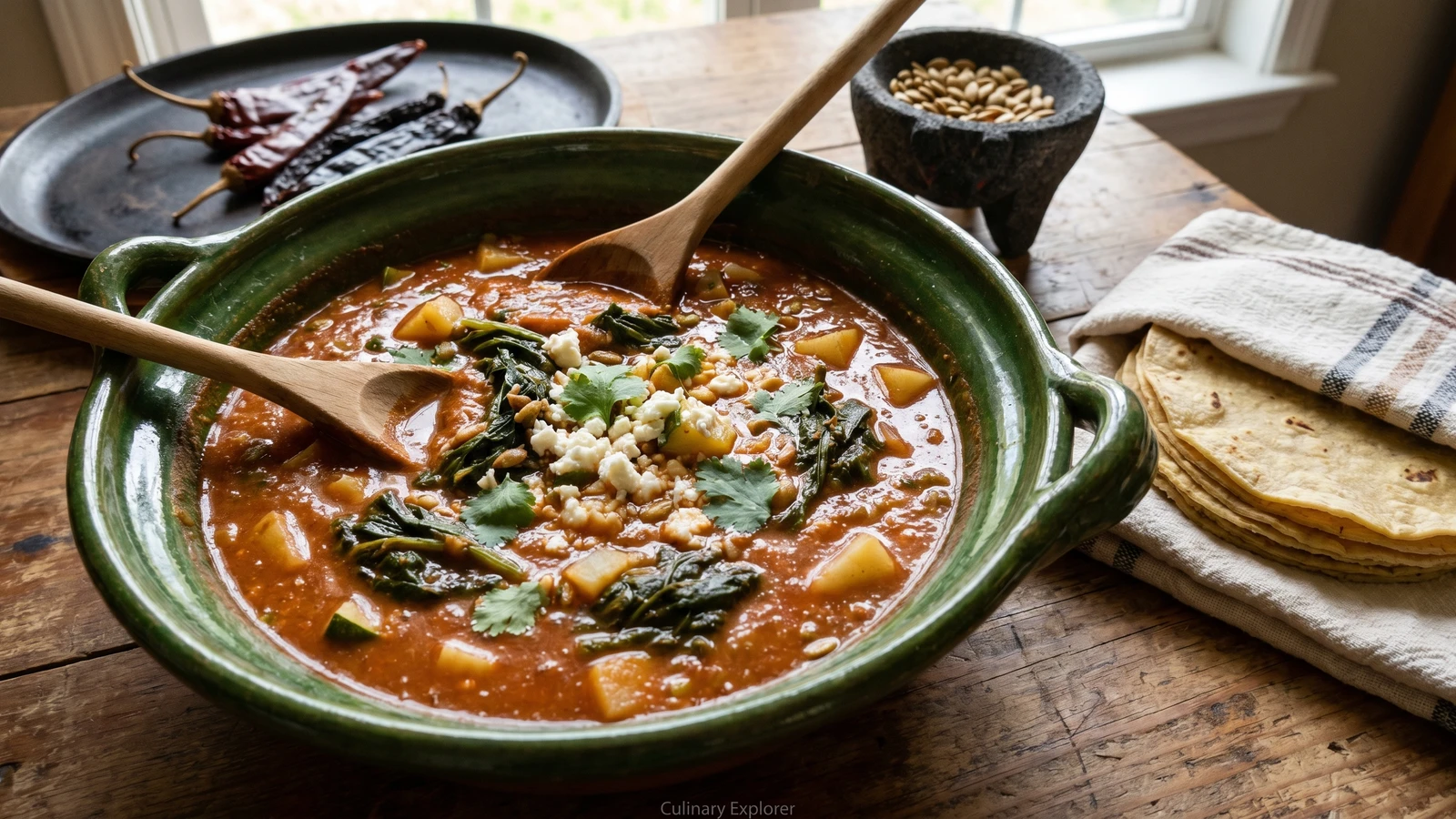
Michoacán's Purépecha atápakua is a chile-red, masa-thickened stew from the Lake Pátzcuaro region, built with guajillo, pasilla, toasted pepita, and quelites until the broth turns sturdy and alive.
Michoacán, in the Purépecha country around Cuanajo and the Lake Pátzcuaro basin, is where this atápakua belongs. Not the north. Not Ciudad de México. Cuanajo sits in the Pátzcuaro municipality with pine wood, embroidered cloth, and comales working before the day gets loud. This kind of pot is daily food there: chile, corn, greens, seeds, and enough body to feed a family with tortillas.
The thickening is the lesson. Purépecha cocineras dissolve masa de maíz nixtamalizado into the broth until it becomes a light mole, not a thin soup. Guajillo gives clean red color. Pasilla gives dark depth. Toasted pepita gives body. Quelites taste of the milpa and the rainy season. Cada estado, su propia cocina.
Use masa from a tortillería if you can. Use maíz seneri if you are in Michoacán and know who grows it. If all you have is masa harina, I will tell you how to use it, but I will also tell you what is missing: the smell of fresh nixtamal, the softness that thickens without turning pasty, the corn flavor that carries the whole cazuela.
My mother was Jalisciense, so this was not in her notebook. I learned atápakua from Purépecha women who kept correcting the texture: thinner, no; thicker, no; it should coat the spoon and still move like a stew. That is the point. Saber cocinar es saber vivir.
Atápakua belongs to Purépecha communities of Michoacán and is commonly glossed from Purépecha-language tradition as a nourishing, chile-warmed guiso that sustains life. The older thickening method is called sïndurhakua, traditionally made with maíz seneri masa dissolved in water and used to bind broths carrying mushrooms, charales, cabbage leaves, potatoes, calabacitas, nopales, seeds, and quelites. In 2010 UNESCO inscribed Traditional Mexican Cuisine as intangible cultural heritage under the Michoacán paradigm, recognizing the living community system behind dishes like this, not a restaurant style.
Quantity
8
stemmed and seeded
Quantity
2
stemmed and seeded
Quantity
1/2 cup
Quantity
4
husked and rinsed
Quantity
2
Quantity
1/2 medium
cut into thick wedges
Quantity
3
unpeeled
Quantity
1
stemmed
Quantity
2 cups
for soaking the chiles
Quantity
6 cups
divided
Quantity
3/4 cup
preferably from a tortillería
Quantity
2 tablespoons
Quantity
2
peeled and cut into 1/2-inch cubes
Quantity
2 small
cut into 1/2-inch half-moons
Quantity
1 pound
preferably quintoniles, verdolagas, or quelite cenizo, washed and tough stems removed
Quantity
8 sprigs
tender stems included
Quantity
4 sprigs
leaves picked
Quantity
1
lightly toasted and crumbled
Quantity
1 1/2 teaspoons, plus more to taste
Quantity
for serving
crumbled
Quantity
for serving
Quantity
for serving
| Ingredient | Quantity |
|---|---|
| dried chile guajillostemmed and seeded | 8 |
| dried chile pasillastemmed and seeded | 2 |
| hulled raw pepitas (pumpkin seeds) | 1/2 cup |
| tomatillos (miltomates)husked and rinsed | 4 |
| ripe Roma tomatoes (jitomates) | 2 |
| white onioncut into thick wedges | 1/2 medium |
| garlic clovesunpeeled | 3 |
| fresh chile serranostemmed | 1 |
| hot waterfor soaking the chiles | 2 cups |
| light chicken broth or vegetable brothdivided | 6 cups |
| fresh masa de maíz nixtamalizadopreferably from a tortillería | 3/4 cup |
| manteca de cerdo | 2 tablespoons |
| small yellow potatoespeeled and cut into 1/2-inch cubes | 2 |
| calabacitascut into 1/2-inch half-moons | 2 small |
| quelites de temporadapreferably quintoniles, verdolagas, or quelite cenizo, washed and tough stems removed | 1 pound |
| fresh cilantrotender stems included | 8 sprigs |
| fresh hierbabuenaleaves picked | 4 sprigs |
| dried avocado leaf (optional)lightly toasted and crumbled | 1 |
| kosher salt | 1 1/2 teaspoons, plus more to taste |
| queso fresco (optional)crumbled | for serving |
| additional fresh cilantro leaves (optional) | for serving |
| warm corundas or hand-pressed corn tortillas | for serving |
Pick through the quelites before you touch the comal. Remove roots, yellow leaves, and tough stems. Wash them in three changes of water until no grit falls to the bottom of the bowl. Verdolagas can keep their tender stems. Quintoniles need a firmer hand. This is market work, not decoration.
Heat a dry comal over medium. Add the pepitas and toast for 3 to 4 minutes, shaking often, until they puff, pop here and there, and smell nutty. Do not brown them hard. Burned pepita tastes dusty. Grind them in a molcajete, metate, or spice grinder until fine. Set aside.
Wipe the guajillo and pasilla chiles clean. Press each chile against the hot comal for 15 to 25 seconds per side, just until the skin darkens slightly and the chile becomes flexible. The pasilla is thin and burns faster. If a chile turns black, throw it out. Burned chile makes bitter atápakua and there is no fixing it later.
Put the toasted chiles in a bowl and cover with the hot water. Let them soften for 15 minutes. Drain them and discard the soaking water. Hot water softens the flesh. Boiling water can pull bitterness from the skins. Small decision, big difference.
On the same comal, roast the tomatillos, jitomates, onion, garlic, and chile serrano. Turn them until they blister and soften, about 8 to 10 minutes for the tomatillos and jitomates, less for the garlic. Black spots are flavor. Ash is not. Peel the garlic when it is cool enough to handle.
Put the drained chiles, roasted tomatillos, jitomates, onion, peeled garlic, serrano, cilantro, hierbabuena, and toasted avocado leaf if using into a blender. Add 2 cups of broth and blend until completely smooth. Strain through a fine-mesh sieve into a bowl, pressing hard. Stir the ground pepitas into the strained base. You want a red sauce with body, not chile skins floating around like nobody was paying attention.
Crumble the fresh masa into a bowl. Whisk in 1 cup warm broth a little at a time until it looks like thin atole with no lumps. This is the thickener, the sïndurhakua. Fresh masa gives the clean corn flavor. Masa harina will get you through if you live far from a tortillería, but do not pretend it is the same.
Melt the manteca de cerdo in a 4-quart cazuela or heavy pot over medium heat. Pour in the chile and pepita base. It will sputter. Stir constantly for 8 to 10 minutes, until the color deepens to brick red and tiny beads of fat show at the edges. La manteca es el sabor. This frying wakes up the chile and keeps the atápakua from tasting raw.
Add the remaining 3 cups broth, the salt, and the diced potatoes. Bring to a steady simmer and cook for 12 minutes, until the potatoes are almost tender. Add the calabacitas and cook 5 minutes more. The vegetables should still hold their shape. Atápakua is a stew, not baby food.
Lower the heat. Pour in the masa slurry in a thin stream while stirring with a wooden spoon. Keep stirring for the first 2 minutes so the masa does not settle and scorch. Simmer gently for 10 to 12 minutes, scraping the bottom often, until the raw masa taste disappears and the stew coats the spoon but still moves when you tilt the pot.
Fold in the cleaned quelites by handfuls. Simmer 4 to 6 minutes, just until the greens collapse into the red sauce and turn dark green. Taste for salt. The guajillo should taste round, the pasilla should sit underneath it, and the pepita should give the broth a quiet thickness. Not every Mexican dish is a chile contest. This one should warm the mouth and feed the body.
Ladle the atápakua into a green-glazed Michoacán barro cazuela or deep clay bowls. Add crumbled queso fresco and a few cilantro leaves if you are using them. Serve with warm corundas or hand-pressed corn tortillas. In Cuanajo, the tortilla is not a side. It is the tool. Así se hace y punto.
1 serving (about 470g)
Culinary guides, cultural storytelling, and the editorial depth that makes cooking meaningful.
Discover Culinary ExplorerChef Lupita
Aguascalientes' Bajio pozole de lengua, built with cacahuazintle hominy, tender beef tongue, chile ancho and guajillo, with xoconostle brightness and table garnishes.

Chef Lupita
Veracruz's Gulf coast rice from Alvarado, built with seafood stock, tomato, chile chipotle, epazote, shrimp, fish, jaiba, and pulpo, served loose and brothy in a clay cazuela.

Chef Lupita
Costa Chica's wet salt-beef stew, built from chile costeño, guajillo, tomato, manteca, yuca, plantain, and masa dumplings, the ranching pot of Cuajinicuilapa and Pinotepa.

Chef Lupita
Michoacán's P'urhépecha atápakua is a masa-thickened sauce and stew at once, built with pork, chile guajillo, and hierbabuena added only at the end.