Chef Dimitra
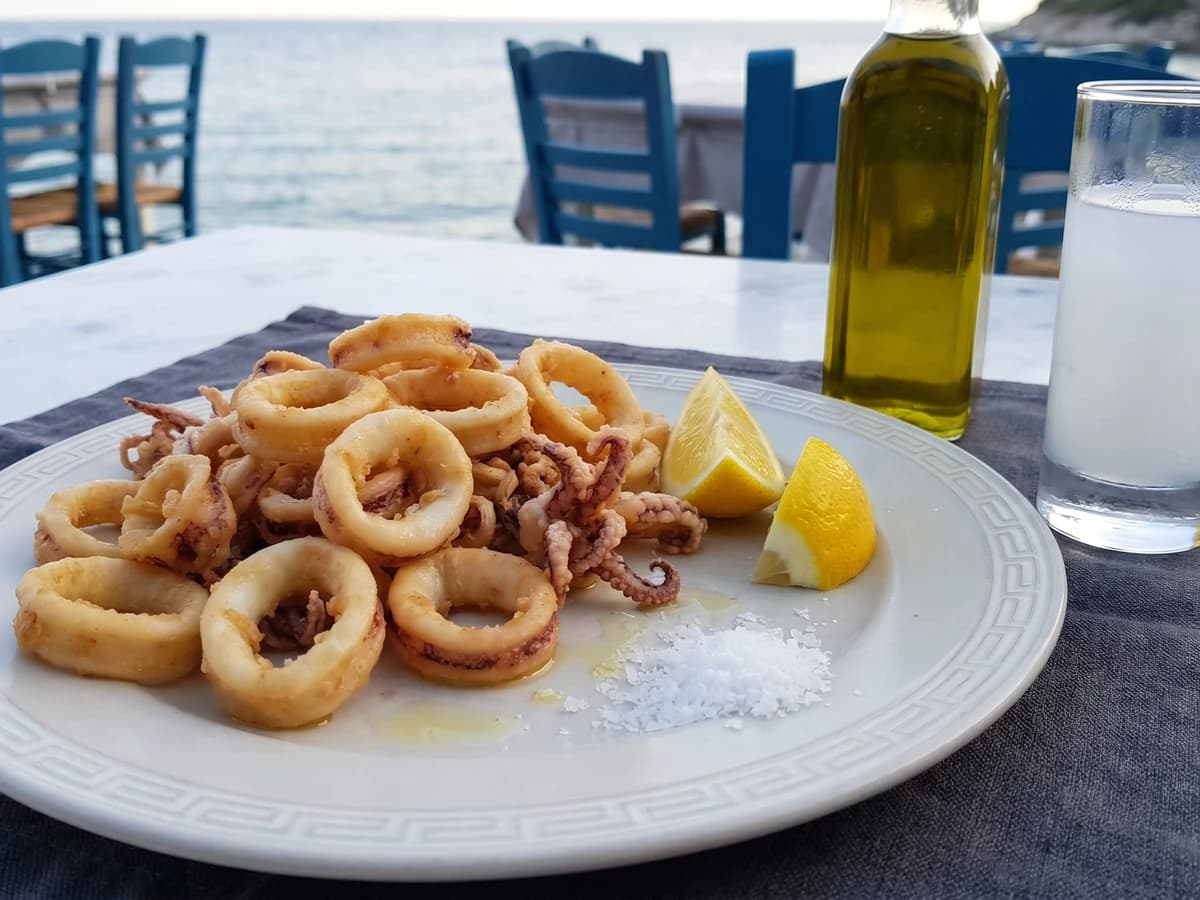
Aegean Island Kalamarakia Tiganita (Καλαμαράκια Τηγανητά)
Aegean island fried squid is flour, hot oil, lemon, and nerve. Fry it for a minute or two, no longer, and it stays tender under its crisp coat.
A cooking platform built around craft, culture, and the stories behind what we eat.

Created by
Macedonia and Thrace keep these cabbage rolls for the fasting table: soft leaves wrapped around dill-bright rice, simmered with lemon and olive oil until the pot smells clean and green.
Lahanodolmades yialantzi belong to the fasting tables of Macedonia and Thrace: cabbage leaves wrapped around rice, onion, dill, mint, lemon, and good olive oil. No meat. No egg. The roll is soft and pale, the filling loose enough to stay tender, and the pot liquor sharp with lemon.
The step that decides the dish is the cabbage. Blanch the head whole, peel the leaves as they soften, then trim the thick ribs flat. A leaf that is only half-softened tears under your fingers; a leaf boiled to exhaustion tastes tired. You want it pliable enough to roll snugly, with a little room left for the rice to swell.
I keep this one in my notebook under Clean Monday, because this is where the fasting calendar shows its intelligence. A plant-based table in Greece is not a correction. It is inheritance. Serve the rolls warm or at room temperature, with lemon, oil, and patience.
Yialantzi comes from the Turkish yalancı, meaning false or lying, a word Greek cooks used under Ottoman rule for meatless dolmades filled with olive-oil rice instead of mince. The cabbage version settled strongly in Macedonia and Thrace, where winter cabbages were plentiful and the Orthodox fasting calendar gave the rolls a natural place from Clean Monday through Lent. In Politiki and refugee kitchens the same word can point to richer rice fillings with currants or pine nuts; this northern fasting version keeps to herbs, lemon, and oil.
Quantity
1 large, 1.6 to 1.8kg
Quantity
250g
rinsed and drained
Quantity
150ml
divided
Quantity
300g
finely chopped
Quantity
80g
thinly sliced
Quantity
25g
chopped, plus extra for serving
Quantity
20g
chopped
Quantity
10g
chopped
Quantity
1
zested
Quantity
90ml
divided
Quantity
8g
plus more for blanching
Quantity
1/2 teaspoon
Quantity
650ml
divided
Quantity
as needed
for serving
| Ingredient | Quantity |
|---|---|
| firm green cabbage | 1 large, 1.6 to 1.8kg |
| medium-grain rice, such as Carolinarinsed and drained | 250g |
| extra virgin Koroneiki olive oildivided | 150ml |
| yellow onionsfinely chopped | 300g |
| spring onionsthinly sliced | 80g |
| fresh dillchopped, plus extra for serving | 25g |
| flat-leaf parsleychopped | 20g |
| fresh mintchopped | 10g |
| unwaxed lemonzested | 1 |
| fresh lemon juicedivided | 90ml |
| fine sea saltplus more for blanching | 8g |
| freshly ground black pepper | 1/2 teaspoon |
| hot waterdivided | 650ml |
| lemon wedges (optional)for serving | as needed |
Cut a cone around the cabbage core and pull out as much of it as you can. Bring a large pot of well-salted water to a boil, lower in the cabbage, and turn it with tongs. As the outer leaves soften, peel them away one by one and lift them to a tray. Keep going until you have 24 to 28 usable leaves. The leaves must bend without cracking, because this is what lets the rolls close neatly without tearing.
Lay each leaf vein-side up and shave the thick rib flat with a small knife. Leave small leaves whole. Cut very large leaves in half along the rib. You want pieces roughly the size of your hand, soft enough to fold but not ragged.
Warm 80ml of the olive oil in a wide pan over medium heat. Add the yellow onions and cook for 8 to 10 minutes, stirring often, until they turn soft and sweet but do not brown. Stir in the spring onions and rice, and cook for 2 minutes so the rice is glossy with oil.
Add 150ml of the hot water, the lemon zest, 30ml of the lemon juice, the salt, and the pepper. Cook for 4 to 5 minutes, until the water is mostly absorbed and the rice is still firm at the center. Take the pan off the heat and fold in the dill, parsley, and mint. The filling should taste a little too lemony and a little too salty; the cabbage will quiet it down.
Line the bottom of a wide heavy pot with the torn cabbage leaves. Place one prepared leaf on the board, vein-side up and stem end toward you. Add 1 level tablespoon of filling near the base, fold the sides over, and roll away from you into a neat parcel. Roll snugly, not tightly. Rice swells in the pot, and if you pack it like a coin purse it will split the leaf. Set each roll seam-side down in the pot.
Arrange the rolls close together in one or two layers, seam-side down, so they support each other. Pour over the remaining 70ml olive oil, the remaining 60ml lemon juice, and 500ml hot water. The liquid should come about halfway up the rolls, not drown them. Cover with a few spare cabbage leaves, then set a heatproof plate on top to keep everything in place.
Bring the pot to a gentle bubble over medium heat, then lower the heat, cover, and simmer for 45 to 55 minutes. Shake the pot once or twice instead of stirring. The rolls are ready when the cabbage is tender and the rice inside has lost its chalky center.
Take the pot off the heat and let the rolls rest, covered, for 30 minutes. This rest matters. The rice finishes drinking the lemony oil and the rolls firm enough to lift cleanly. Serve warm or at room temperature with spoonfuls of the pot liquor, extra dill, a thread of olive oil, and lemon wedges.
1 serving (about 430g)
Culinary guides, cultural storytelling, and the editorial depth that makes cooking meaningful.
Discover Culinary ExplorerChef Dimitra
Aegean island fried squid is flour, hot oil, lemon, and nerve. Fry it for a minute or two, no longer, and it stays tender under its crisp coat.

Chef Dimitra
Pale Aegean taramosalata is cured roe, soaked bread, lemon, and olive oil worked slowly until it turns thick and clean, made for lagana on Clean Monday.

Chef Dimitra
Athenian March 25 salt cod, crisp in a puffed beer batter and served with garlic skordalia, the Lenten fish dish Greece keeps for Annunciation day.

Chef Dimitra
Crete names this dish by the pan motion: snails set mouth-down in salted flour, fried in good olive oil, then hit with rosemary and vinegar.