Chef Joost
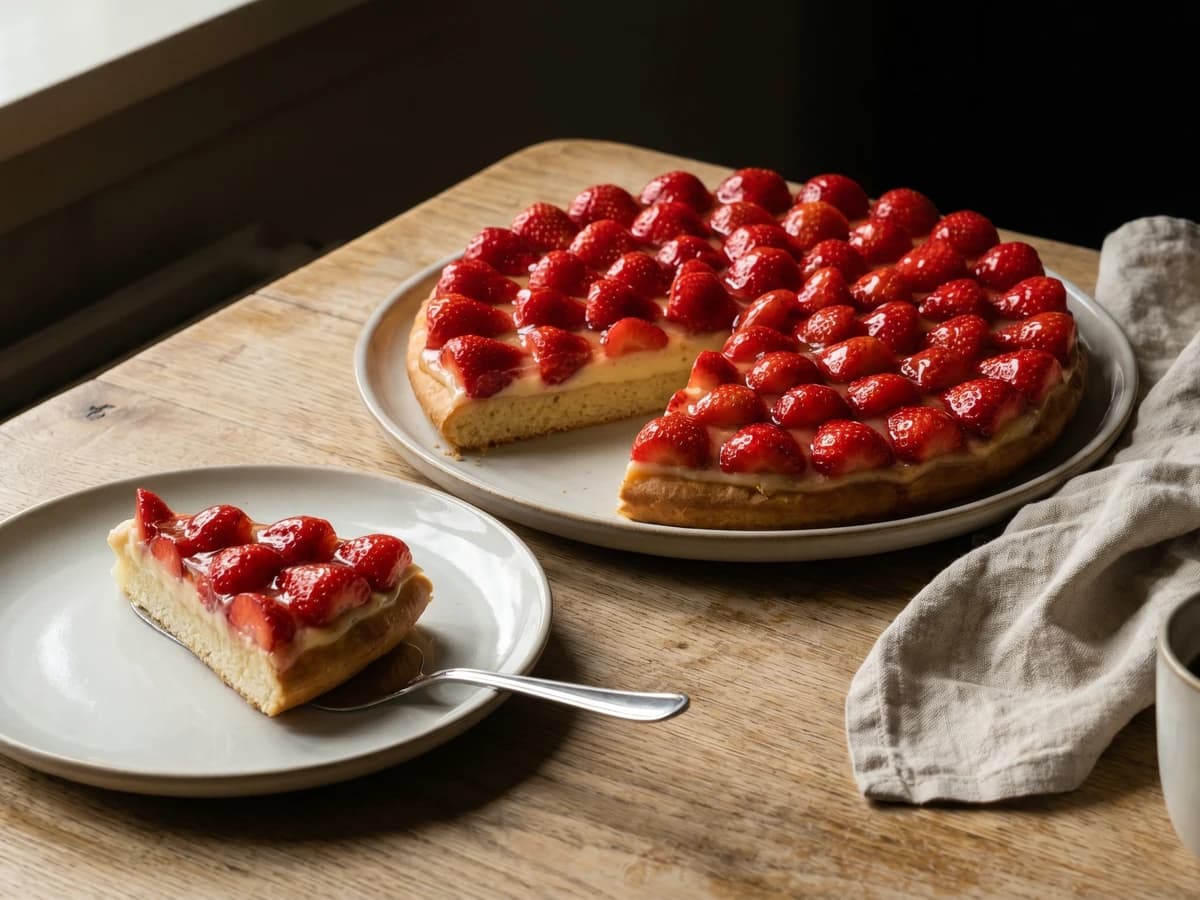
Aardbeienvlaai (Limburg Strawberry Vlaai)
The summer vlaai that politely breaks Limburg's baked-fruit rule: soft gistdeeg, cool pastry cream, and strawberries left fresh because June knows better than the oven.
A cooking platform built around craft, culture, and the stories behind what we eat.

Created by
The name means crumbs, but Limburg hears celebration: tender yeast vlaai, fruit and pudding beneath a thick roof of buttery knubbelkes, cut for birthdays and serious coffee tables.
The first time I understood Limburg, it was not through beer or hills or the soft southern vowels. It was through a cake box on a family table, opened with the ceremony other provinces reserve for silver. Inside was vlaai, not pie exactly, not tart exactly, but the thing Limburg brings when people gather and coffee is already being poured.
The name already tells you what matters. Kruimelvlaai is crumb vlaai, and in Limburg those crumbs are often called knubbelkes, little lumps. A plain word, which is how you know it is serious. But let me tell you a secret: the topping is not decoration. It is the roof of the dish, thick enough to crack under the knife, buttery enough to scent the whole room, and uneven enough to prove a human hand was there.
Vlaai belongs to the south, and flattening it into some general Dutch pastry is a small culinary crime committed mostly by people who have never waited in a Maastricht bakery on a Saturday morning. The base is yeast dough, tender and thin, made to carry filling rather than show off. Apricot is my choice here because its sharpness cuts cleanly through the pudding and butter, but cherry, plum, or plain rijstevlaai filling all have their defenders. Let families argue. It keeps them cheerful.
What I ask is simple. Hou het altijd simpel, always keep it simple: keep the filling thick, the dough thin, and the crumbs cold and knobbly. Do not press them flat. Do not make them polite. A dish without its story is half a meal, and this one says exactly what Limburg has always known, that a celebration can arrive under a brown paper bakery box and still feel like inheritance.
Limburgse vlaai is one of the Netherlands' most regionally guarded baked goods, associated especially with Dutch and Belgian Limburg and served at birthdays, church feasts, kermis, and the koffietafel, the coffee table gathering. In 2024, Limburgse vlaai was registered in the European Union as a Traditional Speciality Guaranteed, with rules emphasizing yeast dough, a filled open tart form, and baking the filling with the base rather than adding it afterward. Kruimelvlaai is the crumb-topped member of this family, often filled with fruit, pudding, or rice, and its thick layer of knubbelkes is so characteristic that many Limburg bakers treat it as a category of its own.
Quantity
250g
plus extra for dusting
Quantity
7g
Quantity
35g
Quantity
1/2 teaspoon
Quantity
125ml
Quantity
40g
softened
Quantity
1
Quantity
300g
Quantity
350ml
Quantity
45g
Quantity
30g
Quantity
1
Quantity
1 teaspoon
Quantity
150g
Quantity
100g
cubed
Quantity
80g
Quantity
pinch
Quantity
as needed
| Ingredient | Quantity |
|---|---|
| plain flourplus extra for dusting | 250g |
| instant yeast | 7g |
| caster sugar | 35g |
| fine salt | 1/2 teaspoon |
| lukewarm milk | 125ml |
| unsalted buttersoftened | 40g |
| egg yolk | 1 |
| thick apricot compote or well-drained apricot jam | 300g |
| whole milk | 350ml |
| sugar | 45g |
| custard powder or cornstarch | 30g |
| egg yolk | 1 |
| vanilla extract | 1 teaspoon |
| plain flour for crumbs | 150g |
| cold unsalted buttercubed | 100g |
| light brown sugar | 80g |
| salt for crumbs | pinch |
| butter for the tin | as needed |
Whisk 75ml of the milk with the sugar, custard powder or cornstarch, egg yolk, and vanilla until smooth. Heat the remaining milk until just below a boil, whisk it into the custard mixture, then return everything to the pan and cook, stirring constantly, until thick enough to hold a spoon track. Scrape into a bowl, press a piece of paper directly onto the surface, and let it cool completely.
Mix the flour, yeast, sugar, and salt in a bowl. Add the lukewarm milk, softened butter, and egg yolk, then knead for eight to ten minutes until the dough is smooth, soft, and only lightly tacky. Cover and let it rise until puffy and nearly doubled, about one hour. Vlaai dough is not bread dough pretending to be pastry; it should stay tender under the filling.
Rub the flour, cold butter, brown sugar, and salt together with your fingertips until you have large uneven crumbs. In Limburg they call these knubbelkes, little lumps, and the word is useful because it tells your hands when to stop. Fine sand bakes dull; little lumps bake crisp at the edges and buttery in the middle.
Butter a 28cm vlaai tin or shallow tart tin. Roll the risen dough into a round a little larger than the tin, lay it in gently, and press it into the fluted edge without stretching. Trim the rim cleanly. Prick the base a few times with a fork so it rises politely rather than in hills.
Spread the apricot compote over the dough in an even layer, then spoon the cooled pudding over it and smooth it carefully. Keep both fillings thick and cool. A runny filling is the enemy here, because the base must bake through before the fruit and pudding start wandering.
Scatter the knubbelkes thickly over the top, right to the edge, without pressing them down. Let the assembled vlaai rest for fifteen minutes while the oven heats to 200C. That short rest wakes the rim of dough without giving the filling time to soak the base.
Bake for 30 to 35 minutes, until the rim is golden, the underside is cooked, and the crumbs are deeply blond with darker edges. Cool in the tin for fifteen minutes, then slide the vlaai onto a rack. Cut it only when just barely warm or fully cool; impatience gives you pudding landslide, which is delicious but not a slice.
1 serving (about 125g)
Culinary guides, cultural storytelling, and the editorial depth that makes cooking meaningful.
Discover Culinary ExplorerChef Joost
The summer vlaai that politely breaks Limburg's baked-fruit rule: soft gistdeeg, cool pastry cream, and strawberries left fresh because June knows better than the oven.

Chef Joost
A Limburg vlaai is not a pie trying to be grand. It is a thin yeast-dough round, fruit-bright and generous, made for birthdays, coffee, and second slices.

Chef Joost
The December bakery counter made small: cold leafed pastry wrapped around lemon-scented amandelspijs, brushed gold, and scattered with almonds so one person gets the whole holiday in both hands.
Chef Joost
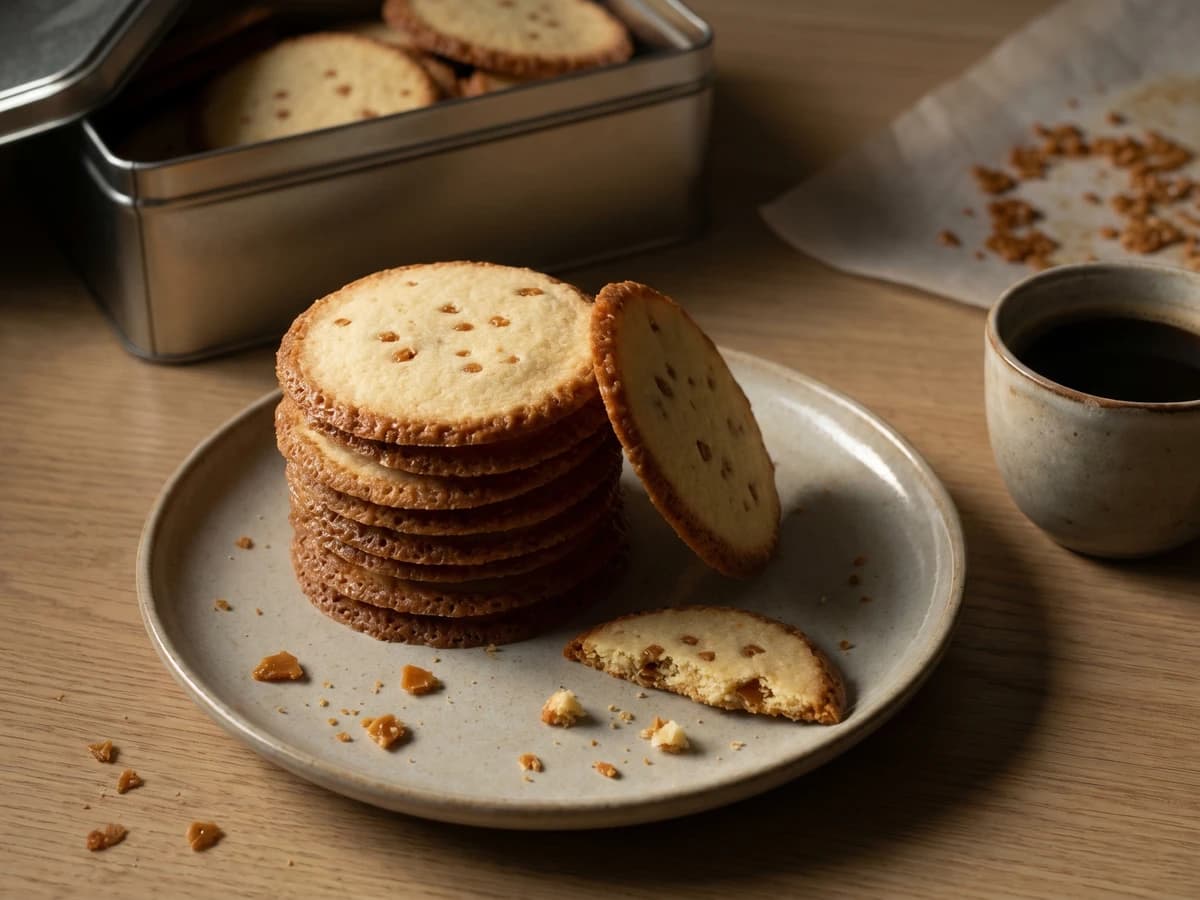
A thin Amsterdam cookie carrying a cog ship in its name: caramelized butter dough, almond nougatine, and a 1934 contest that turned municipal pride into something for coffee.