Chef Elsa
Almjause (Alpine Hut Snack Board)
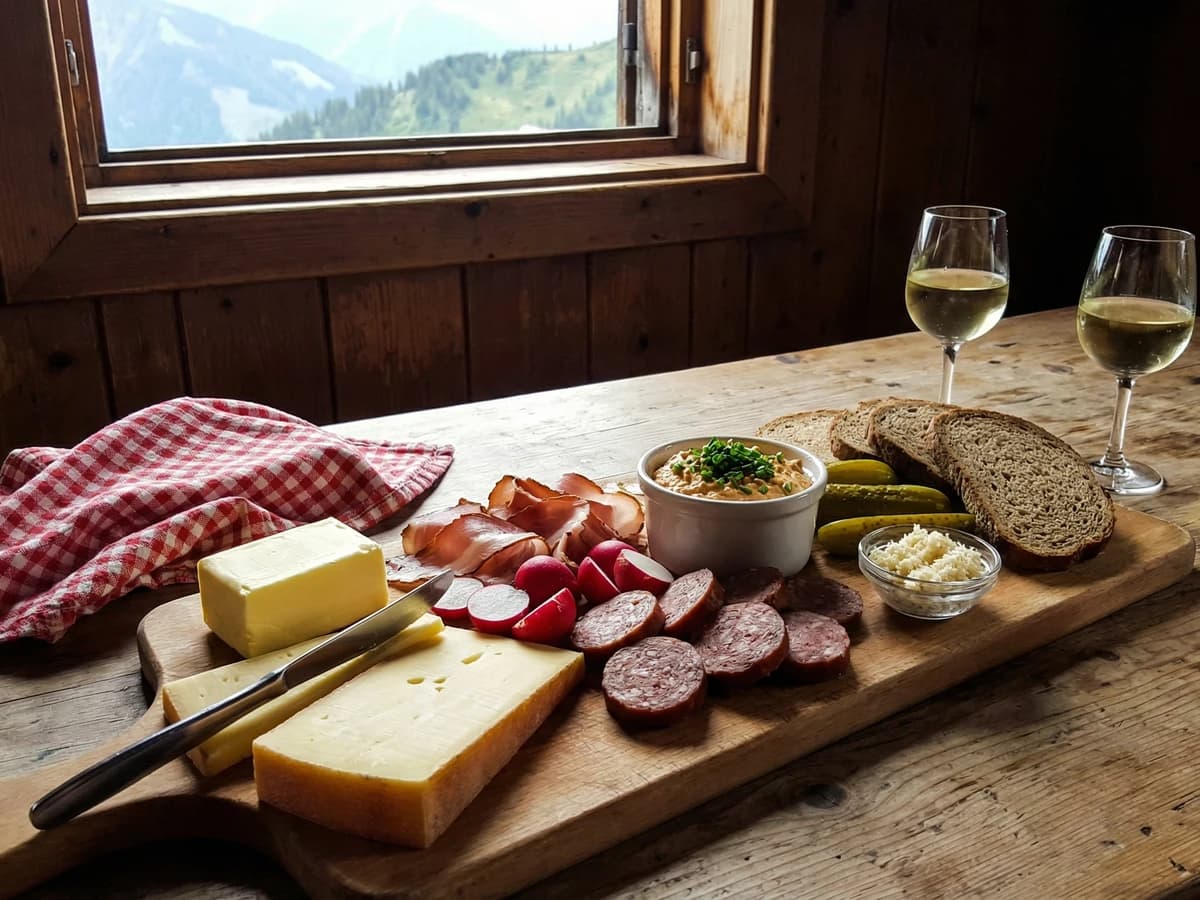
A wooden board loaded with mountain cheese, juniper-smoked Speck, air-dried Hauswürstel, handmade Liptauer, fresh Kren, and thick-cut Bauernbrot, the way Austrian Almhütten have fed hikers for generations.
A cooking platform built around craft, culture, and the stories behind what we eat.

Created by
Cool, herb-flecked Topfen spread on a thick slice of dark Bauernbrot, the way they serve it at every alpine hut and Heuriger garden in Austria when the walking is done and the wine is cold.
The first time I tasted Kräutertopfen properly was at an Almhütte above the Salzkammergut. I was nine or ten, halfway through a summer walk with Gretel and my grandmother Eva. We'd been going since morning and I was complaining about my boots. The woman at the hut set down a crock of white spread flecked with green, a board of bread so dark it was nearly black, and said nothing. I ate three slices before I remembered to be tired.
Kräutertopfen is the simplest thing in Austrian cooking and one of the hardest to get right for exactly that reason. It's fresh Topfen, Austria's beloved quark, mixed with whatever herbs are growing that morning. Chives, parsley, dill, a few leaves of lemon balm if you have it. A whisper of garlic. Good salt. That's it. There's nowhere to hide in this recipe. If your Topfen is bland, your spread is bland. If your herbs are old and tired, you'll taste it in every bite. This is the kind of cooking where the shopping matters more than the technique.
At my restaurant in Salzburg, I serve Kräutertopfen as part of the Brettljause, the cold board of spreads and cured meats that Austrians eat at a Heuriger or Buschenschank with a glass of Grüner Veltliner. It's the first thing people reach for, and it's always the first thing gone. There's something about cool, tangy Topfen against a dense slice of rye that makes you stop talking and start eating. Good Austrian home cooking at its most honest.
Topfen has been a staple of Austrian farmhouse cooking for centuries, produced by acidifying fresh milk and draining the curds. Kräutertopfen belongs to the tradition of Aufstriche, the cold spreads served at Heuriger wine taverns and alpine Almhütten across Austria. The Heuriger tradition itself dates to a 1784 decree by Emperor Joseph II permitting vintners to sell their own wine and food directly to the public, creating the tavern culture where dishes like this became essential. The herbs used varied by altitude and season, from wild garlic in spring lowlands to alpine chives and Bergkräuter higher up.
Quantity
250g
full-fat, well-drained
Quantity
3 tablespoons
Quantity
1 tablespoon
Quantity
2 tablespoons
finely cut
Quantity
2 tablespoons
finely chopped
Quantity
1 tablespoon
finely chopped
Quantity
6-8 leaves
finely shredded
Quantity
1 small clove
crushed to a paste with salt
Quantity
1/2 teaspoon, plus more to taste
Quantity
freshly ground, to taste
Quantity
a squeeze
Quantity
for serving
| Ingredient | Quantity |
|---|---|
| Topfen (quark)full-fat, well-drained | 250g |
| sour cream (Sauerrahm) | 3 tablespoons |
| Austrian pumpkin seed oil or mild olive oil | 1 tablespoon |
| fresh chivesfinely cut | 2 tablespoons |
| fresh flat-leaf parsleyfinely chopped | 2 tablespoons |
| fresh dillfinely chopped | 1 tablespoon |
| fresh lemon balm leavesfinely shredded | 6-8 leaves |
| garliccrushed to a paste with salt | 1 small clove |
| fine sea salt | 1/2 teaspoon, plus more to taste |
| black pepper | freshly ground, to taste |
| lemon juice | a squeeze |
| dark rye bread or Bauernbrot | for serving |
If your Topfen is at all wet, spoon it into a fine-mesh sieve set over a bowl and let it drain for fifteen minutes. You want it thick and slightly crumbly, not watery. A loose Topfen will make a spread that slides off the bread and pools on the plate. Full-fat quark from a good dairy is what you're after. If you can only find low-fat, stir in an extra tablespoon of sour cream to compensate for the lost richness.
Wash and dry your herbs thoroughly. Wet herbs will bleed into the Topfen and turn it gray instead of letting you see those bright green flecks. Cut the chives with a sharp knife, don't chop them or they'll bruise and go dull. Chop the parsley and dill finely but not to a paste. Shred the lemon balm leaves with your fingers at the last moment. Lemon balm darkens quickly once it's cut, so it goes in last.
Put the drained Topfen in a bowl. Stir in the sour cream and oil until the texture is smooth and creamy but still has some body to it. You're not making a dip. You want this thick enough to hold its shape on bread. Mix in the garlic paste, salt, and pepper. Now fold in the chives, parsley, and dill. Stir gently, just enough to distribute them evenly. The spread should be white with green running through it, not uniformly green.
Add a squeeze of lemon juice, just enough to brighten everything without making it taste like lemon. Fold in the shredded lemon balm leaves. Taste it. The salt level should be assertive because you're eating this on bread and bread dulls seasoning. Adjust the salt now, not at the table. Cover and rest in the fridge for at least thirty minutes. The flavors need time to come together and the Topfen needs to firm back up after mixing.
Spoon the Kräutertopfen into an earthenware crock or onto a wooden board. Scatter a few extra chive tips and a small drizzle of pumpkin seed oil across the top. Serve with thick slices of dark rye bread or Bauernbrot and let people spread their own. This is not careful restaurant food. It's a crock of something good set in the middle of the table, a bread knife, and a conversation. Mahlzeit!
1 serving (about 85g)
Culinary guides, cultural storytelling, and the editorial depth that makes cooking meaningful.
Discover Culinary ExplorerChef Elsa
A wooden board loaded with mountain cheese, juniper-smoked Speck, air-dried Hauswürstel, handmade Liptauer, fresh Kren, and thick-cut Bauernbrot, the way Austrian Almhütten have fed hikers for generations.

Chef Elsa
Dark, spiced, and wickedly good: Blunzn mashed with onion, mustard, and marjoram into the kind of spread that disappears first from every Heuriger Brettl, scooped up on torn hunks of dark bread.

Chef Elsa
A silky potato and sour cream spread with raw onion and paprika, piled onto dark rye bread the way they serve it at every Heuriger in Lower Austria. No cheese, despite the name. Just good potatoes and honest cooking.
Chef Elsa
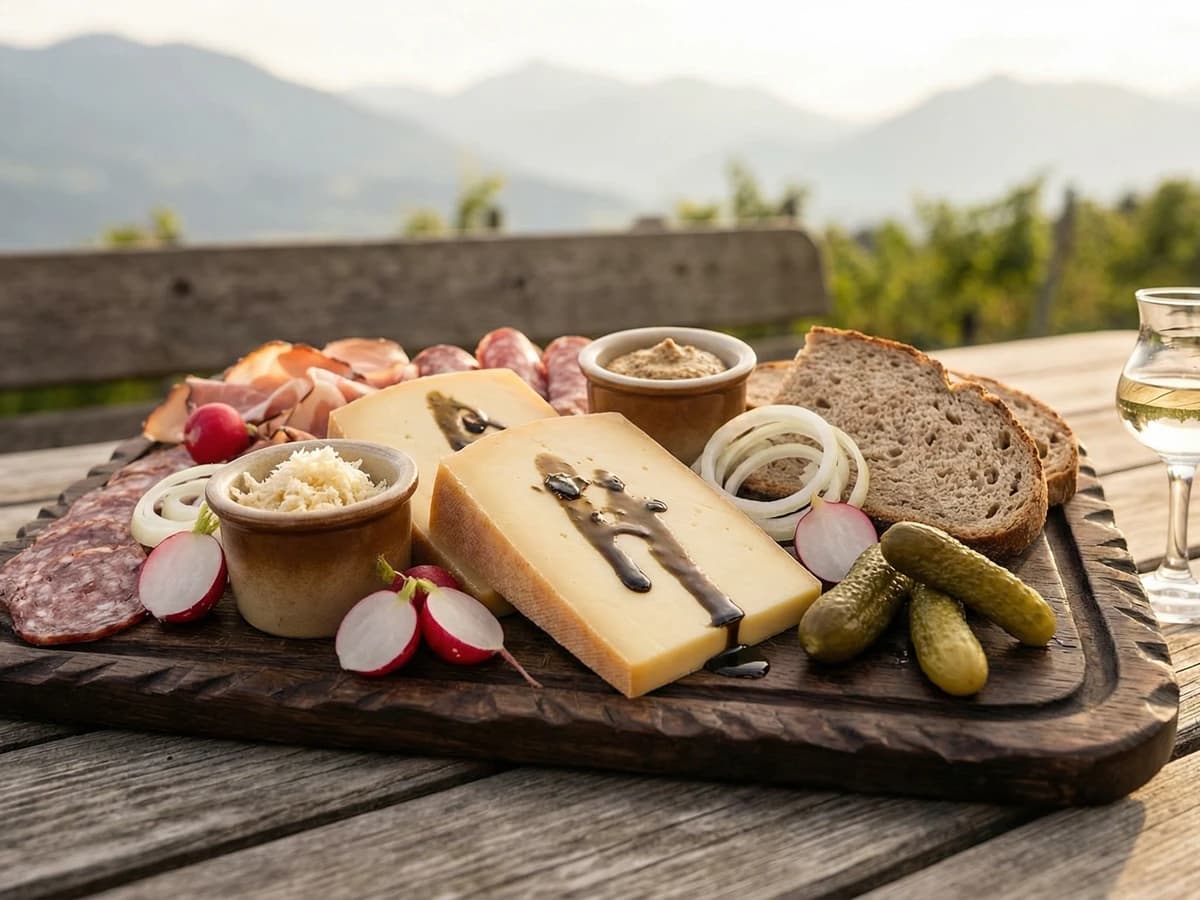
A proper Carinthian Brettljause built around PDO Gailtaler Almkäse, nutty raw-milk alpine cheese served with Speck, dark Bauernbrot, pickles, fresh horseradish, and everything you need for an afternoon on an Almhütte terrace.