
Chef Joost
Aspergesoep (Dutch White Asparagus Soup)
White asparagus is Limburg's spring clock, and this soup uses every pale stem and peeling to make wit goud, white gold, taste like the season it refuses to outlive.
A cooking platform built around craft, culture, and the stories behind what we eat.

Created by
French court soup put in Dutch house slippers: pale chicken stock, a careful roux, peas and carrot, and a queen's name made useful at the Sunday table.
In my grandmother's second notebook, Koninginnesoep sits between ordinary kippensoep, chicken soup, and a sherry pudding that only appeared when the good glasses had been polished. That is the first secret of it: the queen's soup lived in ordinary houses. It was the course that made a Sunday dinner feel like company had been expected, even when the company was only family.
The name already tells you it came dressed from elsewhere. Koningin is queen; the older French phrase is potage à la reine, a courtly chicken soup, pale and smooth, made for tables where soup wore titles. The Dutch did what Dutch kitchens often do to imported grandeur: kept the useful part, took off the lace cuffs, and put it into a pan that could feed six. Roux, chicken stock, a little cream, peas, carrot. Royal in name only. That is why I like it.
What matters here is restraint. Brown the flour and you have told the wrong story; this soup wants a pale roux, clean chicken stock, small vegetables cut evenly, and mace or nutmeg only as a whisper from the spice cupboard. Hou het altijd simpel, always keep it simple. A dish without its story is half a meal, but a soup with too much story in the pot is just confusion. Let it be gentle, ivory, and generous.
Potage à la reine, literally soup in the style of the queen, belongs to French courtly cookery of the seventeenth and eighteenth centuries, where pale poultry soups were thickened with rice, almonds, bread, or cream before later roux-based versions became common. Dutch household and hotel cookbooks borrowed the French name as koninginnesoep in the nineteenth and early twentieth centuries, then made it a domestic kippensoep, chicken soup, with a white roux, cream, peas, and carrot. Despite the Dutch title, no secure source ties it to one Dutch queen; its real story is French menu language made useful at the Dutch dinner table.
Quantity
1 chicken (1.2-1.4kg) or 1.2kg thighs
Quantity
2.2 liters
Quantity
1
halved
Quantity
1 medium
dark green leaves washed for stock, white and light green part finely sliced for soup
Quantity
1
scrubbed and roughly chopped
Quantity
1 stalk or 75g
roughly chopped
Quantity
2
Quantity
6
Quantity
1 teaspoon, plus more to taste
Quantity
50g
Quantity
50g
Quantity
150g
cut into 5mm dice
Quantity
250g
diced or shredded
Quantity
150g
Quantity
200ml
Quantity
150ml
Quantity
1/4 teaspoon
Quantity
to taste
Quantity
1 tablespoon
| Ingredient | Quantity |
|---|---|
| small chicken or bone-in chicken thighs | 1 chicken (1.2-1.4kg) or 1.2kg thighs |
| cold water | 2.2 liters |
| onionhalved | 1 |
| leekdark green leaves washed for stock, white and light green part finely sliced for soup | 1 medium |
| carrot for stockscrubbed and roughly chopped | 1 |
| celery stalk or celeriacroughly chopped | 1 stalk or 75g |
| bay leaves | 2 |
| black peppercorns | 6 |
| fine sea salt | 1 teaspoon, plus more to taste |
| unsalted butter | 50g |
| plain flour | 50g |
| carrotscut into 5mm dice | 150g |
| cooked chicken meat from the stockdiced or shredded | 250g |
| fresh or frozen peas | 150g |
| whole milk | 200ml |
| cream (slagroom) | 150ml |
| ground mace or freshly grated nutmeg | 1/4 teaspoon |
| freshly ground white pepper | to taste |
| finely chopped parsley (optional) | 1 tablespoon |
Put the chicken, cold water, onion, dark leek leaves, rough carrot, celery or celeriac, bay leaves, peppercorns, and salt into a large pot. Bring it slowly just to a boil, skim the grey foam that rises, then lower the heat to a quiet simmer for 75 to 90 minutes, until the chicken is tender and the stock tastes properly of bird. A furious boil gives you cloudy, tired stock; the queen can wait.
Lift the chicken onto a plate and let it cool enough to handle. Strain the stock through a fine sieve and measure out 1.5 liters for the soup; if you have less, add a little water, and if you have more, keep the rest for another pan. Pull or dice 250g of the chicken meat and save any extra for sandwiches, because Dutch thrift is not decoration.
In a clean soup pot, melt the butter over medium-low heat. Add the diced carrot and the finely sliced white and light green leek, and cook for 4 minutes without browning. Stir in the flour and cook for 2 minutes, until it smells faintly like warm bread but stays pale. Add the hot stock a ladle at a time, whisking until smooth before each addition. Simmer for 12 minutes, stirring along the bottom so the flour cooks out and the soup thickens gently.
Stir in the milk, cream, cooked chicken, peas, and mace or nutmeg. Keep the heat low and let the soup warm through for 5 minutes, just until the peas are bright and the chicken is hot. Do not let it boil hard now; cream splits when bullied, and chicken goes dry when it has already given you its best.
Taste carefully and season with salt and white pepper. Ladle into warmed bowls and scatter over the parsley if you are using it. The soup should be ivory and gentle, with small green peas and orange carrot showing through, royal in name but entirely at home with bread and butter on the table.
1 serving (about 400g)
Culinary guides, cultural storytelling, and the editorial depth that makes cooking meaningful.
Discover Culinary ExplorerChef Joost
White asparagus is Limburg's spring clock, and this soup uses every pale stem and peeling to make wit goud, white gold, taste like the season it refuses to outlive.
Chef Joost
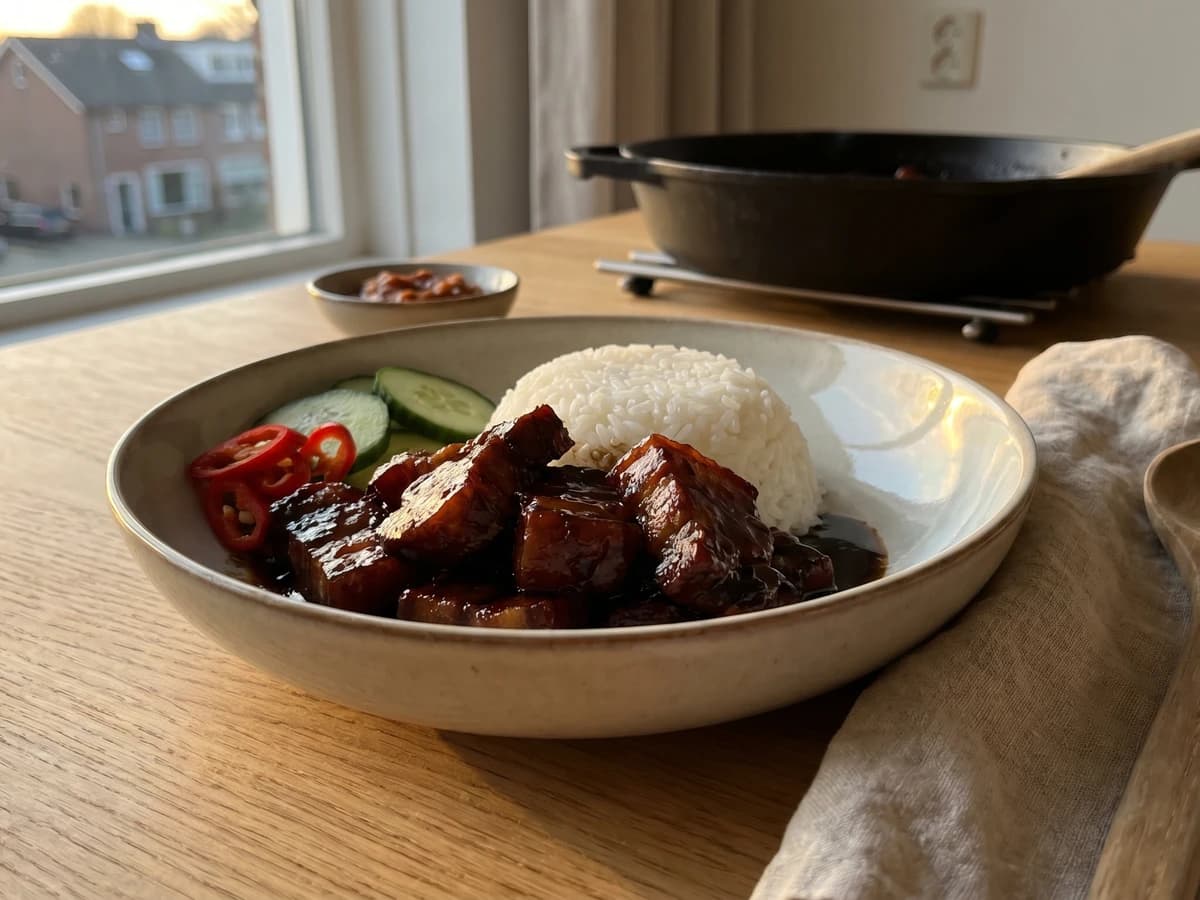
Pork, sweet soy, ginger, and patience: the Indo-Dutch braise that carried the colonial table into Dutch kitchens and made rice feel like Sunday dinner.
Chef Joost
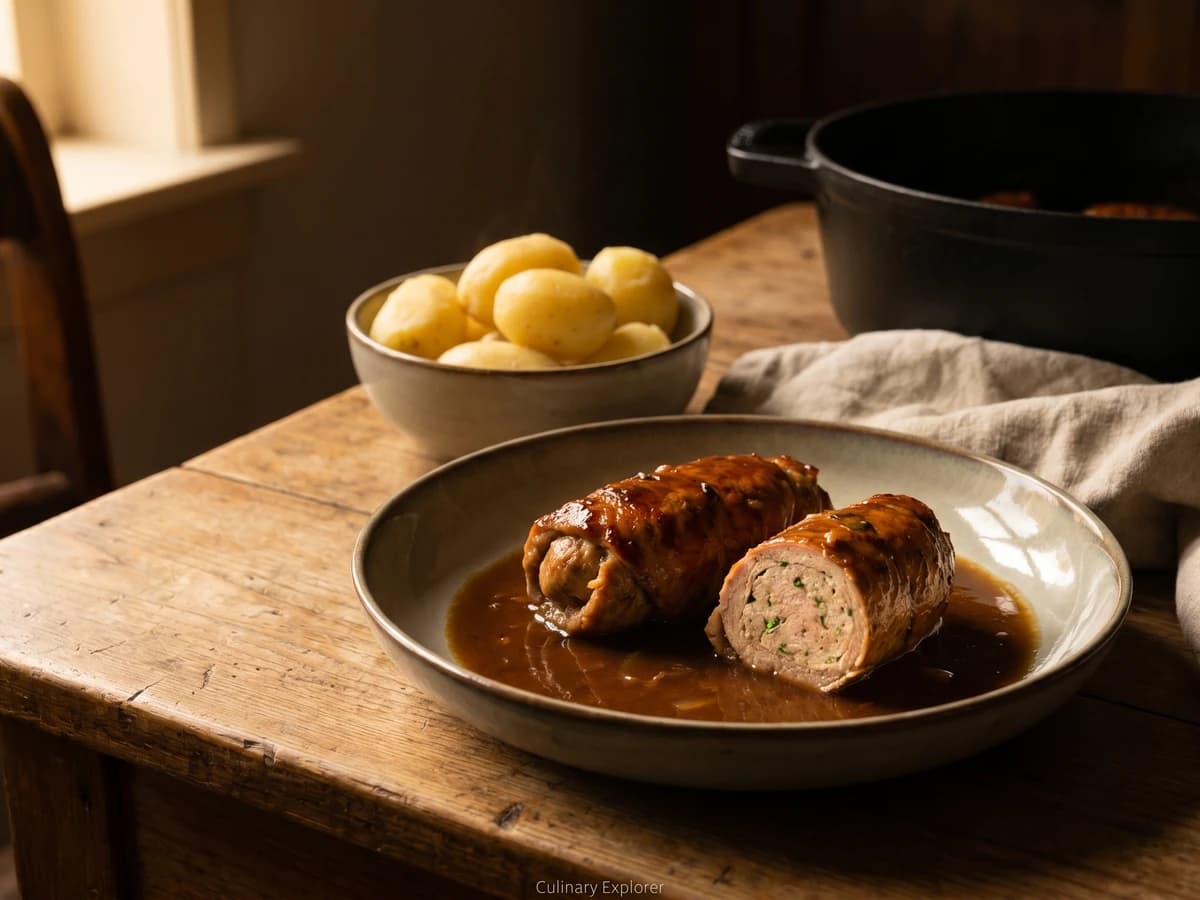
Blinde vinken are not birds but a butcher's little joke: seasoned mince tucked into thin veal or beef, browned dark in butter, then braised until the jus tastes of onion, mace, and patience.

Chef Joost
Bruine bonensoep is the quieter winter cousin of snert: brown beans, rookworst, bacon and roots in a broth that stays spoonable, frugal, and deeply Dutch.