
Chef Joost
Aspergesoep (Dutch White Asparagus Soup)
White asparagus is Limburg's spring clock, and this soup uses every pale stem and peeling to make wit goud, white gold, taste like the season it refuses to outlive.
A cooking platform built around craft, culture, and the stories behind what we eat.
Created by
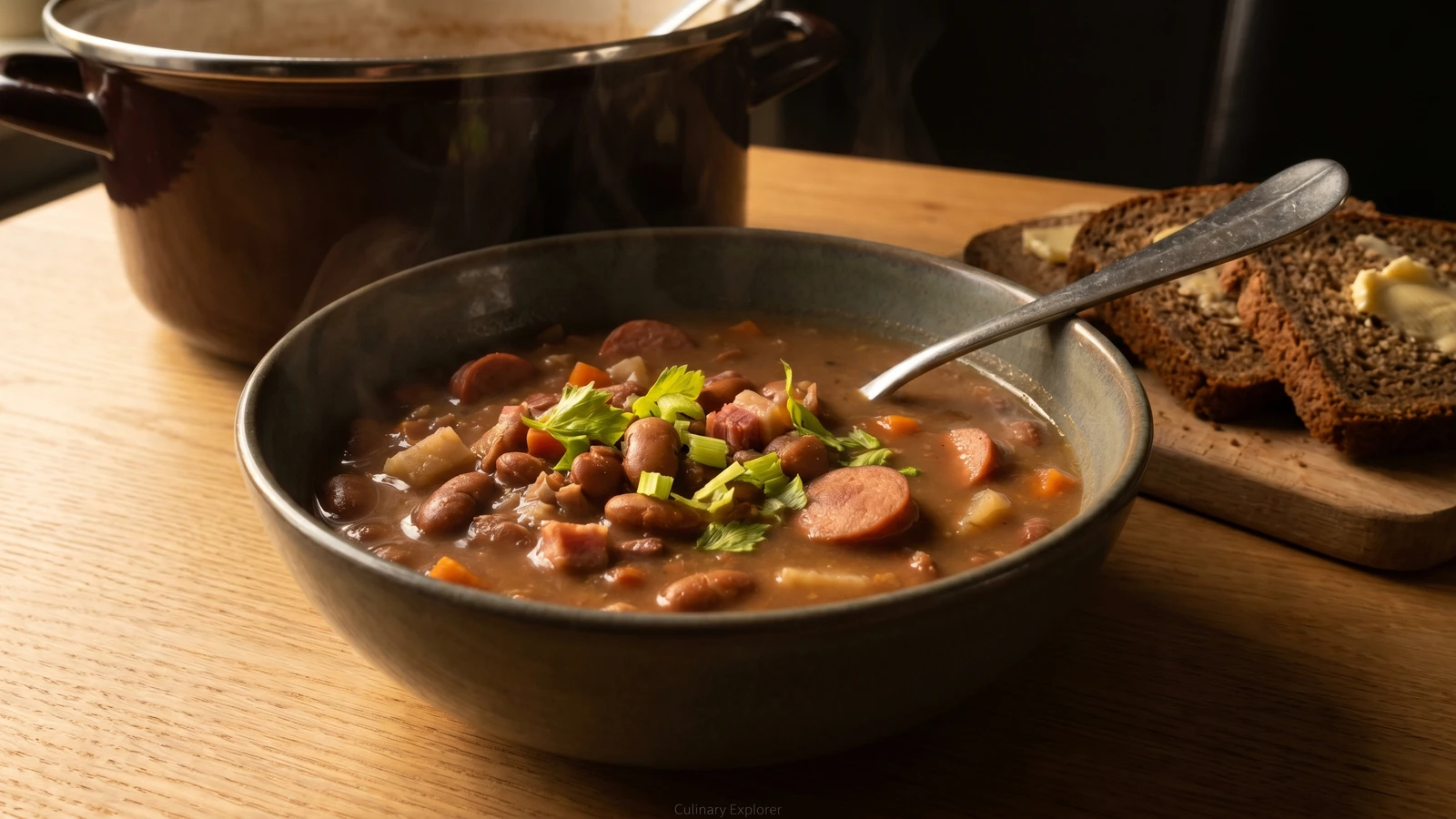
Bruine bonensoep is the quieter winter cousin of snert: brown beans, rookworst, bacon and roots in a broth that stays spoonable, frugal, and deeply Dutch.
Some dishes arrive with trumpets; bruine bonensoep comes with the scrape of a ladle on the bottom of a weekday pot. In my grandmother's second notebook, the recipe sat between leftover potatoes and apple sauce, exactly where it belonged: not grand, not poor, just the sort of food a house makes when the wind is against the windows and money has learned to sit quietly.
The name already tells you the contract. Bruine bonen are brown beans, soep is soup, and the Dutch title refuses to decorate itself. But let me tell you a secret: plain naming is not plain cooking. The brown bean itself made a long sea journey from the Americas into European fields, then settled into the Dutch winter cupboard so thoroughly that it began to look as if it had always lived there. History and cookery, they cannot be separated, even when the dish is wearing work clothes.
This is the softer cousin of snert, not a rival. Erwtensoep wants to stand a spoon upright; bruine bonensoep should move, glossy and brown, with whole beans still visible and enough mashed beans to give the broth body. The smoke from spek, bacon, and rookworst, smoked sausage, does the deep work, while carrot, leek, celeriac and potato make the pot generous without making it expensive. Exuberant cookery in a frugal country, quietly done.
So soak the beans. Boil them properly first, then let them murmur until they give. Mash a little back into the pot instead of reaching for flour, salt only after the smoked meat has spoken, and serve it with rye bread and butter. Hou het altijd simpel. A soup this honest doesn't need performance; it needs time, a heavy pot, and people hungry enough to stop talking for the first few spoonfuls.
Bruine bonensoep could not be medieval in its modern form: the brown bean is Phaseolus vulgaris, an American bean that entered European fields after the sixteenth-century Atlantic exchange, much like the potato that later joined Dutch winter kitchens. By the late nineteenth century, Dutch household manuals and huishoudscholen (domestic science schools) treated dried brown beans as economical winter staples, especially for soups bulked with root vegetables and smoked pork. The dish sits beside erwtensoep in the winter repertoire, but it is usually looser and more broth-like, its body coming from partly mashed beans rather than split peas cooked to a porridge.
Quantity
500g
rinsed and picked over
Quantity
2.5 liters, plus more for soaking
Quantity
200g
in one piece
Quantity
1
Quantity
2
Quantity
1 large
diced
Quantity
2
diced
Quantity
1
rinsed and sliced
Quantity
250g
peeled and diced
Quantity
1 medium
peeled and diced
Quantity
250g
Quantity
1 small bunch
chopped
Quantity
to taste
Quantity
to serve
Quantity
1 tablespoon
| Ingredient | Quantity |
|---|---|
| dried Dutch brown beans (bruine bonen)rinsed and picked over | 500g |
| cold water | 2.5 liters, plus more for soaking |
| smoked bacon or spekin one piece | 200g |
| bay leaf | 1 |
| whole spice cloves | 2 |
| oniondiced | 1 large |
| carrotsdiced | 2 |
| leekrinsed and sliced | 1 |
| celeriacpeeled and diced | 250g |
| floury potatopeeled and diced | 1 medium |
| rookworst (Dutch smoked sausage) | 250g |
| celery leafchopped | 1 small bunch |
| salt and freshly ground black pepper | to taste |
| rye bread and butter | to serve |
| Dutch mustard (optional) | 1 tablespoon |
Rinse the dried brown beans and pick out any small stones or tired beans. Put them in a large bowl with at least three times their volume of cold water and leave them overnight, 8 to 12 hours. In the morning, drain and rinse. This is not ceremony; dried beans wake unevenly if you rush them, and the pot will tell on you later.
Put the soaked beans in a large heavy pot with the 2.5 liters cold water, the smoked bacon, bay leaf, and whole spice cloves. Bring to a full rolling boil for 10 minutes, skimming off the grey foam that rises. Then lower the heat to a gentle simmer, lid ajar, and cook for 75 to 90 minutes, until the beans are tender but not collapsing. Dried common beans deserve that first hard boil; after that, patience keeps the skins from splitting into rags.
Stir in the onion, carrots, leek, celeriac, and potato. Simmer for another 30 to 40 minutes, until the vegetables are soft and some of the beans break when pressed against the side of the pot. If the liquid drops below the beans, add a little hot water. The potato is not for show; it disappears on purpose and gives the broth a quiet thickness.
Lift out the bacon, bay leaf, and spice cloves. Dice the bacon and set it aside. Scoop two ladles of beans, vegetables, and broth into a bowl and mash them with a potato masher, or blend briefly in the pot while leaving plenty of whole beans behind. Return the mashed beans to the soup. You're not making snert; bruine bonensoep should be brown, generous, and still able to run off the spoon.
Lay the whole rookworst into the soup with the diced bacon and simmer gently for 15 minutes. Do not boil the sausage hard; it tightens and gives up its smoke too quickly. Lift it out, slice it into coins, and return the coins to the pot. Season now with salt and black pepper, because the smoked pork has already done some of the seasoning.
Stir in the chopped celery leaf and let the soup rest off the heat for 10 minutes. Ladle it into deep bowls with the rookworst visible on top, and serve with rye bread, butter, and a little Dutch mustard on the side if your house expects it. The soup is even better after it sits; beans are patient, and smoke needs time to settle.
1 serving (about 610g)
Culinary guides, cultural storytelling, and the editorial depth that makes cooking meaningful.
Discover Culinary ExplorerChef Joost
White asparagus is Limburg's spring clock, and this soup uses every pale stem and peeling to make wit goud, white gold, taste like the season it refuses to outlive.
Chef Joost
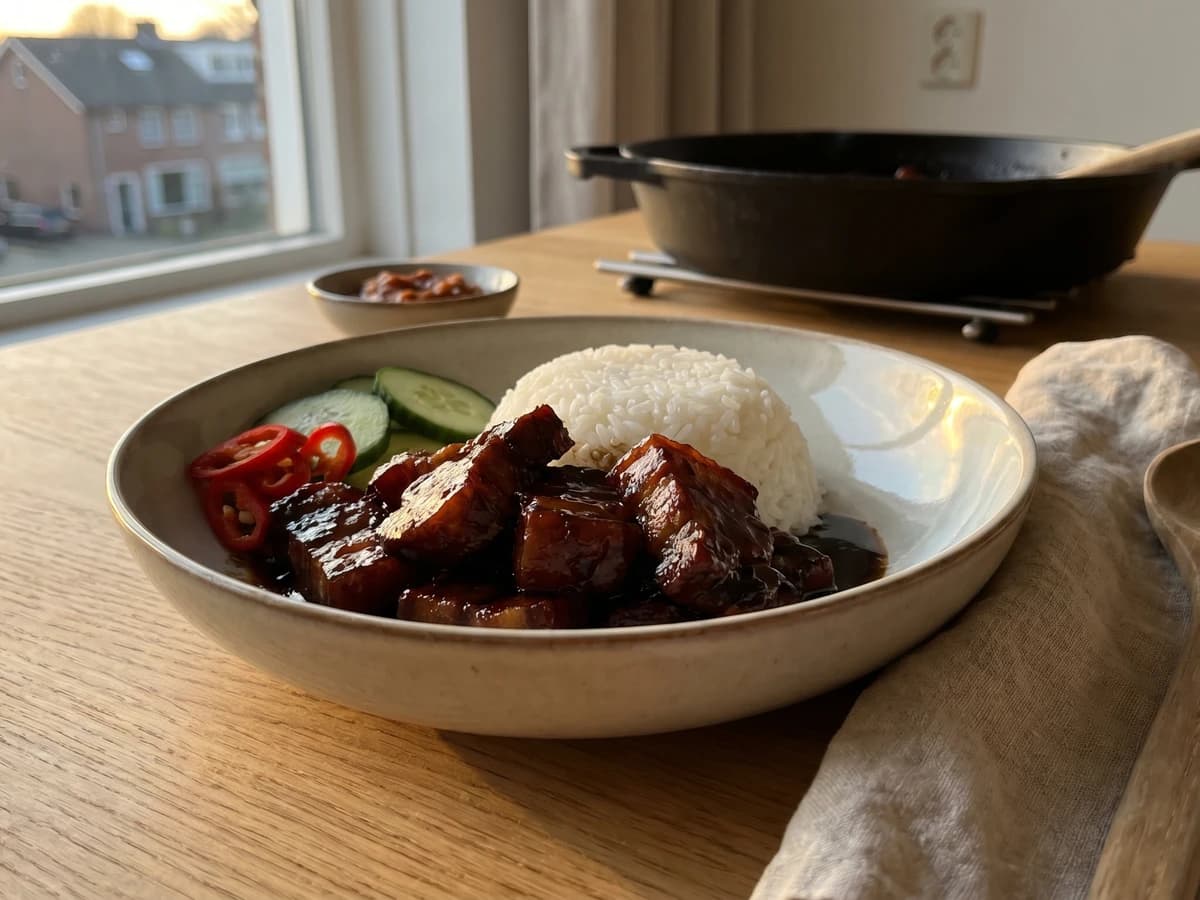
Pork, sweet soy, ginger, and patience: the Indo-Dutch braise that carried the colonial table into Dutch kitchens and made rice feel like Sunday dinner.
Chef Joost
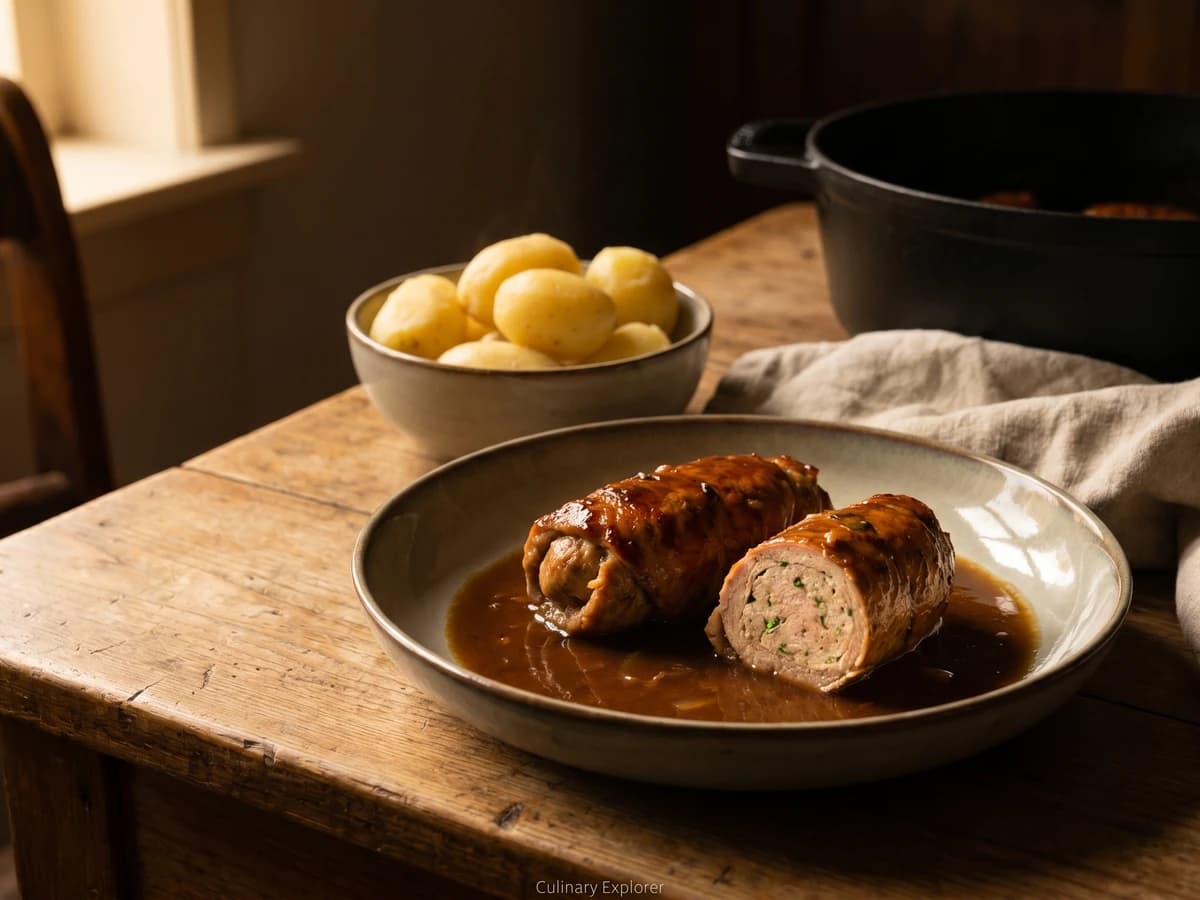
Blinde vinken are not birds but a butcher's little joke: seasoned mince tucked into thin veal or beef, browned dark in butter, then braised until the jus tastes of onion, mace, and patience.
Chef Joost
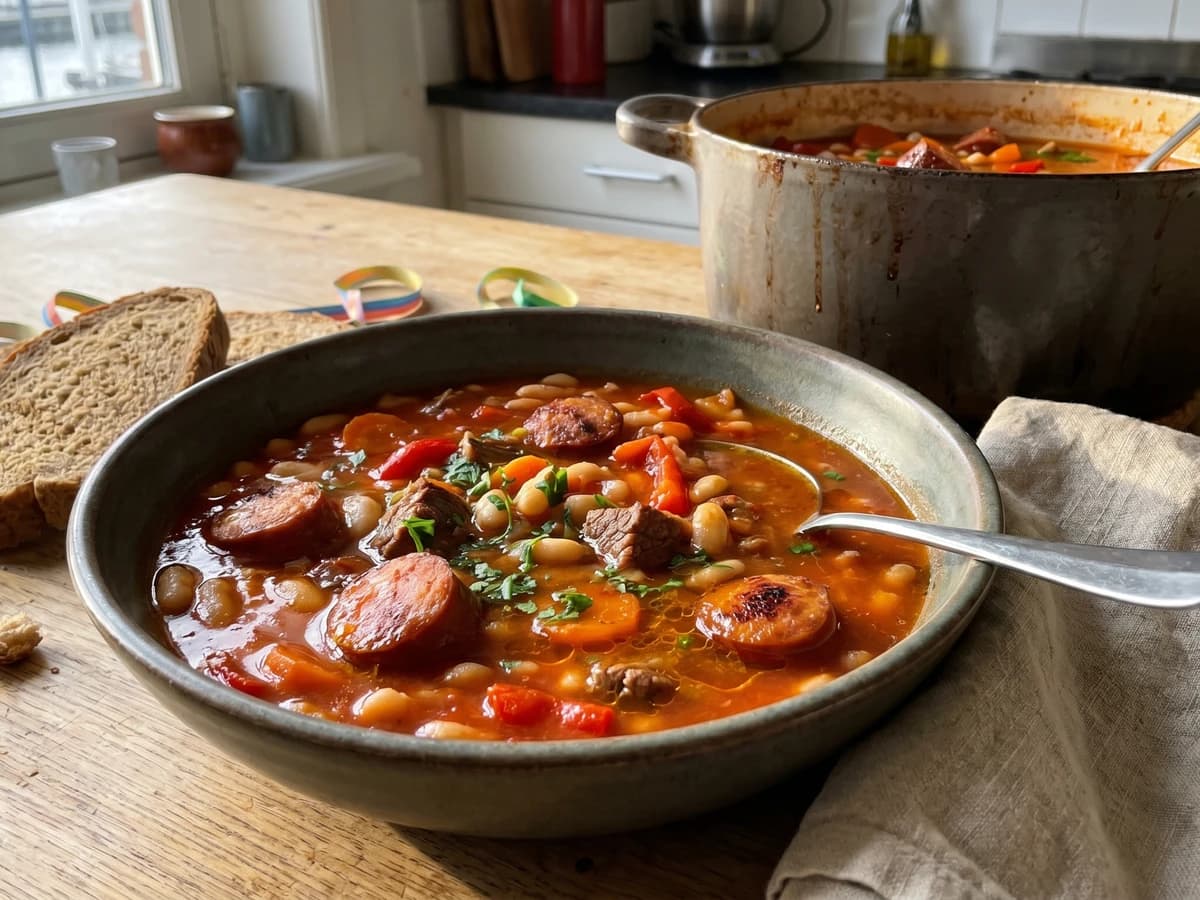
A filled tomato soup from the Catholic south, built with white beans, minced beef, and rookworst for the long, loud days of Vastelaovend.