
Chef Joost
Aspergesoep (Dutch White Asparagus Soup)
White asparagus is Limburg's spring clock, and this soup uses every pale stem and peeling to make wit goud, white gold, taste like the season it refuses to outlive.
A cooking platform built around craft, culture, and the stories behind what we eat.
Created by
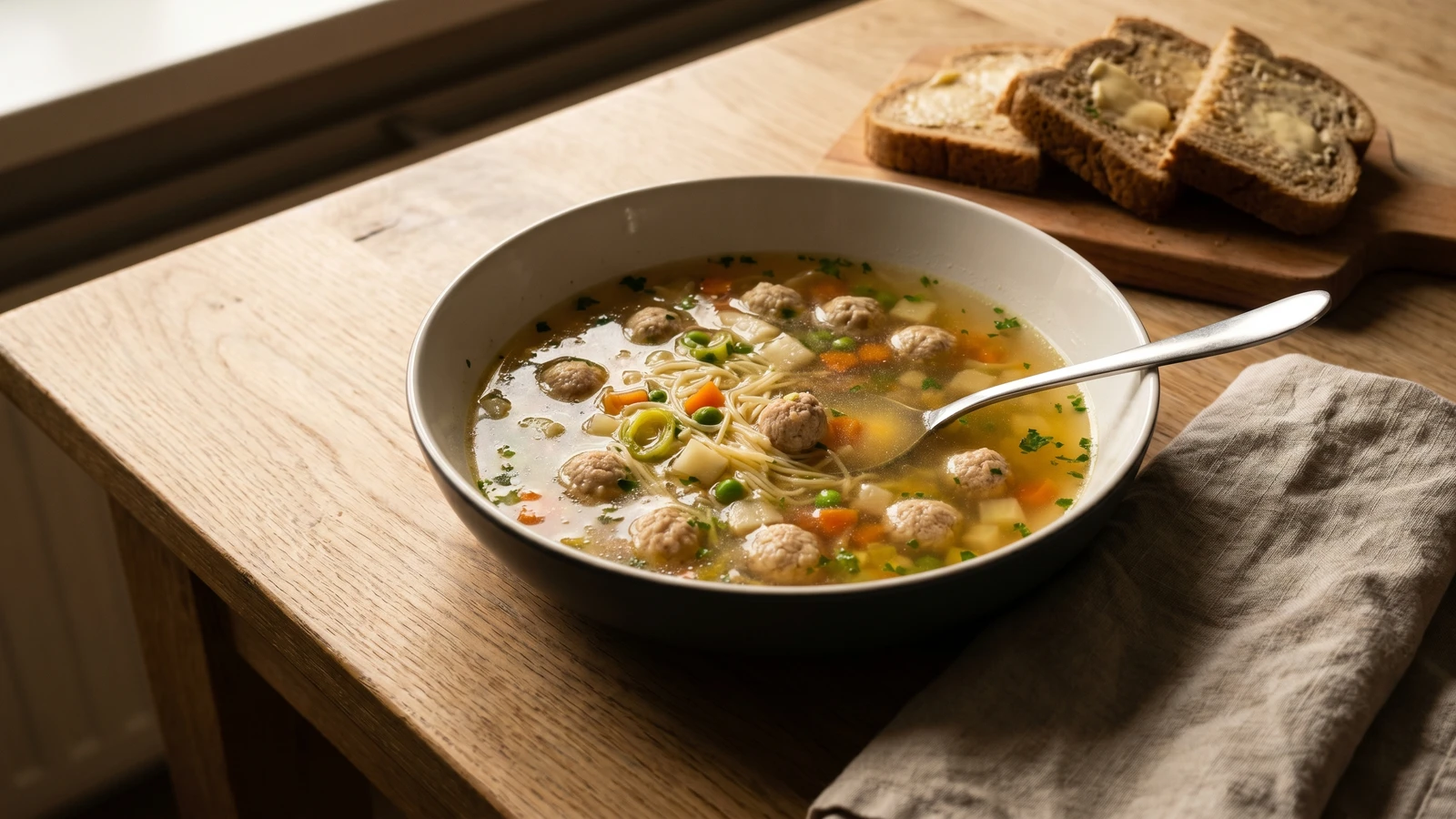
The Dutch home soup that never asks for attention: clear broth, spoon-small meatballs, vermicelli, and cut vegetables, the bowl that tells you someone expected you at lunch.
In my grandmother's second notebook, groentesoep met balletjes has no title worthy of a book. It is just soup, written between a Sunday roast and a note about parsley in the garden, which tells you everything. Some recipes announce themselves; this one waits until the table is laid, the bread is cut, and a child has already stolen one meatball from the pot.
The name already tells you the manners of the dish. Groentesoep met balletjes means vegetable soup with little balls, and the little is doing quiet Dutch work here. Balletjes are not grand meatballs. They are spoon-small, rolled from gehakt, minced meat, seasoned with nutmeg and white pepper, and poached gently so they season the broth without making it cloudy.
But let me tell you a secret: clear is not empty. A clear broth shows whether you were patient, whether you skimmed, whether the vegetables were cut finely enough to give themselves to the pot without turning it muddy. Add the soepgroenten, soup vegetables, in their proper order, the hard pieces first and the tender green things later. Hou het altijd simpel, always keep it simple, but don't confuse simple with careless.
I make this on weeknights with good stock, and on Sundays with a beef bone and a slower clock. Either way, it is family-table soup: not provincial pride in the loud sense, but the everyday common language of Dutch kitchens, with every household moving carrot, leek, celeriac, and vermicelli by a finger's width. A dish without its story is half a meal. This one whispers its story, which is very Dutch of it.
The habit is visible in Dutch household cookbooks from Aaltje, de volmaakte en zuinige keukenmeid, first published in 1803, onward: clear broth was treated as household capital, stretched with small additions rather than disguised. The tiny gehaktballetjes, minced-meat balls, show the same thrift, because a modest amount of seasoned meat turns a first-course soup into a family meal without muddying the broth. Its modern form, with vermicelli and pre-cut soepgroenten, belongs especially to twentieth-century Dutch home kitchens and Sunday lunch.
Quantity
2 liters
preferably low-salt
Quantity
250g
Quantity
1 small
beaten
Quantity
3 tablespoons or 1 beschuit
crushed
Quantity
1/2 teaspoon
Quantity
1/4 teaspoon
Quantity
1/4 teaspoon
Quantity
2 medium
finely diced
Quantity
150g
peeled and finely diced
Quantity
1
finely diced
Quantity
1 small
white and pale green parts finely sliced
Quantity
100g
cut very small
Quantity
75g
fresh or frozen
Quantity
50g
Quantity
2 tablespoons
finely chopped
Quantity
to taste
| Ingredient | Quantity |
|---|---|
| clear beef stockpreferably low-salt | 2 liters |
| lean beef mince or half-om-half minced pork and beef | 250g |
| eggbeaten | 1 small |
| fine breadcrumbs or Dutch beschuitcrushed | 3 tablespoons or 1 beschuit |
| fine salt | 1/2 teaspoon |
| freshly grated nutmeg | 1/4 teaspoon |
| ground white pepper | 1/4 teaspoon |
| carrotsfinely diced | 2 medium |
| celeriacpeeled and finely diced | 150g |
| celery stalkfinely diced | 1 |
| leekwhite and pale green parts finely sliced | 1 small |
| cauliflower floretscut very small | 100g |
| green peasfresh or frozen | 75g |
| thin vermicelli | 50g |
| flat-leaf parsley or celery leaffinely chopped | 2 tablespoons |
| salt | to taste |
Mix the mince, beaten egg, breadcrumbs or crushed beschuit, salt, nutmeg, and white pepper in a bowl. Work it with your hand just until the mixture turns a little sticky; that stickiness keeps the balletjes from falling apart. With damp hands, roll tiny balls about 1.5 centimetres across, small enough to sit neatly on a soup spoon.
Bring the beef stock to a gentle simmer in a large soup pot. Taste it now, before the meat goes in. If the stock is already salty, leave the final seasoning until the end, because the broth will concentrate a little as it cooks.
Lower the balletjes into the simmering stock and let them poach for 8 to 10 minutes. Keep the pot calm. A hard boil knocks the meatballs about and clouds the broth, and clear broth is the whole quiet pride of this soup. Skim off any grey foam that rises.
Add the diced carrot, celeriac, and celery. Simmer for about 10 minutes, until the vegetables are beginning to soften but still hold their shape. This is why the dice matters: cut them small and they cook kindly; leave them big and the soup becomes a waiting room.
Add the leek, cauliflower, peas, and vermicelli. Simmer for 5 to 7 minutes, stirring once or twice so the vermicelli does not clump at the bottom. The vegetables should stay bright, the pasta should soften, and the balletjes should be cooked through.
Turn off the heat and stir in the parsley or celery leaf. Let the soup stand for five minutes, then taste and adjust the salt. Serve in deep bowls with brown bread and butter. I prefer to keep it a bit more relaxed, in the Dutch way: the pot on the table, the ladle within reach, and no one counting the balletjes.
1 serving (about 440g)
Culinary guides, cultural storytelling, and the editorial depth that makes cooking meaningful.
Discover Culinary ExplorerChef Joost
White asparagus is Limburg's spring clock, and this soup uses every pale stem and peeling to make wit goud, white gold, taste like the season it refuses to outlive.
Chef Joost
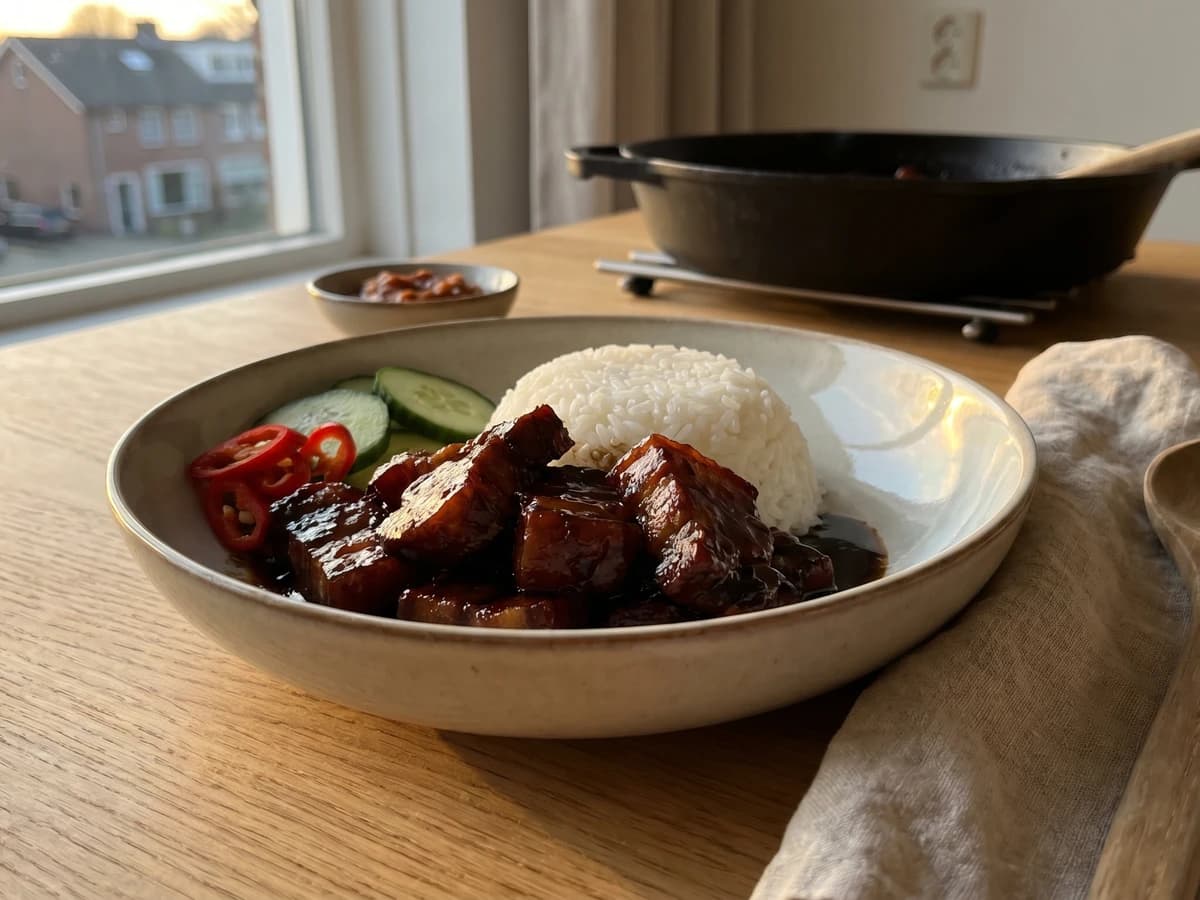
Pork, sweet soy, ginger, and patience: the Indo-Dutch braise that carried the colonial table into Dutch kitchens and made rice feel like Sunday dinner.
Chef Joost
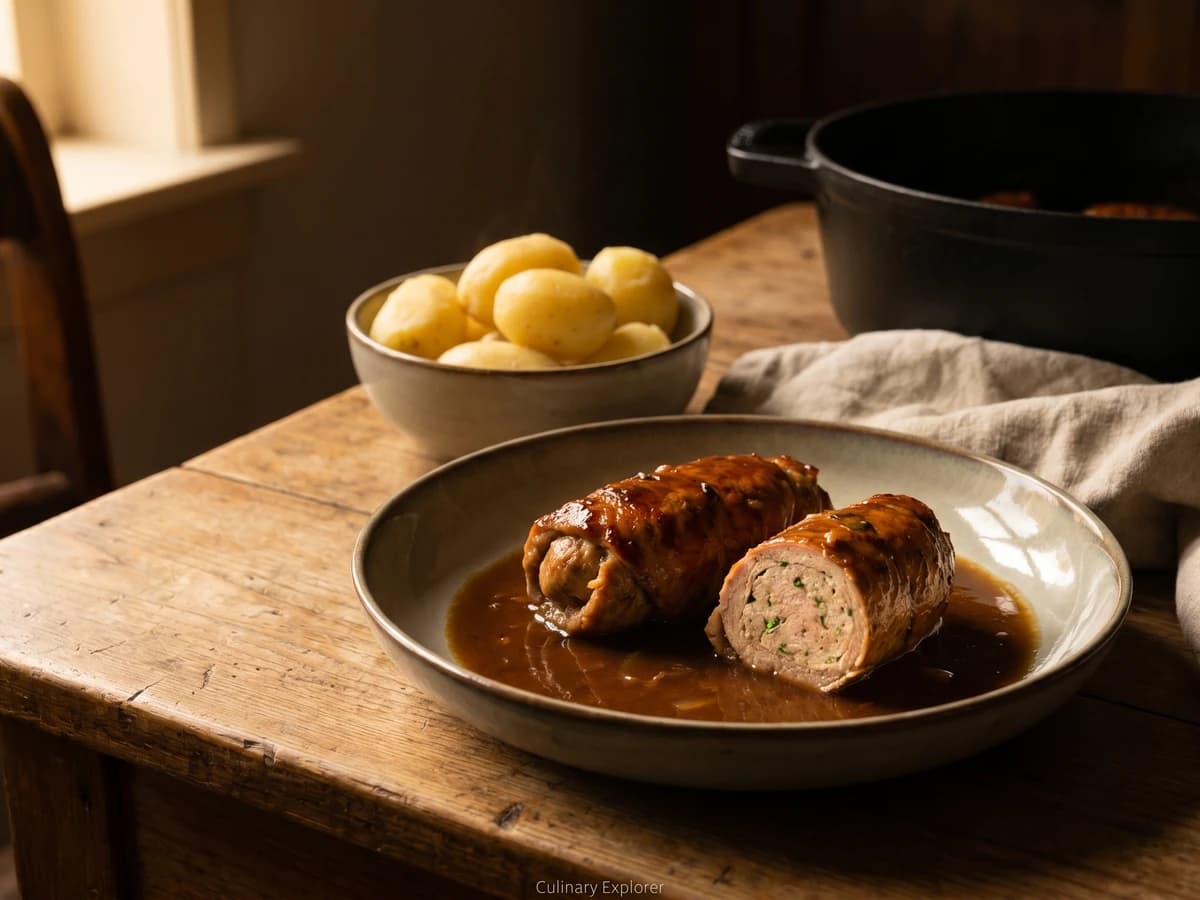
Blinde vinken are not birds but a butcher's little joke: seasoned mince tucked into thin veal or beef, browned dark in butter, then braised until the jus tastes of onion, mace, and patience.

Chef Joost
Bruine bonensoep is the quieter winter cousin of snert: brown beans, rookworst, bacon and roots in a broth that stays spoonable, frugal, and deeply Dutch.