
Chef Joost
Aspergesoep (Dutch White Asparagus Soup)
White asparagus is Limburg's spring clock, and this soup uses every pale stem and peeling to make wit goud, white gold, taste like the season it refuses to outlive.
A cooking platform built around craft, culture, and the stories behind what we eat.
Created by
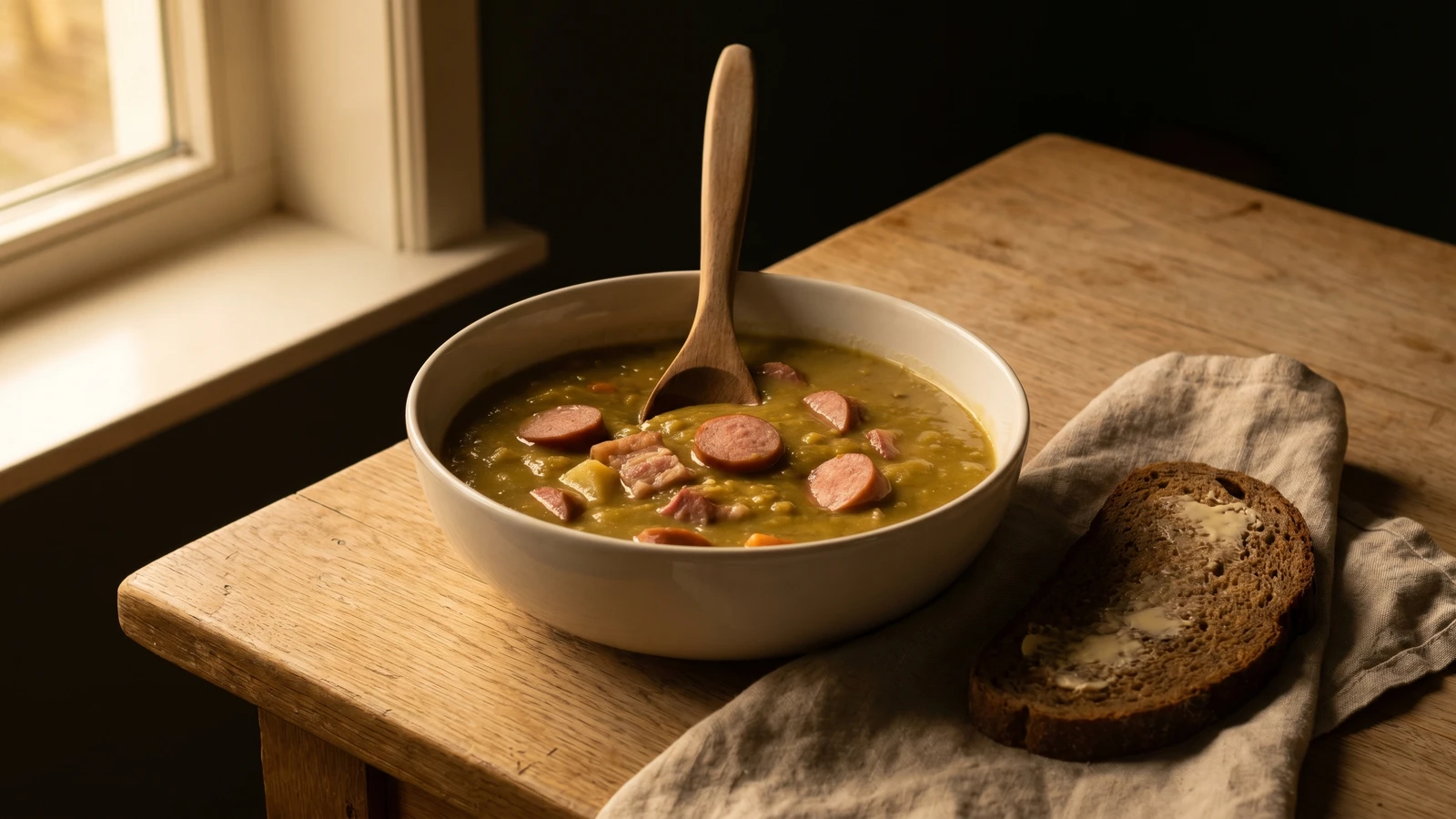
Snert is Dutch winter made edible: split peas, pork, leek, celeriac, and rookworst simmered until the spoon stands upright, because thickness is not folklore here, it is the test.
My grandfather did not speak lightly about winter food. He had lived through the Hongerwinter, the famine winter of 1944 to 1945, when the western Netherlands learned how thin a meal could become and still be called dinner. So when cold came in from the North Sea, he made erwtensoep in a pot large enough to suggest either hospitality or panic. Usually both.
But let me tell you a secret: snert is not simply pea soup. Pea soup can be polite, pourable, served in bowls that behave themselves. Snert should nearly refuse the ladle. The Dutch name erwtensoep means exactly what it says, pea soup, but snert is the kitchen word, the winter word, the word that belongs to skaters, farm tables, football canteens, and a pot left on the back burner because everyone will want a second bowl later.
The method is the lesson. Split peas do not need cleverness; they need time enough to collapse. The vegetables are not decoration but architecture: leek sweetness, celeriac earthiness, potato to help the body set, celery leaf for that sharp green Dutch note at the end. Salt waits until the smoked pork and rookworst have spoken, because they have plenty to say.
Hou het altijd simpel, always keep it simple. Rinse the peas, simmer the pork, add the winter vegetables, stir the bottom, and trust the spoon test. When a wooden spoon stands upright in the pot, the soup has become what it came to be. Make it a day ahead if you can. Snert understands tomorrow better than today.
Erwtensoep belongs to the older North Sea world of thick pea pottages, where dried peas provided cheap, storable protein through long winters and sea voyages; Dutch cookbooks and household manuals of the seventeenth century already treat pea soup as ordinary fare. The name snert is documented in Dutch usage by the nineteenth century for the thick, rustic form, distinct from a thinner erwtensoep served more like soup. Its modern winter identity, with rookworst, pork, leek, celeriac, and the famous standing-spoon test, is especially tied to home kitchens, skating rinks, and outdoor winter gatherings.
Quantity
500g
rinsed well
Quantity
2 liters
Quantity
1 hock or 300g ribs
Quantity
150g
in one piece or thick slices
Quantity
2
Quantity
1 large
chopped
Quantity
2
washed well and sliced
Quantity
250g
peeled and diced
Quantity
2 medium
peeled and diced
Quantity
2
diced
Quantity
1 small bunch
chopped, plus extra to finish
Quantity
1 sausage, about 250g
Quantity
to taste
Quantity
for serving
| Ingredient | Quantity |
|---|---|
| green split peasrinsed well | 500g |
| cold water | 2 liters |
| smoked pork hock or pork ribs | 1 hock or 300g ribs |
| smoked baconin one piece or thick slices | 150g |
| bay leaves | 2 |
| onionchopped | 1 large |
| leekswashed well and sliced | 2 |
| celeriacpeeled and diced | 250g |
| potatoespeeled and diced | 2 medium |
| carrotsdiced | 2 |
| celery leafchopped, plus extra to finish | 1 small bunch |
| smoked rookworst | 1 sausage, about 250g |
| salt and freshly ground black pepper | to taste |
| dark rye bread and butter (optional) | for serving |
Put the rinsed split peas, cold water, smoked pork hock or ribs, bacon, and bay leaves into a large heavy pot. Bring to a boil, then skim off the grey foam that rises in the first ten minutes. Lower the heat until the pot murmurs gently. This first hour is where the pork gives the water its backbone.
Let the peas and pork simmer for about 1 hour, stirring now and then along the bottom. The peas will begin as neat little halves and end by losing their edges. That collapse is not failure; it is the whole point.
Add the onion, leeks, celeriac, potatoes, carrots, and most of the celery leaf. Simmer uncovered for another 1 hour to 1 hour 15 minutes, stirring more often as the soup thickens. The potato should disappear into the soup, the leek should soften completely, and the celeriac should give a quiet earthy sweetness.
Lift out the pork hock or ribs and the bacon. Discard the bay leaves. Pull the meat from the bone, chop the bacon into small pieces, and return the meat to the pot. If the soup is already very thick, loosen it with a splash of water; it will thicken again before you can turn your back.
Let the soup simmer uncovered for 20 to 30 minutes more, stirring the bottom carefully with a wooden spoon. The peas have surrendered by now, and they will stick the moment you stop paying attention. The soup is ready when a spoon stands upright in the pot for a few seconds without help. If it leans like a tired uncle, give it more time.
Lay the whole rookworst into the soup for the last 10 to 15 minutes, just to warm through. Lift it out, slice it into thick coins, and return the slices to the pot or lay them on top of each bowl. Taste now, then season with salt and black pepper. Finish with the remaining celery leaf and serve with dark rye bread and butter.
1 serving (about 600g)
Culinary guides, cultural storytelling, and the editorial depth that makes cooking meaningful.
Discover Culinary ExplorerChef Joost
White asparagus is Limburg's spring clock, and this soup uses every pale stem and peeling to make wit goud, white gold, taste like the season it refuses to outlive.
Chef Joost
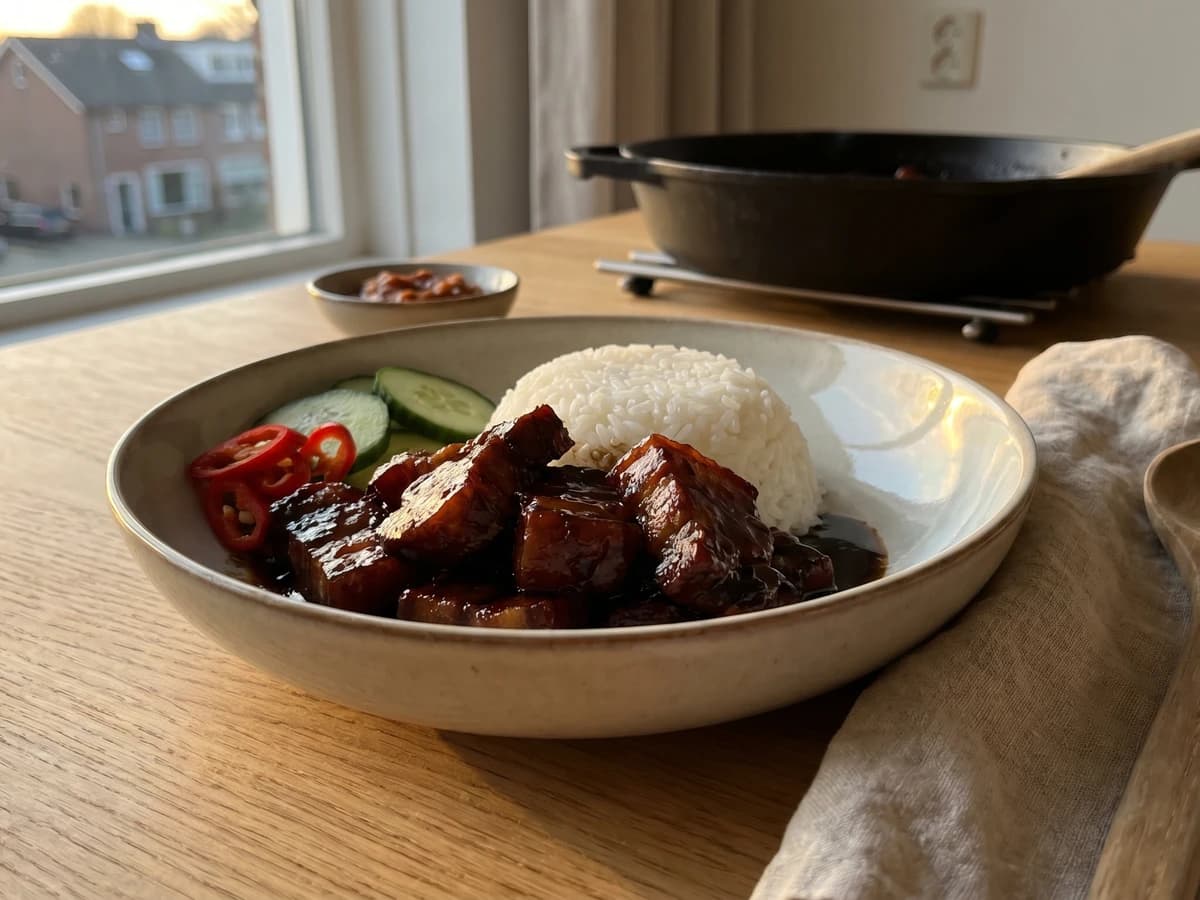
Pork, sweet soy, ginger, and patience: the Indo-Dutch braise that carried the colonial table into Dutch kitchens and made rice feel like Sunday dinner.
Chef Joost
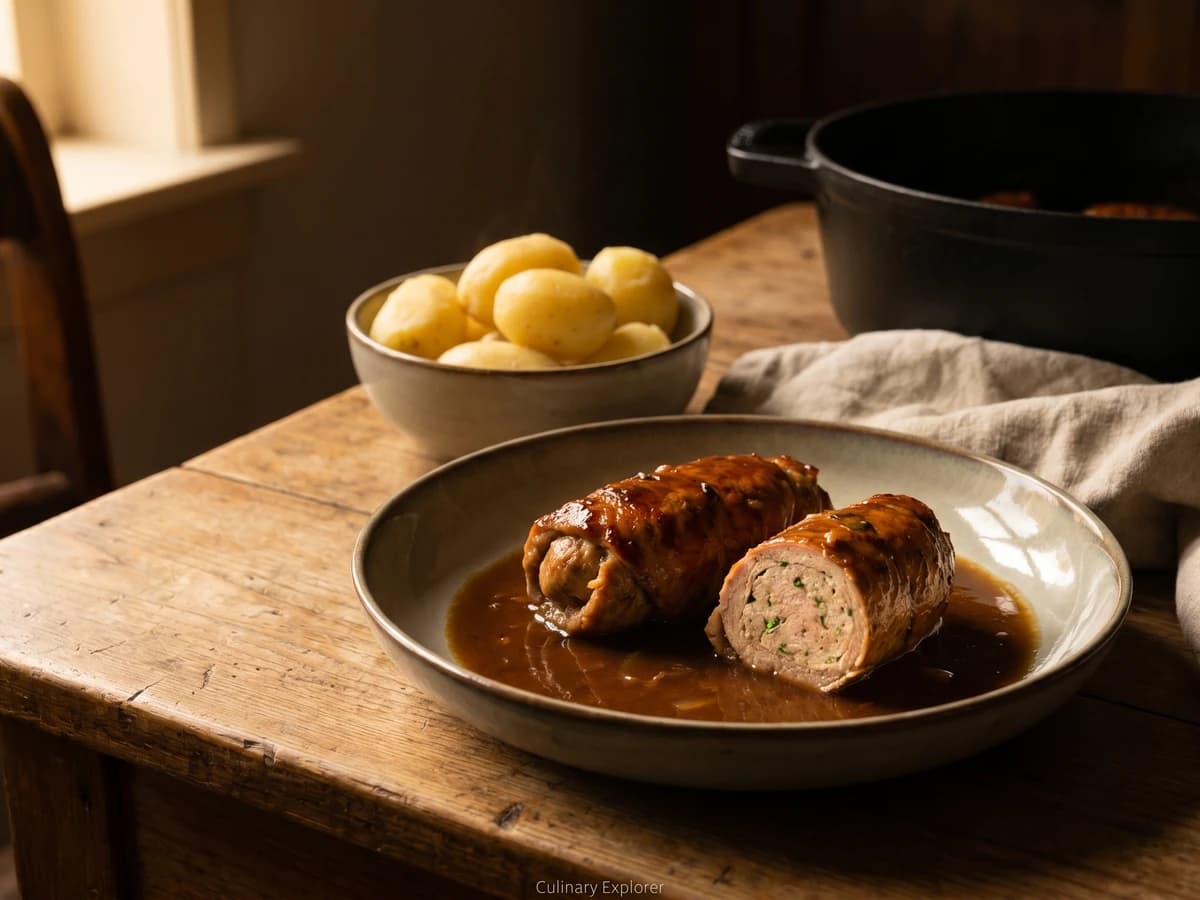
Blinde vinken are not birds but a butcher's little joke: seasoned mince tucked into thin veal or beef, browned dark in butter, then braised until the jus tastes of onion, mace, and patience.

Chef Joost
Bruine bonensoep is the quieter winter cousin of snert: brown beans, rookworst, bacon and roots in a broth that stays spoonable, frugal, and deeply Dutch.