
Chef Joost
Aspergesoep (Dutch White Asparagus Soup)
White asparagus is Limburg's spring clock, and this soup uses every pale stem and peeling to make wit goud, white gold, taste like the season it refuses to outlive.
A cooking platform built around craft, culture, and the stories behind what we eat.
Created by
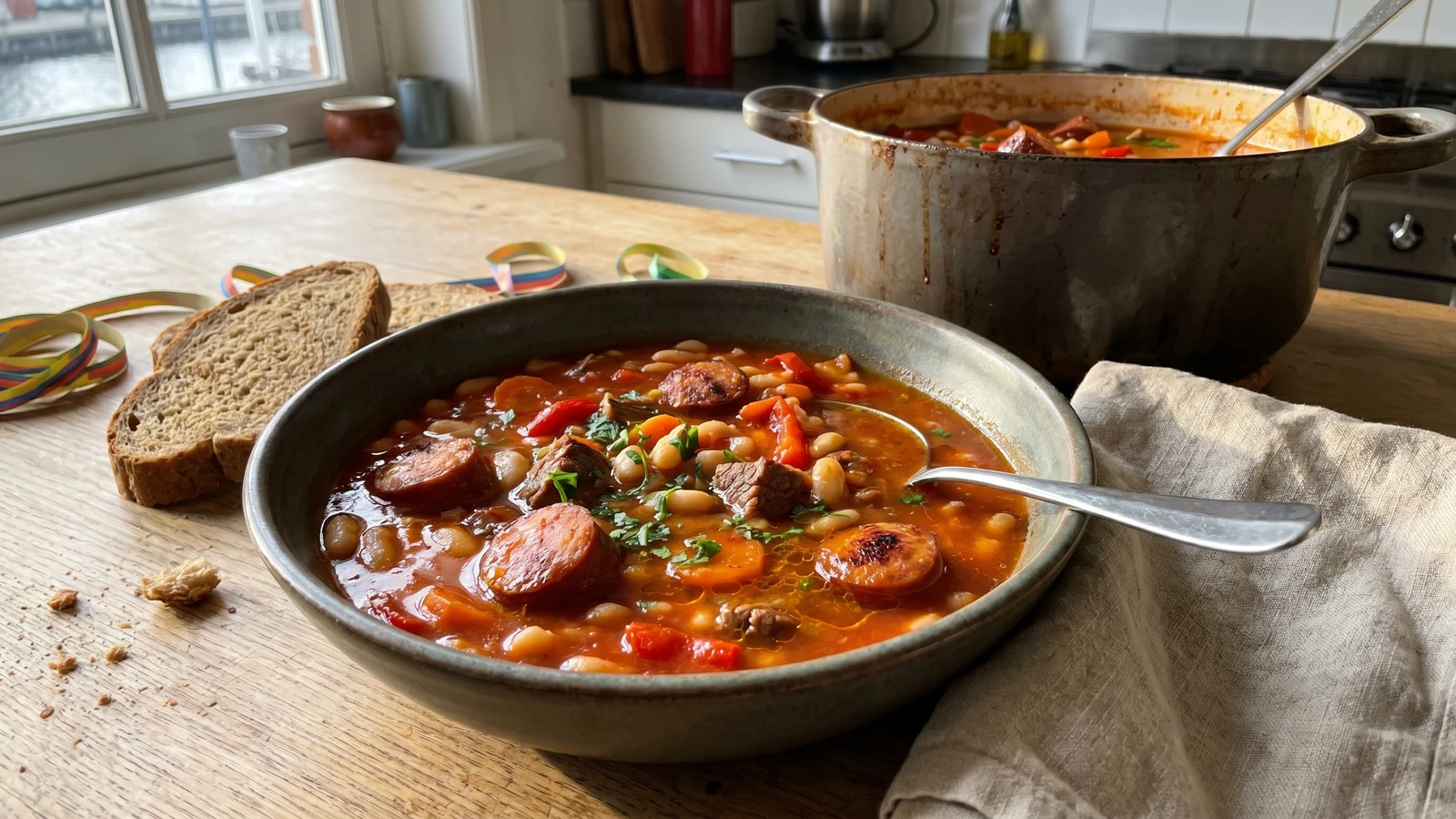
A filled tomato soup from the Catholic south, built with white beans, minced beef, and rookworst for the long, loud days of Vastelaovend.
The name already tells you when to eat it, not where to polish the silver. Carnavalssoep is the soup of Vastelaovend, the Limburg word for the last evenings before Lent, when a town becomes music, costume, brass, beer, and a great deal of foolishness carried out with impressive discipline. Every province has its kitchen. This one belongs to the Catholic south, where the soup must do the work of a full meal before the street claims you.
But let me tell you a secret: this isn't an old grand dish pretending to be humble. It is a practical pot from association kitchens, family tables, clubhouses, and borrowed soup kettles. Tomato gives it brightness, white beans give it body, minced beef makes it generous, and rookworst brings the smoky Dutch backbone. A stevige bodem, a sturdy base, is not a metaphor here. It is insurance.
Hou het altijd simpel, always keep it simple. Brown the meat properly, let the tomato paste darken a little, and add the rookworst late so it stays juicy instead of giving everything away to the pot. The beans are already cooked, so they need warming and settling, not punishment. Make it ahead if you can. Carnival has enough noise; the soup may quietly improve overnight.
Carnival in the Netherlands is strongest in the historically Catholic provinces of Limburg and North Brabant, where the days before Lent are still marked by local dialect names, processions, music societies, and temporary carnival town names. Vastelaovend, used widely in Limburg, means the eve or evening before the fast, and points more directly to the church calendar than the imported word carnaval. Carnavalssoep is a modern household and vereniging, or association, dish rather than a medieval relic: a large, filling tomato-based soup designed for potlucks, parades, and a long day of celebration.
Quantity
2 tablespoons
Quantity
500g
Quantity
2
finely chopped
Quantity
2
diced
Quantity
2
diced
Quantity
2
diced
Quantity
3
minced
Quantity
2 tablespoons
Quantity
1 teaspoon
Quantity
1/2 teaspoon
Quantity
1
Quantity
1.5 liters
Quantity
800g
Quantity
2 tablespoons
Quantity
2 cans, about 800g total
drained and rinsed
Quantity
250g
sliced into coins
Quantity
to taste
Quantity
2 tablespoons
chopped
| Ingredient | Quantity |
|---|---|
| neutral oil or butter | 2 tablespoons |
| ground beef | 500g |
| onionsfinely chopped | 2 |
| carrotsdiced | 2 |
| celery stalksdiced | 2 |
| red bell peppersdiced | 2 |
| garlic clovesminced | 3 |
| tomato paste | 2 tablespoons |
| sweet paprika | 1 teaspoon |
| dried thyme | 1/2 teaspoon |
| bay leaf | 1 |
| beef stock | 1.5 liters |
| canned chopped tomatoes | 800g |
| ketchup or Dutch curry ketchup (optional) | 2 tablespoons |
| white beansdrained and rinsed | 2 cans, about 800g total |
| rookworstsliced into coins | 250g |
| salt and black pepper | to taste |
| parsley (optional)chopped | 2 tablespoons |
Heat the oil or butter in a large heavy pot over medium-high heat. Add the ground beef with a good pinch of salt and cook until it loses its rawness and begins to brown in little crisp-edged pieces. Don't rush this. Pale mince gives you filling; browned mince gives you soup with a floor under it.
Add the onions, carrots, celery, and red peppers. Cook for eight to ten minutes, stirring now and then, until the onion is glossy and the peppers have relaxed. Add the garlic for the last minute, just until it smells warm rather than sharp.
Stir in the tomato paste, paprika, thyme, and bay leaf. Let the tomato paste cook against the bottom of the pot for two minutes until it darkens from bright red to brick red. This is the small honest step that makes the soup taste cooked rather than assembled.
Pour in the beef stock and chopped tomatoes, scraping the bottom of the pot clean with a wooden spoon. Stir in the ketchup if using; it is not noble, but carnival is not a monastery. Bring to a boil, then lower to a steady simmer for twenty minutes, lid partly ajar.
Add the drained white beans and the sliced rookworst. Simmer gently for ten to fifteen minutes, just long enough for the beans to take the tomato and the sausage to warm through. Hard boiling now makes the beans split and the rookworst tired, and nobody needs tired sausage before a parade.
Taste only at the end, because the stock and rookworst have been salting the pot while you weren't looking. Add black pepper and salt if needed, remove the bay leaf, and scatter over parsley if you like. Serve in deep bowls with bread, or from the pot in mugs if the hallway is already full of coats and costumes.
1 serving (about 460g)
Culinary guides, cultural storytelling, and the editorial depth that makes cooking meaningful.
Discover Culinary ExplorerChef Joost
White asparagus is Limburg's spring clock, and this soup uses every pale stem and peeling to make wit goud, white gold, taste like the season it refuses to outlive.
Chef Joost
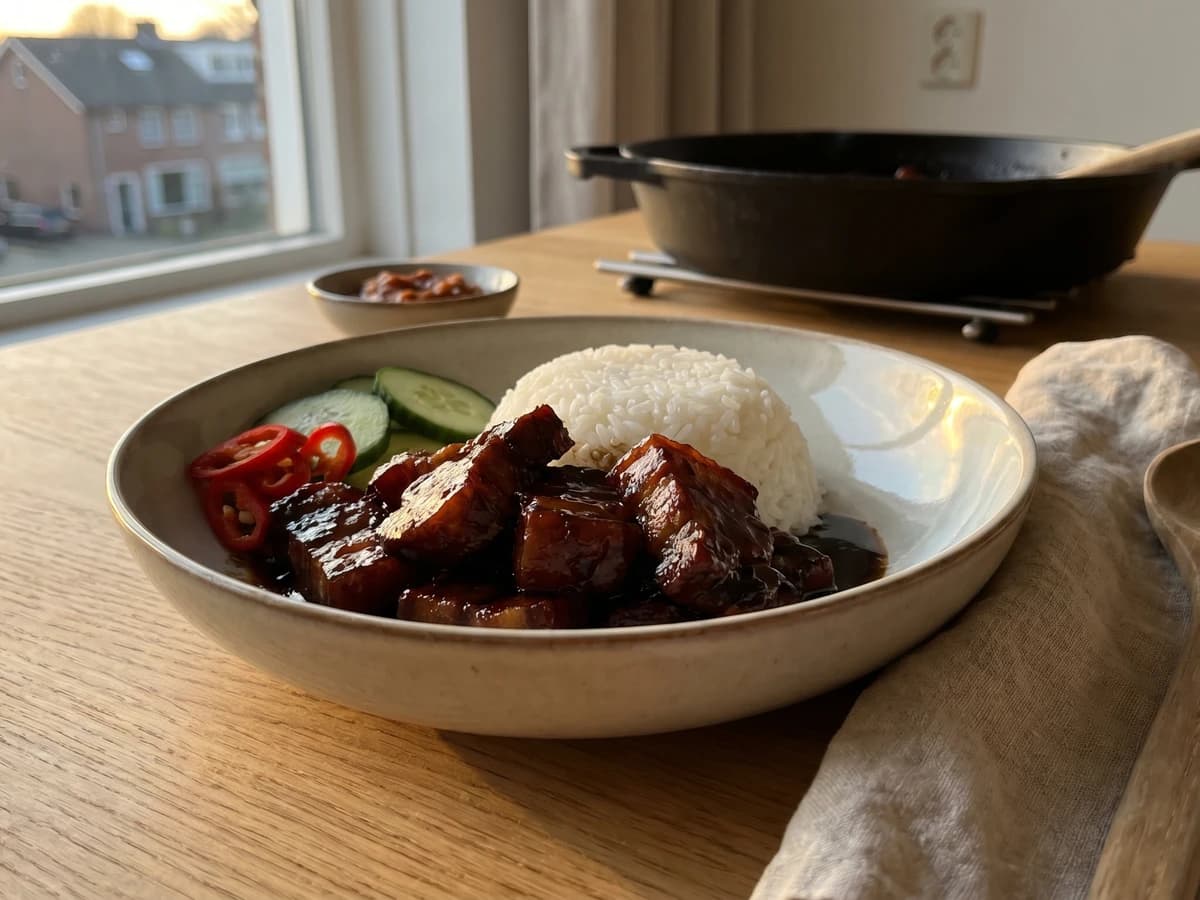
Pork, sweet soy, ginger, and patience: the Indo-Dutch braise that carried the colonial table into Dutch kitchens and made rice feel like Sunday dinner.
Chef Joost
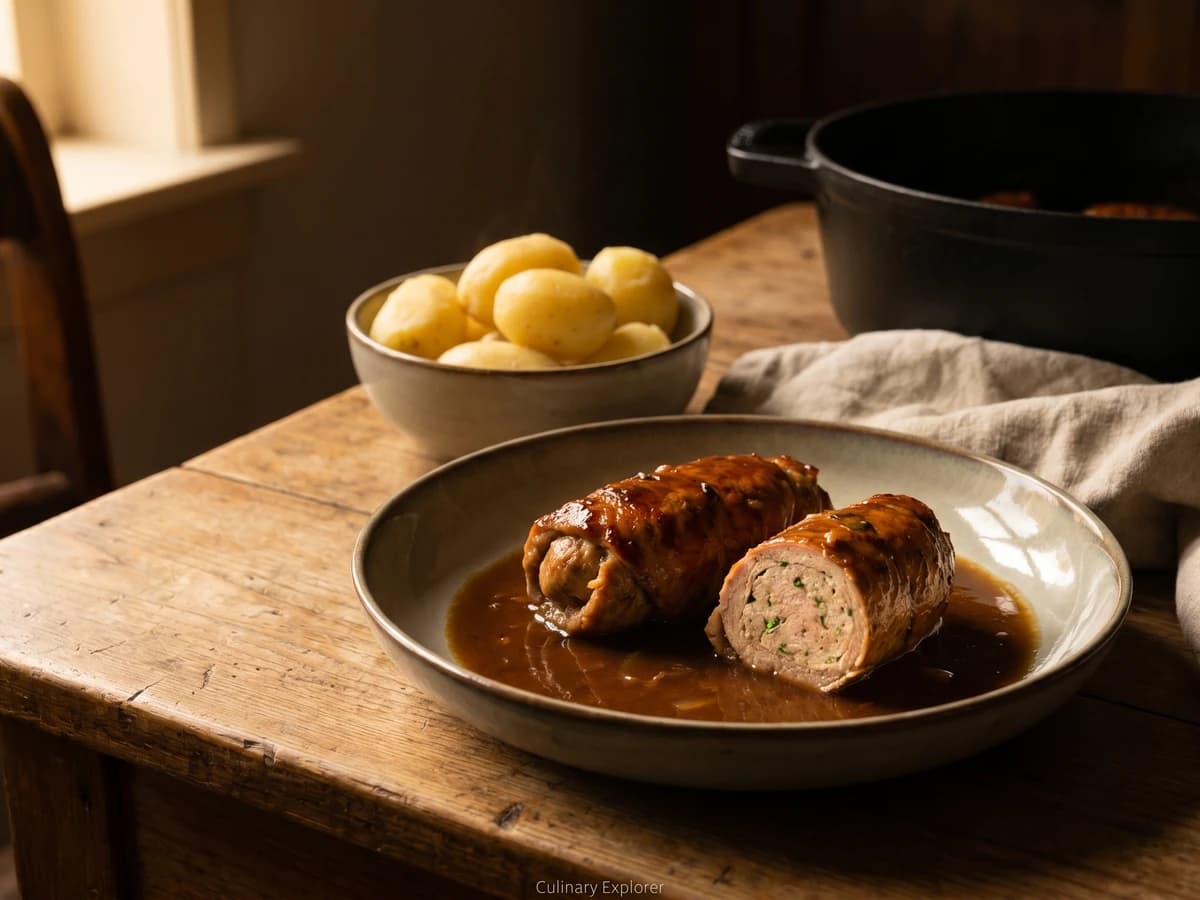
Blinde vinken are not birds but a butcher's little joke: seasoned mince tucked into thin veal or beef, browned dark in butter, then braised until the jus tastes of onion, mace, and patience.

Chef Joost
Bruine bonensoep is the quieter winter cousin of snert: brown beans, rookworst, bacon and roots in a broth that stays spoonable, frugal, and deeply Dutch.