
Chef Jeong-sun
Agwi-jjigae (Monkfish Stew)
A Masan coast monkfish stew with firm white meat, gelatin at the bones, soybean sprouts for crunch, and a red broth seasoned to carry the fish, not bury it.
A cooking platform built around craft, culture, and the stories behind what we eat.
Created by
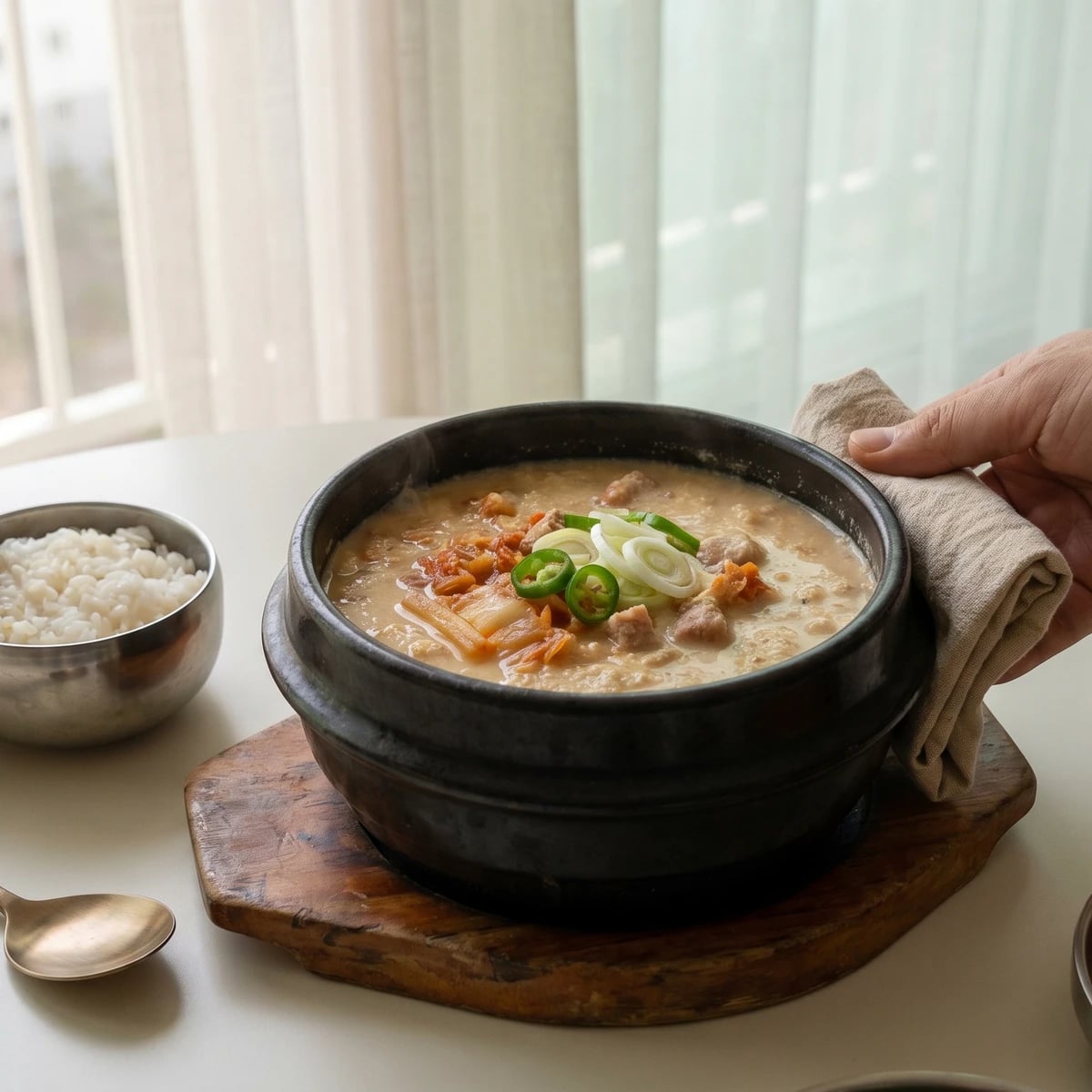
The frugal soybean-pulp stew that turns what tofu makers leave behind into a creamy, nutty pot with aged kimchi, a little pork, and enough care to feed the table well.
Kongbiji-jjigae begins with a correction: the pulp left from making tofu is not refuse. It is dinner. In the markets of my childhood, soybean pulp sat in plain plastic bags near the tofu seller, cheap enough that nobody bragged about buying it and good enough that every careful kitchen knew what to do with it.
Kongbiji-jjigae belongs to the long Korean habit of using every useful part of the soybean, beside doenjang, ganjang, tofu, and cheonggukjang. Ground soybean pulp, called biji or kongbiji, became common wherever tofu was made, and home cooks often simmered it with sour kimchi because aged kimchi supplied salt, acidity, and depth to an otherwise plain ingredient. It is an everyday stew of thrift, not a court dish, and that is exactly why it tells the truth about the Korean home table.
Quantity
2 cups (about 450g)
Quantity
1 cup
chopped into bite-size pieces
Quantity
1/4 cup
Quantity
150g
cut into 1/2-inch pieces
Quantity
1 tablespoon
Quantity
1 teaspoon
Quantity
3 cups
Quantity
1 piece, about 3 inches square
Quantity
6
heads and guts removed
Quantity
1 tablespoon
Quantity
1 teaspoon
minced
Quantity
2 cloves
minced
Quantity
1/2 medium
finely chopped
Quantity
1/2 teaspoon
Quantity
1
thinly sliced
Quantity
1
sliced
Quantity
1/4 teaspoon at a time, only if needed
| Ingredient | Quantity |
|---|---|
| fresh kongbiji (ground soybean pulp) | 2 cups (about 450g) |
| well-fermented napa cabbage kimchichopped into bite-size pieces | 1 cup |
| kimchi brine | 1/4 cup |
| pork shoulder or pork bellycut into 1/2-inch pieces | 150g |
| neutral oil | 1 tablespoon |
| toasted sesame oil | 1 teaspoon |
| anchovy-kelp broth or water | 3 cups |
| dried kelp (dasima), if making broth (optional) | 1 piece, about 3 inches square |
| large dried anchovies (myeolchi), if making broth (optional)heads and guts removed | 6 |
| soup soy sauce (guk-ganjang) | 1 tablespoon |
| saeujeot (salted shrimp) (optional)minced | 1 teaspoon |
| garlicminced | 2 cloves |
| onionfinely chopped | 1/2 medium |
| gochugaru (Korean chili flakes) (optional) | 1/2 teaspoon |
| scallionthinly sliced | 1 |
| green chili or mild green pepper (optional)sliced | 1 |
| salt (optional) | 1/4 teaspoon at a time, only if needed |
If you are making broth, put 3 cups water, the kelp, and the cleaned anchovies in a small pot. Bring it just to a simmer over medium heat, then remove the kelp at once so it does not turn the broth bitter. Simmer the anchovies 8 more minutes, strain, and keep the broth ready. Water will still make dinner, but broth gives the soybean pulp a backbone.
If your kongbiji is very dry and crumbly, stir in 1/2 cup of the broth to loosen it before it goes into the pot. If it is fresh and soft from the tofu shop, leave it alone. Do not rinse it. The soybean flavor is the point.
Set a heavy pot or ttukbaegi over medium heat. Add the neutral oil, sesame oil, and pork, and cook 4 to 5 minutes until the edges lose their raw look and a little fat coats the bottom. You are not browning it hard. This stew is gentle, and the pork is there to season the pot, not to take it over.
Add the chopped kimchi and onion. Stir and cook 5 minutes, until the kimchi softens and stains the oil lightly red. This step matters because raw sour kimchi thrown straight into broth stays sharp and separate. Cook it first and it becomes part of the stew.
Add the garlic, kimchi brine, soup soy sauce, saeujeot if using, and gochugaru if you want a little color. Stir for 30 seconds. Start with these measured amounts, then stop. The kimchi and salted shrimp will keep giving salt as the stew simmers, and a heavy hand now makes a harsh bowl later.
Pour in 2 1/2 cups of the broth and bring it to a steady simmer. Cook uncovered for 10 minutes, until the kimchi is tender and the broth tastes joined. Keep the remaining 1/2 cup broth nearby. Kongbiji thickens differently from shop to shop, so you adjust the liquid by what is in front of you.
Lower the heat to medium-low and spoon in the kongbiji in loose clumps. Stir gently from the bottom so it does not catch, then simmer 12 to 15 minutes. Do not boil it hard. Hard boiling makes it stick and spit, and the texture turns rough instead of creamy.
The finished stew should mound softly on the spoon but still flow, like a loose porridge. If it is too thick, add the remaining broth 2 tablespoons at a time. If it is too thin, simmer 3 to 5 minutes more with the lid off. 손맛 is real. I still measure it anyway, so the next cook can find the same bowl.
Taste before adding salt. If it tastes flat, add salt 1/4 teaspoon at a time, waiting 30 seconds between additions. Scatter the scallion and green chili over the top and turn off the heat. Let the pot sit 2 minutes so the soybean pulp settles into the broth, then serve with rice and one crisp banchan, something sour or fresh to wake the spoon.
1 serving (about 380g)
Culinary guides, cultural storytelling, and the editorial depth that makes cooking meaningful.
Discover Culinary Explorer
Chef Jeong-sun
A Masan coast monkfish stew with firm white meat, gelatin at the bones, soybean sprouts for crunch, and a red broth seasoned to carry the fish, not bury it.

Chef Jeong-sun
A Uijeongbu-born pot of sour kimchi, Spam, sausage, tofu, beans, and ramen, held together by anchovy-kelp broth and a measured seasoning paste so the stew tastes like more than salt.

Chef Jeong-sun
Thin brisket seared until the edges brown, then simmered with doenjang, tofu, zucchini, and chilies; a weeknight soybean paste stew made richer by beef fat, not heavier.

Chef Jeong-sun
A loud, nutty soybean stew for weeknights, built on anchovy-kelp broth, sour kimchi, tofu, and cheonggukjang stirred in off the boil so its fast-fermented character stays clear.