
Chef Juliana
Açaí com Camarão do Pará
You think açaí belongs with banana and granola because that's the version that traveled. In Pará, thick unsweetened açaí sits beside shrimp, rice, and farinha. Anota aí: same fruit, different meal.
A cooking platform built around craft, culture, and the stories behind what we eat.
Created by
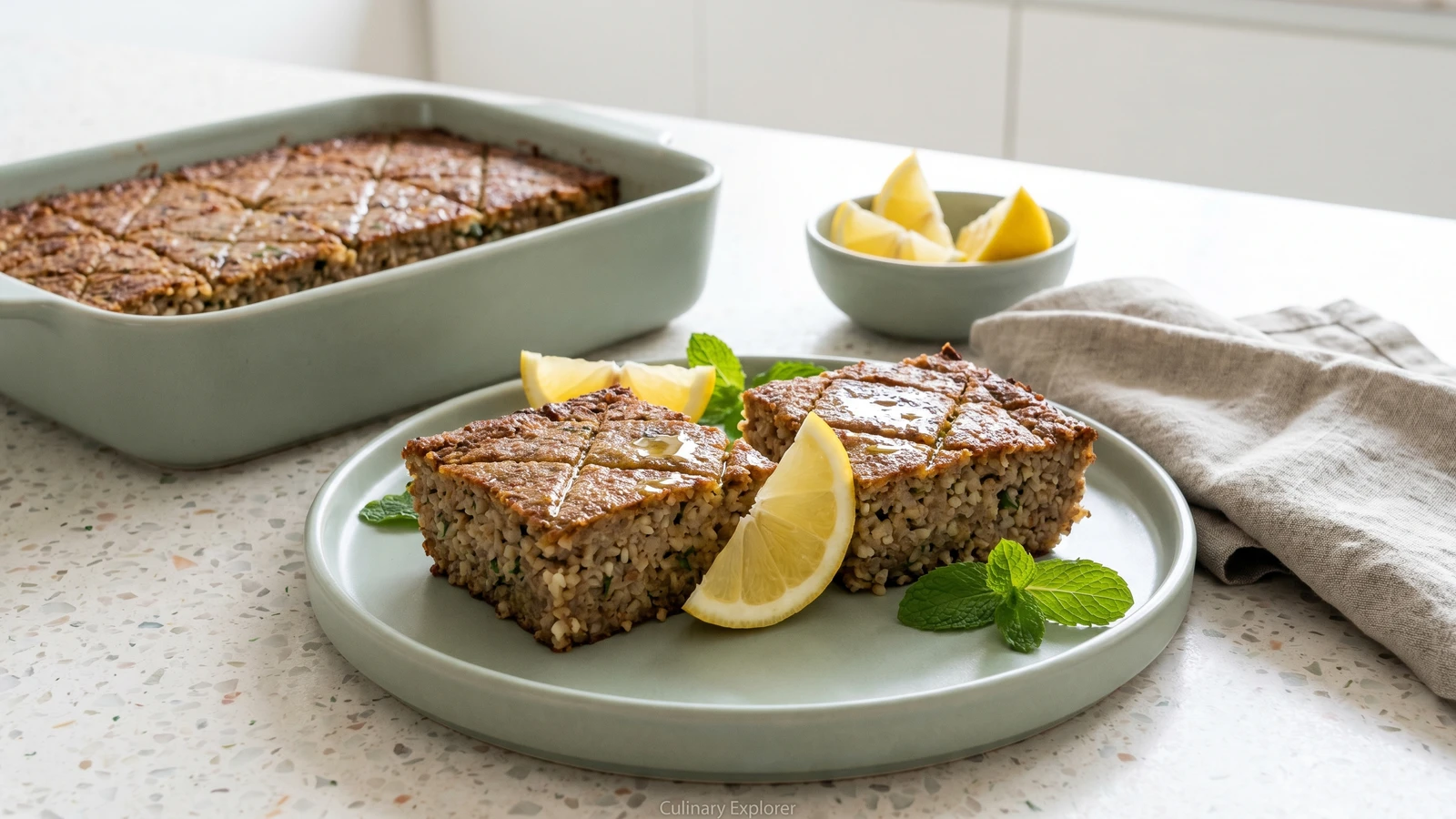
You don't need restaurant tricks for kibe: hydrate the wheat, build a refogado, mix with beef and herbs, press it into a tray, and let the oven solve dinner.
You know that quiet little voice that looks at a baking tray and says, isso não é pra mim? Let it talk. Then give it a measuring cup and make it useful. This isn't talent, it's sequence: hydrate the wheat, soften the onion, mix until the meat and grains hold together, press, score, bake.
I learned as a grown woman, with a cheap notebook open beside me and onions behaving badly in more pans than I care to count. That's why I like this oven kibe for beginners. It shows you what cooking really is: a few plain decisions that repeat. The wheat drinks exactly enough water so it doesn't steal moisture from the beef. The refogado mellows onion and garlic so every bite tastes cooked through. The oil in the score lines helps the top crisp instead of drying out into a sad brown board.
On a Brazilian table, kibe is already part of the week. It came from another place, yes, and I respect that, but here it learned the rhythm of the bakery counter, the festa table, and the Tuesday tray. Put it beside arroz soltinho, feijão with proper caldo, and something green, couve if you've got it, salad if that's what survived the fridge. That's a pê-efe doing its quiet work: rice, beans, meat, green, and nobody pretending dinner has to be mystical.
By the end, you'll slice it in neat diamonds, squeeze lemon over the corner piece, and have comida de verdade on the table. Anota aí: cozinhar não é dom, é um aprendizado.
Kibe entered Brazilian food through Arab immigration, especially Syrian and Lebanese communities who settled in cities such as São Paulo from the late nineteenth century into the early twentieth. The Levantine family of kibbeh includes raw, fried, and baked versions, and Brazil adapted the baked tray, kibe assado, into home cooking, bakeries, and party tables. The everyday Brazilian twist is not a claim that the dish started here; it's how a borrowed technique became a Tuesday dinner served beside rice, beans, and greens.
Quantity
1 cup
Quantity
1 cup
Quantity
5 tablespoons, divided
plus more for greasing
Quantity
1 large
finely chopped, about 1 cup
Quantity
3 cloves
minced
Quantity
1 pound (500g)
85 to 90 percent lean, kept cold until mixing
Quantity
1/2 cup
finely chopped
Quantity
1/2 cup
finely chopped
Quantity
1 3/4 teaspoons, divided
plus more to taste
Quantity
1 teaspoon
or 1/2 teaspoon ground allspice plus 1/2 teaspoon black pepper
Quantity
1/2 teaspoon
Quantity
2 tablespoons
only if the mixture feels dry
Quantity
1
cut into wedges, for serving
| Ingredient | Quantity |
|---|---|
| fine bulgur wheat (trigo para kibe) | 1 cup |
| boiling water | 1 cup |
| olive oilplus more for greasing | 5 tablespoons, divided |
| onionfinely chopped, about 1 cup | 1 large |
| garlicminced | 3 cloves |
| ground beef85 to 90 percent lean, kept cold until mixing | 1 pound (500g) |
| fresh mint leavesfinely chopped | 1/2 cup |
| fresh parsleyfinely chopped | 1/2 cup |
| fine saltplus more to taste | 1 3/4 teaspoons, divided |
| pimenta síriaor 1/2 teaspoon ground allspice plus 1/2 teaspoon black pepper | 1 teaspoon |
| ground cumin | 1/2 teaspoon |
| cold water (optional)only if the mixture feels dry | 2 tablespoons |
| lemoncut into wedges, for serving | 1 |
Put the bulgur in a large bowl and stir in 1/2 teaspoon of the salt. Pour over the boiling water, cover the bowl, and let it sit 20 minutes. Fluff it with a fork. The grains should be plump and tender, with no puddle at the bottom; if you see water, squeeze the bulgur in a clean towel or press it in a sieve. Dry wheat steals moisture from the meat and stays gritty, and wet wheat makes a heavy tray. A gente wants tender, not mush.
While the wheat hydrates, warm 2 tablespoons of the olive oil in a small skillet over medium heat. Add the onion and cook, stirring now and then, until it goes soft, sweet, and see-through, 6 to 8 minutes. Add the garlic and cook for 1 minute, just until you smell it, then scrape everything onto a plate and let it cool 10 minutes. Refogar first takes the raw bite out of the onion and keeps it from leaking sharp water into the kibe. Hot refogado also warms the meat before baking, so let it calm down.
Heat the oven to 200°C (400°F). Add the ground beef, hydrated bulgur, cooled refogado, mint, parsley, pimenta síria, cumin, and the remaining 1 1/4 teaspoons salt to the bowl. Mix with clean hands for about 2 minutes, folding and pressing until the mixture turns tacky and holds together when you squeeze a handful. This is the point, not punishment: that little kneading makes slices hold instead of crumbling all over the plate. If it feels dry and cracks, sprinkle in cold water 1 tablespoon at a time.
Grease a 9 x 13-inch baking dish with a little olive oil. Tip in the mixture and press it into an even layer about 1 inch thick, using wet hands so it doesn't stick. Press all the way into the corners and smooth the top; air pockets bake into cracks. Score diamonds or squares halfway down with a knife, then drizzle the remaining 3 tablespoons olive oil over the top and into the lines. The scoring gives the oil a path and gives you clean slices later.
Bake until the edges pull slightly from the dish, the top is browned and lightly crisp, and the center reaches 71°C (160°F) if you use a thermometer, 35 to 40 minutes. If the top browns before the center is done, lay foil loosely over it. The oil should glisten in the score lines, not pool like a lake; if it does, spoon off the extra after baking.
Let the kibe rest 10 minutes before slicing along the scored lines. I know, you want the corner piece now. Wait. Resting lets the juices settle back into the wheat and meat, so the first slice comes out neat instead of falling apart. Serve with lemon wedges, arroz soltinho, feijão de caldo, and something green. That's dinner solved.
1 serving (about 180g)
Culinary guides, cultural storytelling, and the editorial depth that makes cooking meaningful.
Discover Culinary ExplorerChef Juliana
You think açaí belongs with banana and granola because that's the version that traveled. In Pará, thick unsweetened açaí sits beside shrimp, rice, and farinha. Anota aí: same fruit, different meal.

Chef Juliana
You think savory açaí is not for you. I understand. Then you taste the cold, dark bowl beside hot fried fish, rice, greens, and farinha, and dinner gets very quiet.

Chef Juliana
You think salted beef and rice sound like trouble. Anota aí: soak the charque, brown it properly, build the refogado, and this one pot resolves dinner.

Chef Juliana
You think a Maranhão green rice belongs to somebody else's clever hands. It doesn't. Wilt the vinagreira, build the refogado, fold it through arroz soltinho, and dinner gets bright, coastal, and yours.