
Chef Lesia
Buzhenyna (буженина, garlic-studded roast pork)
A whole pork neck takes garlic into little knife pockets, roasts until the crust goes dark and fragrant, then rests overnight so every cold slice tastes better than shop ham.
A cooking platform built around craft, culture, and the stories behind what we eat.
Created by
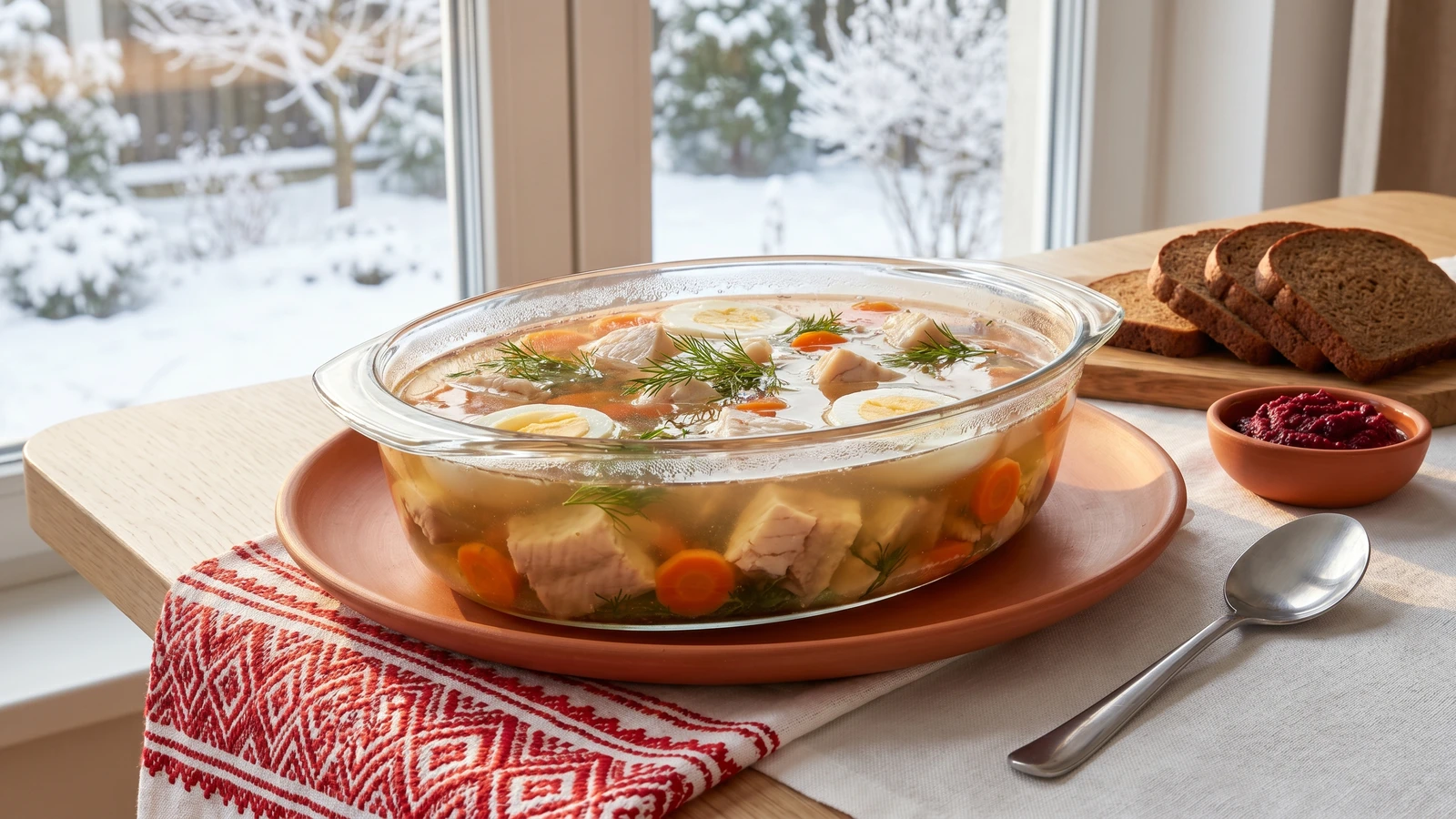
Clear fish broth sets itself when you give it bones, skin, fins, and a quiet simmer, holding river fish, dill, and carrot in amber for the celebration table.
The most beautiful part is also the bossiest: the jelly comes from the fish, not a packet. Heads, tails, skin, fins, all the bits polite people try to hide, give the broth its body until it cools into clear amber around the cooked fish. If you start with boneless fillets, you can make a nice cold fish salad. You cannot make this.
This is a southern river dish to me, Kherson and the Dnipro in my head, the kind of make-ahead plate that waits calmly while the rest of the table gets noisy. You poach the good pieces gently, lift them out before they toughen, then keep the bones murmuring until the broth feels tacky on your fingers and the smell changes from raw river to sweet, clean fish. Aunt Nadia's letter says only, strain it when it starts behaving, which is completely useless and also correct.
The why is simple. A hard boil clouds the broth and knocks the collagen out of order; a quiet tremble pulls it from the skin and fins so the set is clear, soft, and alive under the spoon. Make a big dish. At a Ukrainian celebration the cold plates come out first, and this one should look like the catch was suspended in sunlight.
Kholodets takes its name from kholod, cold; fish versions overlap with zalivne, the poured aspic served across river and Black Sea kitchens of southern Ukraine, especially where Dnipro, Dniester, Southern Buh, and Danube fish were everyday food. In Soviet canteens, fish in aspic became a stiff banquet item, but home cooks along the rivers relied on heads, skin, fins, and patience, a more local craft that gives a clear set and a taste of the catch itself.
Quantity
1.5 kg
pike-perch, carp, pike, or catfish
Quantity
900g
gills removed
Quantity
2.5 litres
or just enough to barely cover the trimmings
Quantity
1 large
unpeeled and halved
Quantity
2
one quartered, one sliced into thin coins
Quantity
2
Quantity
10
Quantity
4
Quantity
6
plus small sprigs for the dish
Quantity
2 cloves
lightly crushed
Quantity
2 teaspoons
plus more to taste
Quantity
2
sliced
Quantity
to serve
Quantity
to serve
| Ingredient | Quantity |
|---|---|
| skin-on freshwater fish steaks or thick piecespike-perch, carp, pike, or catfish | 1.5 kg |
| fish heads, frames, tails, fins, and skingills removed | 900g |
| cold wateror just enough to barely cover the trimmings | 2.5 litres |
| onionunpeeled and halved | 1 large |
| carrotsone quartered, one sliced into thin coins | 2 |
| bay leaves | 2 |
| black peppercorns | 10 |
| allspice berries | 4 |
| dill stemsplus small sprigs for the dish | 6 |
| garliclightly crushed | 2 cloves |
| sea saltplus more to taste | 2 teaspoons |
| hard-boiled eggs (optional)sliced | 2 |
| prepared horseradish or beet horseradish | to serve |
| black rye bread and sharp pickles | to serve |
Rinse the fish pieces quickly under cold water and pat them dry. Check the heads carefully: the gills must be removed, because they make the broth bitter and muddy. Keep the skin, fins, tails, and bones. They are not scraps here. They are the set.
Put the heads, frames, tails, fins, and skin into a big stockpot with the cold water. Bring it up slowly until the surface only trembles, then skim away the grey foam as it rises. Add the onion, quartered carrot, bay, peppercorns, allspice, dill stems, and salt. Keep it at a quiet murmur, not a boil, until the kitchen smells cleanly of fish and roots, about an hour.
Lower the serving pieces of fish into the broth and poach them gently until the flesh turns opaque and just begins to loosen from the bone. Thick pieces take longer, thin ones less; watch the fish, not the clock. Lift them out carefully onto a plate before they break apart, then cover loosely.
Let the bones and trimmings keep murmuring in the pot until the broth feels slightly sticky between finger and thumb. It should taste stronger than a soup, because cold dulls salt and scent. Add the sliced carrot coins for the last few minutes, just until tender, then lift them out and keep them for the dish.
Add the crushed garlic for five minutes, then strain the broth through a fine sieve lined with damp muslin. Do not press on the solids, or the broth will cloud. Spoon a little broth onto a saucer and chill it for ten minutes. If it wrinkles softly when pushed, you're ready. If it stays loose, simmer the strained broth uncovered until it reduces and feels tackier.
Pick the cooked fish away from any large bones, keeping generous pieces where you can. Arrange it in a shallow serving dish with the carrot coins, egg slices if using, and dill sprigs. Don't fuss it into tiny perfection. This should look served, not arranged with tweezers.
Taste the broth once more; it should be a shade saltier than you want it warm. Let it cool until just warm, then ladle it gently over the fish until everything is covered. Chill uncovered until set, then cover and leave overnight if you can. When ready, it should tremble when the dish moves and cut cleanly with a spoon.
Serve the kholodets cold with prepared horseradish or beet horseradish, black rye bread, and sharp pickles. A little dill on top is welcome. Enough for eight guests or one hungry Ukrainian, depending on the table.
1 serving (about 260g)
Culinary guides, cultural storytelling, and the editorial depth that makes cooking meaningful.
Discover Culinary ExplorerChef Lesia
A whole pork neck takes garlic into little knife pockets, roasts until the crust goes dark and fragrant, then rests overnight so every cold slice tastes better than shop ham.
Chef Lesia
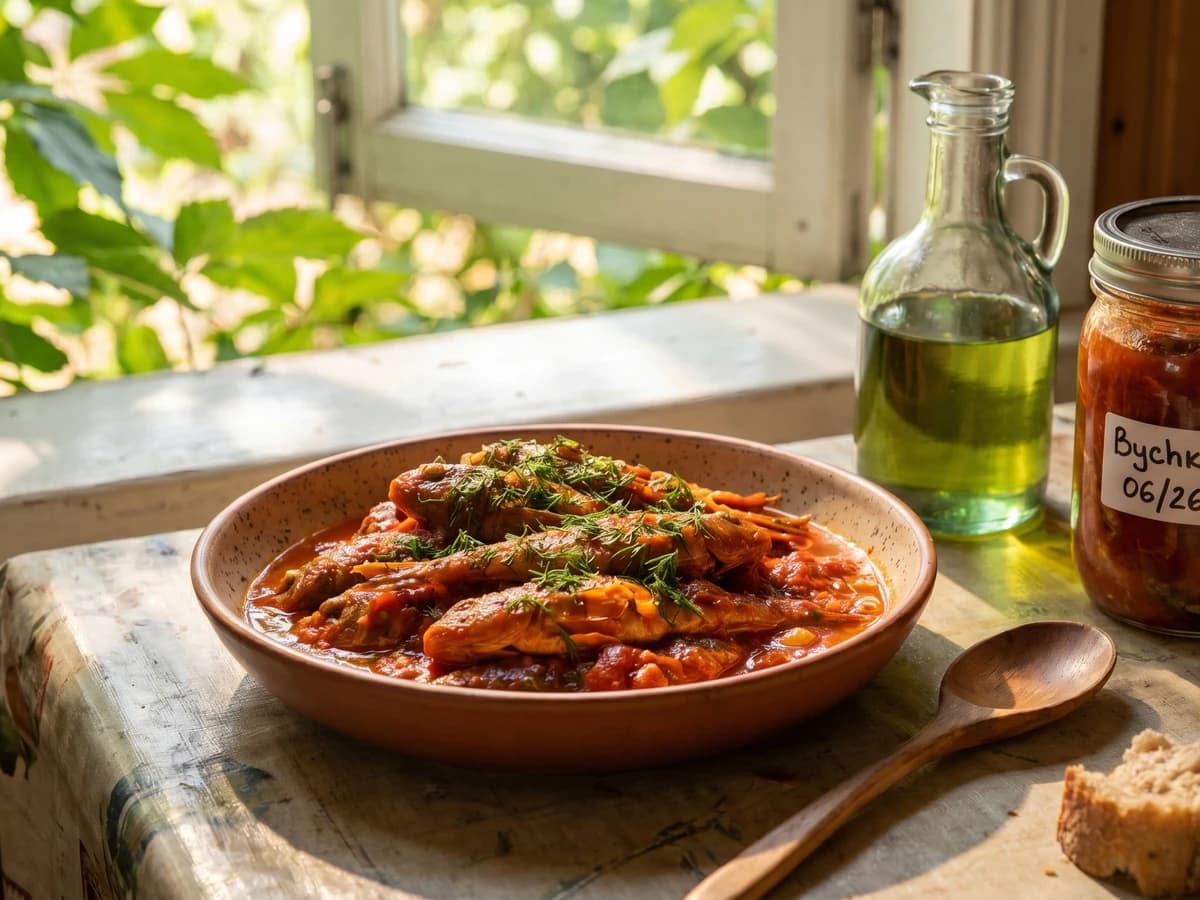
Small Azov gobies go into tomato bright as market cloth and come out soft enough that the bones give up. This is Mariupol food: cheap, red, generous, and better tomorrow.

Chef Lesia
The first sound is the meat against the board: flat, sharp, changing as the fibres loosen. Fry the cutlets fast, then let onion gravy do the soft finishing.

Chef Lesia
A heap of tiny silver fish becomes supper by the oldest Odesa trick: clean them, press them together, fry until the edges crackle, and let lemon and dill do the talking.