Culinary Explorer

A cooking platform built around craft, culture, and the stories behind what we eat.
Discover Culinary Explorer
Shrimp Paste Fried Rice (Khao Pad Kapi)

Shrimp Paste Fried Rice (Khao Pad Kapi)

Created by

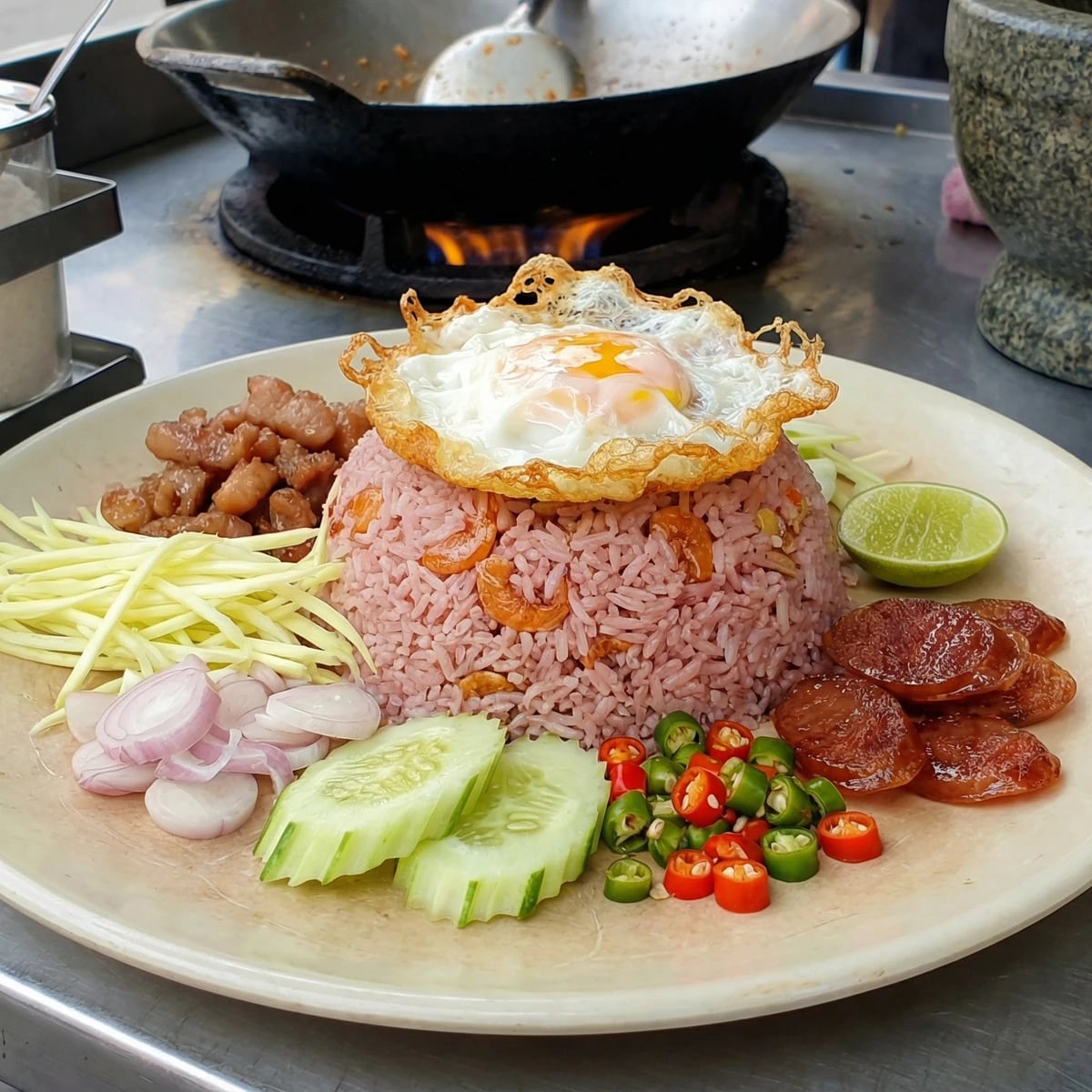
Fermented shrimp paste fried in hot oil until it blooms, tossed with day-old rice, then surrounded by the real architecture: sweet pork, sour mango, fried egg, raw shallots, and chili. The four pillars live on the plate, not in the wok.

Main Dishes
Thai
Weeknight
Comfort Food
25 min
Active Time
25 min cook50 min total
Yield2 servings

Kapi is fermentation concentrated into a fist. Tiny shrimp, salted, packed tight, and left in the equatorial sun until they collapse into a dense, purple-brown paste that smells like the ocean floor at low tide. It's intense. It's funky. And it's one of the nine essential ingredients Ajarn McDang identifies as the foundation of Thai cooking. You either respect it or you don't understand Thai food.

Here's the principle this dish teaches better than almost any other: the four pillars don't always live inside one pot. Sometimes they're assembled on the plate. The kapi rice is salty and deeply savory. That's one pillar. The sweet pork (moo wan) brings palm sugar caramelized into sticky, dark sweetness. That's two. The green mango (mamuang) hits you with raw, sharp sourness. Three. And the sliced bird's eye chilies bring heat. Four. You build the balance yourself, bite by bite. Fork into the rice, drag it through the sweet pork, pick up a strand of mango, hit the chili. That's the system at work.

The technique matters too. You don't just stir kapi into rice. You fry it in hot oil first, alone, until the raw fermented funk transforms into something roasted, deep, and almost sweet. Ajarn always said: heat activates fermentation. Raw kapi smells aggressive. Fried kapi smells like a Bangkok lunch counter at noon. That bloom is everything. Skip it and your rice tastes like someone dropped shrimp paste on it. Do it right and the rice turns pink, fragrant, and savory in a way no other ingredient can replicate.

Every element on this plate has a job. The fried egg with crispy edges and a runny yolk becomes a sauce when you break it. The sliced shallots are sharp and raw, cutting through the richness. The cucumber cools. This is what a Central Thai one-plate meal looks like when every principle is firing. I teach this dish at Fai Thai workshops because it forces people to understand that Thai food is a system, not a single flavor.

Khao pad kapi is a Central Thai preparation rooted in Bangkok's merchant and household cooking traditions, where the quality of the accompaniment tray (krueng kiang) distinguished a simple fried rice from a composed meal. Kapi production centers on Thailand's coastal provinces, particularly Rayong, Samut Songkhram, and Chumphon, where tiny krill (Acetes species) are salted and fermented for weeks in open-air wooden trays. The elaborate side dishes reflect a distinctly Central Thai philosophy: the cook builds a plate of contrasts, and the eater orchestrates the balance.

The technique, the tradition, and the story behind every dish.

Discover Culinary Explorer

Ingredients

day-old cooked jasmine rice (khao suay)

Quantity

3 cups

cold from refrigerator

shrimp paste (kapi)

Quantity

2 tablespoons

garlic

Quantity

4 cloves

minced

dried shrimp (goong haeng)

Quantity

2 tablespoons

roughly chopped

fish sauce (nam pla)

Quantity

1 tablespoon

granulated sugar

Quantity

1 teaspoon

vegetable oil

Quantity

3 tablespoons

pork belly, for sweet pork (moo wan)

Quantity

150g

cut into small thin slices

palm sugar (nam tan pip), for sweet pork

Quantity

3 tablespoons

fish sauce (nam pla), for sweet pork

Quantity

1 tablespoon

dark soy sauce (si ew dam), for sweet pork

Quantity

1 teaspoon

water, for sweet pork

Quantity

2 tablespoons

eggs

Quantity

2

green mango (mamuang)

Quantity

1

julienned

shallots (hom daeng)

Quantity

4

thinly sliced

Chinese sausage (kun chiang) (optional)

Quantity

1

sliced on the bias, pan-fried

bird's eye chilies (prik khi nu)

Quantity

3

thinly sliced

cucumber

Quantity

half

sliced into rounds

lime wedges

Quantity

for serving

nam pla prik (chili fish sauce)

Quantity

for serving

Equipment Needed

  • Wok (carbon steel preferred)
  • Wok spatula
  • Small saucepan for sweet pork

Instructions

  1. 1

    Make the sweet pork

    In a small saucepan over medium heat, combine the palm sugar with 2 tablespoons of water. Let the sugar melt and start to bubble. Don't stir it. Watch it. When it turns a deep amber and smells like caramel, add the pork belly slices and toss to coat. Add the fish sauce and dark soy sauce. Lower the heat and let it simmer for 15 to 20 minutes, stirring occasionally, until the pork is tender and glazed in a sticky, dark sauce. The liquid should reduce to almost nothing, leaving the pork coated and glistening. This is moo wan. Sweet, salty, rich. It's the counterweight to the funky kapi rice.

    Moo wan keeps for days in the fridge and tastes better the next day. Make a big batch. You'll use it on everything: khao pad kapi, over plain rice, straight out of the container at midnight.
  2. 2

    Bloom the kapi

    Get your wok hot over high heat. Add 2 tablespoons of oil. When the oil shimmers, drop the kapi directly into the center of the wok. Press it flat with your spatula and let it fry for about 30 seconds. This is the moment. The raw fermented smell will shift into something roasted, nutty, and deeply savory. Your nose will tell you when it's done. If it still smells sharp and aggressive, it needs more time. If it smells like the best thing in the room, it's ready. Add the garlic and stir for 5 seconds until fragrant.

    Ajarn always said: heat activates fermentation. This bloom step is the difference between rice that tastes like shrimp paste and rice that tastes like khao pad kapi. Don't skip it. Don't rush it.
  3. 3

    Fry the rice

    Add the cold day-old rice to the wok. Break up any clumps with your spatula and toss aggressively. Every grain needs to be coated in that fried kapi. The rice will turn pink, almost mauve. That color is how you know the kapi is distributed evenly. Add the chopped dried shrimp and toss again. Season with fish sauce and sugar. Keep tossing and pressing the rice against the hot wok surface. You want some grains to get a little toasted, a little crispy where they touch the metal. That's the wok doing its job. Total time in the wok: about 3 minutes. Taste a spoonful. It should be salty, savory, and deeply funky in a good way.

    Day-old rice is non-negotiable. Fresh rice has too much moisture. It steams instead of frying and you get a sticky, clumpy mess. Cook your jasmine rice the night before and refrigerate it uncovered. Cold, dry grains are what you need.
  4. 4

    Fry the eggs

    Push the rice to a plate and wipe the wok. Add another tablespoon of oil over high heat. Crack the eggs in one at a time. The oil should be hot enough that the whites bubble and puff immediately, creating lacy, golden, crispy edges. The yolk stays runny. About 90 seconds per egg. Don't flip it. The bottom gets crispy, the top stays soft. That's a kai dao (fried egg), Bangkok style.

    If you want the Chinese sausage (kun chiang), slice it on the bias and fry it in the same wok for a minute on each side until the edges caramelize. It's optional, but that sweet, fatty pork sausage is traditional on a khao pad kapi plate.
  5. 5

    Assemble the plate

    Mound the kapi rice in the center of a wide plate. Place the fried egg on top or beside the rice. Arrange the moo wan on one side, the julienned green mango on another, the sliced shallots, cucumber rounds, fried Chinese sausage, and sliced chilies around the edges. Put a lime wedge within reach. Set nam pla prik (chili fish sauce) and phrik pon (chili flakes) on the table as condiments. Now look at your plate. Every element is a pillar. The rice is salt. The pork is sweet. The mango is sour. The chili is heat. You don't need me to tell you how to eat it. Take a bite of everything. Build the balance yourself. That's the Thai system.

Chef Tips

  • The kapi makes or breaks this dish. Buy Thai kapi, not Malaysian or Indonesian versions, which have different salt levels and fermentation profiles. Good Thai kapi (look for brands from Rayong or Samut Songkhram) is dense, dark purple-brown, and smells powerfully of the sea. If it smells rancid or chemical, it's bad. If it smells like concentrated ocean, it's right.
  • Green mango is the sour pillar on this plate. It has to be unripe, hard, and tart. If you can't find green mango, use tart green apple as a last resort, but know that the flavor profile shifts. The sharp, tropical acidity of green mango is specific and irreplaceable. Some vendors use santol fruit or sour star fruit as alternatives.
  • This dish proves that Thai food is a system of contrasts, not a single flavor. Every component is aggressive on its own: the kapi rice is salty and funky, the moo wan is intensely sweet, the mango is bracingly sour, the chilies are brutal. Together they balance. Alone they'd be too much. That's the architecture. Ajarn always said the plate is the composition. The eater is the conductor.
  • Some Bangkok vendors wrap a spoonful of kapi in foil and grill it over charcoal before frying. The char adds another layer of smokiness. If you have access to a flame, try holding the foil-wrapped kapi over a gas burner for 30 seconds per side before it goes in the wok. It's not required, but it's a technique worth knowing.

Advance Preparation

  • Cook jasmine rice the night before and refrigerate uncovered. Cold, dry, day-old rice is the only rice that fries correctly. This is the single most important advance step.
  • Moo wan (sweet pork) can be made up to 3 days ahead and refrigerated. It reheats beautifully and the flavors deepen overnight. Make a large batch.
  • Green mango can be julienned up to an hour ahead. Toss it in a squeeze of lime juice to prevent browning and keep it covered in the fridge.
  • Shallots, chilies, and cucumber can be sliced and set out on a prep tray before you start the wok. Once the kapi hits the oil, you move fast.

Frequently Asked Questions

Nutrition Information

1 serving (about 650g)

Calories
1290 calories
Total Fat
68 g
Saturated Fat
17 g
Trans Fat
0 g
Unsaturated Fat
51 g
Cholesterol
295 mg
Sodium
2900 mg
Total Carbohydrates
130 g
Dietary Fiber
4 g
Sugars
32 g
Protein
42 g

Note: Chef personas and recipes are created with AI assistance. Cook with care: follow safe food-handling practices, check doneness with a thermometer when needed, and adapt for allergies and your kitchen.

Where cooking meets culture.

Culinary guides, cultural storytelling, and the editorial depth that makes cooking meaningful.

Discover Culinary Explorer

More from Central Thai Rice & Noodle Plates

Browse the full collection