
Chef Fai
Dry Egg Noodles (Ba Mee Haeng)
The four pillars live at the bottom of the bowl before the noodles ever touch it: nam pla for salt, sugar for sweet, vinegar for sour, chili for heat. Every noodle cart in Bangkok runs on this principle.
A cooking platform built around craft, culture, and the stories behind what we eat.
Created by
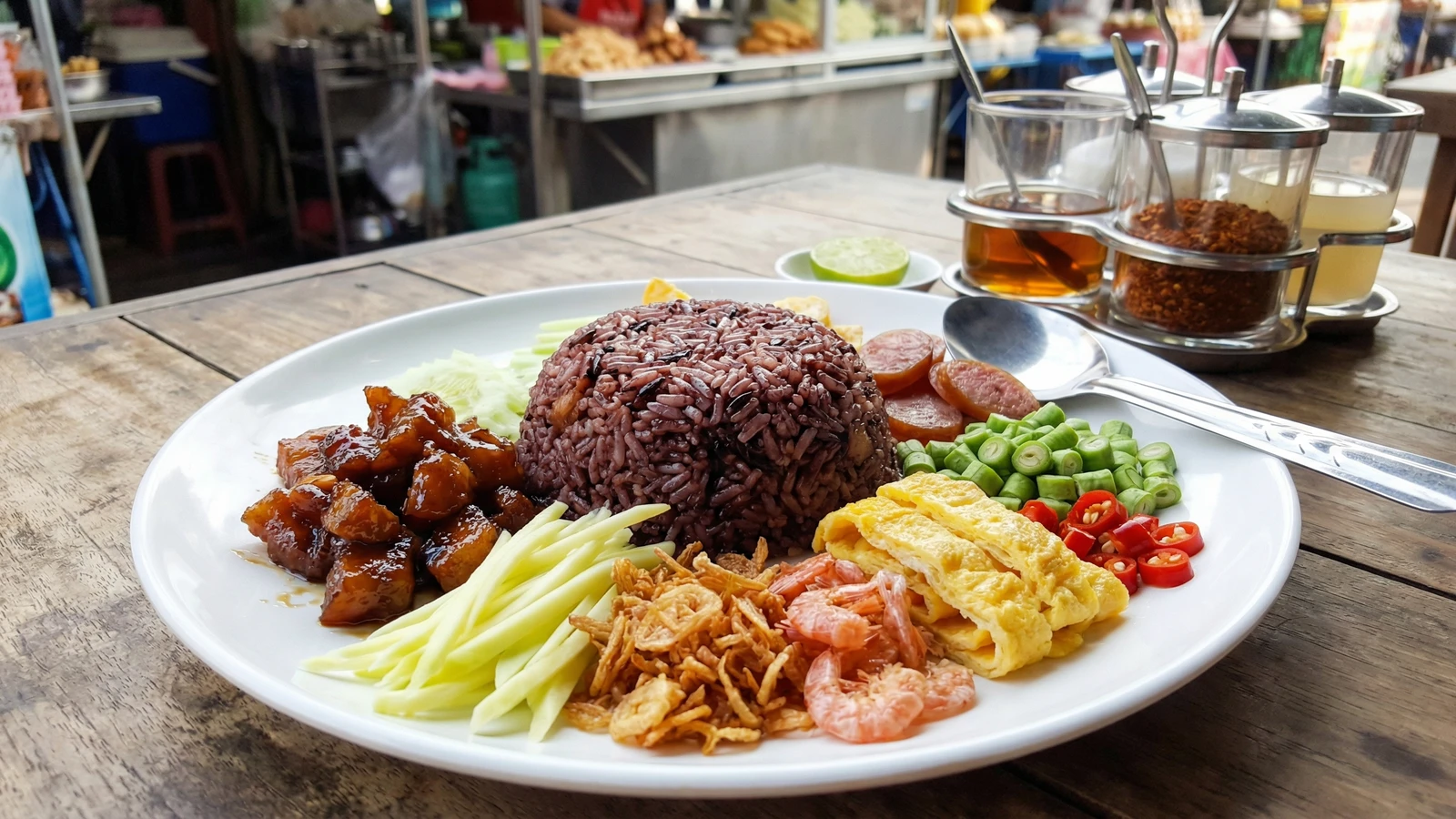
Every topping on this plate is a pillar in disguise: sweet pork, sour mango, salty dried shrimp, fresh chilies. The shrimp paste rice ties it all together. This is Thai flavor architecture you eat with a spoon.
Khao kluk kapi is the dish that teaches you how Thai balance actually works. Not every dish puts the four pillars into a single sauce. Sometimes the plate is the system. The rice carries umami from kapi (shrimp paste). The sweet pork brings the palm sugar. The green mango brings the sour. The chilies bring the heat. The dried shrimp and fried shallots bring salt and crunch. You build each bite yourself. Spoon of rice, sliver of mango, shred of sweet pork, a chili if you want fire. That bite is the four pillars in your mouth, assembled by you, not by a recipe.
Ajarn always said the four pillars define Thai cuisine: fish sauce for salt, palm sugar for sweet, tropical fruit acids for sour, chili for heat. Khao kluk kapi is the plate where those pillars are separated and laid out in front of you like a lesson. You can see them. Taste each one individually. Then combine them and understand why the system works.
The kapi is everything here. Shrimp paste, fermented and pungent, is one of the nine essential ingredients in Thai cooking. When you fry it with rice, the raw funk transforms into something deep, savory, and addictive. If you've never smelled kapi frying in hot oil, brace yourself. The smell is aggressive. The taste is extraordinary. That transformation, raw funk to cooked depth, is fermentation science at work. Protein breaks down into amino acids, and heat unlocks glutamate. It's the same science behind fish sauce, just concentrated.
I teach this dish at every Fai Thai workshop because it's the best one-plate demonstration of how Thai food thinks. No kreung tam, no curry paste, no mortar work. Just a composed plate where every element has a job. Sweet. Sour. Salty. Spicy. Crunchy. Soft. Bright. Deep. All of it on one plate of rice you can eat in ten minutes at a market stall for sixty baht.
Khao kluk kapi is a Central Thai dish with roots in Bangkok's home kitchens and market stalls, likely dating to the early 20th century when shrimp paste was a pantry staple in every household along the Chao Phraya River basin. The sweet pork (moo wan) and Chinese sausage (kun chiang) toppings reflect the Chinese-Thai culinary exchange that defines much of Central Thai food. The dish was considered humble home cooking for decades before Bangkok food stalls elevated it into a lunchtime staple, proving once again that the best Thai food has never needed a restaurant to justify its existence.
Quantity
4 cups
day-old, refrigerated
Quantity
3 tablespoons
Quantity
2 tablespoons
Quantity
200g
cut into small strips
Quantity
3 tablespoons
Quantity
2 tablespoons
Quantity
1 tablespoon
Quantity
1
julienned
Quantity
4 tablespoons
Quantity
5
thinly sliced
Quantity
1 cup
Quantity
4
Quantity
2
sliced on the bias
Quantity
5
sliced into rounds
Quantity
2
sliced into thin rounds
Quantity
1
cut into wedges
| Ingredient | Quantity |
|---|---|
| cooked jasmine riceday-old, refrigerated | 4 cups |
| shrimp paste (kapi) | 3 tablespoons |
| vegetable oil (for rice) | 2 tablespoons |
| pork belly or pork shouldercut into small strips | 200g |
| palm sugar (nam tan pip) | 3 tablespoons |
| fish sauce (nam pla) | 2 tablespoons |
| dark soy sauce (si ew dam) | 1 tablespoon |
| green mango (mamuang)julienned | 1 |
| dried shrimp (goong haeng) | 4 tablespoons |
| shallotsthinly sliced | 5 |
| vegetable oil (for frying shallots) | 1 cup |
| eggs | 4 |
| Chinese sausage (kun chiang)sliced on the bias | 2 |
| bird's eye chilies (prik khi nu)sliced into rounds | 5 |
| long beans (thua fak yao)sliced into thin rounds | 2 |
| limecut into wedges | 1 |
In a small saucepan or wok over medium heat, add the pork strips with a splash of oil. Cook until they start to render their fat, about 3 minutes. Add the palm sugar and let it melt and bubble. Then the dark soy sauce for color and a tablespoon of the fish sauce for depth. Stir constantly. The sugar will caramelize around the pork, turning each piece glossy and dark. Cook for 8 to 10 minutes until the liquid reduces to a thick glaze and the pork is tender and sticky. It should look lacquered. Taste it. This is your sweet pillar. If it's not sweet enough to make you pause, add more palm sugar.
Heat the cup of oil in a small saucepan over medium heat. Add the sliced shallots and fry slowly, stirring occasionally. Patience. This takes 8 to 10 minutes. They should turn evenly golden, then deep amber. Pull them out with a slotted spoon just before they look done because they'll keep darkening on the paper towel. If they go black, start over. Bitter shallots ruin the plate. Save the shallot oil. It's incredible drizzled on anything.
Beat the eggs lightly with a pinch of fish sauce. Heat a wok or pan with a generous film of oil over high heat. Pour in the egg and let it puff and set, about 90 seconds per side. You want a Thai-style omelet (khai jiao): golden, slightly crispy edges, puffy, not a flat French crepe. Slide it out, let it cool briefly, and slice into strips. In the same pan, fry the Chinese sausage slices until they render some of their fat and the edges turn slightly crispy. Two minutes. Set aside.
This is the heart of the dish. Heat 2 tablespoons of oil in a wok over high heat. Add the shrimp paste (kapi) and fry it for 30 seconds, pressing it into the oil with your spatula. The smell will hit you. It's intense, funky, almost aggressive. That's correct. Trust the process. Add the cold day-old rice and toss it vigorously, breaking up any clumps, coating every grain with the shrimp paste. The rice should turn a uniform light purple-brown. Add the remaining tablespoon of fish sauce. Toss for another minute until the rice is hot through and the kapi smell has transformed from raw funk into something deep and savory. That's fermentation doing its work under heat.
Mound the shrimp paste rice in the center of each plate. Now arrange the toppings around it: sweet pork on one side, julienned green mango on another, omelet strips, Chinese sausage slices, dried shrimp, sliced long beans, fried shallots, and sliced bird's eye chilies. A lime wedge on the side. Don't mix it yet. The whole point is seeing every component separately before you eat. Each topping is a pillar. The diner builds the balance. Squeeze lime over everything just before you eat. Then take your spoon, mix a little of each topping into the rice, and taste what four pillars working together feels like.
1 serving (about 420g)
Culinary guides, cultural storytelling, and the editorial depth that makes cooking meaningful.
Discover Culinary ExplorerChef Fai
The four pillars live at the bottom of the bowl before the noodles ever touch it: nam pla for salt, sugar for sweet, vinegar for sour, chili for heat. Every noodle cart in Bangkok runs on this principle.

Chef Fai
The kreung tam fried in cracked coconut cream until the oil bleeds red. That's the technique. Concentrated, semi-dry, spooned thick over crispy fish. This is what happens when the four pillars meet restraint.

Chef Fai
Isan foraging in a bowl: wild taro stems stripped of their sting, simmered in padaek broth with a pounded chili paste and yanang leaf extract. The land feeds you if you know the rules.

Chef Fai
Lanna's kreung tam breaks from Central Thai rules: ginger over galangal, cumin and coriander from Burmese spice routes, tamarind for sour instead of lime. The North has its own system, and this curry is its crown.