Chef Joost
Aardbeienvlaai (Limburg Strawberry Vlaai)
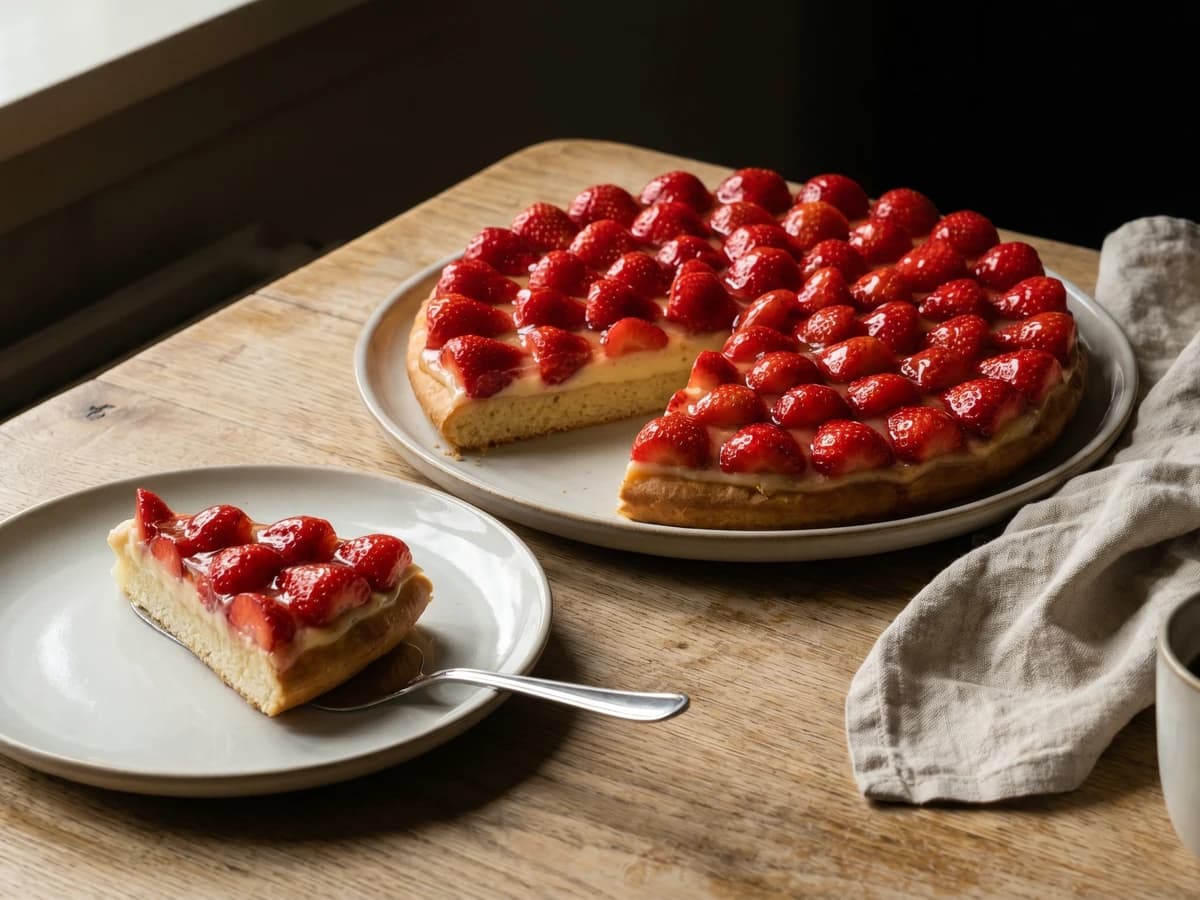
The summer vlaai that politely breaks Limburg's baked-fruit rule: soft gistdeeg, cool pastry cream, and strawberries left fresh because June knows better than the oven.
A cooking platform built around craft, culture, and the stories behind what we eat.
Created by
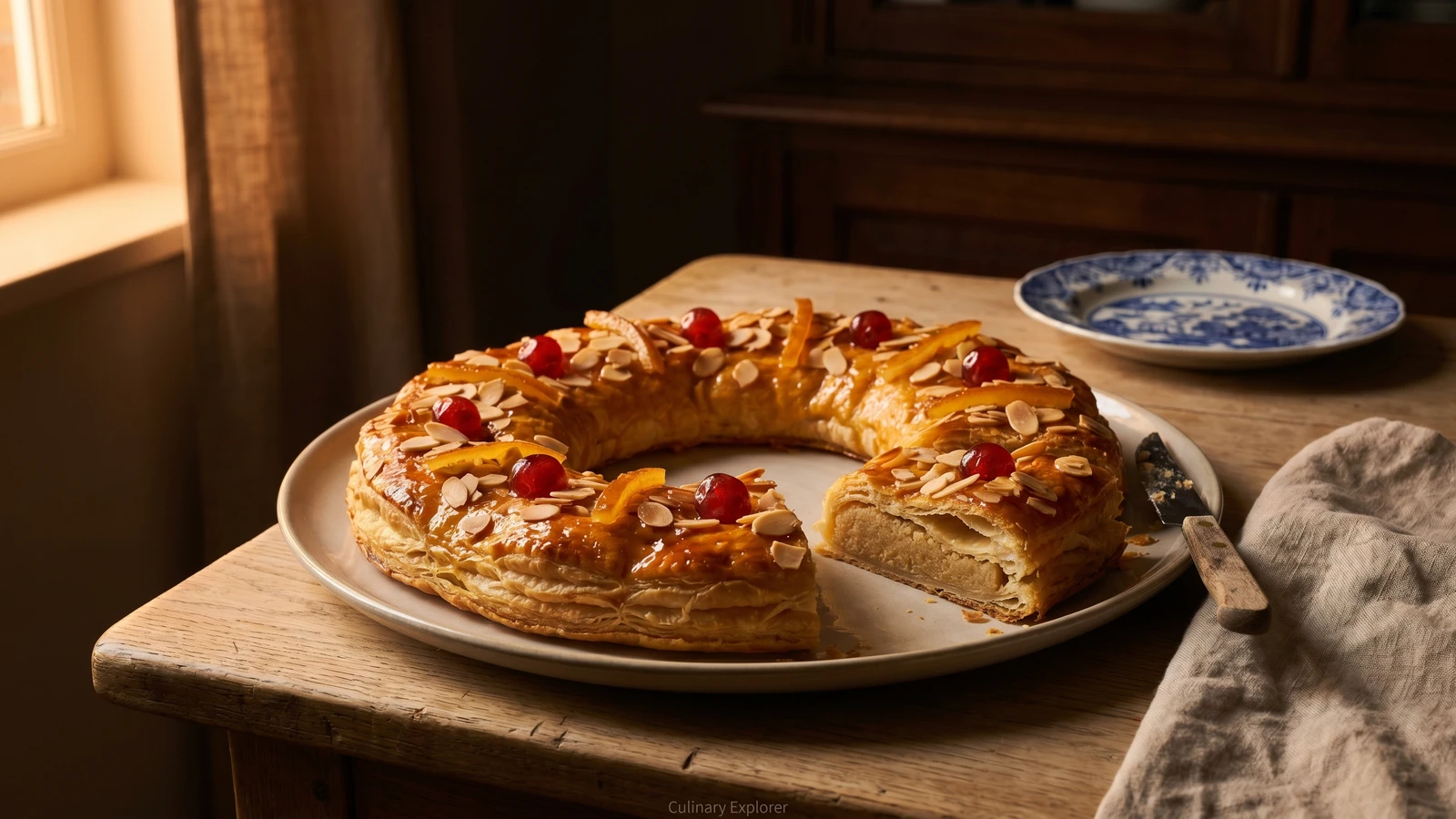
Kerstkrans means Christmas wreath, but the secret is inside: a golden ring of puff pastry carrying almond paste, the banket centrepiece of a Dutch holiday table.
Some dishes announce the feast before anyone has sat down. Kerstkrans does it by shape alone: a wreath, a krans, on the table at Kerst, Christmas, golden and lacquered, with candied cherries winking from the top like the sort of decoration a sober Dutch household allows itself once a year. The name already tells you the truth plainly. No scholarly acrobatics needed, for obvious reasons.
But let me tell you a secret. The real Christmas treasure is not the pastry, though it should flake properly under the knife. It is the amandelspijs, almond paste, the same sweet almond heart that runs through banketletters at Sinterklaas and into the festive baking of December. Almonds were never backyard food in the Netherlands; they came north through trade, pharmacy, confectionery, and holiday luxury, until a frugal country decided that once a year the centre of the table could wear a ring of imported sweetness.
I prefer to keep it a bit more relaxed, in the Dutch way. Buy good all-butter puff pastry if you don't laminate dough at home; this is the honest shortcut history allows, because the point of the dish is the clean contrast between crisp pastry and soft almond centre. What you must not skip is resting the almond paste and sealing the ring well. Spijs likes time. Pastry likes cold. The oven likes confidence. Hou het altijd simpel, and the krans will behave.
Kerstkrans belongs to the Dutch banket family of almond-filled pastries, closely related to the banketletter traditionally eaten around Sinterklaas and carried into Christmas in wreath form. Printed Dutch household cookbooks from the nineteenth and early twentieth centuries show almond paste pastries as festive baking, reflecting almonds' long status as a costly imported ingredient before industrial baking made them common. The wreath shape connects the pastry to the Christmas table rather than to one province alone, though bakeries across the Netherlands still decorate it in strongly local habits, from sober almond slivers to bright candied cherries and citrus peel.
Quantity
300g
Quantity
300g
Quantity
1
finely zested
Quantity
2
divided
Quantity
1 teaspoon
Quantity
500g
cold
Quantity
2 tablespoons
for rolling
Quantity
2 tablespoons
Quantity
1 tablespoon
Quantity
40g
Quantity
6
halved
Quantity
30g
thinly sliced
| Ingredient | Quantity |
|---|---|
| blanched almonds or almond flour | 300g |
| fine sugar | 300g |
| lemonfinely zested | 1 |
| eggsdivided | 2 |
| almond extract (optional) | 1 teaspoon |
| all-butter puff pastrycold | 500g |
| flourfor rolling | 2 tablespoons |
| apricot jam | 2 tablespoons |
| water | 1 tablespoon |
| sliced almonds | 40g |
| candied cherrieshalved | 6 |
| candied citrus peelthinly sliced | 30g |
If using whole blanched almonds, grind them finely with the sugar until the mixture looks like pale damp sand. Mix in the lemon zest, one egg, and the almond extract if using. The paste should hold together when pressed but not feel wet. Wrap it and chill for at least one hour; overnight is better, because almonds need time to drink in the egg and lemon.
Beat the second egg in a small bowl and set it aside for sealing and glazing. Roll the chilled almond paste into one long rope, about 55 to 60 centimetres, tapering the ends slightly so they overlap neatly. If it cracks, knead it once or twice with cool hands. Spijs is forgiving, which is one of its better Dutch qualities.
On a lightly floured surface, roll the cold puff pastry into a long rectangle, roughly 65 by 18 centimetres. Work quickly and keep the pastry cool; butter that softens before the oven has lost the argument. Lay the almond rope along the lower third of the pastry.
Brush the far edge of the pastry with beaten egg, then roll the pastry around the almond paste into a long sealed cylinder. Put the seam underneath. Bring the ends together into a ring on a parchment-lined baking tray, tucking one end slightly into the other and sealing with more egg. Cut three or four tiny slits on the underside if the pastry feels very tight; the filling needs a whisper of room, not an escape route.
Chill the shaped wreath for 20 minutes while the oven heats to 200C. Brush the top with beaten egg, then scatter over the sliced almonds. Cold pastry in a hot oven gives you lift; warm pastry in a warm kitchen gives you regret. This is not philosophy, just butter.
Bake for 25 to 30 minutes, until the pastry is deeply golden, risen in clear flaky layers, and firm on the underside when lifted gently with a spatula. If the top colours too quickly, lower the oven to 180C for the last ten minutes. Let the wreath cool on the tray for 15 minutes before decorating.
Warm the apricot jam with the water until loose, then brush it over the cooled wreath so the surface shines. Dot the top with candied cherry halves and thin strips of candied citrus peel. Serve in generous slices with coffee, tea, or a small glass of something stronger if the presents have required diplomacy.
1 serving (about 150g)
Culinary guides, cultural storytelling, and the editorial depth that makes cooking meaningful.
Discover Culinary ExplorerChef Joost
The summer vlaai that politely breaks Limburg's baked-fruit rule: soft gistdeeg, cool pastry cream, and strawberries left fresh because June knows better than the oven.

Chef Joost
A Limburg vlaai is not a pie trying to be grand. It is a thin yeast-dough round, fruit-bright and generous, made for birthdays, coffee, and second slices.

Chef Joost
The December bakery counter made small: cold leafed pastry wrapped around lemon-scented amandelspijs, brushed gold, and scattered with almonds so one person gets the whole holiday in both hands.
Chef Joost
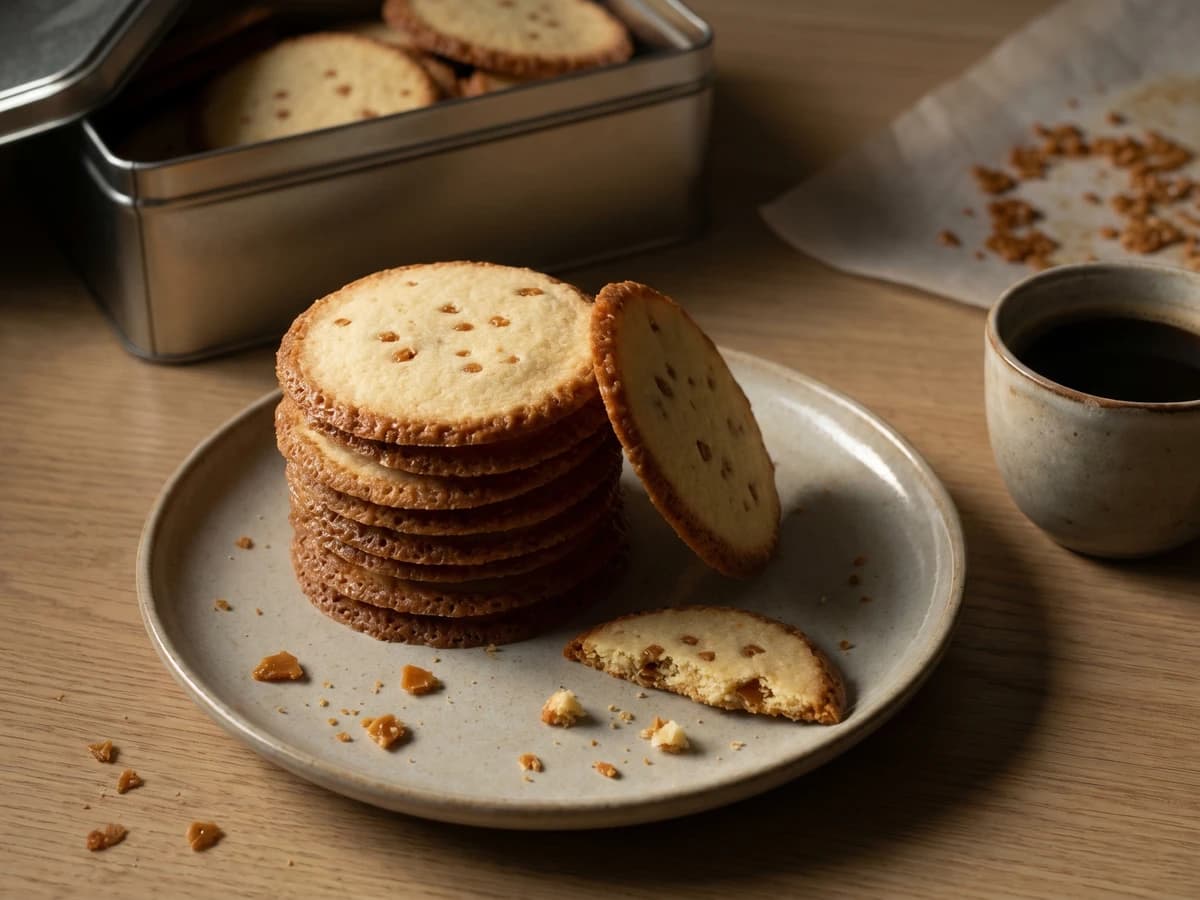
A thin Amsterdam cookie carrying a cog ship in its name: caramelized butter dough, almond nougatine, and a 1934 contest that turned municipal pride into something for coffee.