
Chef Lesia
Buzhenyna (буженина, garlic-studded roast pork)
A whole pork neck takes garlic into little knife pockets, roasts until the crust goes dark and fragrant, then rests overnight so every cold slice tastes better than shop ham.
A cooking platform built around craft, culture, and the stories behind what we eat.
Created by
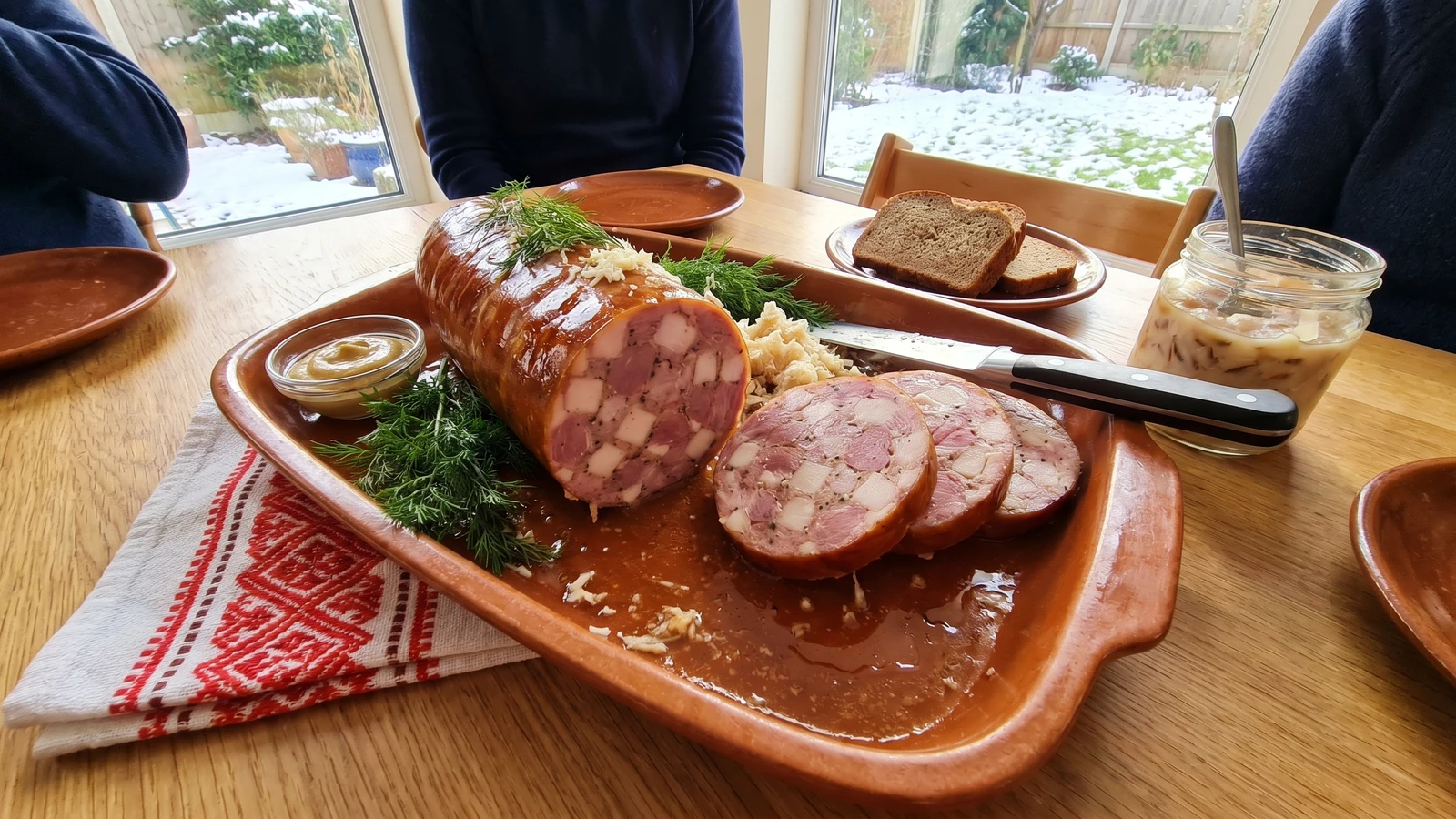
A cleaned pork stomach looks severe on the board, then it becomes a burnished casing for garlic-heavy pork, fat, and pepper, the whole pig turned into one generous slice.
Acleaned pork stomach looks severe on the board, pale and muscular, like a question most modern kitchens have forgotten how to answer. Then you pack it with garlic-heavy pork, firm white fat, pepper and a splash of cold stock, and after the simmer and the oven it comes back bronzed, taut, and sliceable, the whole pig gathered into one generous platter. This is thrift with its jacket buttoned for a feast.
Kendiukh is not everyday food in my kitchen; it belongs to the days when a pig has been divided properly and the table is already making room. The stomach is the casing, not a trick, and that is the point: nothing with flavor gets treated as rubbish. Aunt Nadia's line for this kind of dish was short, of course: "not tight, or it will burst," and she was right in the way women are right when they don't waste paper.
The one thing that decides it is looseness. The filling swells, the stomach shrinks, and a gentle simmer sets everything before the oven gives it color; pack it like a suitcase and it will punish you. Let it rest before slicing, long enough for the juices to settle and the knife to move cleanly. Make the whole thing. There is no tradition of a small one.
Kendiukh belongs to the winter pig-slaughter cycle of central and western Ukraine, especially Poltava, Podillia, Volyn and Halychyna, where the pig stomach became the largest natural casing after sausages were tied. Its names overlap by region: kendiukh or kendyukh in central speech, kovbyk in parts of the west, and salceson in households shaped by Polish borderland cooking. Fillings shift from minced pork and back fat to head meat, tongue, heart, liver, or buckwheat, but the older household logic stays the same: slaughter day was practical, Christmas and Easter were generous.
Quantity
1, about 500-700g
Quantity
3 tablespoons
for cleaning
Quantity
3 tablespoons
for cleaning
Quantity
2 tablespoons
for soaking
Quantity
1.2 kg
coarsely minced
Quantity
500g
finely diced
Quantity
300g
finely diced, or replace with more pork shoulder
Quantity
6 cloves
crushed to a paste
Quantity
32g
Quantity
2 teaspoons
Quantity
1 teaspoon
Quantity
1 teaspoon
Quantity
1 teaspoon
Quantity
120ml
Quantity
2 large
halved, for poaching
Quantity
2
Quantity
1 teaspoon
Quantity
1 tablespoon
for poaching water
Quantity
2 tablespoons
for baking
Quantity
to serve
| Ingredient | Quantity |
|---|---|
| cleaned pork stomach | 1, about 500-700g |
| coarse saltfor cleaning | 3 tablespoons |
| plain flourfor cleaning | 3 tablespoons |
| white vinegar or wheyfor soaking | 2 tablespoons |
| pork shouldercoarsely minced | 1.2 kg |
| pork belly or firm back fatfinely diced | 500g |
| cooked pork tongue, heart, or cheekfinely diced, or replace with more pork shoulder | 300g |
| garliccrushed to a paste | 6 cloves |
| fine sea salt | 32g |
| freshly ground black pepper | 2 teaspoons |
| ground allspice | 1 teaspoon |
| ground coriander | 1 teaspoon |
| dried marjoram (optional) | 1 teaspoon |
| cold pork stock or ice water | 120ml |
| onionshalved, for poaching | 2 large |
| bay leaves | 2 |
| black peppercorns | 1 teaspoon |
| saltfor poaching water | 1 tablespoon |
| lard or unrefined sunflower oilfor baking | 2 tablespoons |
| pickled cucumbers, pelustka, mustard, grated horseradish, and dill (optional) | to serve |
Rinse the pork stomach well, turn it inside out, and scrape away any clinging slick membrane with the back of a knife. Rub it hard with the coarse salt and flour until the surface stops feeling slippery, then rinse again. Soak it in cold water with the vinegar or whey for 20 to 30 minutes, then rinse once more. It should smell clean and faintly mineral. If it smells rotten, no recipe can rescue it.
Keep the pork cold while you work. Coarsely mince the shoulder, then dice the pork belly or back fat small enough to show as pale cubes in the finished slices. If you're using tongue, heart, or cheek, dice it the same size. The fat should be visible, not smeared into paste; that mosaic is part of the dish.
Mix the pork, fat, optional cooked meat, garlic, fine salt, black pepper, allspice, coriander, marjoram if using, and cold stock or ice water. Use your hands and mix until the meat turns tacky and begins to hold together against the bowl. Fry a spoonful as a test patty. It should taste a little bold, because the stomach and poaching water will quiet it down.
Stitch or tie any small openings in the stomach, then spoon in the filling. Push it gently into the corners, but fill only until the stomach looks plump and still a little slack, no more than two-thirds full. Stitch the main opening shut with strong cotton thread. If you have extra filling, fry it as patties; do not force it in.
Put the onions, bay leaves, peppercorns, and poaching salt into a wide stockpot, add the stuffed stomach, and cover with cold water. Bring it up slowly until the water barely moves, then keep it there. Turn the kendiukh gently now and then, and prick only the visible air bubbles with a clean needle. Cook until it feels firm under the spoon, the juices run clear when pierced, and the center reaches 74C if you're checking with a thermometer. At first it answers like a wet sack; later it gives a soft solid thud. That's "until it sounds right."
Lift the kendiukh onto a tray and save a cup of the poaching liquor. Put a board on top with a modest weight and leave it for 30 to 60 minutes, or chill it under the weight overnight if you want very neat slices. Pat the surface dry before baking, because wet skin sulks instead of browning.
Heat the oven to 190C. Rub the kendiukh with lard or unrefined sunflower oil, set it in a roasting tray with a splash of the saved poaching liquor, and bake until the casing turns chestnut-gold, taut, and glossy. Baste once or twice. The smell will change from boiled pork to roasted garlic and fat, and that is when the table starts paying attention.
Let it rest at least 20 minutes before cutting. Slice thickly with a sharp knife, spoon over a little tray juice, and serve with pickled cucumbers, pelustka, mustard, grated horseradish, and dill. Hot is grand. Cold the next day, with rye bread and something sharp from a jar, it is dangerous in the best way.
1 serving (about 270g)
Culinary guides, cultural storytelling, and the editorial depth that makes cooking meaningful.
Discover Culinary ExplorerChef Lesia
A whole pork neck takes garlic into little knife pockets, roasts until the crust goes dark and fragrant, then rests overnight so every cold slice tastes better than shop ham.
Chef Lesia
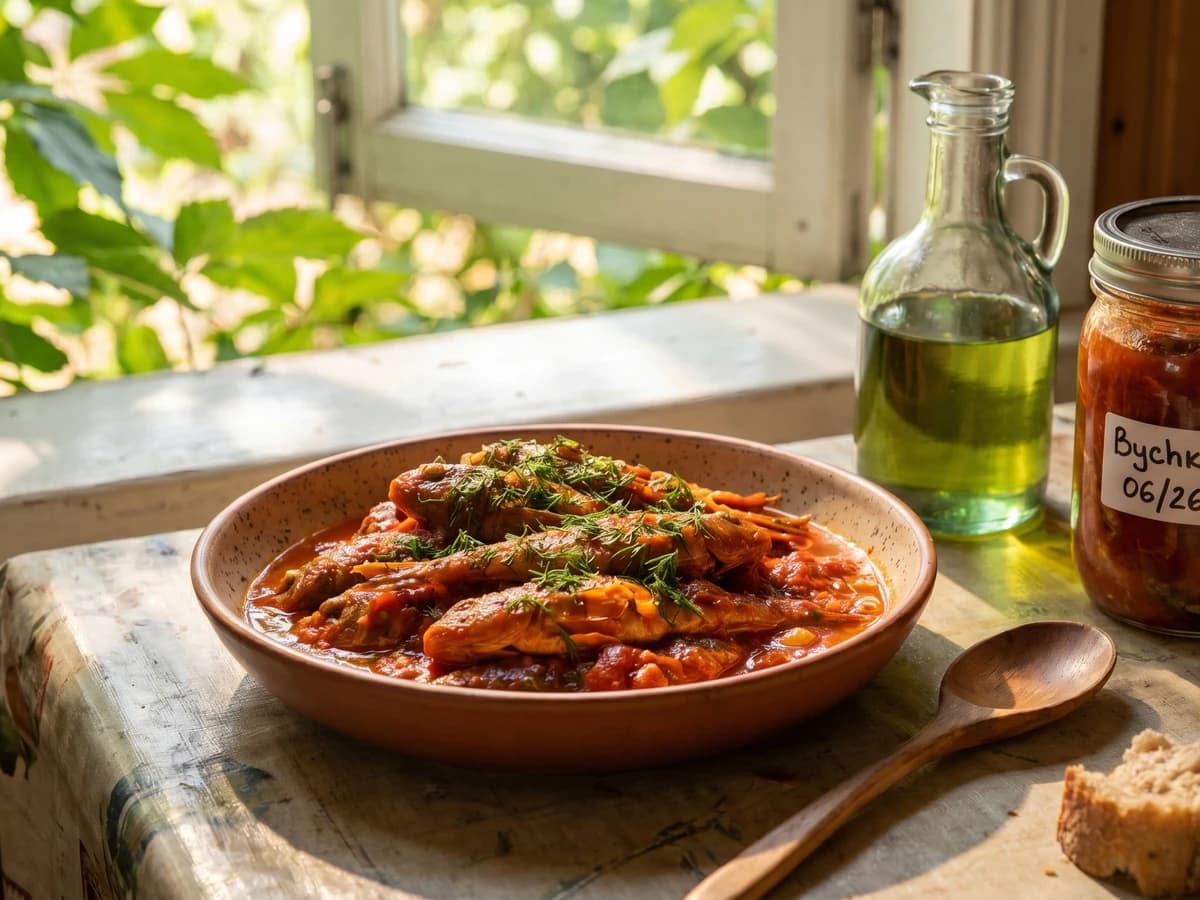
Small Azov gobies go into tomato bright as market cloth and come out soft enough that the bones give up. This is Mariupol food: cheap, red, generous, and better tomorrow.

Chef Lesia
The first sound is the meat against the board: flat, sharp, changing as the fibres loosen. Fry the cutlets fast, then let onion gravy do the soft finishing.

Chef Lesia
A heap of tiny silver fish becomes supper by the oldest Odesa trick: clean them, press them together, fry until the edges crackle, and let lemon and dill do the talking.