Chef Makoa
Faʻapapa (Sāmoan Baked Coconut Bread)
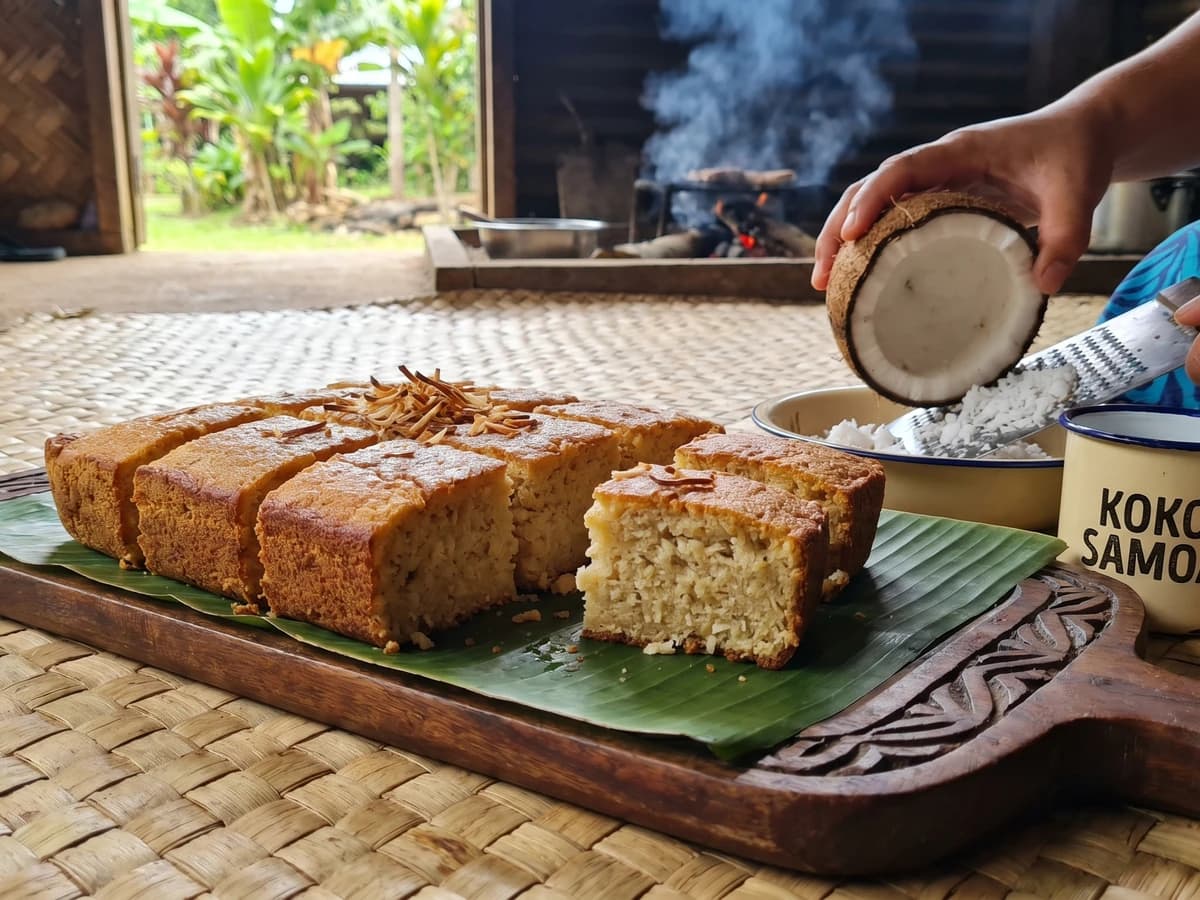
A Sāmoan slab bread, dense with grated popo and coconut cream, baked gold in a home oven and eaten with koko Samoa, budget food that still keeps the family close.
A cooking platform built around craft, culture, and the stories behind what we eat.
Created by
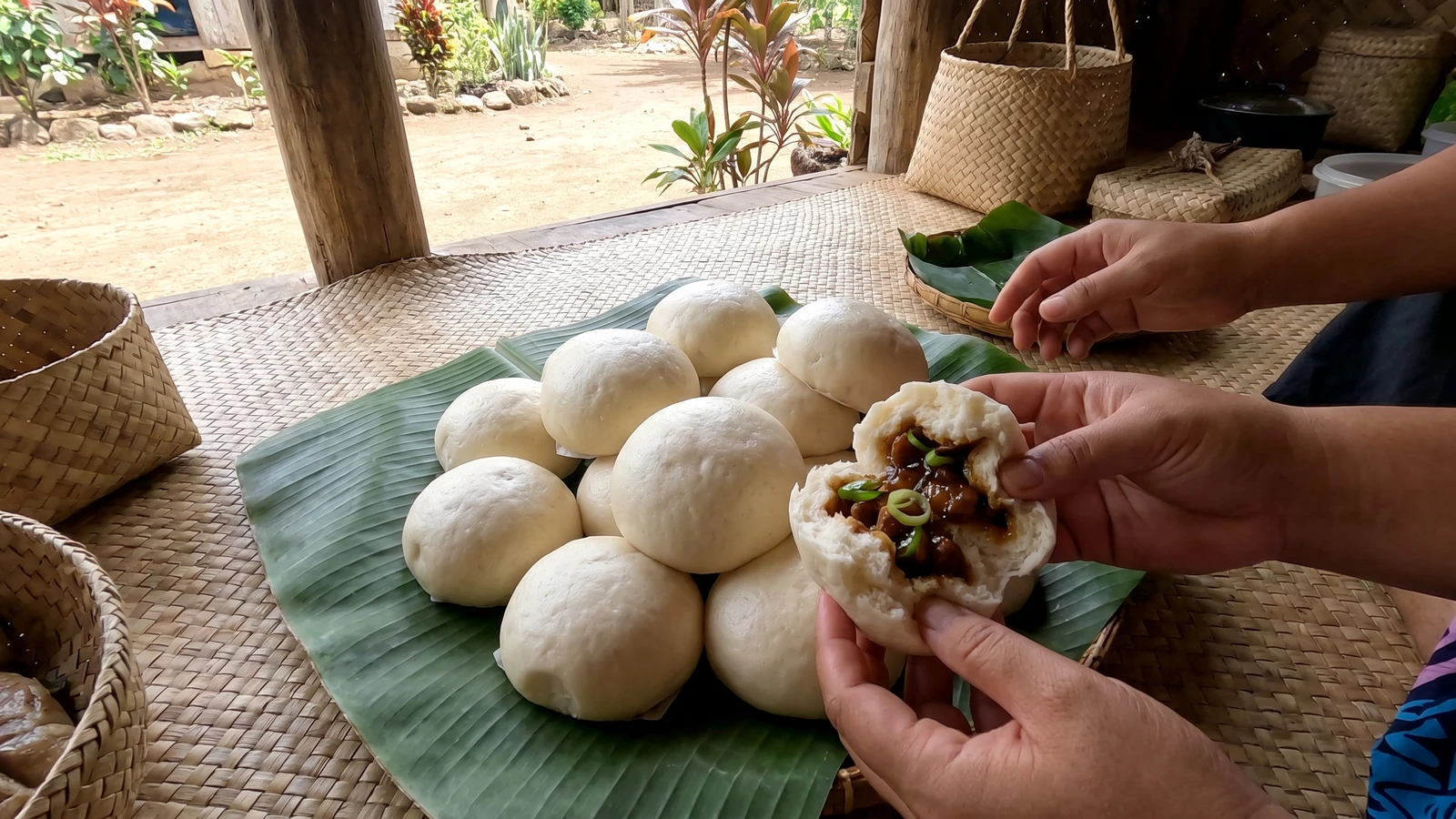
Sāmoa's keke puaʻa wraps sweet white dough around savory pork, steamed soft and shared warm from a market cart, church kitchen, or aiga table.
The first time a Sāmoan auntie handed me keke puaʻa, she didn't explain one thing. She just split it open, let the pork shine in the middle, and said, eat. That's teaching too. Sāmoa knows comfort in the hand, a soft bun big enough to quiet a hungry child, passed across a market counter in Apia or packed for a church hall spread where the whole aiga, the family, keeps making room.
This one is Sāmoa's. The name is plain and good: keke, cake or bun, and puaʻa, pork. It has a Chinese bao ancestor in its body, and that story belongs to Chinese cooks too, but in Sāmoa the bun took on its own walk, a little sweeter in the dough, generous in the filling, homey and unfussy. Back home in Hawaiʻi, our local cousin is manapua, another island answer to the same Chinese root. Same bun family, different hands, different tables.
So don't make this precious. Knead the dough until it feels alive, let it rise until it looks full-bellied, cook the pork until the sauce clings glossy, then close each bun like you're feeding somebody you know. This is not the old canoe-crop food like talo or ʻulu, and I won't pretend it is. But keeper, not gatekeeper, yeah? The islands eat today too: sapasui, corned beef and rice, plate lunch, Spam, and these Sāmoan pork buns warm in a paper bag. Eat what you have, and feed the people in front of you.
Keke puaʻa is a modern Sāmoan food shaped by Chinese bao traditions that came into the islands through trade, migration, and colonial-era labor routes in the late nineteenth and early twentieth centuries. In Sāmoa it became its own market and family-table bun, larger and sweeter than many Chinese versions, filled with seasoned pork and sold hot in Apia shops, roadside carts, school canteens, and church fundraisers. Its Hawaiian cousin is manapua, another local island bun with Chinese roots, proof that contemporary Polynesian foodways carry old canoe foods and newer arrivals side by side.
Quantity
4 cups
plus more for shaping
Quantity
2 1/4 teaspoons
Quantity
1/2 cup
Quantity
1 teaspoon
Quantity
1 cup
about 105F to 110F
Quantity
1/4 cup
plus more for the bowl
Quantity
1 pound
finely diced
Quantity
1 tablespoon
for cooking the filling
Quantity
1 small
finely diced
Quantity
3 cloves
minced
Quantity
1 tablespoon
grated
Quantity
3 tablespoons
Quantity
2 tablespoons
Quantity
1 tablespoon
Quantity
1 tablespoon
Quantity
1/2 teaspoon
Quantity
2
thinly sliced
Quantity
1 tablespoon cornstarch mixed with 2 tablespoons water
Quantity
10
about 4 inches each
| Ingredient | Quantity |
|---|---|
| all-purpose flourplus more for shaping | 4 cups |
| instant yeast | 2 1/4 teaspoons |
| granulated sugar | 1/2 cup |
| fine sea salt | 1 teaspoon |
| warm waterabout 105F to 110F | 1 cup |
| neutral oilplus more for the bowl | 1/4 cup |
| boneless pork shoulder or pork bellyfinely diced | 1 pound |
| neutral oilfor cooking the filling | 1 tablespoon |
| onionfinely diced | 1 small |
| garlicminced | 3 cloves |
| fresh gingergrated | 1 tablespoon |
| soy sauce | 3 tablespoons |
| oyster sauce | 2 tablespoons |
| brown sugar | 1 tablespoon |
| tomato sauce or ketchup | 1 tablespoon |
| black pepper | 1/2 teaspoon |
| green onionsthinly sliced | 2 |
| cornstarch slurry | 1 tablespoon cornstarch mixed with 2 tablespoons water |
| parchment squaresabout 4 inches each | 10 |
Mix the flour, yeast, sugar, and salt in a large bowl. Pour in the warm water and oil, then stir until a shaggy dough comes together. Knead 8 to 10 minutes by hand, or 5 to 6 minutes in a mixer, until the dough turns smooth, soft, and a little springy under your palm.
Rub a bowl lightly with oil, set the dough inside, cover it, and let it rise in a warm place for 1 to 1 1/2 hours, until doubled and full-looking. No rush the dough. Yeast keeps its own small tide, and if the kitchen is cool it just needs more time.
While the dough rises, heat 1 tablespoon oil in a skillet over medium-high heat. Add the diced pork and cook until the edges brown and the fat begins to gloss the pan, 6 to 8 minutes. Stir in the onion, garlic, and ginger and cook until the onion softens and smells sweet.
Add the soy sauce, oyster sauce, brown sugar, tomato sauce, and black pepper. Cook 3 to 4 minutes, until the pork is coated and the sauce looks dark and shiny. Stir in the green onions, then pour in the cornstarch slurry and cook until the filling tightens enough to mound on a spoon. Cool it completely before shaping.
Punch down the dough and divide it into 10 equal pieces. Roll each piece into a round about 5 inches wide, thicker in the center and thinner at the edge. Spoon a generous mound of pork into the middle, then pull the edges up and pinch them closed tight. Set each bun seam-side down on a parchment square.
Cover the shaped buns with a clean towel and let them rest 20 to 30 minutes, until slightly puffed. They don't need to double now. They just need to relax, so the dough steams up soft instead of tight.
Bring a few inches of water to a steady simmer in a wide pot or steamer. Set the buns in the steamer with space between them, because they swell. Cover and steam 16 to 18 minutes for large buns, keeping the heat steady and the lid closed. The finished buns should look plump, matte-white, and tender, with a soft give when pressed.
Turn off the heat and let the buns sit covered for 3 minutes before lifting the lid, so they don't wrinkle hard from the sudden air. Serve warm, whole or split open, with the glossy pork tucked inside the soft bread. Put them out family-style. Somebody will always take one for the road.
1 serving (about 155g)
Culinary guides, cultural storytelling, and the editorial depth that makes cooking meaningful.
Discover Culinary ExplorerChef Makoa
A Sāmoan slab bread, dense with grated popo and coconut cream, baked gold in a home oven and eaten with koko Samoa, budget food that still keeps the family close.
Chef Makoa
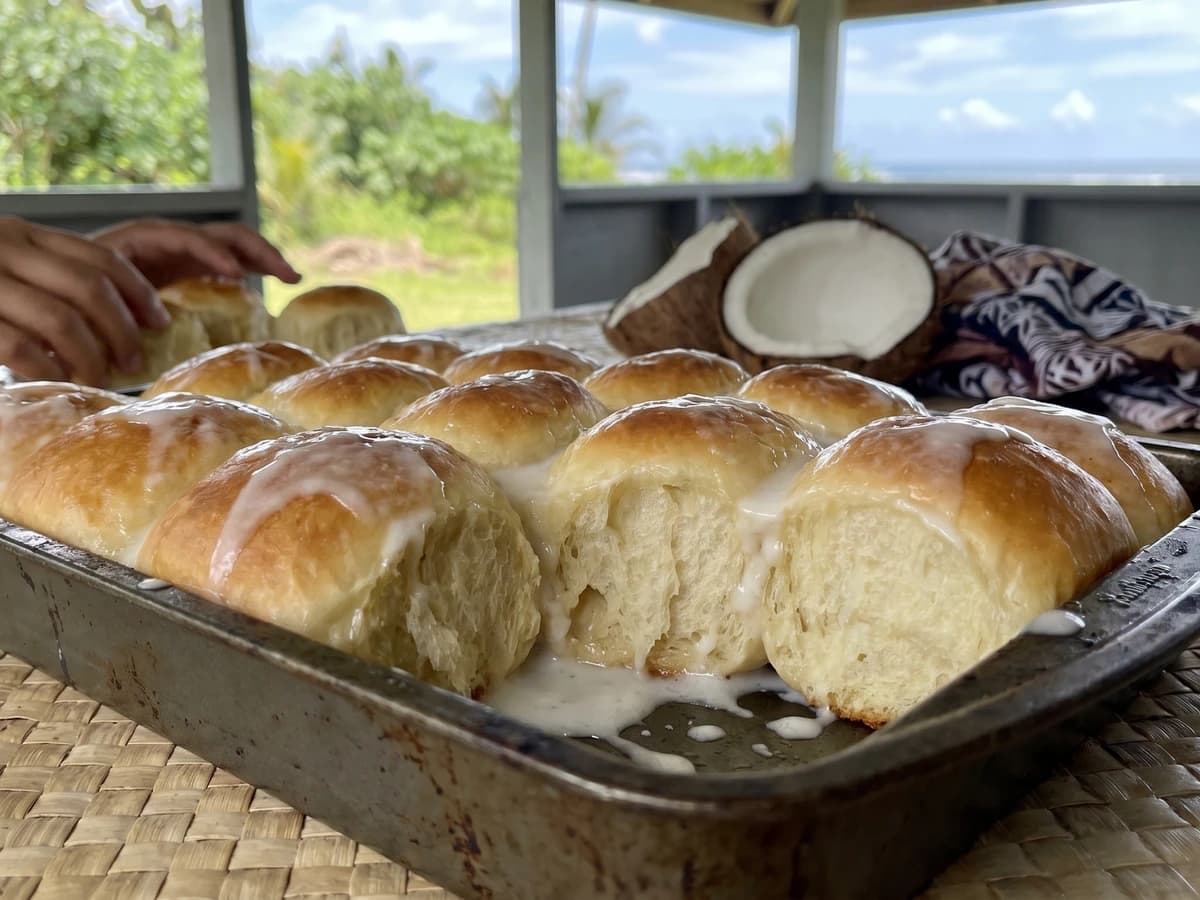
Sāmoa's panipopo, soft bread rolls baked sitting in sweet coconut cream until the bottoms turn gooey and gold. Not ancient canoe food, but living aiga food, warm from today's table.

Chef Juliette
Pâte à brioche ordinaire teaches enriched dough properly: wake the leaven, build strength before the last egg, then work in pliable butter by stages and let one long fermentation do its quiet work.

Chef Juliette
Ordinary brioche takes one exact measure of butter and a patient rise in the mould, becoming so light and silken that it can cradle fruit without losing its tender crumb.