Chef Makoa
Keke Puaʻa (Sāmoan Steamed Pork Bun)
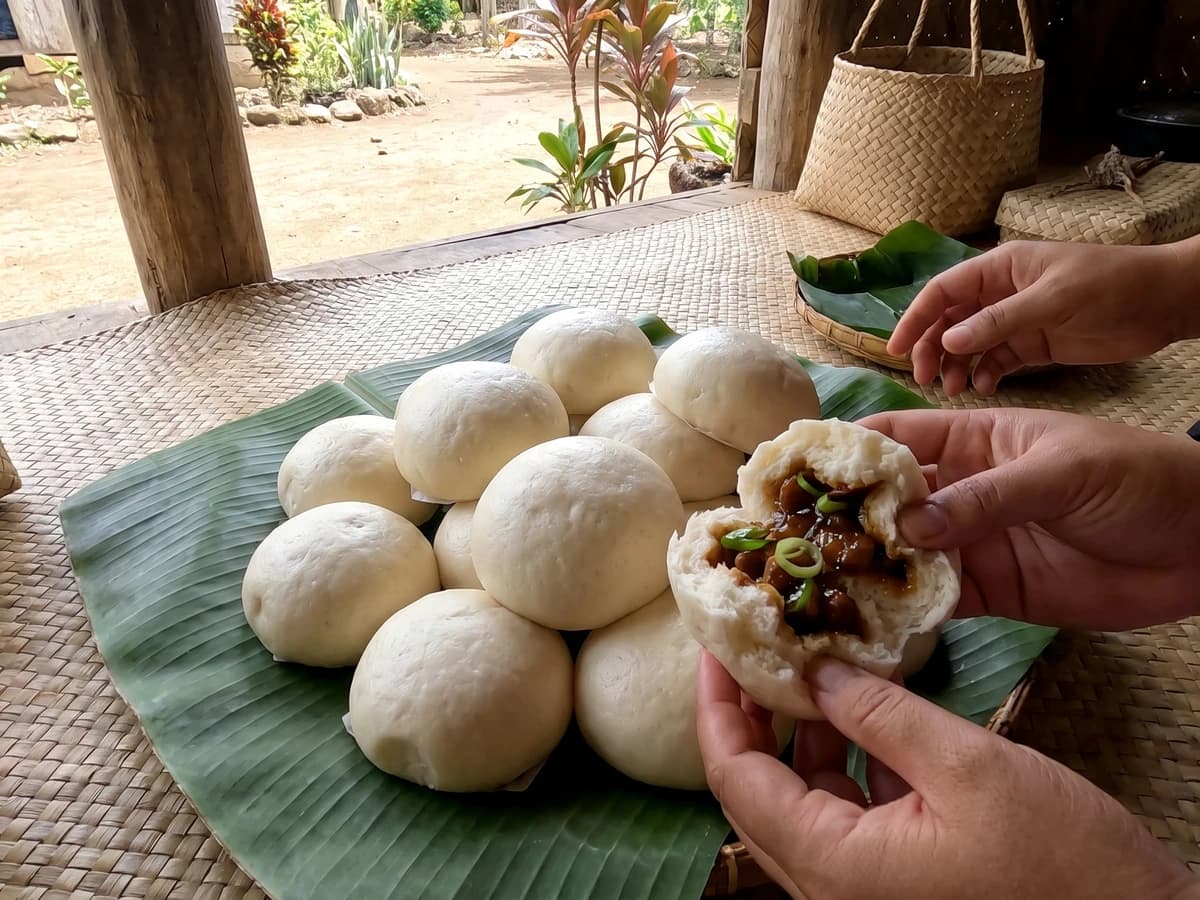
Sāmoa's keke puaʻa wraps sweet white dough around savory pork, steamed soft and shared warm from a market cart, church kitchen, or aiga table.
A cooking platform built around craft, culture, and the stories behind what we eat.

Created by
A Sāmoan slab bread, dense with grated popo and coconut cream, baked gold in a home oven and eaten with koko Samoa, budget food that still keeps the family close.
The auntie who taught me to stop chasing fluffy bread was Sāmoan, sitting under a fale (open house) roof after the morning work, with koko Samoa, the rough-ground cacao drink, dark in the cup. She put a square of faʻafapapa, Sāmoan baked coconut bread, in my hand and laughed when I looked for a soft crumb. Don't make it fluffy, boy, she said. This one supposed to sit with you.
This is Sāmoa's hand: flour and sugar from the newer pantry, popo (mature coconut) from the trees, and peʻepeʻe (fresh coconut cream) to bind it into a dense slab. It is not cake, and it doesn't want to be. Stir only until the flour disappears, press it flat, bake it gold, then let it rest so the coconut fat moves back through the crumb.
Across the Triangle, every cousin taught new flour its own manners. Sāmoa has faʻafapapa and panipopo (Sāmoan coconut buns), Aotearoa has Māori rēwena bread (potato-starter bread), and Hawaiʻi has its plantation-era sweet loaves beside haupia and coconut desserts. Those are cousins, not one blurred plate. One ocean, many hands, each island speaking in its own mouth.
Bring it forward simple. Fresh cream if you can squeeze it, canned if it's Tuesday night and the family is hungry. For the deeper parts of Sāmoan feasting, the toʻonaʻi (Sunday meal) and the family protocols around it, go sit with Sāmoan elders. This bread I pass open-handed, warm from an ordinary oven, cut big enough for one more person at the table.
Faʻapapa sits on Sāmoa's mission-and-trade side of the pantry: wheat flour and refined sugar spread through the islands in the nineteenth century, while popo, mature coconut, was already a tended shoreline food across Polynesia. In Sāmoa, those new dry goods were folded into family breads like faʻafapapa and panipopo, then served with koko Samoa, a cacao drink made local after cacao planting expanded under German colonial rule after 1900. The lesson is not that one food is pure and another is not; it is that Sāmoan families kept feeding their people in Sāmoan ways, even with ingredients history pushed onto the table.
Quantity
for greasing the pan
Quantity
2 cups
Quantity
2 teaspoons
Quantity
1/2 teaspoon
Quantity
1/2 to 3/4 cup
Quantity
1 1/2 cups
loosely packed, or unsweetened frozen shredded coconut, thawed
Quantity
1 1/4 cups, plus 2 tablespoons more if needed
or canned coconut cream stirred smooth
Quantity
2 tablespoons
for the top
| Ingredient | Quantity |
|---|---|
| coconut oil or butter | for greasing the pan |
| all-purpose flour | 2 cups |
| baking powder | 2 teaspoons |
| fine sea salt | 1/2 teaspoon |
| sugar | 1/2 to 3/4 cup |
| fresh grated mature coconut (popo)loosely packed, or unsweetened frozen shredded coconut, thawed | 1 1/2 cups |
| thick fresh coconut cream (peʻepeʻe)or canned coconut cream stirred smooth | 1 1/4 cups, plus 2 tablespoons more if needed |
| grated coconut (popo) (optional)for the top | 2 tablespoons |
Heat the oven to 350F. Grease an 8-inch square pan and line it with banana leaf if you have it, glossy side up, or parchment if that's what your kitchen gives you. If the banana leaf is stiff, pass it over a warm burner or hot pan just until it bends without cracking.
Whisk the flour, baking powder, salt, and sugar together. Add the grated popo and rub it through the flour with your fingers so the coconut separates and every strand gets coated. It should smell sweet and nutty before any liquid touches it.
Pour in the coconut cream and stir with a strong spoon until the flour disappears. The dough should be thick, sticky, and heavy, more like wet clay than cake batter. If dry flour is sitting at the bottom, add coconut cream 1 tablespoon at a time. Stop when it comes together; working it too long makes it tough.
Scrape the dough into the pan. Wet your hands with coconut cream or oil and press it to the corners, about 1 inch thick, smoothing the top without polishing it into cake. Scatter the optional grated popo over the top if you want that rough coconut crust.
Bake 35 to 45 minutes, until the top is pale gold, the edges are deeper brown, and the center feels firm when you press it lightly. A skewer should come out with moist crumbs, not wet paste. If the edges brown before the middle is set, lay foil loosely over the pan for the last 10 minutes.
Let the faʻafapapa rest in the pan for 20 minutes so the coconut fat settles back through the crumb. Cut it into thick squares and serve warm or room temperature with koko Samoa, black coffee, or tea. It should be dense and chewy. If it eats like cake, no blame the bread, that's another loaf.
1 serving (about 95g)
Culinary guides, cultural storytelling, and the editorial depth that makes cooking meaningful.
Discover Culinary ExplorerChef Makoa
Sāmoa's keke puaʻa wraps sweet white dough around savory pork, steamed soft and shared warm from a market cart, church kitchen, or aiga table.
Chef Makoa
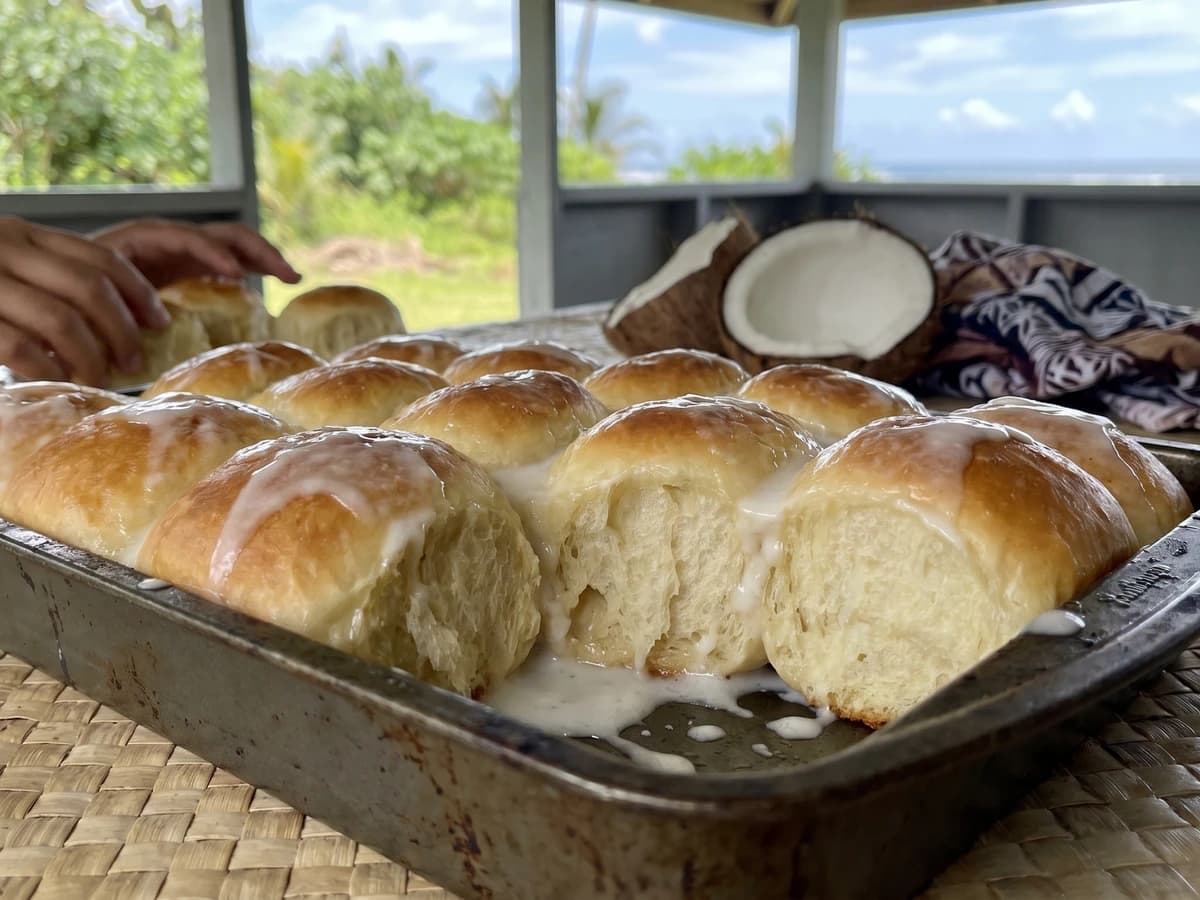
Sāmoa's panipopo, soft bread rolls baked sitting in sweet coconut cream until the bottoms turn gooey and gold. Not ancient canoe food, but living aiga food, warm from today's table.

Chef Juliette
Pâte à brioche ordinaire teaches enriched dough properly: wake the leaven, build strength before the last egg, then work in pliable butter by stages and let one long fermentation do its quiet work.

Chef Juliette
Ordinary brioche takes one exact measure of butter and a patient rise in the mould, becoming so light and silken that it can cradle fruit without losing its tender crumb.