Chef Makoa
Keke Faʻi (Sāmoan Banana Cake)
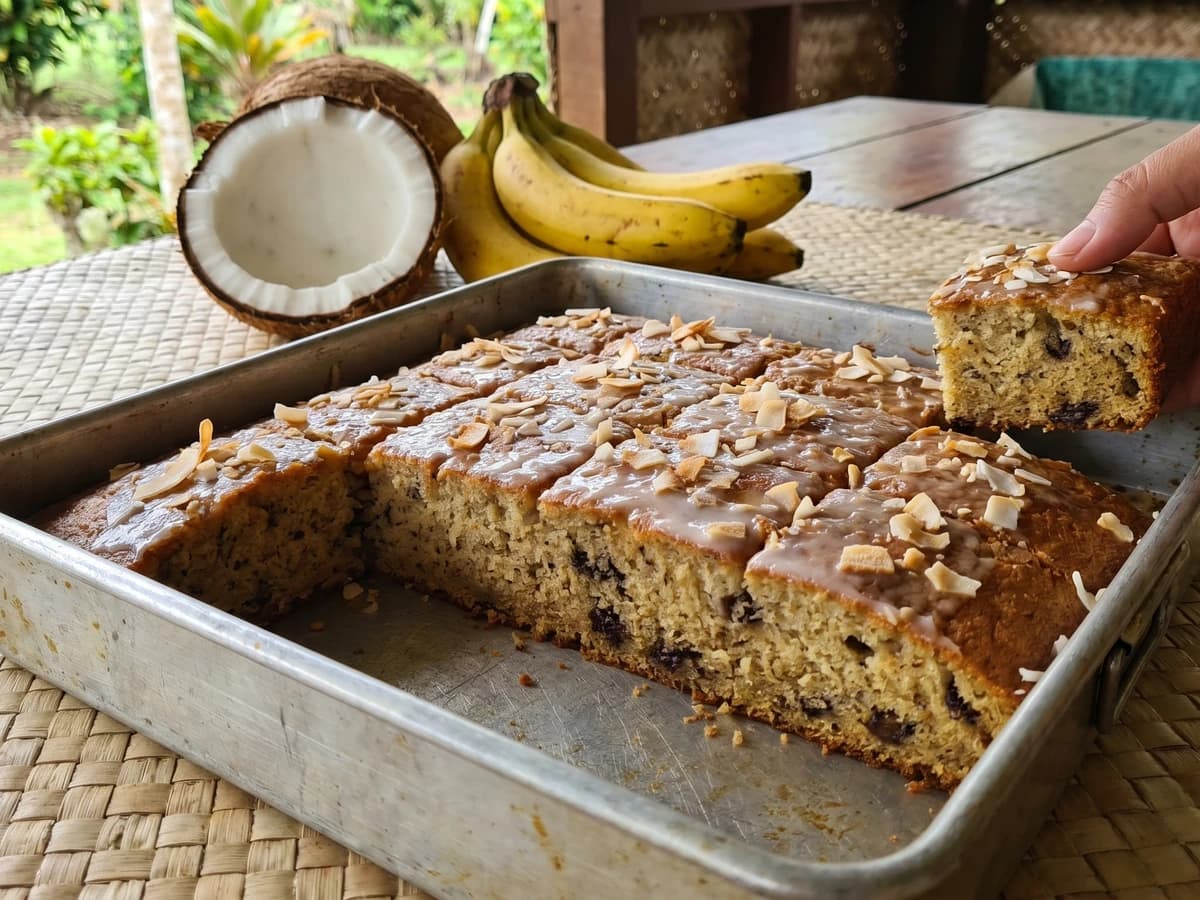
Sāmoa's keke faʻi is a soft home-oven banana cake, ripe fruit mashed deep into the crumb, coconut cream brushed over warm, made for birthdays, toʻonaʻi, and tea with the aiga.
A cooking platform built around craft, culture, and the stories behind what we eat.
Created by
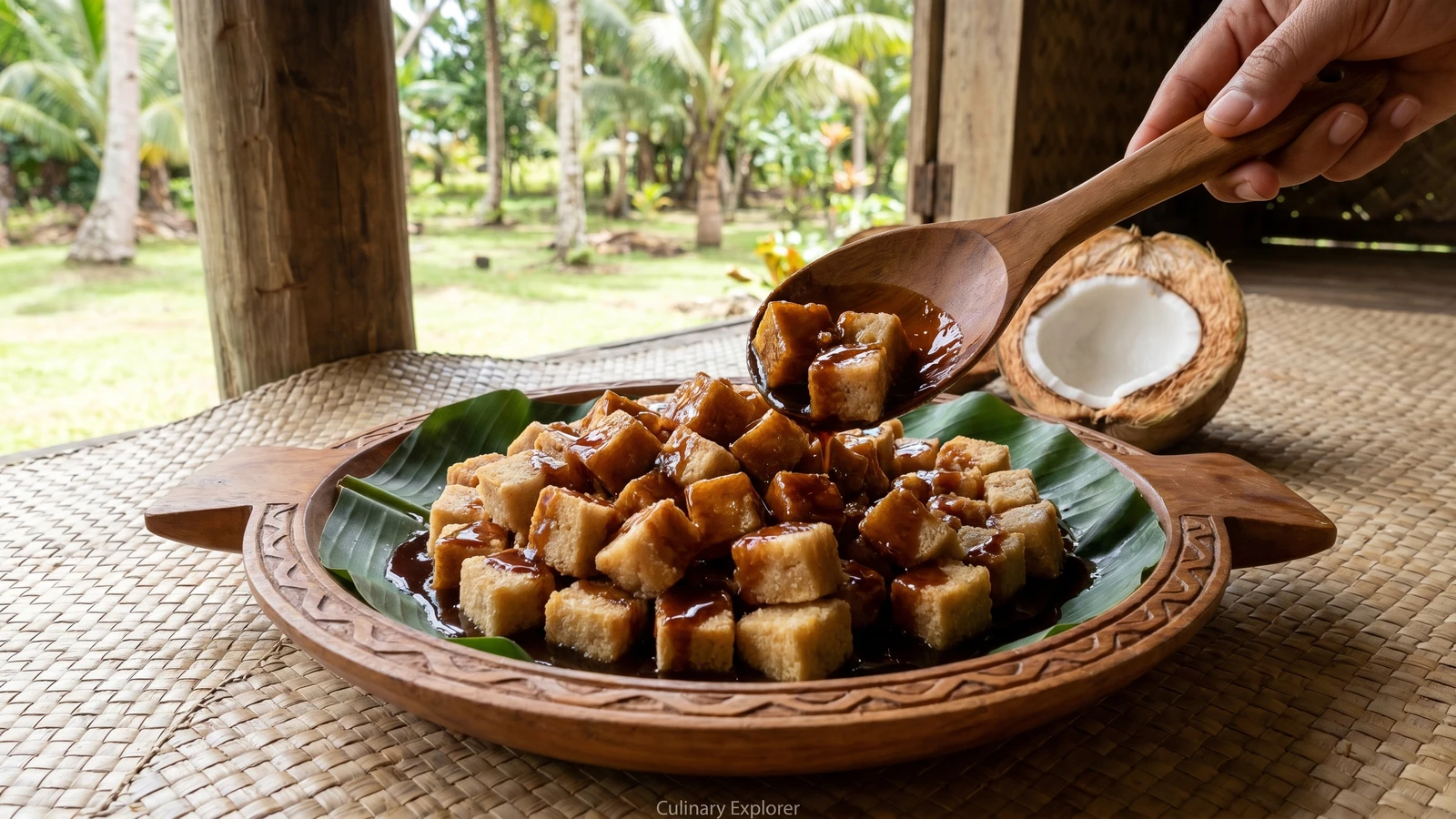
Sāmoa's faʻausi brings cubes of dense faʻapapa coconut bread under dark coconut caramel, the sweet ending of toʻonaʻi, and kin to Tonga's faikakai and the Cook Islands poke.
ʻĀiga means family in gagana Sāmoa, the Sāmoan language, and that's where this sweet begins. Not in a pastry case. At the end of toʻonaʻi, the Sunday meal after church, when the savory umu, the Sāmoan hot-stone oven, has already fed everybody and somebody comes through with a pan shining dark. This is faʻausi, Sāmoa's coconut-caramel dumpling plate: cubes of faʻapapa, dense Sāmoan coconut bread, or sometimes grated cassava baked firm, covered with peʻepeʻe, fresh coconut cream, cooked into caramel.
The Sāmoan aunties who showed me this didn't make it precious. They made it generous. The sugar goes dark because the coconut can take that little bitter edge, and the bread is dense on purpose so it drinks the sauce without falling apart. That's the why beneath the method. You're not making cake with frosting. You're making something sturdy enough for a full table, sweet enough to close the meal, soft enough that the children go quiet for one minute before asking who gets the corner.
Across the Triangle, the cousins are not the same dish, and we name them by their own houses: Tonga has faikakai, dumplings in sweet coconut syrup; the Cook Islands have poke, fruit or starch pudding with coconut cream; Tahiti has poʻe, fruit pudding eaten with coconut; Hawaiʻi has kūlolo, kalo and coconut baked slow. Same coconut, same love of starch, different island hands. For Sāmoa's faʻausi, squeeze the coconut cream fresh if you can, use a can when that is what the pantry gives, and keep your hands open. For the deep meaning of toʻonaʻi and the umu, go sit with a Sāmoan elder. They should tell their own story.
Faʻausi sits on Sāmoa's mission-and-trade side of the doorway, not the older canoe-crop side like talo and ʻulu: by the nineteenth century, wheat flour, refined sugar, and cassava from the Americas were entering Pacific kitchens, while coconut stayed the old Pacific backbone. Sāmoan cooks made those arrivals their own in the toʻonaʻi spread, baking dense faʻapapa or manioc, then pouring over coconut caramel after the umu foods had fed the savory table. Its named cousins across the Triangle, Tongan faikakai, Cook Islands poke, Tahitian poʻe, and Hawaiian kūlolo, show how each island speaks starch, sweetness, and coconut in its own tongue.
Quantity
3 cups
Quantity
1/2 cup
Quantity
1 tablespoon
Quantity
1/2 teaspoon
Quantity
1 cup
Quantity
1 1/4 cups
plus 2 to 4 tablespoons more if the dough is dry
Quantity
as needed
for lining the pan
Quantity
as needed
for greasing
Quantity
1 1/4 cups
Quantity
1/4 cup
Quantity
1 1/2 cups
warmed
Quantity
1/4 teaspoon
Quantity
2 pounds
squeezed dry, for the cassava version
| Ingredient | Quantity |
|---|---|
| all-purpose flour | 3 cups |
| granulated sugar | 1/2 cup |
| baking powder | 1 tablespoon |
| fine sea salt | 1/2 teaspoon |
| fresh grated mature coconut or unsweetened shredded coconut | 1 cup |
| thick coconut milkplus 2 to 4 tablespoons more if the dough is dry | 1 1/4 cups |
| banana leaf or parchmentfor lining the pan | as needed |
| coconut oil or neutral oilfor greasing | as needed |
| granulated sugar, for the coconut caramel | 1 1/4 cups |
| water | 1/4 cup |
| fresh coconut cream (peʻepeʻe) or canned coconut creamwarmed | 1 1/2 cups |
| sea salt | 1/4 teaspoon |
| peeled grated cassava or thawed frozen grated cassava (optional)squeezed dry, for the cassava version | 2 pounds |
Heat the oven to 350F. Line an 8-inch square pan with parchment, or with banana leaf if you have it, and grease it lightly. If the banana leaf is stiff, pass it over a hot pan or low flame just until it relaxes and bends. No need make it fancy. The leaf is there to hold the food and give a little green breath to the bread.
Whisk the flour, sugar, baking powder, and salt in a wide bowl, then stir in the grated coconut. Pour in the coconut milk and mix with your hand or a sturdy spoon until you have a thick, sticky dough with no dry pockets. Apāpapa, the Sāmoan coconut bread, should be dense. If you beat it like cake, it forgets its job, and its job is to drink the caramel.
Press the dough evenly into the pan with damp fingers. Bake for 38 to 45 minutes, until the top is matte and lightly golden, the edges pull a little from the pan, and the center feels set when you press it. It will not feel fluffy. Good. This is sturdy food, made for a full table.
Let the faʻapapa cool for 10 minutes, then lift it out and cut it into rough 1-inch cubes. Put the cubes in a wide serving bowl or shallow pan. Don't chase perfect dice. The broken corners and uneven faces are where the sauce holds on.
Put the sugar and water in a heavy saucepan with high sides. Cook over medium-high heat until the sugar dissolves, then stop stirring and let it boil, swirling the pan now and then, until it turns deep amber, almost mahogany, and smells like toasted sugar with a clean bitter edge. Watch close here. Caramel gives you one warning, then it goes too far.
Take the pan off the heat and slowly pour in the warm coconut cream. It will bubble hard, so keep your face and hands back. Stir until the caramel smooths out, then return it to low heat and simmer 3 to 5 minutes, until glossy and thick enough to coat a spoon. Stir in the salt. The sauce should taste dark, sweet, and coconut-rich, not sharp with burnt sugar.
Pour the hot coconut caramel over the cubes and fold gently until every piece is coated. Let it sit 10 to 15 minutes so the bread drinks the sauce but still keeps its shape. Serve warm or at room temperature, family-style, with extra sauce spooned from the bottom. This is Sāmoa's sweet ending, not a precious little square on a plate.
1 serving (about 160g)
Culinary guides, cultural storytelling, and the editorial depth that makes cooking meaningful.
Discover Culinary ExplorerChef Makoa
Sāmoa's keke faʻi is a soft home-oven banana cake, ripe fruit mashed deep into the crumb, coconut cream brushed over warm, made for birthdays, toʻonaʻi, and tea with the aiga.

Chef Juliette
Five almond preparations, one discipline: remove the skins cleanly, dry every kernel through, then cut, toast, or cloak it in pale caramel without letting its fragrant oils escape.

Chef Juliette
A pastry pantry lesson in one tray: filberts warmed only until their red skins release, rubbed clean, cooled, and chopped into a fragrant mise-en-place for cakes, creams, pralines, and petits fours.

Chef Juliette
The smallest pâtisserie discipline decides whether a cake leaves its mould intact: clarified butter in every corner, followed by the lightest veil of dry flour or fécule.