Chef Makoa
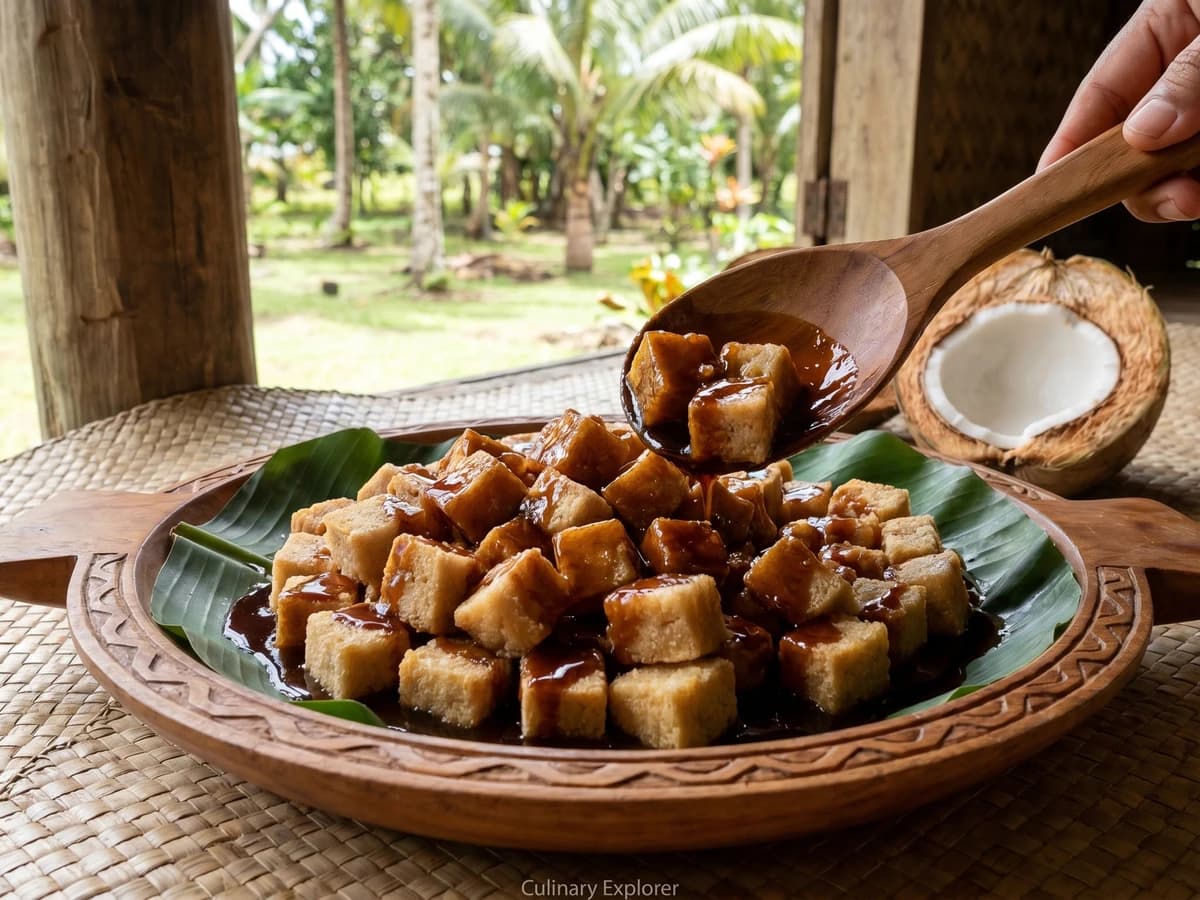
Faʻausi (Sāmoan Coconut-Caramel Dumplings)
Sāmoa's faʻausi brings cubes of dense faʻapapa coconut bread under dark coconut caramel, the sweet ending of toʻonaʻi, and kin to Tonga's faikakai and the Cook Islands poke.
A cooking platform built around craft, culture, and the stories behind what we eat.

Created by
Sāmoa's keke faʻi is a soft home-oven banana cake, ripe fruit mashed deep into the crumb, coconut cream brushed over warm, made for birthdays, toʻonaʻi, and tea with the aiga.
The first time a Sāmoan auntie set keke faʻi in front of me, she did it the way good relatives do, one square on a napkin before I could say I was full. Keke means cake in gagana Sāmoa, the Sāmoan language, and faʻi is banana, so the name tells the truth plain. This is Sāmoa's home-oven sweet, born from ripe fruit off the fanua (land), coconut, flour, and the aiga (family) table, not from some nameless plate called Polynesian.
The faʻi isn't the taro, no need put another plant's genealogy on it, but it traveled with the people too, a canoe crop that fed children and elders long before flour and baking powder came into the kitchen. Across the Triangle the cousins answer in their own voices: Cook Islands poke, a ripe banana pudding with coconut; Tahitian poʻe, fruit and starch finished with coconut; and in Hawaiʻi, maiʻa (banana) turns up in local sweet breads today. Same canoe memory, different hands, and this cake belongs to Sāmoa.
The work is simple because the table is busy. Let the bananas go soft and freckled, mash them rough, fold the flour gentle, and brush coconut cream over while the cake is still warm enough to drink it in. No need dress it up like a hotel dessert. Cut big squares, leave the pan where hands can reach, and let birthday candles, afternoon tea, or a Sunday toʻonaʻi (Sunday meal) make the occasion.
Banana was one of the canoe plants carried by Austronesian voyagers, so faʻi was in Sāmoa long before wheat flour, sugar, or baking powder. After the London Missionary Society reached Sāmoa in 1830, mission households and later colonial trade helped bring those dry goods and enclosed ovens into celebration food; keke itself is English cake made Sāmoan. Keke faʻi lives in that meeting place beside older fruit-and-coconut sweets such as Cook Islands poke and Tahitian poʻe, each island keeping ripe fruit in its own hand.
Quantity
as needed
for the pan
Quantity
3 to 4
mashed, about 1 1/2 cups
Quantity
2 cups
Quantity
1 teaspoon
Quantity
1 teaspoon
Quantity
1/2 teaspoon
Quantity
1/2 teaspoon
Quantity
3/4 cup
Quantity
1/2 cup
cooled if using butter
Quantity
2
room temperature
Quantity
1/2 cup
stirred smooth, or canned coconut cream
Quantity
1 teaspoon
Quantity
1/3 cup
additional, for brushing
Quantity
2 tablespoons
for brushing
Quantity
1 pinch
for brushing
Quantity
1/4 cup
lightly toasted
| Ingredient | Quantity |
|---|---|
| neutral oil or melted butterfor the pan | as needed |
| very ripe bananas (faʻi)mashed, about 1 1/2 cups | 3 to 4 |
| all-purpose flour | 2 cups |
| baking powder | 1 teaspoon |
| baking soda | 1 teaspoon |
| fine sea salt | 1/2 teaspoon |
| ground cinnamon (optional) | 1/2 teaspoon |
| packed light brown sugar | 3/4 cup |
| neutral oil or melted unsalted buttercooled if using butter | 1/2 cup |
| large eggsroom temperature | 2 |
| thick coconut cream (peʻepeʻe if fresh)stirred smooth, or canned coconut cream | 1/2 cup |
| vanilla extract | 1 teaspoon |
| thick coconut creamadditional, for brushing | 1/3 cup |
| brown sugarfor brushing | 2 tablespoons |
| sea saltfor brushing | 1 pinch |
| unsweetened shredded coconut (optional)lightly toasted | 1/4 cup |
Heat the oven to 350F. Grease a 9-by-13-inch metal baking pan and line the bottom with parchment if you want clean lifting later. This is a family cake, so the plain pan is plenty. No need make it precious.
Peel the very ripe faʻi and mash them with a fork until soft and loose, with a few small lumps left. Measure about 1 1/2 cups. The smell should be deep and sweet, almost honeyed, because that ripe fruit is carrying the cake.
Whisk the flour, baking powder, baking soda, salt, and cinnamon if you're using it. Break up any little pockets of soda now, because nobody wants that bitter bite in the middle of a birthday square.
In a larger bowl, whisk the brown sugar with the oil or cooled melted butter until glossy and sandy. Beat in the eggs one at a time, then whisk in the coconut cream and vanilla. Fold in the mashed faʻi until the bowl smells like ripe fruit and coconut.
Tip the dry ingredients into the wet and fold gently until no dry streaks remain. Stop there. If you stir hard now, the flour tightens and the cake goes heavy. No blame the keke. You beat it too long.
Scrape the batter into the pan and smooth it to the corners. Bake 32 to 38 minutes, until the top is honey-brown, the center springs back under a light finger, and a skewer comes out with moist crumbs instead of wet batter. The edges should just begin to pull from the pan.
While the cake finishes baking, warm the extra coconut cream with the brown sugar and pinch of salt just until the sugar melts. When the cake comes out, make shallow holes across the top with a skewer and spoon or brush the coconut finish over it. It should sink in and leave a soft sheen, not sit on top like frosting.
Let the cake rest at least 15 minutes so the crumb settles and the coconut finds its way down. Scatter toasted coconut over the top if you're using it, then cut big squares. Serve warm or room temperature, from the pan or on a wooden board, with tea, coffee, or whatever the aiga already has on the table.
1 serving (about 90g)
Culinary guides, cultural storytelling, and the editorial depth that makes cooking meaningful.
Discover Culinary ExplorerChef Makoa
Sāmoa's faʻausi brings cubes of dense faʻapapa coconut bread under dark coconut caramel, the sweet ending of toʻonaʻi, and kin to Tonga's faikakai and the Cook Islands poke.

Chef Juliette
Five almond preparations, one discipline: remove the skins cleanly, dry every kernel through, then cut, toast, or cloak it in pale caramel without letting its fragrant oils escape.

Chef Juliette
A pastry pantry lesson in one tray: filberts warmed only until their red skins release, rubbed clean, cooled, and chopped into a fragrant mise-en-place for cakes, creams, pralines, and petits fours.

Chef Juliette
The smallest pâtisserie discipline decides whether a cake leaves its mould intact: clarified butter in every corner, followed by the lightest veil of dry flour or fécule.