Culinary Explorer

A cooking platform built around craft, culture, and the stories behind what we eat.
Discover Culinary Explorer
Kasspressknödel (Tyrolean Fried Cheese Dumplings)

Kasspressknödel (Tyrolean Fried Cheese Dumplings)

Created by

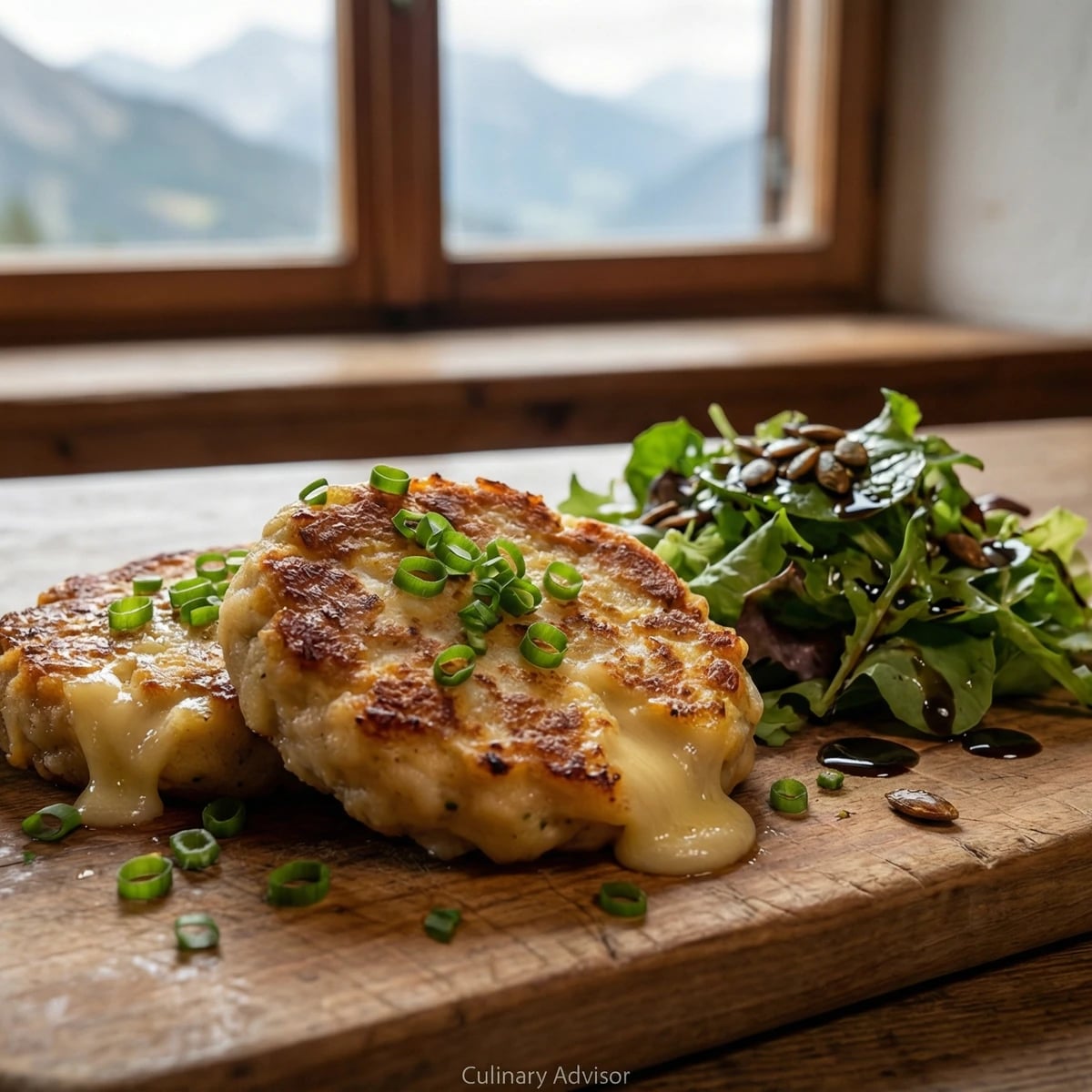
Tyrolean flat-pressed cheese dumplings, golden and crisp from the pan, stuffed with Bergkäse and day-old bread. Almhütte cooking at its most honest, served with salad or floated in clear broth.

Appetizers & Snacks
Austrian
Comfort Food
Outdoor Dining
30 min
Active Time
25 min cook55 min total
Yield4 servings (about 8 Knödel)

The first time I had Kasspressknödel I was eleven, sitting on a wooden bench outside an Almhütte somewhere above Innsbruck with Gretel and my grandmother Eva. We'd hiked up from the valley, which at eleven felt like climbing the Matterhorn, and the reward was a plate of these flat, golden dumplings with a bowl of green salad on the side. The cheese was still melting when the plate hit the table. I ate three before anyone told me to slow down.

Kasspressknödel are mountain food, made by people who had stale bread, hard cheese, a few eggs, and a hot pan. That's Tyrolean cooking in a sentence: nothing wasted, everything good. You take day-old Semmeln, soak them in a little warm milk, work in a generous amount of coarsely grated Bergkäse, some fried onion, fresh herbs, and enough egg to hold it all together. Then you press the mixture flat (that's the "press" in the name) and fry the patties in butter until the outside turns golden and the cheese inside goes soft and stringy.

What makes them special is the contrast. The crust is crisp and golden from the pan. The center is soft, warm, tangled with melted cheese. Every bite gives you both. In Tyrol, you'll find Kasspressknödel on the menu at nearly every Gasthaus and Almhütte from Innsbruck to the Arlberg, and every cook will tell you theirs are the right ones. They're all correct. This is peasant food that became a point of regional pride, and Tyroleans are not shy about their pride.

Kasspressknödel originated in the Tyrolean Alps as a way to use stale bread and the hard mountain cheeses produced on high-altitude Almen (alpine pastures). The tradition of pressing Knödel flat before frying is specific to Tyrol and distinguishes them from the round Semmelknödel found elsewhere in Austria. The dish became a symbol of Tyrolean Almhütte culture, where hikers and farmers alike eat from the same menu, and it was inscribed on Austria's national inventory of intangible cultural heritage traditions.

The technique, the tradition, and the story behind every dish.

Discover Culinary Explorer

Ingredients

day-old Semmeln or white bread

Quantity

250g

cut into small cubes

whole milk

Quantity

150ml

warm

Bergkäse (Austrian mountain cheese)

Quantity

150g

coarsely grated

onion

Quantity

1 medium

finely diced

unsalted butter (for frying onion)

Quantity

30g

eggs

Quantity

2 large

lightly beaten

plain flour

Quantity

2 tablespoons

fresh chives

Quantity

2 tablespoons

finely cut

fresh flat-leaf parsley

Quantity

1 tablespoon

chopped

salt and black pepper

Quantity

to taste

nutmeg

Quantity

pinch

freshly grated

clarified butter or unsalted butter

Quantity

for pan-frying

green salad or clear beef broth (optional)

Quantity

for serving

Equipment Needed

  • Large mixing bowl
  • Heavy-bottomed pan or skillet (28cm)
  • Coarse grater for cheese
  • Small frying pan for onion

Instructions

  1. 1

    Soak the bread cubes

    Place the bread cubes in a large bowl and pour the warm milk over them. Toss gently so the milk reaches every piece. Let them sit for fifteen minutes. You want the bread soft enough to hold together but not waterlogged. If you squeeze a cube and milk streams out, you've added too much. The bread should feel damp and pliable, like it could be pressed into shape without crumbling apart.

    Day-old Semmeln are best. If your bread is fresh, cut it into cubes and spread them on a tray the night before. Fresh bread holds too much moisture and the Knödel will fall apart in the pan.
  2. 2

    Fry the onion

    Melt the butter in a small pan over medium heat. Add the diced onion and cook slowly, stirring now and then, until soft and translucent. This takes about five minutes. You're not looking for color. Golden-brown onion would fight the cheese instead of supporting it. Pull the pan off the heat and let the onion cool for a few minutes before adding it to the bread.

  3. 3

    Mix the Knödel mass

    Add the grated Bergkäse, fried onion, beaten eggs, flour, chives, parsley, a good pinch of salt, pepper, and nutmeg to the soaked bread. Mix everything together with your hands. Get in there. You need to feel when the mixture comes together, when it's wet enough to hold its shape but not so wet it sticks to everything. If it feels too loose, add a little more flour, a teaspoon at a time. If it's too dry and crumbly, a splash more milk. The Bergkäse should be in visible pieces throughout, not vanished into the dough.

    Let the mixture rest for ten minutes before shaping. The flour hydrates, the bread absorbs the egg, and the whole mass becomes easier to work with. Skipping this rest is why people's Knödel fall apart.
  4. 4

    Shape the patties

    Wet your hands slightly. Take a generous handful of the mixture, about the size of a tennis ball, and roll it between your palms. Then press it flat into a patty roughly two centimeters thick and eight centimeters across. The "press" in Kasspressknödel is the whole point. These are not round dumplings. They're flat so they develop a proper crust on both sides. Set each patty on a board and repeat until you have about eight.

  5. 5

    Pan-fry until golden

    Heat a generous amount of clarified butter in a wide, heavy pan over medium heat. You need enough that the patties sizzle when they go in, but they shouldn't be swimming. Lay the Knödel in without crowding. Four at a time in a 28cm pan is right. Fry for four to five minutes on the first side. Don't touch them. Don't nudge them. Let the crust form. When the edges turn deep golden and the cheese near the surface starts to melt and catch, flip them carefully. Another three to four minutes on the second side. The outside should be crisp and golden, the inside soft and warm with pockets of melted Bergkäse.

    If the Knödel stick, your pan wasn't hot enough or you didn't use enough butter. Both problems have the same solution: more heat, more butter.
  6. 6

    Serve with salad or broth

    You have two choices, and both are correct. For the Almhütte way, serve two Knödel on a plate with a simple green salad dressed in pumpkin seed oil and cider vinegar. The cool, sharp salad against the warm, cheesy Knödel is one of the best contrasts in Austrian cooking. For the soup way, float one or two Knödel in a bowl of clear, hot beef broth. The broth softens the crust just slightly on the outside while the inside stays rich with melted cheese. Either way: Mahlzeit!

Chef Tips

  • The cheese matters here more than anywhere. Bergkäse, a firm Alpine cheese aged at least four months, gives the Knödel their character. If you can't find Austrian Bergkäse, a good Gruyère or Comté will work, but stay away from anything pre-shredded or mild. You want a cheese that announces itself.
  • Grate the cheese on the coarse side of the grater. Fine shreds melt away and disappear. Coarse pieces hold their shape just enough that you get pockets of melted cheese inside each Knödel, which is exactly what you want.
  • Gretel always said that the best Knödel are made by feel, not by measuring. If the mixture holds together when you press it in your palm, it's ready. If it crumbles, add a splash of milk. If it's wet and sticky, a dusting of flour. Trust your hands.
  • These reheat well in a hot pan with a little fresh butter. They don't reheat well in a microwave. The crust goes soft and sad. Don't do it.

Advance Preparation

  • The Knödel mixture can be made several hours ahead and refrigerated. The flavors develop nicely and the mixture firms up, making it easier to shape. Bring it to room temperature for twenty minutes before forming the patties.
  • Shaped, uncooked patties can be layered between parchment paper and refrigerated for up to one day, or frozen for up to a month. Fry from frozen, adding a minute or two per side.
  • If serving in broth, have your clear beef broth hot and ready before you start frying. The Knödel should go from pan to bowl without waiting.

Frequently Asked Questions

Nutrition Information

1 serving (about 195g)

Calories
520 calories
Total Fat
30 g
Saturated Fat
17 g
Trans Fat
0 g
Unsaturated Fat
13 g
Cholesterol
170 mg
Sodium
800 mg
Total Carbohydrates
39 g
Dietary Fiber
2 g
Sugars
5 g
Protein
22 g

Note: Chef personas and recipes are created with AI assistance. Cook with care: follow safe food-handling practices, check doneness with a thermometer when needed, and adapt for allergies and your kitchen.

Where cooking meets culture.

Culinary guides, cultural storytelling, and the editorial depth that makes cooking meaningful.

Discover Culinary Explorer

More from Austrian Jause & Brettljause

Browse the full collection