Chef Elsa
Almjause (Alpine Hut Snack Board)
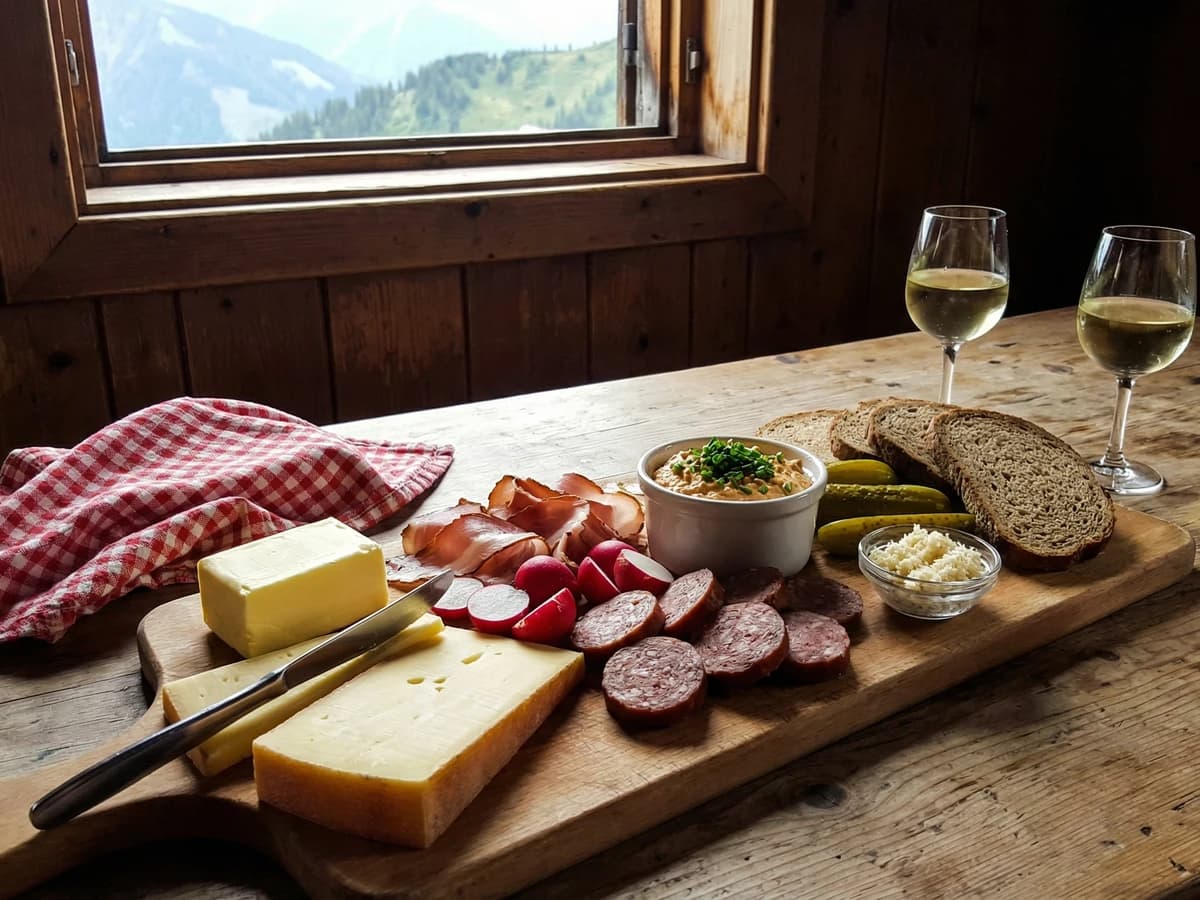
A wooden board loaded with mountain cheese, juniper-smoked Speck, air-dried Hauswürstel, handmade Liptauer, fresh Kren, and thick-cut Bauernbrot, the way Austrian Almhütten have fed hikers for generations.
A cooking platform built around craft, culture, and the stories behind what we eat.
Created by
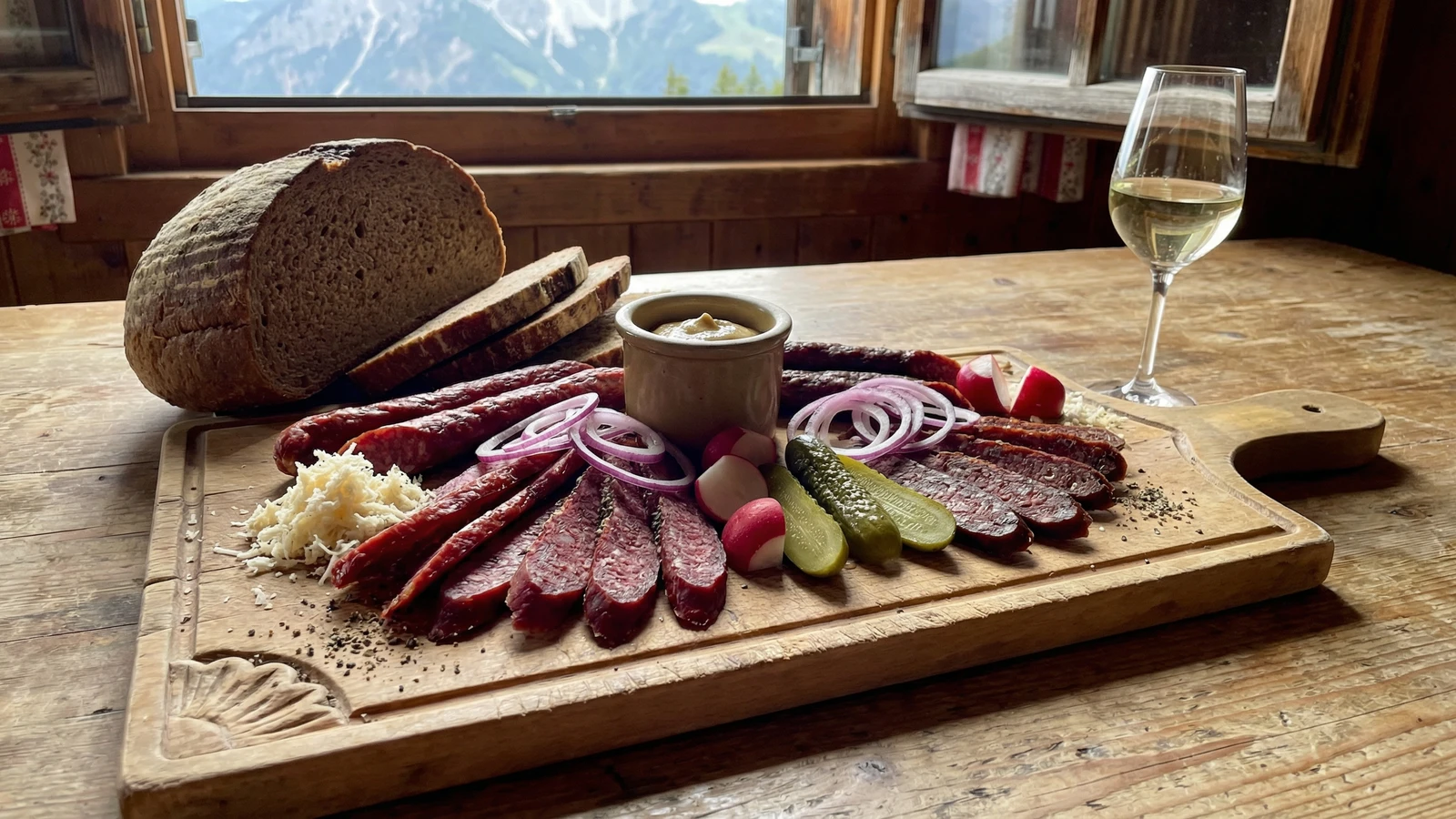
Tyrolean dried sausages fanned across a wooden Brettl board with freshly grated Kren, sharp mustard, dark Schwarzbrot, and crunchy Essiggurkerl. Alpine hiking provisions turned into the finest thing on the table.
Every summer when Gretel and my grandmother Eva took me to Austria, we'd stop somewhere in the Tyrolean Alps on the drive from Salzburg. There was always a Jausenstation, one of those half-farmhouse, half-restaurant places perched on a mountainside where you sit outside on a bench and they bring you a wooden board covered in dried sausage, dark bread, and horseradish so fresh it makes your eyes water. I was maybe eight the first time I understood that this was a complete meal. Nothing cooked, nothing warm, nothing complicated. Just extraordinary ingredients on a board, and a view that went on forever.
Kaminwurzen are the soul of Tyrolean charcuterie. They're cold-smoked over beechwood in farmhouse chimneys, sometimes for weeks, until the meat dries to a firm, deep-red chew with a smoky edge that hits you at the back of your throat. Landjäger are their flatter, more portable cousins: pressed into a distinctive rectangular shape, air-dried until almost hard, the kind of thing a hunter or a hiker would slip into a rucksack because they last for days without refrigeration. Together on a board, they tell you everything about how Tyroleans eat when they're outdoors, working, or sitting on an Alm watching the light change over the Zillertal.
The board itself is not a recipe in the usual sense. You don't cook anything. But the assembly matters. The way you slice the sausages, the sharpness of the Kren, the quality of the bread, the crunch of the pickles. This is Austrian cooking at its most honest: good ingredients, presented simply, with nothing to hide behind. If your Kaminwurzen aren't worth eating on their own, no arrangement on a board will save them.
Kaminwurzen take their name from 'Kamin,' the chimney or open hearth of a Tyrolean farmhouse, where sausages were hung above the smoldering fire and slowly cold-smoked through the winter months. The practice dates back centuries as a preservation method in Alpine valleys where fresh meat was scarce from November to March. Landjäger, meaning 'country hunter,' were developed as field rations for soldiers and hunters across the Alpine regions of Austria, Switzerland, and southern Germany, with their distinctive pressed rectangular shape designed to stack flat in a pack. The Tyrolean Jause, a cold snack board of dried meats, bread, and sharp condiments, remains the standard meal at mountain huts and Almwirtschaften across the Austrian Alps today.
Quantity
200g (2-3 pieces)
Quantity
200g (2-3 pairs)
Quantity
1 piece, about 10cm
Quantity
3 tablespoons
Quantity
8 slices
Quantity
6-8
Quantity
4-6
quartered
Quantity
1 small
sliced into thin rings
Quantity
100g
sliced or broken into chunks
Quantity
2 tablespoons
Quantity
to taste
| Ingredient | Quantity |
|---|---|
| Kaminwurzen (Tyrolean cold-smoked dried sausage) | 200g (2-3 pieces) |
| Landjäger (pressed dried sausage) | 200g (2-3 pairs) |
| fresh horseradish root (Kren) | 1 piece, about 10cm |
| sharp Austrian mustard (Kremser Senf or similar) | 3 tablespoons |
| dark rye bread (Schwarzbrot) | 8 slices |
| cornichons or pickled gherkins (Essiggurkerl) | 6-8 |
| radishesquartered | 4-6 |
| red onionsliced into thin rings | 1 small |
| Tiroler Graukäse or Bergkäse (optional)sliced or broken into chunks | 100g |
| Verhackert (smoked bacon spread) (optional) | 2 tablespoons |
| freshly cracked black pepper | to taste |
Peel away the natural casing from the Kaminwurzen if it's thick and papery. If the casing is thin and edible, leave it. Slice on a sharp diagonal, about three millimeters thick. The angle matters: a diagonal cut exposes more of the interior, which means more smoky aroma reaching your nose before the first bite. The slices should show a deep ruby-red center with a darker, firmer edge where the smoke penetrated. Fan them out as you cut so they don't stick together.
Landjäger come in pairs, pressed flat and joined at the side. Separate them first. Slice each piece on the diagonal into pieces about five millimeters thick, a little thicker than the Kaminwurzen because Landjäger is denser and drier. The texture should be firm and slightly chewy, almost like a very lean bresaola. If your Landjäger crumbles when you cut it, it's been over-dried. Still good for eating, but cut it into chunks instead of slices and don't fight it.
Peel the horseradish root and grate it finely on a Microplane or the finest holes of a box grater. Do this just before serving. Freshly grated Kren has a sharp, nasal heat that fades within thirty minutes once it's exposed to air. If you grate it ahead of time, you'll end up with a sad, mild pile of white fiber that does nothing for the board. A squeeze of lemon juice stirred through the gratings slows the fading, but fresh is always better.
Slice the Schwarzbrot into manageable pieces. If you're using Schüttelbrot, the traditional Tyrolean crisp-bread, break it into rough shards rather than trying to cut it (it will shatter anyway). Quarter the radishes. Slice the red onion into thin rings and separate them. Halve the Essiggurkerl lengthwise. If you're including Graukäse, slice it thinly or break it into rough pieces with your hands. It's a crumbly, sharp cheese that doesn't pretend to be elegant, and that's exactly right for this board.
Use a large wooden board, a Brettl. This is not a plate situation. Arrange the Kaminwurzen slices in a fanned row on one side and the Landjäger on the other, keeping them separate so people can taste the difference. Put the freshly grated Kren in a small mound, the mustard in a small crock or bowl. Scatter the Essiggurkerl, radish quarters, and onion rings in the gaps. Lean the bread against the edges or pile it to one side. If you're using Verhackert, put a small spoonful on the board with a knife for spreading. Finish with a few cracks of black pepper over the sausage slices.
Put the board on the table and let people help themselves. The Tyrolean way is to take a slice of sausage, fold it onto a piece of dark bread, add a dab of mustard or a pinch of Kren, and eat it with your hands. The Essiggurkerl and radishes are palate cleansers between bites. If you've got a bottle of Grüner Veltliner or a cold Austrian beer, open it now. Mahlzeit!
1 serving (about 275g)
Culinary guides, cultural storytelling, and the editorial depth that makes cooking meaningful.
Discover Culinary ExplorerChef Elsa
A wooden board loaded with mountain cheese, juniper-smoked Speck, air-dried Hauswürstel, handmade Liptauer, fresh Kren, and thick-cut Bauernbrot, the way Austrian Almhütten have fed hikers for generations.

Chef Elsa
Dark, spiced, and wickedly good: Blunzn mashed with onion, mustard, and marjoram into the kind of spread that disappears first from every Heuriger Brettl, scooped up on torn hunks of dark bread.

Chef Elsa
A silky potato and sour cream spread with raw onion and paprika, piled onto dark rye bread the way they serve it at every Heuriger in Lower Austria. No cheese, despite the name. Just good potatoes and honest cooking.
Chef Elsa
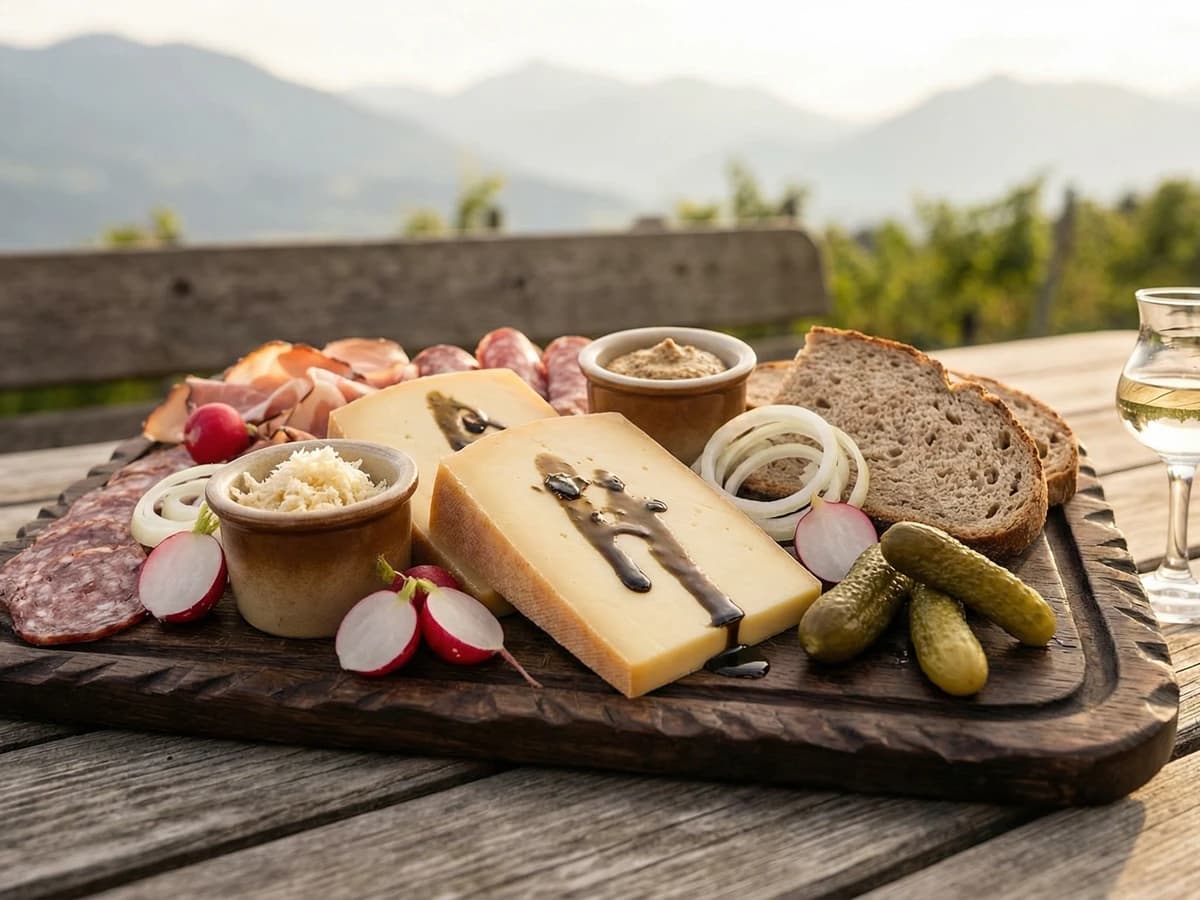
A proper Carinthian Brettljause built around PDO Gailtaler Almkäse, nutty raw-milk alpine cheese served with Speck, dark Bauernbrot, pickles, fresh horseradish, and everything you need for an afternoon on an Almhütte terrace.