
Chef Jeong-sun
Agwi-jjim (Braised Monkfish with Bean Sprouts)
Firm monkfish buried under crisp soybean sprouts, minari, and a red gochugaru sauce thickened at the end; Masan's market dish asks for heat, timing, and a steady hand.
A cooking platform built around craft, culture, and the stories behind what we eat.
Created by
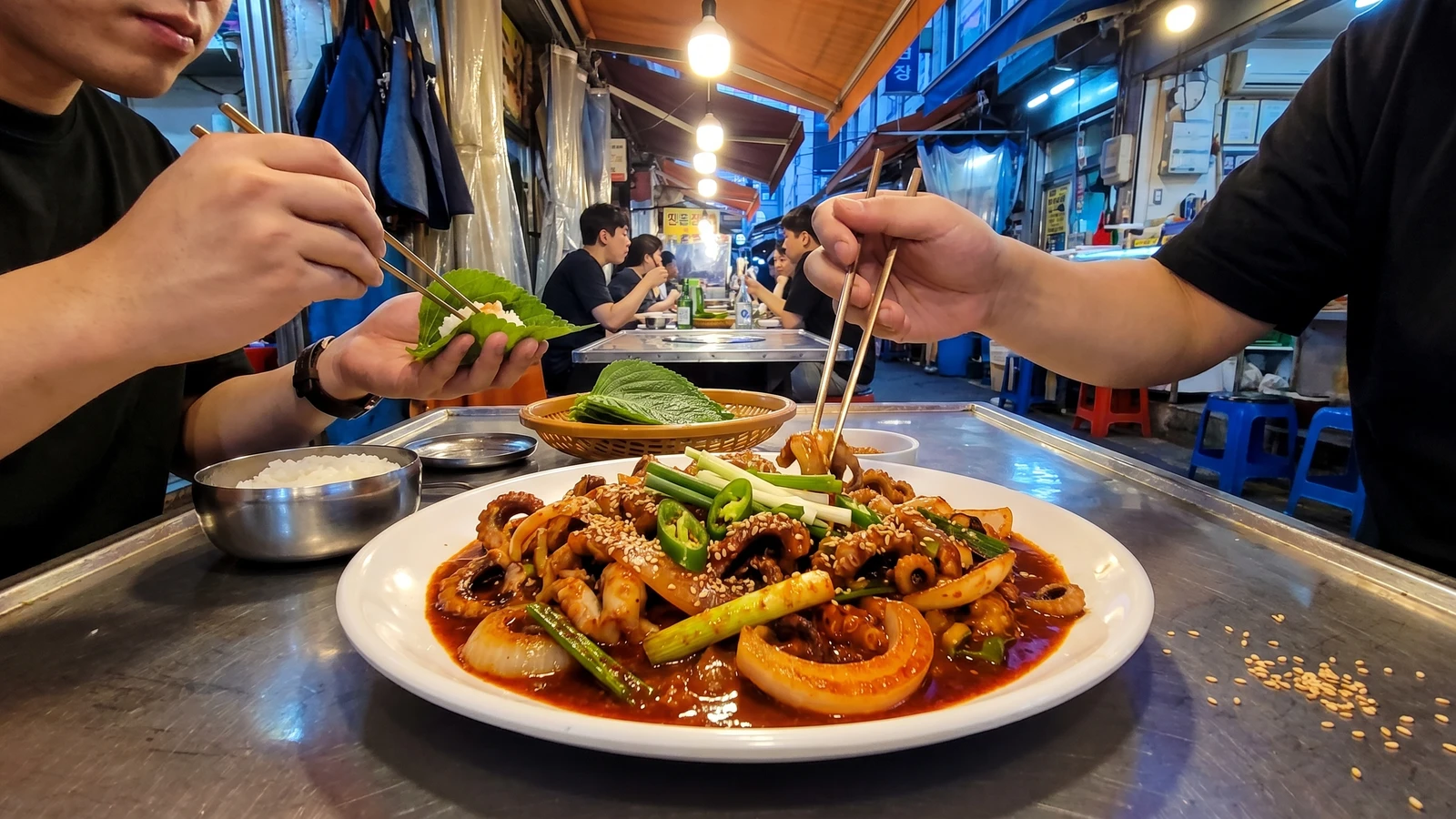
Baby octopus at its spring best, cleaned with salt and flour, shocked briefly, then stir-fried hard in a red sauce that clings without burying the sea sweetness.
Cook the month you're standing in. Jjukkumi is a spring creature, best when the West Sea markets fill with small octopus, the females carrying roe like grains of rice in the head. Buy them then if you can. Out of season, cook ojingeo-bokkeum (spicy squid stir-fry) instead, because a tired octopus punished with chili is still tired.
This dish lives or dies by heat and timing. The mistake is to simmer the octopus in sauce until it tightens into rubber, then blame the animal. Clean it well, blanch it briefly only to set the shape and pull out excess water, then stir-fry in a wide pan until the sauce turns glossy and clings. Fast hands. Hot pan. Rice waiting.
Notebook 41 says 600 grams of cleaned jjukkumi needs 3 tablespoons gochugaru and only 1 tablespoon gochujang. More paste makes the sauce heavy and sweet, and then every bite tastes like the jar instead of the octopus. Let it taste like itself. Serve it with rice, lettuce leaves, and a small dish of gim-garu (crushed toasted seaweed) if you like. The table will lean in by itself.
Jjukkumi, more formally written jukkumi (주꾸미), is strongly tied to Korea's West Sea spring catch, especially fishing towns in Chungcheong such as Seocheon and Boryeong, where local festivals mark the short season when roe-filled females are prized. Spicy jjukkumi-bokkeum is a modern market, restaurant, and drinking-table dish rather than a palace preparation; Seoul's Yongdu-dong became especially associated with fiery stir-fried jjukkumi shops in the late twentieth century. The dish's reputation rests on a seasonal ingredient and a quick wok-like technique, not on long cooking.
Quantity
600g cleaned weight, or about 750g before cleaning
Quantity
2 tablespoons
for cleaning
Quantity
3 tablespoons
for cleaning
Quantity
1 tablespoon
Quantity
1/2 teaspoon
for blanching water
Quantity
3 tablespoons
preferably medium-coarse
Quantity
1 tablespoon
Quantity
2 tablespoons
Quantity
1 tablespoon
Quantity
1 tablespoon syrup or 2 teaspoons sugar
Quantity
1 tablespoon
Quantity
1 tablespoon
minced
Quantity
1 teaspoon
minced
Quantity
1 tablespoon
divided
Quantity
1/4 teaspoon
freshly ground
Quantity
1 medium
sliced 1/2 inch thick
Quantity
1 small
cut into thin matchsticks
Quantity
2
cut into 2-inch lengths
Quantity
1
sliced on the diagonal
Quantity
1
sliced on the diagonal
Quantity
1 tablespoon
Quantity
1 teaspoon
Quantity
to serve
Quantity
to serve
| Ingredient | Quantity |
|---|---|
| fresh baby octopus (jjukkumi) | 600g cleaned weight, or about 750g before cleaning |
| coarse saltfor cleaning | 2 tablespoons |
| all-purpose flourfor cleaning | 3 tablespoons |
| soju or rice wine | 1 tablespoon |
| saltfor blanching water | 1/2 teaspoon |
| gochugaru (Korean chili flakes)preferably medium-coarse | 3 tablespoons |
| gochujang (Korean chili paste) | 1 tablespoon |
| soy sauce | 2 tablespoons |
| fish sauce or Korean soup soy sauce | 1 tablespoon |
| maesil-cheong (green plum syrup) or sugar | 1 tablespoon syrup or 2 teaspoons sugar |
| rice syrup or honey | 1 tablespoon |
| garlicminced | 1 tablespoon |
| gingerminced | 1 teaspoon |
| toasted sesame oildivided | 1 tablespoon |
| black pepperfreshly ground | 1/4 teaspoon |
| onionsliced 1/2 inch thick | 1 medium |
| carrotcut into thin matchsticks | 1 small |
| scallionscut into 2-inch lengths | 2 |
| Korean green chilisliced on the diagonal | 1 |
| red chili (optional)sliced on the diagonal | 1 |
| neutral oil | 1 tablespoon |
| toasted sesame seeds | 1 teaspoon |
| cooked short-grain rice | to serve |
| lettuce or perilla leaves (optional) | to serve |
Turn each jjukkumi head inside out and remove the innards, ink sac, eyes, and hard beak. If there is white roe, keep it attached if it smells clean and fresh. Rub the octopus with the coarse salt and flour for 2 minutes, working between the tentacles, then rinse under cold running water until the water runs clear. The flour grips the slime; the salt tightens the surface. This is not fussing. This is the difference between clean sweetness and a muddy pan.
Bring 6 cups water to a boil with the 1/2 teaspoon salt and the soju or rice wine. Add the jjukkumi and blanch 20 to 30 seconds, just until the tentacles curl and the surface firms. Drain at once and rinse briefly in cold water, then pat very dry. Do not cook it through here. You are setting the shape and driving off water so the stir-fry will not turn into soup.
In a bowl, mix the gochugaru, gochujang, soy sauce, fish sauce, maesil-cheong, rice syrup, garlic, ginger, 2 teaspoons of the sesame oil, and black pepper. Let it sit 10 minutes while you cut the vegetables. Gochugaru needs a little time to bloom and thicken; if you throw it straight into the pan, it tastes dusty before it tastes deep.
Slice the onion thick enough to stay sweet and visible, cut the carrot thin enough to soften fast, and keep the scallions in 2-inch lengths. The vegetables are not filler. They give sweetness and crunch against the octopus, so cut them to finish in the same few minutes.
Heat a wide skillet or wok over high heat until a drop of water jumps. Add the neutral oil, then the onion and carrot. Stir-fry 1 minute, only until the onion edges begin to shine. You want the vegetables awake, not collapsed.
Add the drained jjukkumi and all the sauce. Stir-fry hard for 2 to 3 minutes, scraping and tossing so the sauce coats every piece. The sauce should tighten and turn glossy, with no watery pool in the bottom of the pan. If liquid gathers, spread everything out and give it another 30 seconds over high heat. Stop as soon as the octopus is firm, springy, and still tender.
Add the scallions and sliced chilies and toss 20 seconds. Turn off the heat and stir in the remaining 1 teaspoon sesame oil. Scatter with toasted sesame seeds and carry it to the table at once with hot rice. Spoon the red sauce over the rice after the octopus is gone. That last spoonful is why no one leaves the table early.
1 serving (about 365g)
Culinary guides, cultural storytelling, and the editorial depth that makes cooking meaningful.
Discover Culinary ExplorerChef Jeong-sun
Firm monkfish buried under crisp soybean sprouts, minari, and a red gochugaru sauce thickened at the end; Masan's market dish asks for heat, timing, and a steady hand.

Chef Jeong-sun
A quick Korean rice bowl built on contrast: warm rice, cold popping flying-fish roe, chopped vegetables, gim, sesame oil, and the crisp rice bottom a hot stone bowl gives you.
Chef Jeong-sun
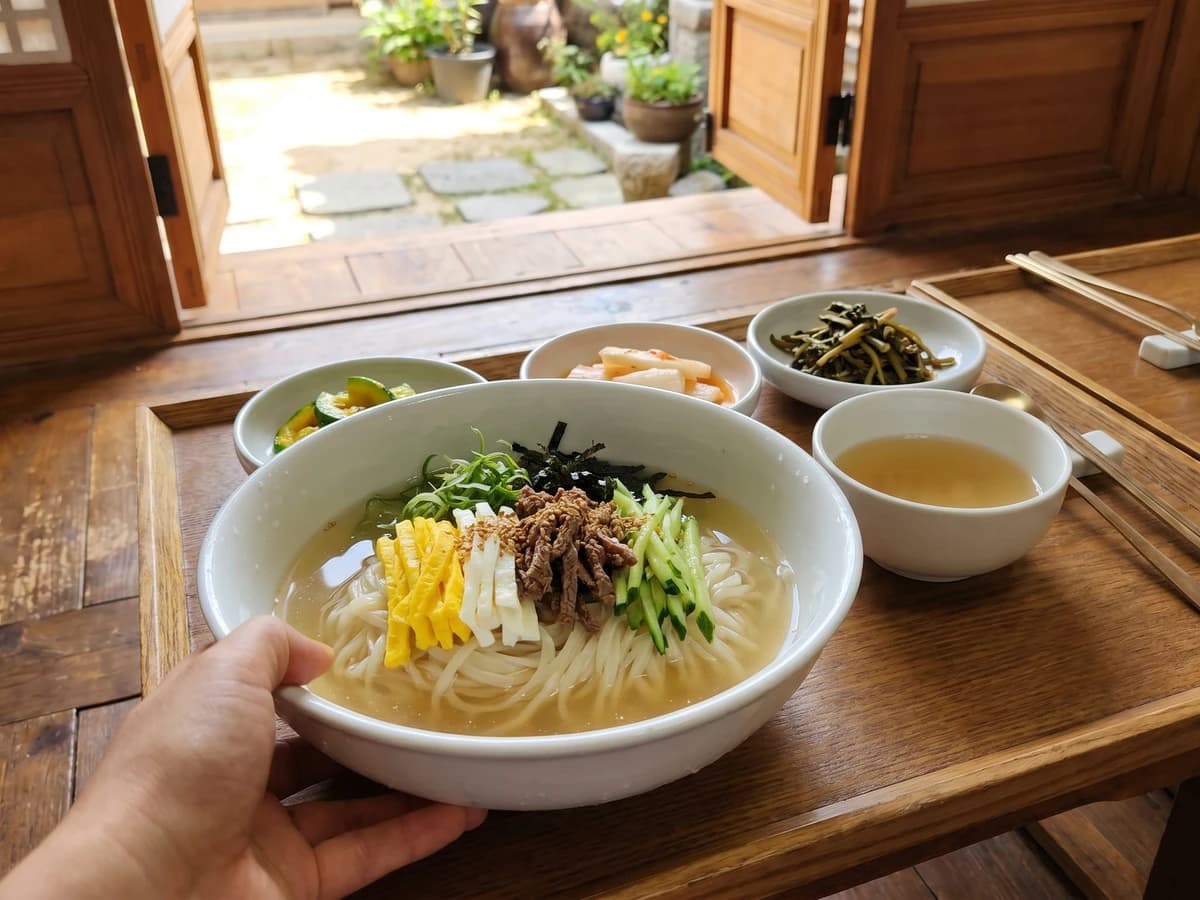
Andong's guest noodles, wheat and roasted soybean flour rolled thin, boiled and rinsed cold, then set in a clear chilled anchovy broth with careful strips of beef, egg, and cucumber.

Chef Jeong-sun
Andong's ritual-table rice served on an ordinary day: separate soy-sesame namul, warm rice, and clear radish soup, mixed without gochujang so every vegetable keeps its own voice.