
Chef Jeong-sun
Agwi-jjim (Braised Monkfish with Bean Sprouts)
Firm monkfish buried under crisp soybean sprouts, minari, and a red gochugaru sauce thickened at the end; Masan's market dish asks for heat, timing, and a steady hand.
A cooking platform built around craft, culture, and the stories behind what we eat.
Created by
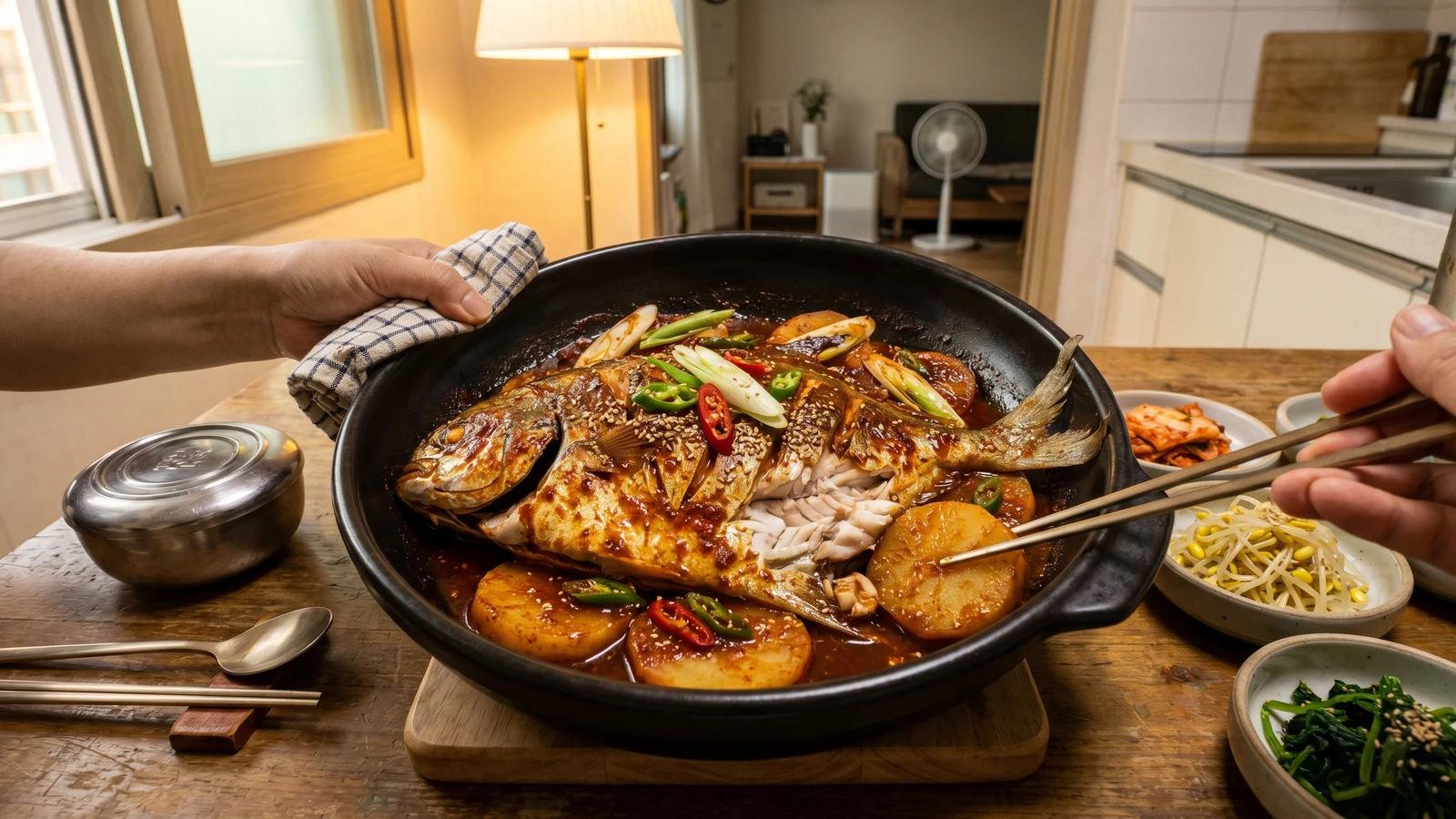
A summer fish braise from the Korean home table, whole silver pomfret simmered gently over potato until the spicy soy sauce clings and the soft flesh lifts clean from the bone.
Byeongeo belongs to early summer. In the west-coast markets the good ones are broad through the belly, bright-skinned, and firm enough that the fishmonger does not have to explain them. Cook the month you're standing in: late spring to midsummer is when this fish gives itself most kindly to a pot. In winter, if the pomfret looks tired, make godeungeo-mu-jorim (mackerel braised with radish) and wait for this one.
People call byeongeo easy because the flesh is soft and there are few small bones. Only half true. The dish lives or dies by timing, because potato is stubborn and pomfret is delicate. Notebook 27 says potato first, fish second, no flipping. Let the potatoes drink the sauce before the fish goes in, then baste the fish from above so it stays whole.
At Master Seong-nyeo's stove, this was the braise she allowed for children and elders, not because it was bland, but because the flesh lifts cleanly from the center bone when cooked right. The sauce is soy, gochugaru, garlic, ginger, and just enough sweetness to round the salt. Don't bury it under gochujang or sugar. Serve it with rice and one clean banchan, and warn the table about the bone even when you think they know. That is care, not fussing.
Silver pomfret, byeongeo (병어), is a warm-season fish of Korea's west and south seas, especially prized in markets around Mokpo, Shinan, and Yeosu from late spring into early summer. In Korean cooking, jorim (조림) means simmering in a seasoned soy-based sauce until it reduces, a home and market technique used for fish that must flavor quickly without falling apart. Large pomfret sold as deokja-byeongeo (덕자병어) became a noted Jeolla specialty, while smaller byeongeo stayed common at family tables because the broad soft flesh has fewer small pin bones than many fish.
Quantity
2 fish, 300 to 350g each
head on if possible
Quantity
1/2 teaspoon
Quantity
2 tablespoons
divided
Quantity
1 piece, about 3 inches square
Quantity
1 3/4 cups
Quantity
2 medium (about 350g)
peeled and cut into 1/2-inch rounds or half-moons
Quantity
1/2 medium (about 100g)
sliced 1/2-inch thick
Quantity
4 tablespoons
Quantity
2 tablespoons
Quantity
1 teaspoon
Quantity
1 tablespoon, or 2 teaspoons sugar
Quantity
5 cloves
minced
Quantity
1 teaspoon
grated
Quantity
1/4 teaspoon
freshly ground
Quantity
2
cut into 2-inch diagonal lengths
Quantity
1
sliced on the diagonal
Quantity
1
sliced on the diagonal
Quantity
1 teaspoon
Quantity
1 teaspoon
| Ingredient | Quantity |
|---|---|
| whole cleaned silver pomfret (byeongeo)head on if possible | 2 fish, 300 to 350g each |
| fine sea salt | 1/2 teaspoon |
| rice wine or sojudivided | 2 tablespoons |
| dried kelp (dasima) | 1 piece, about 3 inches square |
| water | 1 3/4 cups |
| waxy potatoespeeled and cut into 1/2-inch rounds or half-moons | 2 medium (about 350g) |
| onionsliced 1/2-inch thick | 1/2 medium (about 100g) |
| soy sauce | 4 tablespoons |
| gochugaru (Korean chili flakes) | 2 tablespoons |
| gochujang (Korean chili paste) (optional) | 1 teaspoon |
| maesil-cheong (green plum syrup) | 1 tablespoon, or 2 teaspoons sugar |
| garlicminced | 5 cloves |
| fresh gingergrated | 1 teaspoon |
| black pepperfreshly ground | 1/4 teaspoon |
| scallionscut into 2-inch diagonal lengths | 2 |
| green chilisliced on the diagonal | 1 |
| red chili (optional)sliced on the diagonal | 1 |
| toasted sesame oil | 1 teaspoon |
| toasted sesame seeds (optional) | 1 teaspoon |
Put the kelp and water in a wide shallow pan while you prepare the fish, at least 10 minutes if you have the time. Bring it just to a simmer over medium heat, then lift out the kelp. Measure the broth; you need 1 1/2 cups. Add a little water if it boiled down. Kelp gives the sauce body without making the delicate fish taste fishier, but left too long it turns the liquid slick.
If the fishmonger has not done it, trim the fins, remove the guts and gills, scrape away any dark blood along the backbone, rinse quickly, and pat very dry. Cut 2 diagonal slashes on each side of each fish, down to the center bone but not through it. Sprinkle with the salt and 1 tablespoon of the rice wine, rest 10 minutes, then pat dry again. The salt firms the surface, and the cuts let the sauce enter before the flesh overcooks.
Stir together the soy sauce, gochugaru, optional gochujang, maesil-cheong or sugar, garlic, ginger, black pepper, and the remaining 1 tablespoon rice wine. Let it sit while the potatoes start cooking. This wets the gochugaru so it blooms into the sauce instead of floating on top in dusty patches.
Arrange the potato slices in one snug layer in the pan and scatter the onion over them. Pour in the 1 1/2 cups kelp broth and spoon over half the sauce. Bring to a steady simmer, cover, and cook 8 to 10 minutes, until the potato edges look slightly translucent but the centers still resist a skewer. Potato is stubborn. Give it this head start or the pomfret will be finished before the potato knows dinner has begun.
Lay the pomfret over the potatoes, fitting them head to tail if the pan is tight. Spoon the remaining sauce over the slashes. Simmer uncovered for 3 minutes, spooning the sauce over the fish, then lower the heat to medium-low, cover slightly ajar, and braise 8 to 10 minutes. Do not flip the fish. A whole pomfret tears when treated like meat; basting from above cooks it cleanly and keeps it whole.
Add the scallions and chilies. Simmer uncovered 4 to 6 minutes more, basting often, until the potato is tender, the sauce has reduced to about 1/2 cup and looks glossy, and the fish flakes at the thickest part. If you use a thermometer, it should read 63 C / 145 F. Turn off the heat, drizzle with sesame oil, and scatter sesame seeds if using. Rest 3 minutes before serving with rice. For children and elders, lift the flesh away from the center bone before passing the plate.
1 serving (about 340g)
Culinary guides, cultural storytelling, and the editorial depth that makes cooking meaningful.
Discover Culinary ExplorerChef Jeong-sun
Firm monkfish buried under crisp soybean sprouts, minari, and a red gochugaru sauce thickened at the end; Masan's market dish asks for heat, timing, and a steady hand.

Chef Jeong-sun
A quick Korean rice bowl built on contrast: warm rice, cold popping flying-fish roe, chopped vegetables, gim, sesame oil, and the crisp rice bottom a hot stone bowl gives you.
Chef Jeong-sun
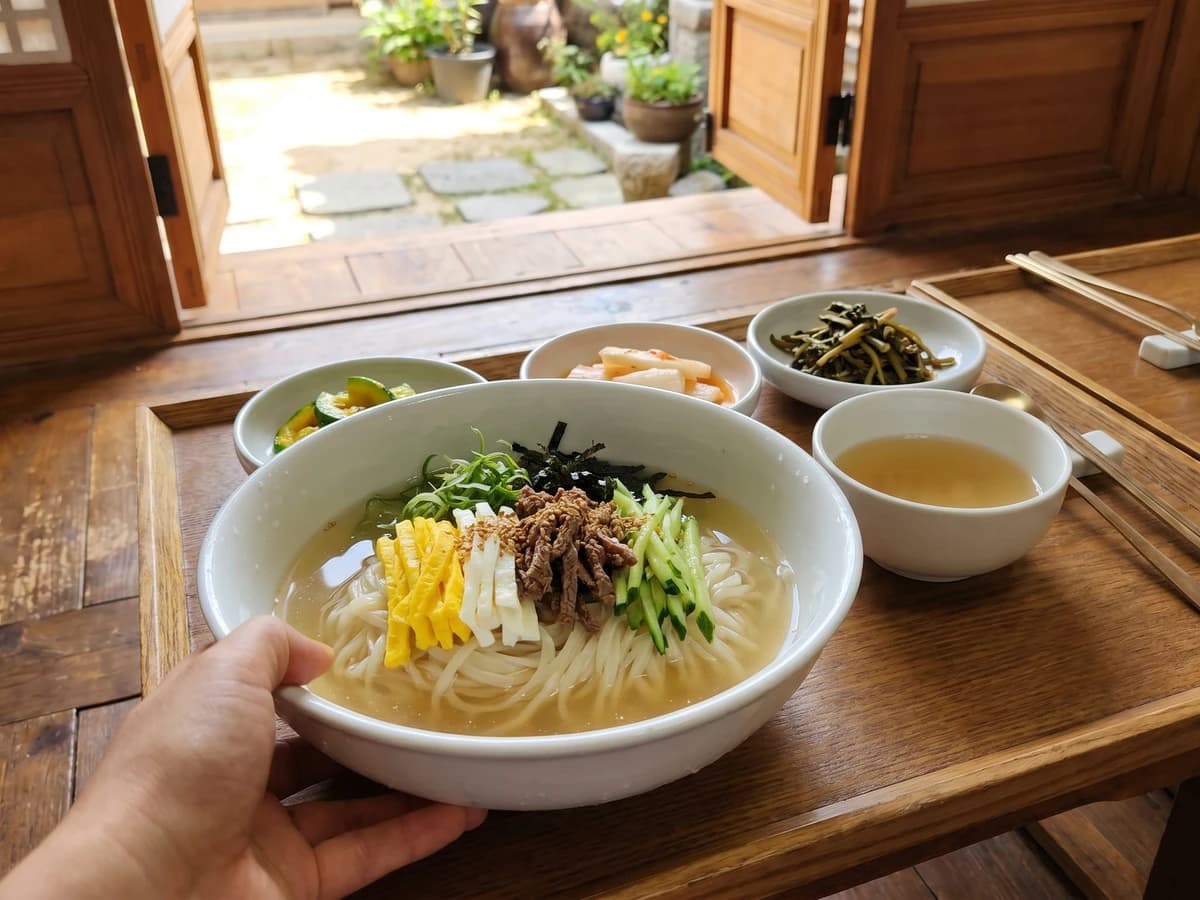
Andong's guest noodles, wheat and roasted soybean flour rolled thin, boiled and rinsed cold, then set in a clear chilled anchovy broth with careful strips of beef, egg, and cucumber.

Chef Jeong-sun
Andong's ritual-table rice served on an ordinary day: separate soy-sesame namul, warm rice, and clear radish soup, mixed without gochujang so every vegetable keeps its own voice.