
Chef Jeong-sun
Agwi-jjim (Braised Monkfish with Bean Sprouts)
Firm monkfish buried under crisp soybean sprouts, minari, and a red gochugaru sauce thickened at the end; Masan's market dish asks for heat, timing, and a steady hand.
A cooking platform built around craft, culture, and the stories behind what we eat.
Created by
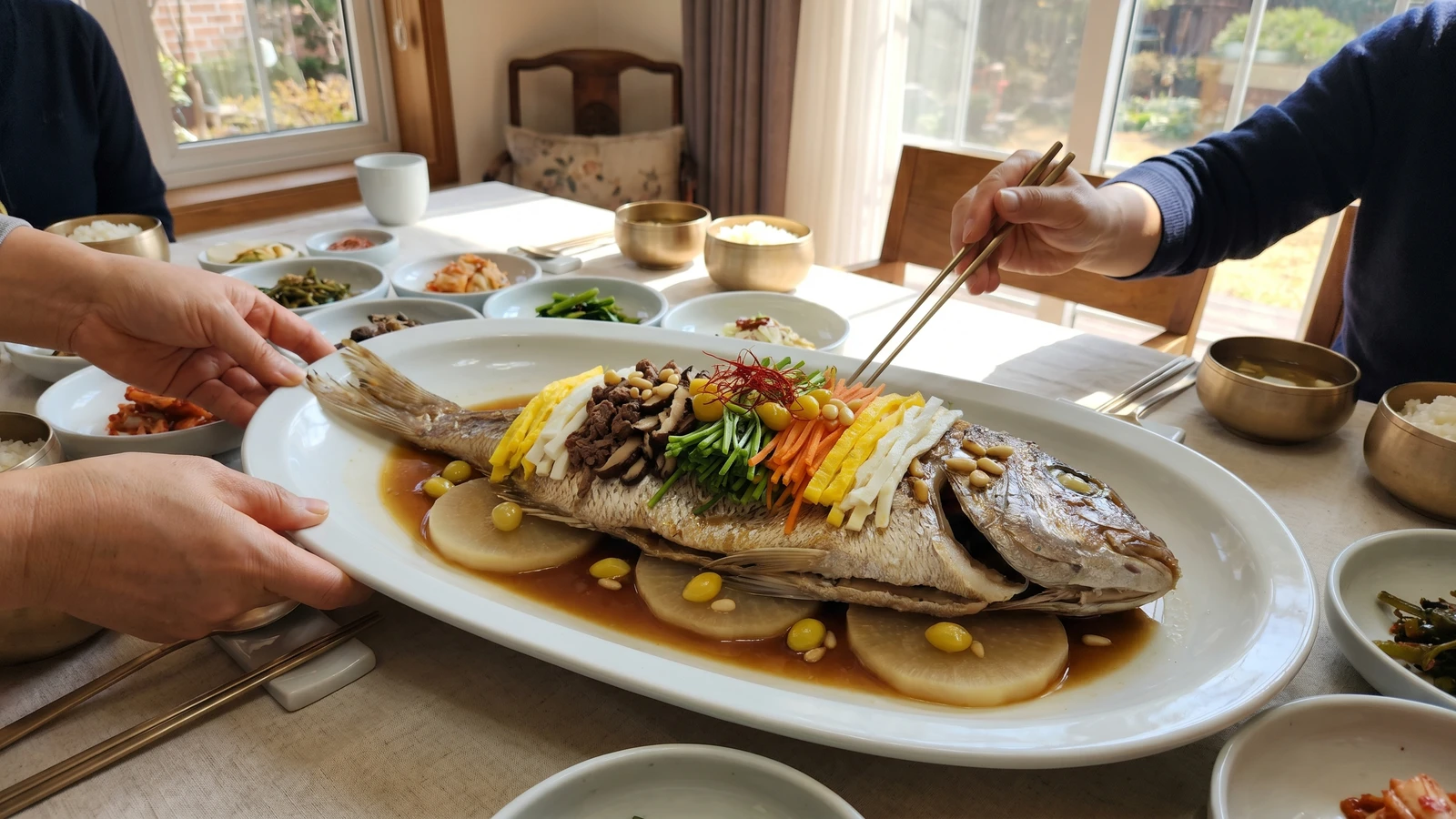
A whole sea bream for the celebration table, scored and steamed under soy-seasoned beef, shiitake, jidan, and five-color garnish, with every cut made to keep the fish tasting like itself.
Master Seong-nyeo made us watch domi-jjim from the doorway the first time. 눈동냥, 귀동냥, borrowing with the eyes and ears. A whole fish on a Korean table shows every careless cut: a torn tail, cloudy jidan, sauce too dark, garnish thrown on as if color alone were respect. She pointed to the tail and said that if it tore, I had rushed. Notebook 18 still has that sentence underlined.
Domi-jjim belongs to the celebration table, especially in Jeolla coastal cooking, where a good fish could carry the honor of the meal. Not every feast is meat and grill. Here the fish is the center: red skin, head and tail intact, beef and shiitake tucked into the cuts, jidan and green, red, black, yellow, and white garnish laid with restraint. Obangsaek, the five-color balance, should make the plate feel complete. It should not bury the sea bream.
Tonight this dish asks for order. Buy a fish that fits your vessel, salt it exactly, prepare the garnish before heat begins, and stop cooking the moment the thickest flesh releases from the bone. The vessel can modernize: a wok with a rack, a wide steamer, even a roasting pan with a tight cover will do. The knife work and seasoning cannot be made lazy. Let it taste like itself.
Sea bream, domi, has long been a celebration fish in Korea because it can be served whole, head and tail intact, a form suited to weddings, major birthdays, and ancestral offering tables. The Jeolla version is tied to the southwest coast's access to fine sea fish and the region's generous garnish tradition: beef, shiitake, egg jidan, green herbs, and red pepper are arranged in obangsaek, the five-color balance. Formal whole-fish jjim also appears in Joseon banquet and court cookery, but this recipe keeps the coastal home-table logic, a prized fish handled cleanly and dressed without hiding it.
Quantity
1 fish, 1.1 to 1.3kg
scaled, gutted, and gills removed
Quantity
1 teaspoon
Quantity
3 tablespoons
divided
Quantity
2 teaspoons
divided
Quantity
4
Quantity
1 cup
for soaking mushrooms
Quantity
120g
finely minced or cut into very fine strips
Quantity
4 tablespoons
divided
Quantity
2 teaspoons
divided
Quantity
2 teaspoons
divided
Quantity
2 teaspoons
minced, divided
Quantity
1 tablespoon
minced
Quantity
1/4 teaspoon
freshly ground, divided
Quantity
2
separated
Quantity
1/4 teaspoon
for jidan
Quantity
1 teaspoon
for the pan
Quantity
1 small, about 60g
cut into fine matchsticks or small diamonds
Quantity
4 minari stems or 2 scallion greens
cut into 2-inch lengths
Quantity
1 chili or 1 tablespoon silgochu
seeded and cut into fine threads
Quantity
150g
cut into 1/4-inch rounds
Quantity
2
cut into 4-inch lengths
Quantity
10
Quantity
1 tablespoon
| Ingredient | Quantity |
|---|---|
| whole sea bream or red snapperscaled, gutted, and gills removed | 1 fish, 1.1 to 1.3kg |
| kosher salt | 1 teaspoon |
| cheongju or dry rice winedivided | 3 tablespoons |
| fresh ginger juicedivided | 2 teaspoons |
| dried shiitake mushrooms | 4 |
| hot waterfor soaking mushrooms | 1 cup |
| lean beef sirloinfinely minced or cut into very fine strips | 120g |
| soy saucedivided | 4 tablespoons |
| sugardivided | 2 teaspoons |
| toasted sesame oildivided | 2 teaspoons |
| garlicminced, divided | 2 teaspoons |
| scallionminced | 1 tablespoon |
| black pepperfreshly ground, divided | 1/4 teaspoon |
| large eggsseparated | 2 |
| fine saltfor jidan | 1/4 teaspoon |
| neutral oilfor the pan | 1 teaspoon |
| carrotcut into fine matchsticks or small diamonds | 1 small, about 60g |
| minari stems or scallion greenscut into 2-inch lengths | 4 minari stems or 2 scallion greens |
| mild red chili or silgochuseeded and cut into fine threads | 1 chili or 1 tablespoon silgochu |
| Korean radishcut into 1/4-inch rounds | 150g |
| scallionscut into 4-inch lengths | 2 |
| peeled ginkgo nuts (optional) | 10 |
| pine nuts (optional) | 1 tablespoon |
Rinse the fish inside and out, then scrape away any dark blood line along the backbone with the tip of a spoon. Pat it very dry. Make 3 diagonal cuts on each side, about 2cm deep, down to the bone but not through the spine. Rub the fish and cavity with the kosher salt, then sprinkle with 2 tablespoons cheongju and 1 teaspoon ginger juice. Rest 20 minutes, then blot again. Wet fish waters the sauce and tears more easily.
Cover the dried shiitake mushrooms with 1 cup hot water and soak 20 minutes, until flexible. Squeeze them dry, trim away the stems, and slice the caps into thin strips. Strain and save 3 tablespoons of the soaking liquid for the sauce. Dried shiitake gives a deeper, steadier flavor than fresh here.
Mix the beef with the sliced shiitake, 1 tablespoon soy sauce, 1 teaspoon sugar, 1 teaspoon sesame oil, 1 teaspoon minced garlic, the minced scallion, and 1/8 teaspoon pepper. Cook in a small skillet over medium heat for 2 to 3 minutes, just until the beef loses its raw color and the mushrooms turn glossy. Cool it before it touches the fish. My teacher steamed the filling raw in a larger kitchen; at home, cooking it first protects the timing so the fish does not overcook while the beef catches up.
Beat the egg yolks with a pinch of the fine salt. Beat the whites separately with another pinch, then strain them if you want a cleaner sheet. Wipe a small nonstick pan with the neutral oil and cook each color over low heat into thin, unbrowned sheets. Cut into fine threads or small diamonds. Low heat matters because browned jidan tastes eggy and heavy, and this dish wants clear color.
Blanch the carrot in salted water for 30 seconds and the minari or scallion greens for 10 seconds, then drain and pat dry. Keep the yellow jidan, white jidan, carrot, greens, red chili threads, ginkgo nuts, and pine nuts in separate small bowls. Obangsaek, the five-color balance, is not confetti. Each color should read clearly.
Stir together the remaining 3 tablespoons soy sauce, 3 tablespoons strained shiitake soaking liquid, remaining 1 tablespoon cheongju, remaining 1 teaspoon ginger juice, remaining 1 teaspoon sugar, remaining 1 teaspoon sesame oil, remaining 1 teaspoon minced garlic, and remaining 1/8 teaspoon pepper. Taste it now. It should be savory and lightly sweet, not salty enough to bully the fish.
Bring 2 inches of water to a steady boil in a wide steamer, wok, or roasting pan fitted with a rack. Line a heatproof platter with the radish rounds and 4-inch scallion lengths, then lay the fish on top. Tuck the beef and shiitake filling into the diagonal cuts and a little into the belly cavity. Spoon 2 tablespoons of the sauce over the fish. The radish and scallion lift the fish, perfume it gently, and keep the skin from sticking.
Cover tightly and steam the fish for 18 to 22 minutes, depending on thickness. At the 10-minute mark, spoon another 2 tablespoons of sauce over the top and cover again. The fish is done when the thickest flesh near the backbone reaches 63°C, or when it separates cleanly from the bone and looks opaque all the way through. Do not keep cooking for courage. Whole fish forgives a little, not a lot.
Carefully lift out the platter. Pour the juices from the platter into a small pan with any remaining sauce and simmer 2 to 3 minutes, just until glossy and slightly concentrated. Spoon this over the fish. This is a dressing, not a glaze to hide mistakes, so keep it light.
Arrange the yellow jidan, white jidan, beef and shiitake, carrot, greens, red chili, ginkgo nuts, and pine nuts in neat bands over the fish, leaving the head and tail visible. Serve at once with rice and quiet banchan. Cut along the backbone at the table and lift the flesh away in pieces. Domi-jjim asks for care, then gives the table a whole fish to share.
1 serving (about 250g)
Culinary guides, cultural storytelling, and the editorial depth that makes cooking meaningful.
Discover Culinary ExplorerChef Jeong-sun
Firm monkfish buried under crisp soybean sprouts, minari, and a red gochugaru sauce thickened at the end; Masan's market dish asks for heat, timing, and a steady hand.

Chef Jeong-sun
A quick Korean rice bowl built on contrast: warm rice, cold popping flying-fish roe, chopped vegetables, gim, sesame oil, and the crisp rice bottom a hot stone bowl gives you.
Chef Jeong-sun
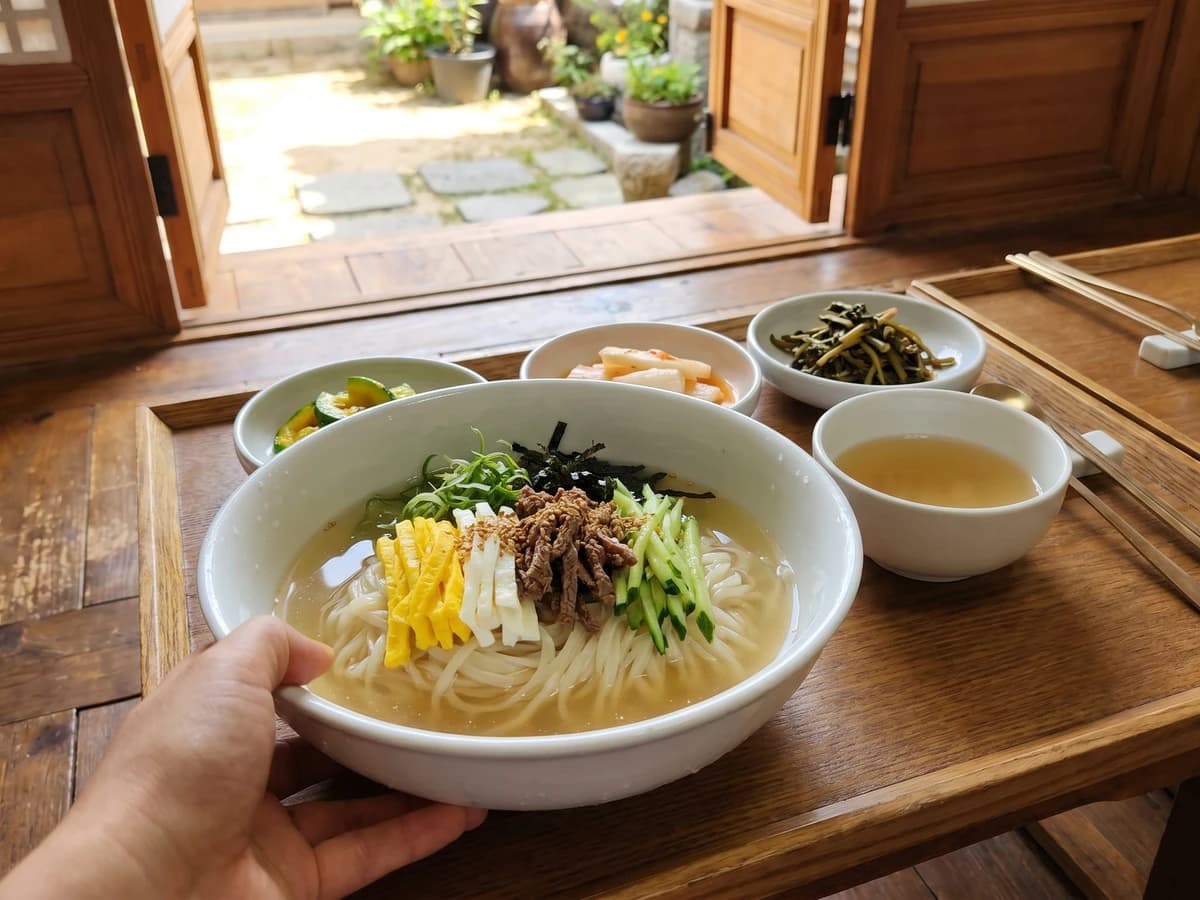
Andong's guest noodles, wheat and roasted soybean flour rolled thin, boiled and rinsed cold, then set in a clear chilled anchovy broth with careful strips of beef, egg, and cucumber.

Chef Jeong-sun
Andong's ritual-table rice served on an ordinary day: separate soy-sesame namul, warm rice, and clear radish soup, mixed without gochujang so every vegetable keeps its own voice.