
Chef Jeong-sun
Aehobak-guk (애호박국, Korean Zucchini Soup)
A clean summer soup of Korean zucchini and salted shrimp, built on quick anchovy-kelp broth and finished before the half-moons lose their shape on a weeknight table.
A cooking platform built around craft, culture, and the stories behind what we eat.
Created by
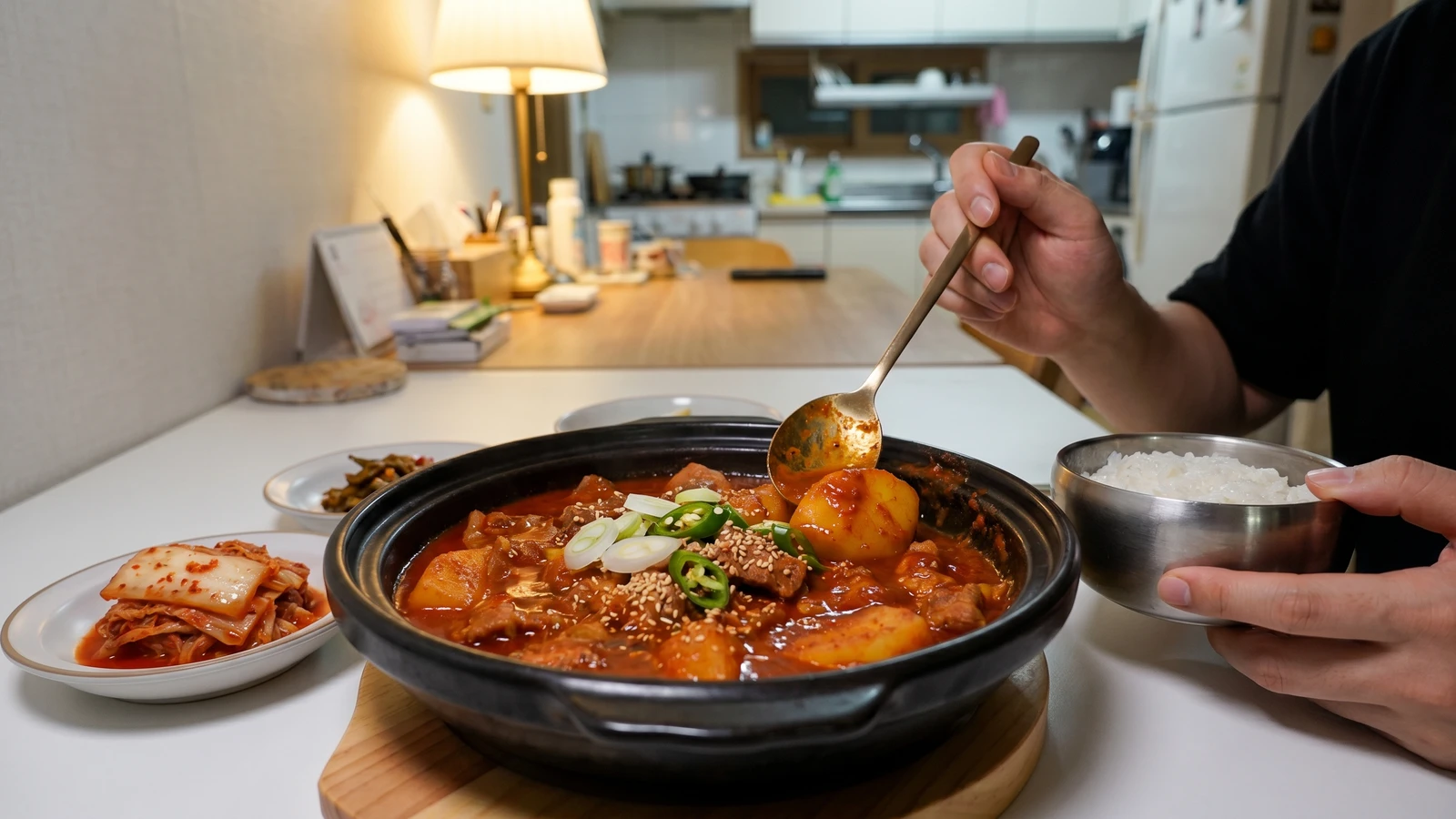
A Cheongju field stew of pork, potato, onion, and chili paste, simmered down until the broth nearly disappears and the sauce is thick enough to drag through rice.
Jjaglie lives or dies by reduction. If you leave it loose, you have made jjigae. Not a bad thing, but not this thing. The name comes from the small, insistent sound of a pot cooking down, jjageul-jjageul, and you should hear that sound near the end, not a rolling boil and not a polite simmer.
Jjaglie, often called Cheongju jjaglie or dwaeji-jjaglie when made with pork, is closely associated with Cheongju in North Chungcheong Province, where inexpensive cuts of pork, potatoes, and pantry seasonings made a filling field and tavern stew. Its name is understood to come from the Korean sound word jjageul-jjageul, the noise of a shallow pot bubbling as the liquid reduces. The dish belongs to everyday modern regional cooking, not palace food, and its test is simple: it should be thick enough to spoon over rice, not served as a soup.
Quantity
600g
cut into 1-inch pieces
Quantity
1 tablespoon
Quantity
2 medium, about 350g
peeled and cut into 3/4-inch chunks
Quantity
1 medium
sliced 1/2 inch thick
Quantity
2
cut into 2-inch lengths
Quantity
1
sliced on the diagonal
Quantity
1
sliced on the diagonal
Quantity
2 1/2 cups
Quantity
3 tablespoons
Quantity
1 tablespoon
Quantity
1 tablespoon
Quantity
1 tablespoon soup soy sauce, or 1 teaspoon fish sauce
Quantity
1 tablespoon
Quantity
1 tablespoon
Quantity
2 teaspoons
Quantity
5 cloves
minced
Quantity
1 teaspoon
grated
Quantity
1 teaspoon
for finishing
Quantity
1 teaspoon
for finishing
Quantity
to serve
| Ingredient | Quantity |
|---|---|
| pork shoulder or pork neckcut into 1-inch pieces | 600g |
| neutral oil | 1 tablespoon |
| potatoespeeled and cut into 3/4-inch chunks | 2 medium, about 350g |
| onionsliced 1/2 inch thick | 1 medium |
| scallionscut into 2-inch lengths | 2 |
| green chilisliced on the diagonal | 1 |
| red chili (optional)sliced on the diagonal | 1 |
| anchovy-kelp broth or water | 2 1/2 cups |
| gochujang (Korean chili paste) | 3 tablespoons |
| gochugaru (Korean chili flakes) | 1 tablespoon |
| soy sauce | 1 tablespoon |
| soup soy sauce (guk-ganjang) or fish sauce | 1 tablespoon soup soy sauce, or 1 teaspoon fish sauce |
| doenjang (fermented soybean paste) | 1 tablespoon |
| rice wine or mirin | 1 tablespoon |
| sugar | 2 teaspoons |
| garlicminced | 5 cloves |
| gingergrated | 1 teaspoon |
| toasted sesame oilfor finishing | 1 teaspoon |
| toasted sesame seedsfor finishing | 1 teaspoon |
| cooked short-grain rice | to serve |
Stir together the gochujang, gochugaru, soy sauce, soup soy sauce, doenjang, rice wine, sugar, garlic, and ginger. The doenjang is not there to make the stew taste like soybean paste. It gives depth under the chili, so the gochujang does not flatten everything into one red taste.
Heat the oil in a wide, heavy pot over medium-high heat. Add the pork in one layer and brown it for 5 to 6 minutes, turning once or twice. You are not cooking it through yet; you are giving the fat a chance to render and the meat a browned edge before the sauce goes in.
Lower the heat to medium. Add the seasoning paste to the pork and stir for 1 minute, just until it darkens and clings. Do not let it scorch. Gochujang has sugar in it, and burned chili paste turns bitter fast.
Add the potatoes and onion and turn them through the red paste until every surface is stained. Cut the potatoes no larger than 3/4 inch, because this stew reduces quickly and large chunks will still be hard when the sauce is ready.
Pour in 2 1/2 cups broth or water and scrape the bottom of the pot clean. Bring it to a boil, then lower to a lively simmer and cook uncovered for 22 to 25 minutes, stirring now and then. Uncovered is the point. The potatoes soften while the liquid reduces into a thick, salty sauce for rice.
When the potatoes are tender, raise the heat slightly and reduce for 5 to 8 minutes more, stirring often so the bottom does not catch. Stop when about 3/4 cup thick sauce remains and the bubbles sound small and sticky. Jjaglie is not soup. If a spoonful runs like broth, cook it longer.
Fold in the scallions and sliced chilies and cook 1 minute, just until they soften at the edges. Turn off the heat and stir in the sesame oil. Taste once. It should be strong enough for rice, not pleasant to drink from a spoon.
Scatter with sesame seeds and carry the pot to the table with hot rice. Spoon pork, potato, and thick sauce over the rice and mix at the edge of the bowl as you eat. This is weeknight food, but weeknight food still deserves exact hands.
1 serving (about 500g)
Culinary guides, cultural storytelling, and the editorial depth that makes cooking meaningful.
Discover Culinary ExplorerChef Jeong-sun
A clean summer soup of Korean zucchini and salted shrimp, built on quick anchovy-kelp broth and finished before the half-moons lose their shape on a weeknight table.
Chef Jeong-sun
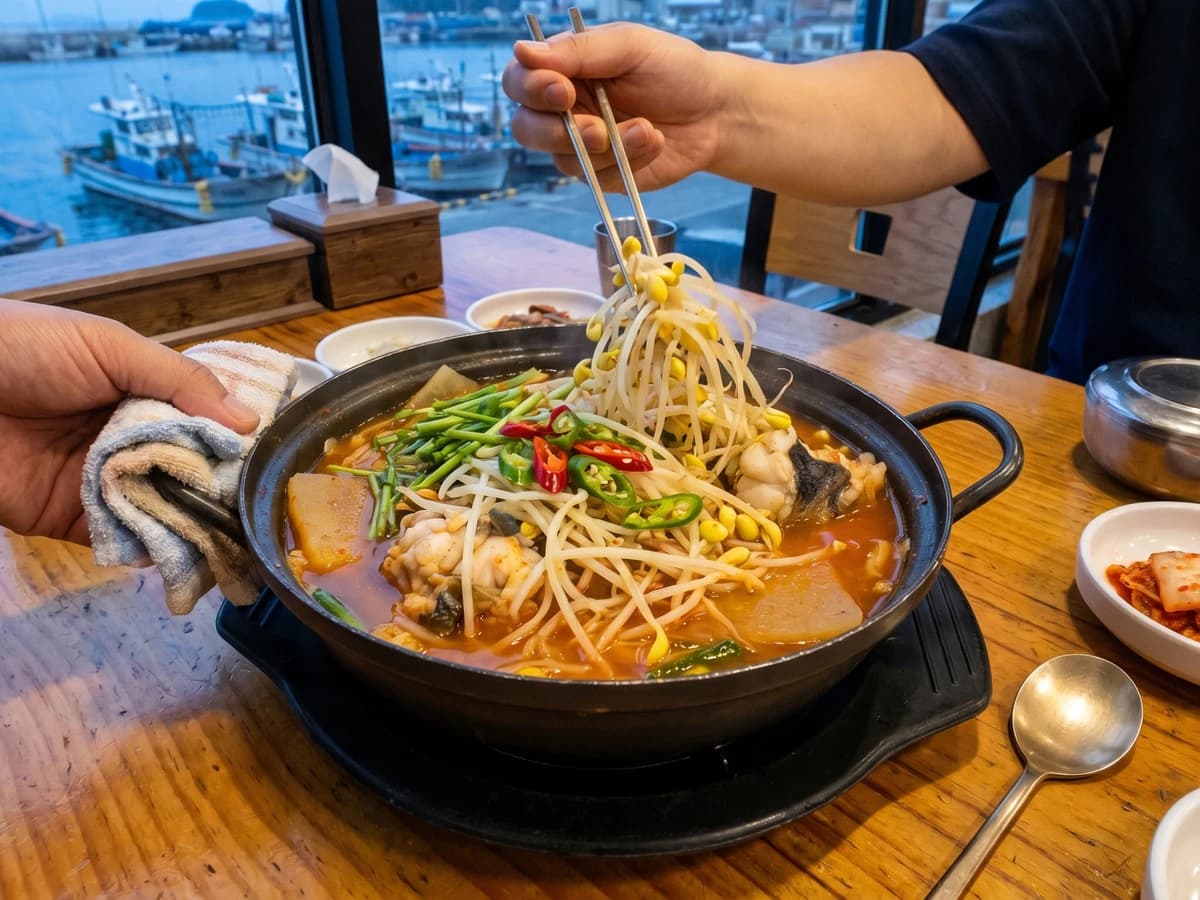
A Masan coast monkfish stew with firm white meat, gelatin at the bones, soybean sprouts for crunch, and a red broth seasoned to carry the fish, not bury it.

Chef Jeong-sun
A weeknight fish roe stew with radish and crown daisy in a clean spicy broth, where the whole success depends on adding the roe late enough that it sets tender, not chalky.

Chef Jeong-sun
Late-summer mallow leaves rubbed with salt until the bitter green water runs off, then simmered in a clean doenjang broth with dried shrimp, the quiet soup a Korean weeknight deserves.