
Chef Lupita
Arroz a la Oaxaqueña
Oaxaca's red rice, stained with tomato and fried in lard, steamed with carrots, ejotes, black beans, and epazote. The side that anchors a Oaxacan family meal and earns its place beside the main.
A cooking platform built around craft, culture, and the stories behind what we eat.

Created by
Veracruz's black beans and rice, carried through the port from the Caribbean and made jarocho with epazote, bay leaf, garlic, and the black bean that rules the Gulf kitchen.
Veracruz, especially the port and the Sotavento, is where this dish belongs in Mexico. Moros y Cristianos came through the Gulf with the Afro-Caribbean line, then Veracruz made it its own with frijol negro, epazote, garlic, bay leaf, and sometimes a strip of tocino cooked down until the fat perfumes the rice.
Do not bring me pinto beans for this. In Veracruz, the black bean rules. The bean pot sits at the center of the kitchen the way the comal does in other states, and the rice is not cooked separately like a polite guest. It marries the bean broth in the same pot. That dark broth is the flavor. Throw it away and you have missed the point.
I learned a version of this near Tlacotalpan from a woman who served it beside platanos fritos on banana leaf, with a clay olla sweating in the humid kitchen and a wooden spoon stained almost purple from years of black beans. She told me, 'El arroz tiene que tomar color.' The rice has to take the color. She was right. Cada estado, su propia cocina.
Moros y Cristianos is associated with Cuba and the wider Spanish Caribbean, where black beans and white rice became a daily dish shaped by African, Spanish, and Indigenous foodways. Veracruz absorbed the preparation through the port trade from the colonial period onward, especially in the Afro-Mestizo corridor of the Sotavento, where plantain, yuca, malanga, black beans, and rice share the same table. The dish's name refers to the medieval Spanish language of Moors and Christians, but in Veracruz the cooking tells a Gulf story, not a Castilian one.
Quantity
1 cup
picked over and rinsed
Quantity
7 cups
divided
Quantity
1/2 medium
left in one piece for the bean pot
Quantity
2
whole for the bean pot
Quantity
1 large sprig
Quantity
1 1/2 teaspoons, divided, plus more to taste
Quantity
1 1/2 cups
Quantity
2 tablespoons
Quantity
2 ounces
diced
Quantity
1/2 medium
finely chopped for the sofrito
Quantity
1
finely chopped
Quantity
1
slit lengthwise
Quantity
1
Quantity
1/2 teaspoon
lightly crushed
Quantity
to taste
| Ingredient | Quantity |
|---|---|
| dried black beanspicked over and rinsed | 1 cup |
| waterdivided | 7 cups |
| white onionleft in one piece for the bean pot | 1/2 medium |
| garlic cloveswhole for the bean pot | 2 |
| fresh epazote | 1 large sprig |
| kosher salt | 1 1/2 teaspoons, divided, plus more to taste |
| long-grain white rice | 1 1/2 cups |
| manteca de cerdo (pork lard) | 2 tablespoons |
| tocino or thick-cut unsmoked bacondiced | 2 ounces |
| white onionfinely chopped for the sofrito | 1/2 medium |
| garlic clovefinely chopped | 1 |
| fresh chile jalapeño or chile cuaresmeñoslit lengthwise | 1 |
| bay leaf | 1 |
| dried Mexican oreganolightly crushed | 1/2 teaspoon |
| freshly ground black pepper | to taste |
Put the black beans in a heavy pot with 6 cups water, the onion piece, 2 whole garlic cloves, and the epazote. Bring to a boil, then lower to a steady simmer. Cook until the beans are tender but not falling apart, about 1 1/2 hours, adding hot water if the beans start to show above the liquid. Add 1 teaspoon salt during the last 20 minutes. Salt too early can slow stubborn beans. Salt too late and the bean broth tastes thin.
Remove the onion, garlic, and spent epazote. Drain the beans over a bowl and save every drop of the dark cooking liquid. You need 2 3/4 cups bean broth for the rice. If you are short, add water. If you throw away the broth, you throw away the Veracruz part of the dish.
Rinse the rice under cool water until the water runs mostly clear, then drain it well. Let it sit in the strainer for 10 minutes. Wet rice thrown straight into hot fat splutters and cooks unevenly. Dry it a little. The grain will behave better.
Set a wide clay cazuela or heavy pot over medium heat. Add the manteca de cerdo and the diced tocino. Cook until the tocino gives up its fat and the edges turn golden, 4 to 5 minutes. La manteca es el sabor. This is not the place for a timid spoon of vegetable oil.
Add the finely chopped onion and cook until translucent and sweet-smelling, about 4 minutes. Stir in the chopped garlic and cook for 30 seconds. Do not brown the garlic. Add the drained rice and stir until every grain is shiny with fat and the rice sounds dry against the pot, 3 to 4 minutes. That frying keeps the grains separate instead of turning the pot into paste.
Stir in the cooked black beans, 2 3/4 cups reserved bean broth, the slit jalapeño, bay leaf, oregano, 1/2 teaspoon salt, and a few grinds of black pepper. Bring to a lively simmer and taste the liquid. It should taste slightly saltier than you want the finished rice, because the grains will absorb it.
Cover the pot, lower the heat to the lowest setting, and cook for 18 minutes without lifting the lid. No me vengas con atajos. Every time you open the pot, you let out the heat the rice needs. At 18 minutes, turn off the heat and let the pot rest, still covered, for 10 minutes.
Remove the bay leaf and jalapeño. Fluff the rice gently with a fork from the edges toward the center. The grains should be stained gray-purple from the black bean broth, tender but separate, with whole beans scattered through the pot. Serve from the cazuela with platanos fritos, yuca frita, or grilled fish. Saber cocinar es saber vivir.
1 serving (about 240g)
Culinary guides, cultural storytelling, and the editorial depth that makes cooking meaningful.
Discover Culinary ExplorerChef Lupita
Oaxaca's red rice, stained with tomato and fried in lard, steamed with carrots, ejotes, black beans, and epazote. The side that anchors a Oaxacan family meal and earns its place beside the main.
Chef Lupita
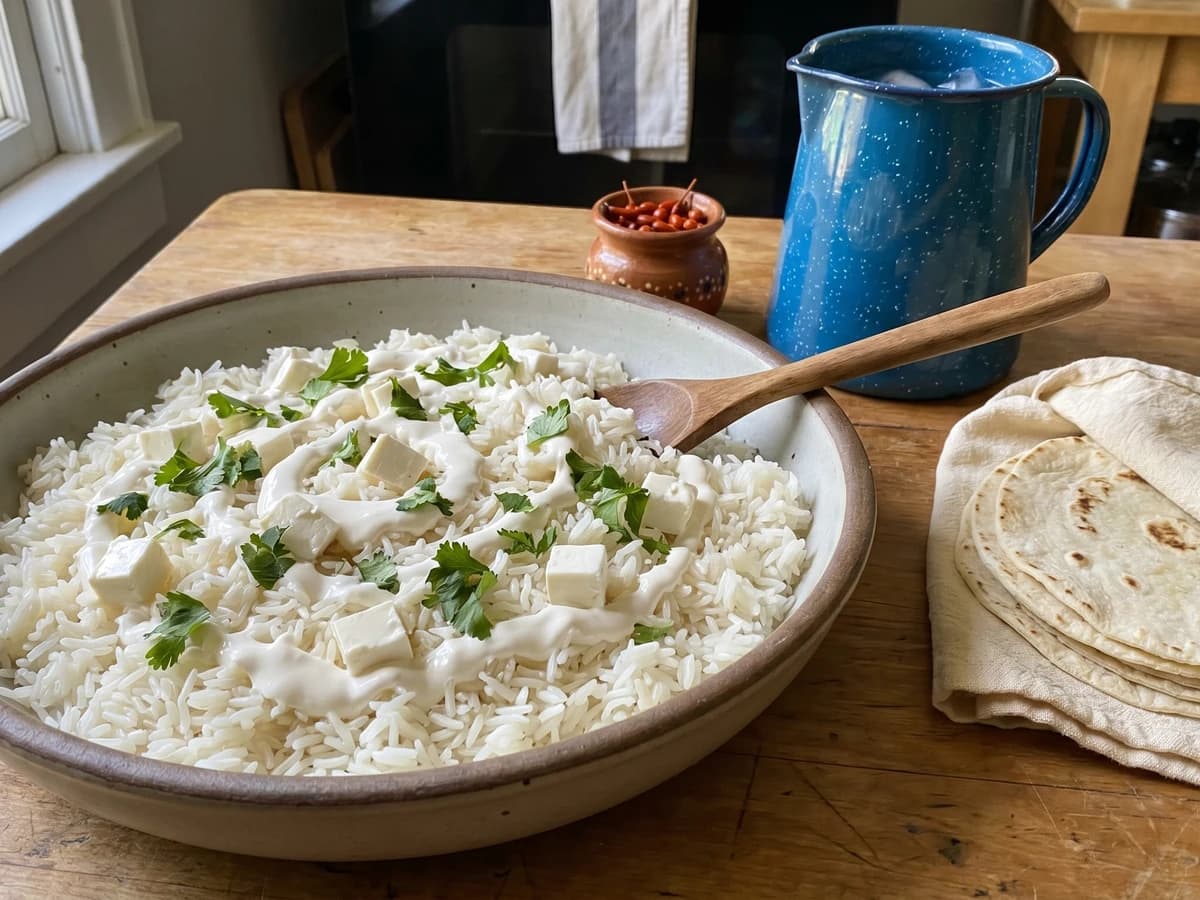
Sinaloa's home-cook white rice topped with cold cubes of cream cheese that soften into the warm grain, finished with crema and a sprinkle of chiltepin at the table. The trick that makes a side dish feel like a small luxury.
Chef Lupita
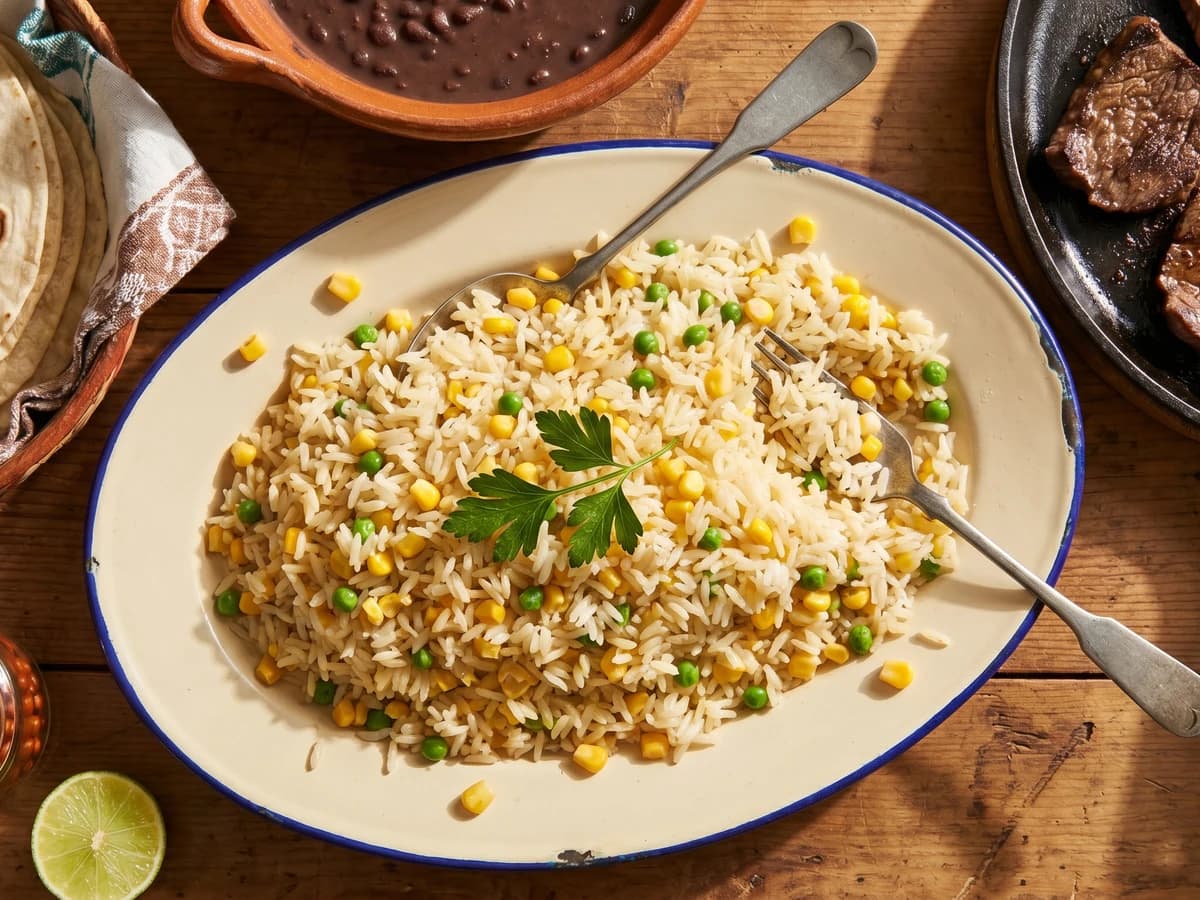
Sonora's white rice, toasted in butter and steamed with sweet corn and tender peas. The clean, quiet partner to a plate of carne asada, not the red rice of central Mexico.

Chef Lupita
Yucatán's white rice with sweet corn kernels, toasted in lard with garlic and onion. The quiet base that holds up against the peninsula's bold achiote-stained stews.