Culinary Explorer

A cooking platform built around craft, culture, and the stories behind what we eat.
Discover Culinary Explorer
Japanese Hot Dog (ホットドッグ, Hottodoggu)

Japanese Hot Dog (ホットドッグ, Hottodoggu)

Created by

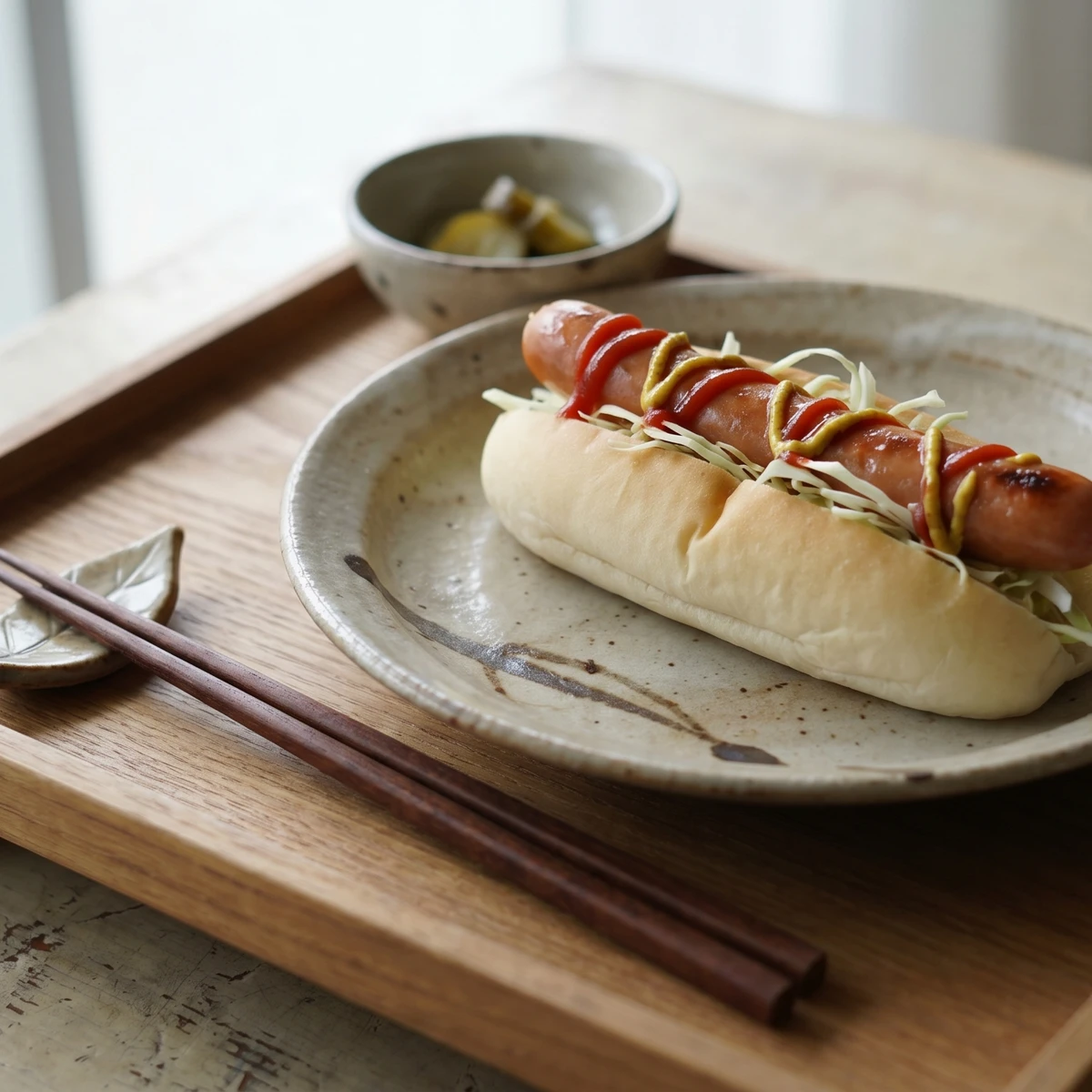
A Japanese hot dog is a bakery lunch, soft and direct: sweet koppepan, a hot frankfurter, neat cabbage, and clean stripes of ketchup and mustard.

Sandwiches & Wraps
Japanese
Quick Meal
Picnic
Game Day
10 min
Active Time
8 min cook18 min total
Yield4 hot dogs

The first thing to understand is the bread. This is not the hard-edged stadium bun, and it isn't trying to be. A Japanese hot dog sits in koppepan, a soft, slightly sweet school-lunch roll, split like a little boat and asked to hold only what it can hold with manners.

The dish is simple, so the one detail decides it: keep the cabbage fine and dry. Salt it briefly, squeeze it lightly, and it becomes pliant enough to tuck under the sausage without soaking the bread. That small step is the difference between a tidy bakery hot dog and a bun that gives up halfway through lunch.

We don't need dashi here, and I won't pretend we do. This is yōshoku, Japanese-style Western food that became its own everyday thing, and its honesty is in proportion: warm soft bread, a mild sausage, cabbage for freshness, ketchup and mustard in clean lines. Nothing hidden. Make it smaller than your appetite suggests, leave it room on the plate, and the plainness reads exactly as it should.

Koppepan entered Japanese food culture in the early twentieth century and became closely tied to school lunches after World War II, when bread was widely used in public meal programs. Hot dogs made with koppepan followed the same yōshoku pattern: a Western form adapted to Japanese bakery bread, milder sausages, and restrained garnishes. In Japan the word hottodoggu usually names this soft bread version, not the larger American ballpark style.

The technique, the tradition, and the story behind every dish.

Discover Culinary Explorer

Ingredients

koppepan or soft Japanese milk bread rolls

Quantity

4

split lengthwise, not cut all the way through

Japanese-style frankfurters or mild pork sausages

Quantity

4

green cabbage

Quantity

3 cups

finely shredded

fine sea salt

Quantity

1/2 teaspoon

neutral oil

Quantity

2 teaspoons

Japanese ketchup

Quantity

4 tablespoons

karashi mustard or mild yellow mustard

Quantity

4 teaspoons

unsalted butter (optional)

Quantity

1 tablespoon

softened

Equipment Needed

  • Small skillet or grill pan
  • Bread knife
  • Tongs

Instructions

  1. 1

    Salt the cabbage

    Toss the shredded cabbage with the salt and leave it for five minutes. This is not to make it salty. The salt draws out a little water, so the cabbage bends into the bun instead of spilling out in stiff, dry shreds. Squeeze it lightly, just enough to remove the wetness.

  2. 2

    Warm the buns

    Split each koppepan lengthwise without cutting through the hinge. Warm the rolls in a low oven or toaster for two or three minutes, only until soft and fragrant. If you toast them hard, you've made a different sandwich. The Japanese hot dog depends on the sweet, yielding bread against the hot sausage.

  3. 3

    Cook the sausages

    Heat the oil in a skillet over medium heat and cook the frankfurters, turning often, until the skins look glossy and taut, about five minutes. Keep the heat moderate. You want a hot, juicy sausage with a little color, not a blistered one that fights the soft bread.

  4. 4

    Fill the bread

    Spread a thin film of butter inside each bun if using. Tuck in a modest line of cabbage, then set one hot frankfurter on top. The cabbage belongs underneath because it cushions the sausage and catches the juices. Pile it high and the first bite becomes a small engineering complaint.

  5. 5

    Stripe and serve

    Stripe each hot dog with ketchup and mustard, using less than your hand wants to use. The sauces should season the bun and sausage, not bury them. Serve at once, while the bread is warm and the sausage skin still has its snap.

Chef Tips

  • Buy the softest plain roll you can find, ideally koppepan or a Japanese milk bread roll. A crusty bun has its place, but not here. The softness is part of the dish.
  • Shred the cabbage finer than you think. Thick pieces spring out of the bun, while fine cabbage settles into a clean bed for the sausage.
  • Karashi has a sharper bite than yellow mustard. Use it lightly. The stripe should wake the sausage up, not announce itself like a temple bell.

Advance Preparation

  • The cabbage can be shredded up to 6 hours ahead and kept covered in the refrigerator. Salt and squeeze it just before assembling so it stays fresh.
  • The buns can be split earlier in the day, then wrapped so they don't dry out. Warm them just before filling.
  • These are best assembled at the last moment. For a picnic, carry the cooked sausages warm, the cabbage separately, and stripe the sauces after filling.

Frequently Asked Questions

Nutrition Information

1 serving (about 160g)

Calories
375 calories
Total Fat
20 g
Saturated Fat
7 g
Trans Fat
0 g
Unsaturated Fat
11 g
Cholesterol
40 mg
Sodium
1040 mg
Total Carbohydrates
37 g
Dietary Fiber
2 g
Sugars
9 g
Protein
13 g

Note: Chef personas and recipes are created with AI assistance. Cook with care: follow safe food-handling practices, check doneness with a thermometer when needed, and adapt for allergies and your kitchen.

Where cooking meets culture.

Culinary guides, cultural storytelling, and the editorial depth that makes cooking meaningful.

Discover Culinary Explorer

More from Japanese Sando

Browse the full collection