
Chef Thomas
All-Butter Shortbread Fingers
The plainest biscuit in the tin and the hardest one to stop eating, three ingredients and a slow oven turning good butter into something quietly perfect with a cup of tea.
A cooking platform built around craft, culture, and the stories behind what we eat.
Created by Chef Thomas
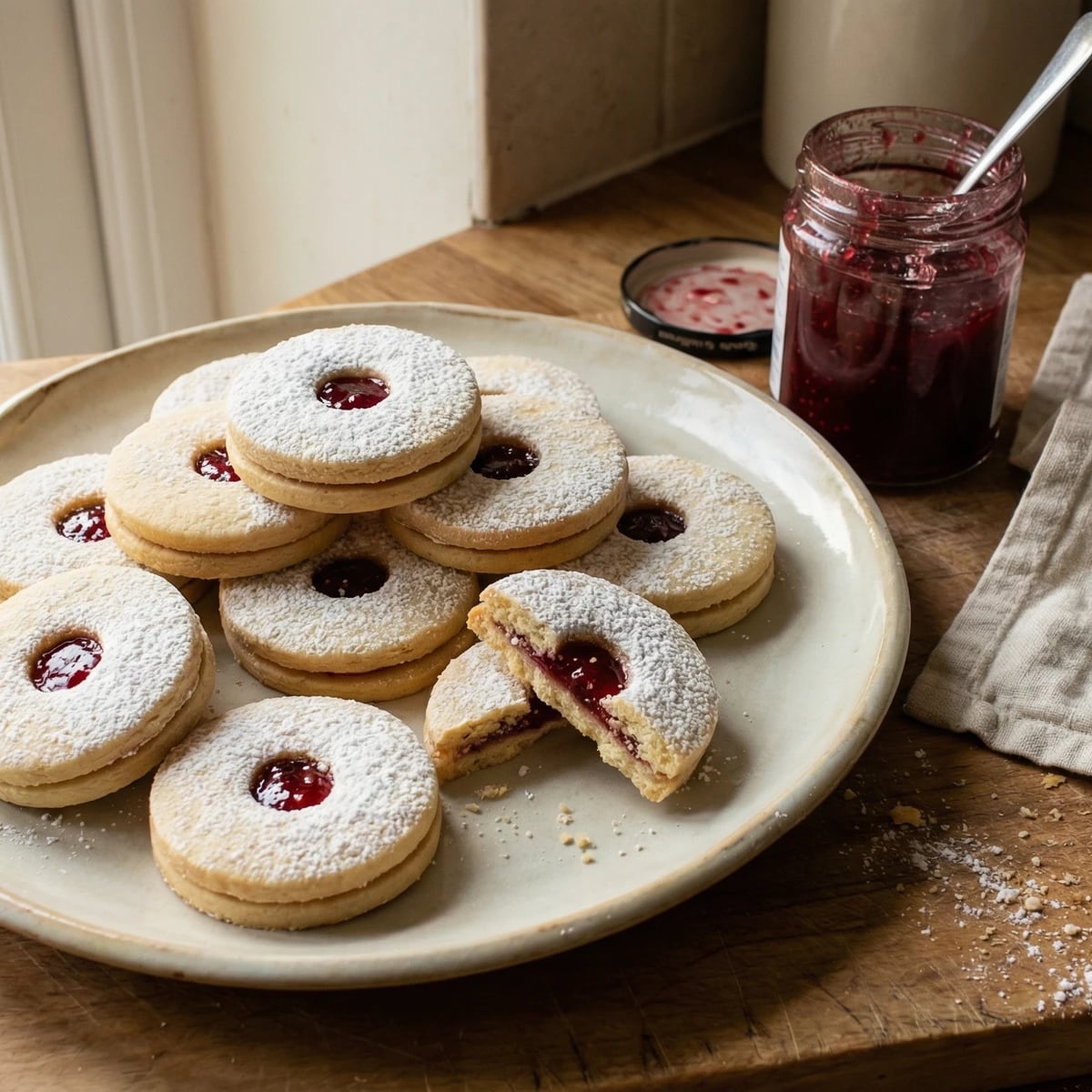
Buttery shortbread rounds with a little cutout window of raspberry jam, the kind of biscuit that makes a wet afternoon feel like the right place to be.
It's the sort of grey afternoon where the rain has settled in for the long haul and there's nothing for it but to put the oven on. The kitchen needs a smell. The kettle goes on first, then the butter comes out of the fridge, and the children, if there are any to hand, start asking when they can do the cutting bit.
I keep a jar of last summer's raspberry jam at the back of the cupboard for exactly this reason. The berries went into the pan in July, when the canes were dripping with them and the kitchen smelled of warm sugar for two days running. Now, in the depths of something that isn't summer, you open the jar and the smell of July comes out with it. There are few better things to do with a jar of good jam than press it between two buttery biscuits and watch a child eat one while still warm, with jam on their chin and absolutely no apology for it.
These are the proper version of what the supermarket calls a Jammie Dodger. Same idea. Better in every way. Real butter, a tender shortbread that melts on the tongue, and a jam that tastes of actual fruit rather than red food colouring. A recipe is a conversation, not a contract, so use whatever jam you've got. Strawberry, blackcurrant, apricot, quince. The market decides, or the cupboard does. We're only making biscuits.
I wrote it down in the notebook the first time I made them with my niece, years ago: "Rain. Biscuits. Jam everywhere. Worth it." That's still the whole recipe, really. The rest is just instructions.
Quantity
250g
softened, but still cool
Quantity
125g
plus extra for dusting
Quantity
1 teaspoon
Quantity
1
Quantity
350g
Quantity
pinch
Quantity
about 200g
good quality, ideally with seeds
| Ingredient | Quantity |
|---|---|
| unsalted buttersoftened, but still cool | 250g |
| icing sugarplus extra for dusting | 125g |
| vanilla extract | 1 teaspoon |
| large egg yolk | 1 |
| plain flour | 350g |
| fine sea salt | pinch |
| raspberry jamgood quality, ideally with seeds | about 200g |
Put the soft butter and icing sugar into a bowl and beat them together until they go pale and fluffy. A wooden spoon is fine. An electric whisk is faster. Either way, you're after a mixture that looks like clotted cream and clings to the back of the spoon. Don't rush this. The air you beat in now is what gives the biscuits their melt.
Beat in the egg yolk and the vanilla. The mixture will loosen and look slightly curdled for a moment. Don't worry. It comes back together as soon as the flour goes in.
Sift the flour and salt over the top. Fold it in with a spatula or your hands until the dough just comes together. Stop the moment it does. Overworked shortbread turns tough, and there's no rescuing it. The dough should feel soft but not sticky. If it's a bit dry, a teaspoon of cold milk helps.
Tip the dough onto a lightly floured surface, press it into two flat discs, wrap them in baking parchment, and put them in the fridge for half an hour. Cold dough rolls cleanly and holds its shape in the oven. Warm dough fights you the whole way.
Heat the oven to 170C/150C fan. Line two baking trays with parchment. Roll the first disc out on a lightly floured surface to about 4mm thick. Cut out rounds with a 6cm fluted cutter. Half of the rounds will be the bases. From the other half, cut a small shape from the centre with a tiny cutter, a heart, a star, a circle, whatever you've got. These are the lids. Lift them onto the trays with a palette knife. Re-roll the scraps once, no more, or the biscuits get tough.
Bake for twelve to fifteen minutes. You're not after colour. You want them barely golden at the edges and still pale on top, the colour of fresh cream rather than honey. Shortbread carries on cooking after you take it out of the oven, and overbaked biscuits taste of nothing but flour. Trust your nose. When the kitchen starts to smell of butter and warm vanilla, look in.
Let the biscuits sit on the tray for a couple of minutes, then move them carefully to a wire rack. They're fragile while warm and firm up as they cool. Don't touch them until they're properly cold. Warm shortbread under jam turns sad and soft.
Dust the cutout lids generously with icing sugar while they're still on the rack. Spoon a teaspoon of raspberry jam onto each base, just enough to spread to the edges when you press the lid down. The jam should peek through the little window, bright and glossy, like a stained glass panel. Press gently. Eat one straight away because nobody's watching, and the first one is always yours.
1 serving (about 65g)
Culinary guides, cultural storytelling, and the editorial depth that makes cooking meaningful.
Discover Culinary Explorer
Chef Thomas
The plainest biscuit in the tin and the hardest one to stop eating, three ingredients and a slow oven turning good butter into something quietly perfect with a cup of tea.

Chef Thomas
Lacy golden tubes of toffee and ginger, filled with cold brandy cream and served the moment they're ready. The biscuit that breaks under your teeth and tastes of December.

Chef Thomas
Tall, tender scones with a soft buttermilk crumb and a deep golden top, the kind of thing you can make from cold to plate in half an hour and feel quietly clever about all afternoon.

Chef Thomas
Sharp cheddar scones with a hum of mustard and cayenne, golden-topped and tall, made for a bowl of soup on a grey afternoon or a picnic basket on a hopeful one.