
Chef Takumi
Anpan (あんぱん)
Anpan is not a pastry trick. It is soft bread, sweet azuki, and a careful seal, so the bean paste stays centered while the bun rises round and tender.
A cooking platform built around craft, culture, and the stories behind what we eat.
Created by
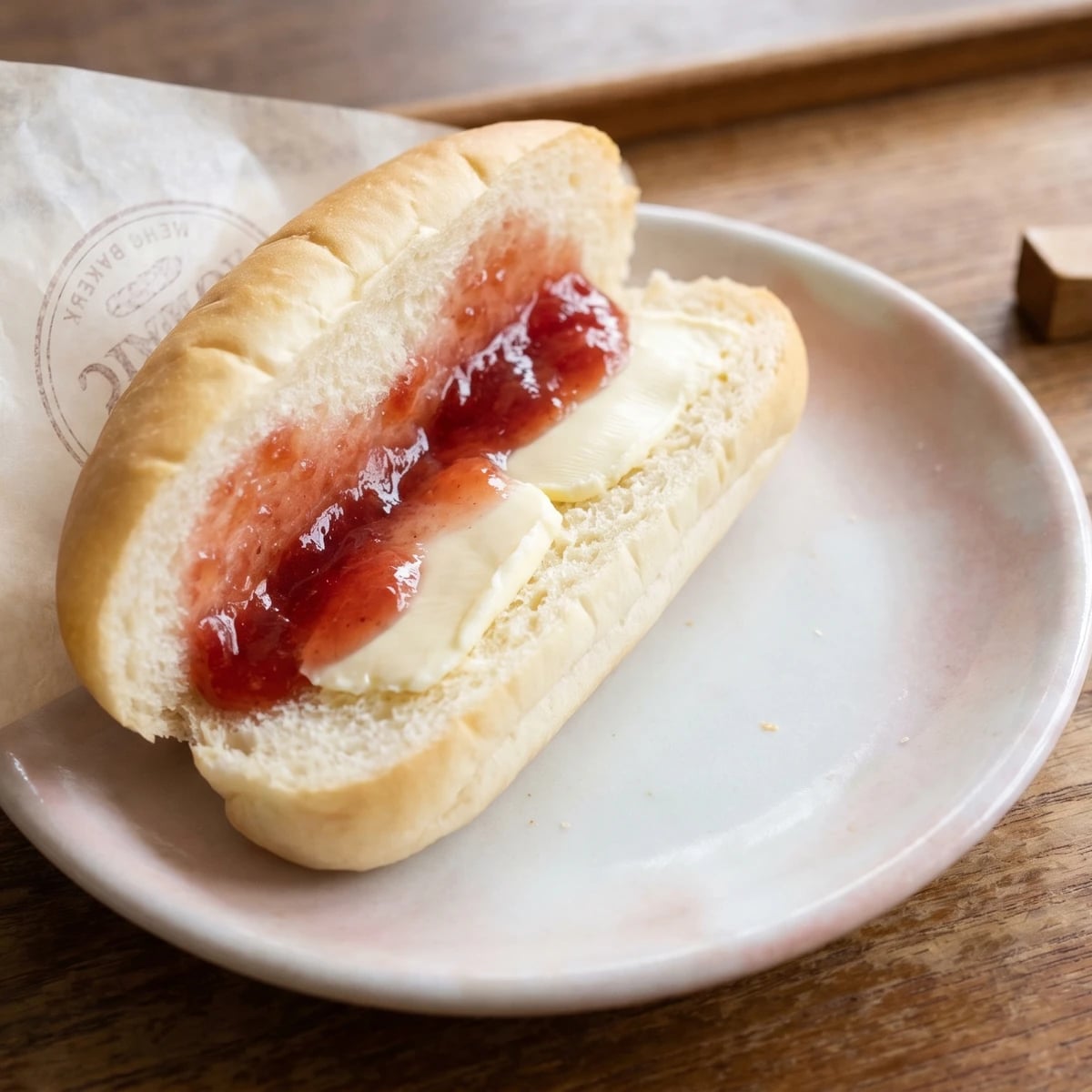
A spindle-shaped school-bread roll, soft and plain on purpose, split open with jam on one side and margarine on the other. Nothing fancy, which is exactly why it works.
Koppepan looks almost too plain to be a recipe. A soft roll, a slit down the middle, jam on one wall, margarine on the other. That is the whole trick, and also the reason people get it wrong by trying to improve it.
The bread must be tender but not rich like a sweet bun. It needs enough strength to hold its spindle shape and enough softness to fold around the filling without cracking. Knead the dough well before the butter goes in, because gluten gives the roll its quiet backbone, and the fat comes after to soften the crumb. This is not difficult work. It's just bread that asks you to stop one step before showing off.
Use strawberry jam if you want the old lunchbox feeling, and use margarine without apology. Butter is a beautiful thing, but it changes this particular bread into something else. The mild, salty spread against bright jam is the taste of the dish. Honmono, in this case, is not grand. It is exact.
Serve it as oyatsu, the small afternoon bite, or wrap one for a simple breakfast with tea. Cut cleanly, fill neatly, and don't overstuff it. Leave it room. Even a bread from the convenience shelf has its own manners.
Koppepan became closely tied to Japanese school lunches after World War II, when wheat bread was promoted through the school meal system during years of food shortage and American wheat imports. The word is usually traced to the French coupe, meaning a cut or slit, but the Japanese roll developed into its own soft, spindle-shaped everyday bread. Yamazaki's Jam and Margarine Koppepan helped fix the split-filling style in popular memory: jam on one side, margarine on the other, a packaged bakery staple that kept the school-lunch shape in daily life.
Quantity
300g
Quantity
30g
Quantity
5g
Quantity
6g
Quantity
180ml
lukewarm
Quantity
1
beaten
Quantity
25g
softened
Quantity
a little
for the bowl
Quantity
120g
Quantity
100g
| Ingredient | Quantity |
|---|---|
| bread flour | 300g |
| sugar | 30g |
| fine sea salt | 5g |
| instant yeast | 6g |
| whole milklukewarm | 180ml |
| large eggbeaten | 1 |
| unsalted buttersoftened | 25g |
| neutral oilfor the bowl | a little |
| strawberry jam | 120g |
| soft baking margarine | 100g |
In a large bowl, whisk the flour, sugar, salt, and yeast. Add the lukewarm milk and beaten egg, then mix until no dry flour remains. The milk should feel warm, not hot, because yeast works steadily in gentle warmth and sulks when scalded.
Knead for 8 to 10 minutes, then work in the softened butter a little at a time. At first the dough will smear and complain. Keep going. The butter coats the flour after gluten has begun to form, giving you a soft crumb without making the dough weak from the start.
Set the dough in a lightly oiled bowl, cover it, and let it rise in a warm place until doubled, about 60 to 75 minutes. Don't chase the clock. A well-risen dough looks swollen and relaxed, and a floured finger pressed into it leaves a slow, shallow dent.
Turn the dough out and divide it into 8 equal pieces, about 70g each. Shape each piece into a loose ball, cover, and rest for 15 minutes. This pause lets the tightened gluten relax, so the rolls shape neatly instead of springing back like a child told to sit still.
Flatten each piece into an oval, fold the long edges toward the center, then roll it into a smooth spindle about 14cm long, tapering the ends slightly. Pinch the seam closed and place seam-side down. The shape matters because koppepan should be long enough to split cleanly and soft enough to cradle the filling without cracking.
Place the rolls on a lined baking sheet with space between them. Cover and proof until puffy and light, 35 to 45 minutes. If underproofed, they bake dense and split at the sides. If ready, a gentle touch leaves a small mark that slowly fills back in.
Bake at 180 C for 13 to 15 minutes, until pale golden on top and lightly browned underneath. Koppepan is not a crusty bread. Pull it before the crust toughens, because the pleasure here is the soft bite against the cool jam and margarine.
Move the rolls to a rack and cool completely. Warm bread melts the margarine and loosens the jam, which sounds harmless until the filling runs out the bottom and the bread turns greasy. Patience is doing real work here.
Cut each roll lengthwise from the top, stopping just before you cut through the bottom. Spread jam along one inner side and margarine along the other, then close the roll gently. Keep the two fillings separate. That clean meeting in the middle is the Yamazaki way, and it is the detail that decides the bread.
1 serving (about 95g)
Culinary guides, cultural storytelling, and the editorial depth that makes cooking meaningful.
Discover Culinary Explorer
Chef Takumi
Anpan is not a pastry trick. It is soft bread, sweet azuki, and a careful seal, so the bean paste stays centered while the bun rises round and tender.

Chef Takumi
Choco cornet looks clever, which is how bakery bread frightens sensible people. Wrap a soft rope around a cone, bake it golden, then pipe in chocolate cream only after the shell is cool.

Chef Takumi
Cream pan asks for two calm things: a custard thick enough to stay put, and a soft dough sealed with patience. Do that, and the little glove-shaped bun behaves.

Chef Takumi
Curry pan looks like bakery magic, but it is only cooled curry, patient sealing, and oil at the right heat. Keep the filling thick and the bread closes around it neatly.