Culinary Explorer

A cooking platform built around craft, culture, and the stories behind what we eat.
Discover Culinary Explorer
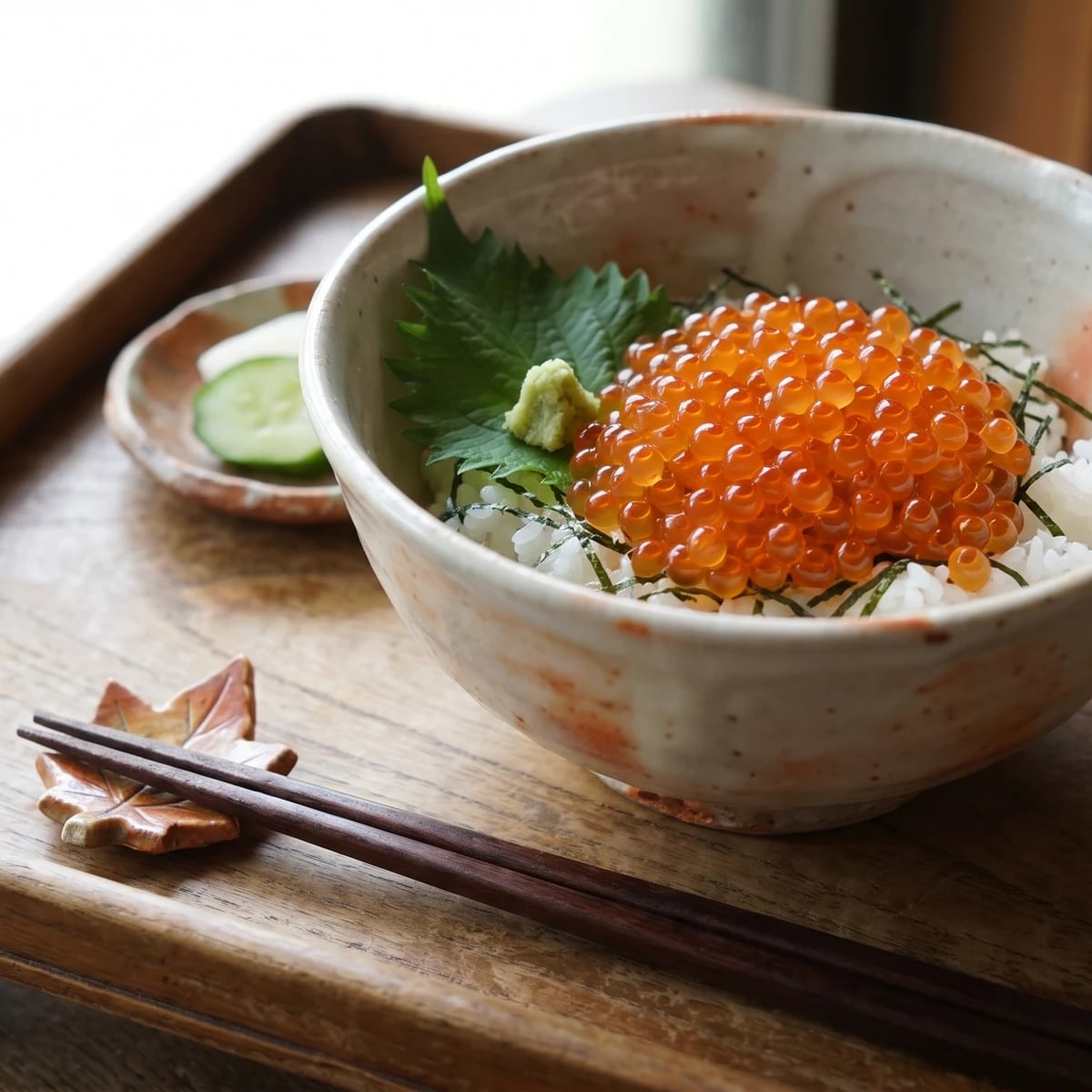
Ikuradon (いくら丼, salmon roe rice bowl)

Ikuradon (いくら丼, salmon roe rice bowl)

Created by

Ikuradon looks lavish, but the work is quiet: clean roe, a cooled soy-dashi marinade, hot rice, and the restraint to let each bead burst without anything heavy in its way.

Main Dishes
Japanese
Special Occasion
Celebration
Date Night
35 min
Active Time
35 min cook5 hr 10 min total
Yield4 servings

Ikura is autumn made round. Each bead should be bright, separate, and glistening fresh, not dull or sticky, and it should smell faintly of the sea, not loudly. This bowl belongs to Hokkaidō's salmon season, when the fish return upriver and the roe is at its prime, its shun. Sourcing comes first. If the roe isn't good enough to eat as it is, no soy will save it, and we should cook something else.

The hesitation is understandable. Salmon roe looks precious, and people begin to whisper as if a donburi were surgery. It isn't. The first secret is cool seasoning: boil the sake and mirin only to soften their raw edge, cool them fully with dashi and soy, then let the roe rest. Hot liquid tightens the beads; cold seasoning keeps the pop.

The rice does the other half. Use Japanese short-grain rice, washed clean and rested after cooking, so the grains cling without turning pasty. Bowl it hot, lay a little nori, and spoon the ikura on with a light hand. The bowl should feel abundant, but not crowded. Leave it room, and the orange, white, black, and green will say celebration before you take the first bite. That is honmono made reachable: season right, handling gentle, nothing hidden.

The word ikura entered Japanese from Russian ikra, meaning fish roe, through northern fishing contact around Hokkaidō, Sakhalin, and the North Pacific in the late nineteenth and early twentieth centuries. Ikuradon is especially tied to Hokkaidō, where chum salmon return to rivers such as the Ishikari in autumn and salmon roe became a marker of the season. Older roe preparations often kept the eggs in the intact salted skein, sujiko; the loose soy-marinated beads now familiar in donburi rely on careful separation and cold handling.

The technique, the tradition, and the story behind every dish.

Discover Culinary Explorer

Ingredients

very fresh salmon roe in skeins (sujiko)

Quantity

350g

intended for raw consumption

cleaned unseasoned salmon roe (optional)

Quantity

300g

use instead of sujiko if already separated

warm water

Quantity

1 liter

about 40°C, for separating the roe

sea salt

Quantity

3 tablespoons

divided, for separating and rinsing the roe

cold water

Quantity

1 cup

for dashi

konbu (dried kelp)

Quantity

1 piece (about 5g)

katsuobushi (bonito flakes)

Quantity

10g

sake

Quantity

2 tablespoons

mirin

Quantity

2 tablespoons

koikuchi shōyu (regular Japanese soy sauce)

Quantity

3 tablespoons

Japanese short-grain rice

Quantity

2 rice-cooker cups (about 300g)

rinsed and cooked

water for rice

Quantity

to the rice-cooker mark, or about 400ml for stovetop cooking

nori

Quantity

1 sheet

cut into thin threads

shiso leaves (optional)

Quantity

4

freshly grated wasabi (optional)

Quantity

2 teaspoons

Equipment Needed

  • Cooking thermometer
  • Fine-mesh strainer lined with a clean cloth
  • Coarse-mesh basket or clean cooling rack for loosening roe, with fingers as the gentler stand-in
  • Rice cooker or heavy pot with a tight lid
  • Donburi bowls

Instructions

  1. 1

    Make fresh dashi

    Wipe the konbu with a damp cloth, but don't wash it. Put it in 1 cup cold water and warm it slowly until the water trembles and small bubbles climb the pot, then lift the konbu out before it boils. Add the katsuobushi all at once, take the pot off the heat, and let the flakes sink for two minutes. Strain through a cloth or fine sieve and let it drip. Don't squeeze, because squeezing pushes harsh, oily flavors into the clear stock you need for a clean marinade.

    You're making only a little dashi, but treat it carefully. Boiled konbu and squeezed flakes turn a clear seasoning cloudy in taste, if not always in color.
  2. 2

    Cool the marinade

    In a small pan, bring the sake and mirin to a lively simmer for 60 seconds, just long enough to soften the raw alcohol. Take it off the heat, stir in the soy sauce and 1/2 cup of the fresh dashi, then cool completely. Taste it when cold. It should be saltier than you want the finished roe, because the beads take seasoning mainly on their surface. Warm marinade tightens the eggs and steals their clean pop, which would be a small crime after buying good roe.

    Set the pan in ice water if you need it cooled quickly. The marinade must be cold before it meets the roe.
  3. 3

    Loosen the roe

    If using roe in skeins, dissolve 2 tablespoons of the sea salt in the warm water, about 40°C. Slip the sujiko into the water and gently open the membrane with your fingers, or rub it very lightly over a coarse-mesh basket set in the bowl. The warm salted water loosens the membrane without setting the eggs; the salt keeps the beads firm instead of waterlogged. Pick out any pale membrane as it floats free. If you bought cleaned unseasoned roe, begin with the next step.

  4. 4

    Rinse in salt water

    Move the loose roe through two or three bowls of cool lightly salted water, using the remaining salt, lifting it with your fingers and pouring off cloudy water and stray membrane. Wash it twice, wash it thrice. You're not scrubbing. You're clearing away the bits of membrane that would taste muddy and cloud the marinade. Drain the roe in a sieve for 10 minutes.

  5. 5

    Marinate the ikura

    Transfer the drained roe to a shallow nonreactive container and pour over enough cooled marinade to cover. Refrigerate for 3 to 6 hours, gently turning once if the top beads sit above the liquid. Longer is not better: the soy keeps tightening the skins, and the bowl loses the delicate burst. Drain before serving. This marinade seasons; it does not make questionable roe safe, so keep everything cold and serve the same day.

    The one detail that decides the dish is temperature. Cold roe, cold marinade, careful handling. That's how each bead stays round and bright.
  6. 6

    Cook the rice

    Rinse the rice in several changes of water until the water runs almost clear, then drain for 20 minutes. Cook in a rice cooker with water to the 2-cup mark, or in a heavy pot with about 400ml water: bring to a boil, cover, lower the heat for 12 minutes, then rest off the heat for 10 minutes. Rinsing removes loose starch so the grains shine instead of clumping; resting lets the moisture settle, which keeps the donburi clean rather than wet.

  7. 7

    Assemble the bowls

    Fluff the rice with a shamoji, a rice paddle, and divide it among four donburi bowls. Let the surface settle for one minute if it is fiercely hot; the rice should warm the roe at the table, not toughen it in the bowl. Lay shredded nori over the rice, set a shiso leaf if using, and spoon the drained ikura in an off-center mound. Add a small dab of wasabi. Serve immediately, while the rice is glossy and the roe still cool enough to burst.

Chef Tips

  • Ask the fishmonger one plain question: did this come in fresh enough to serve raw today? If the answer wanders, buy already seasoned ikura from a Japanese market and serve it as it is, or choose another dish. Sourcing first, always.
  • Fresh sujiko is best in autumn, especially from salmon landed in the north. Look for full, glossy eggs and a clean scent. Dull, collapsed, or sticky roe is telling you the season has passed it by.
  • Use a thermometer for the 40°C water the first time. Too cool and the membrane clings; too hot and the eggs begin to set. After one batch, your fingers will remember.
  • Don't drown the finished bowl in extra soy sauce. The marinade has already done that work. More soy only flattens the sweetness of the roe and makes the rice taste tired.

Advance Preparation

  • The dashi can be made two days ahead and kept refrigerated. The marinade can be mixed one day ahead, but keep it separate from the roe until the day you serve.
  • The roe is best marinated 3 to 6 hours before serving. Drain it just before it goes onto the rice and use it the same day.
  • Wash and drain the rice 20 to 30 minutes before cooking. Cook it close to serving time, because ikuradon depends on the contrast of hot rice and cool, bright roe.

Frequently Asked Questions

Nutrition Information

1 serving (about 260g)

Calories
490 calories
Total Fat
11 g
Saturated Fat
2 g
Trans Fat
0 g
Unsaturated Fat
8 g
Cholesterol
360 mg
Sodium
1250 mg
Total Carbohydrates
66 g
Dietary Fiber
1 g
Sugars
3 g
Protein
28 g

Note: Chef personas and recipes are created with AI assistance. Cook with care: follow safe food-handling practices, check doneness with a thermometer when needed, and adapt for allergies and your kitchen.

Where cooking meets culture.

Culinary guides, cultural storytelling, and the editorial depth that makes cooking meaningful.

Discover Culinary Explorer

More from Donburi: Rice Bowl Mains

Browse the full collection