Chef Makoa
Faikai Ika (Tuvaluan Baked Tuna in Coconut)
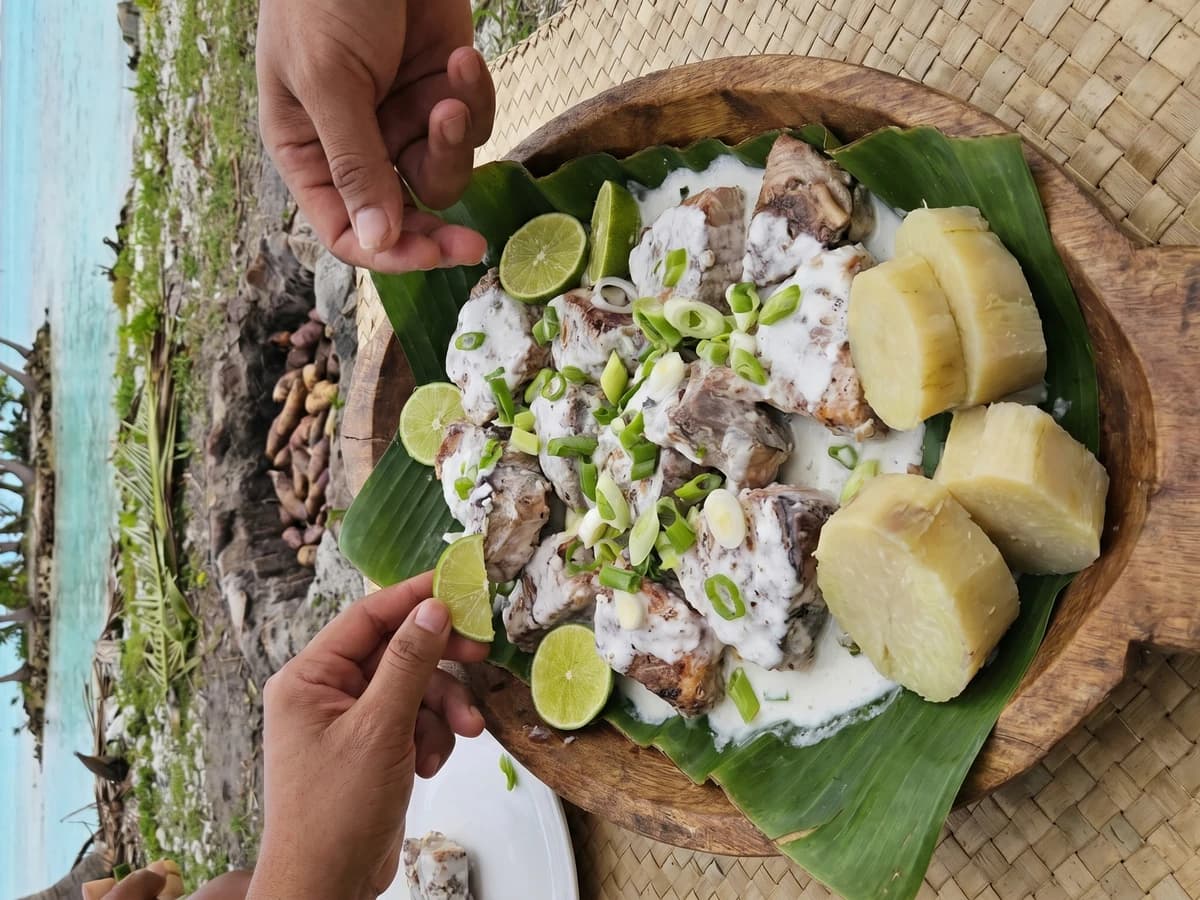
Tuvalu's faikai ika bakes fresh tuna in coconut cream until the fish flakes soft and drinks the nut in, lagoon catch and palm brought together on one low coral island plate.
A cooking platform built around craft, culture, and the stories behind what we eat.
Created by
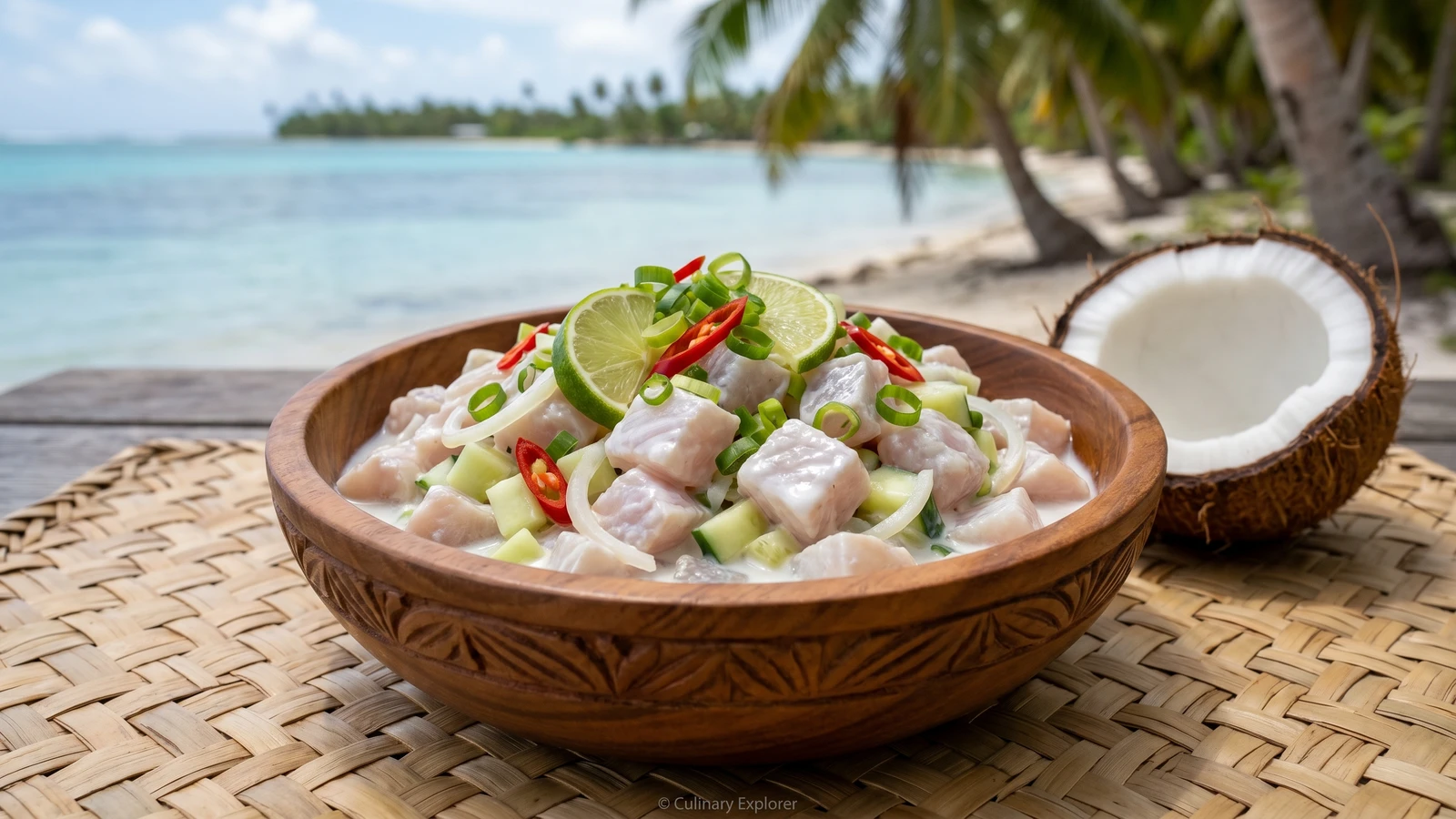
Tuvalu's ʻika mata is the atoll bowl: fresh reef fish, lime, coconut cream, onion, and cucumber, made close to the table where ocean feeds the kāiga.
On an atoll, the ocean is not scenery. It's the pantry, the road, the elder speaking first. Tuvalu's ʻika mata, raw fish, comes from that narrow life between reef and coconut tree, where the soil is coral and the sea has to help feed the kāiga, the family.
This is Tuvaluan food, and I say that plain. Same fish, different bowl: Sāmoa has oka iʻa, Tonga has ʻota ʻika, Tahiti has ʻia ota, the Cook Islands have ika mata too, and back home in Hawaiʻi we make poke with limu and ʻinamona. One ocean, one canoe, one root, but every island keeps its own hand.
The law is simple and strict. The fish must be fresh enough you'd eat it with nothing at all. The lime only turns the surface bright, it doesn't make poor fish good. Then the coconut cream goes in close to the table, softening the sharpness, carrying that atoll sweetness without making anything precious.
Use what you have, yeah? Reef fish if you live where trusted fishers know the safe grounds. Sashimi-grade tuna or snapper if you're far away. Eat what you have, but don't guess with raw fish. No blame the lime if the sourcing was wrong.
Tuvalu is an atoll nation, so dishes like ʻika mata sit inside a food ecology shaped by reef fish, coconut, pandanus, breadfruit, and pulaka, the giant swamp taro grown in pits dug down to fresh water beneath coral soil. Raw fish in citrus and coconut belongs to a wider Polynesian family, with Tuvalu's bowl sitting beside Sāmoan oka iʻa, Tongan ʻota ʻika, Tahitian ʻia ota, Cook Islands ika mata, and Hawaiian poke. The dish also shows the deep-food and everyday-food line together: old reef knowledge carried forward into modern kitchens with limes, chillers, market fish, and canned coconut cream when fresh coconut isn't at hand.
Quantity
1 pound
cut into 1/2-inch cubes
Quantity
4 to 5
juiced
Quantity
1 cup
or thick canned coconut cream, chilled and stirred smooth
Quantity
1 small
seeded and diced
Quantity
1/2 small
very thinly sliced
Quantity
1 small
seeded and diced
Quantity
1 small
finely sliced
Quantity
to taste
Quantity
2 tablespoons
sliced
Quantity
for serving
| Ingredient | Quantity |
|---|---|
| very fresh firm white reef fish, sashimi-grade tuna, or snappercut into 1/2-inch cubes | 1 pound |
| limesjuiced | 4 to 5 |
| fresh coconut creamor thick canned coconut cream, chilled and stirred smooth | 1 cup |
| cucumberseeded and diced | 1 small |
| sweet onionvery thinly sliced | 1/2 small |
| ripe tomato (optional)seeded and diced | 1 small |
| fresh chile (optional)finely sliced | 1 small |
| sea salt | to taste |
| green onion (optional)sliced | 2 tablespoons |
| lime wedges | for serving |
Start with fish that smells like clean ocean and almost nothing else. If you're using reef fish, buy from people who know the reef and the ciguatera grounds; that poison doesn't cook out, and lime won't fix it either. If you're far from Tuvalu, use sashimi-grade tuna or snapper from a trusted fishmonger.
Cut the fish into half-inch cubes, keeping the pieces cold and even. You want each bite to turn at the same pace in the lime, glossy on the outside, still tender in the middle.
Toss the fish with lime juice and a small pinch of salt. Let it sit 5 to 8 minutes, just until the outside goes from clear and glassy to pale and opaque. Don't walk away long. The lime is a quick teacher, and if you let it talk too long the fish turns tight.
Pour off most of the lime juice, leaving only a bright slick in the bowl. This keeps the ʻika mata lively instead of sour, and it leaves room for the coconut cream to do its own work.
Fold in the coconut cream, cucumber, onion, tomato if using, and chile if you like the bite. Stir gently so the fish stays whole and the cream coats everything white-gold and glossy. Taste for salt and lime.
Scatter green onion over the top if you're using it and serve with lime wedges. This dish waits for nobody. Dress it, bless it, eat it, while the cucumber still snaps and the fish still tastes like the water it came from.
1 serving (about 220g)
Culinary guides, cultural storytelling, and the editorial depth that makes cooking meaningful.
Discover Culinary ExplorerChef Makoa
Tuvalu's faikai ika bakes fresh tuna in coconut cream until the fish flakes soft and drinks the nut in, lagoon catch and palm brought together on one low coral island plate.
Chef Makoa
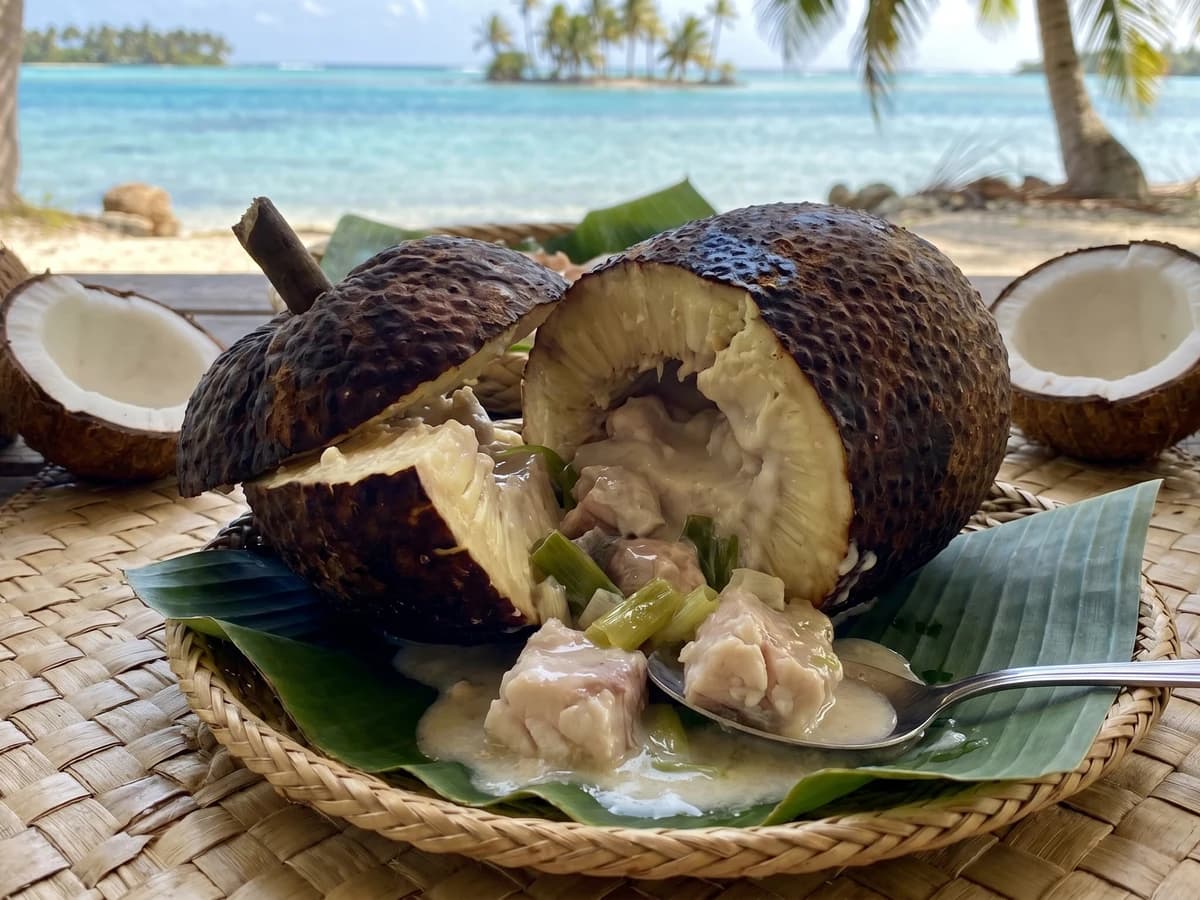
Tuvalu hollows a whole breadfruit, fills it with fresh fish, onion, and coconut cream, then bakes it until the shell darkens and the inside turns rich and soft.
Chef Makoa
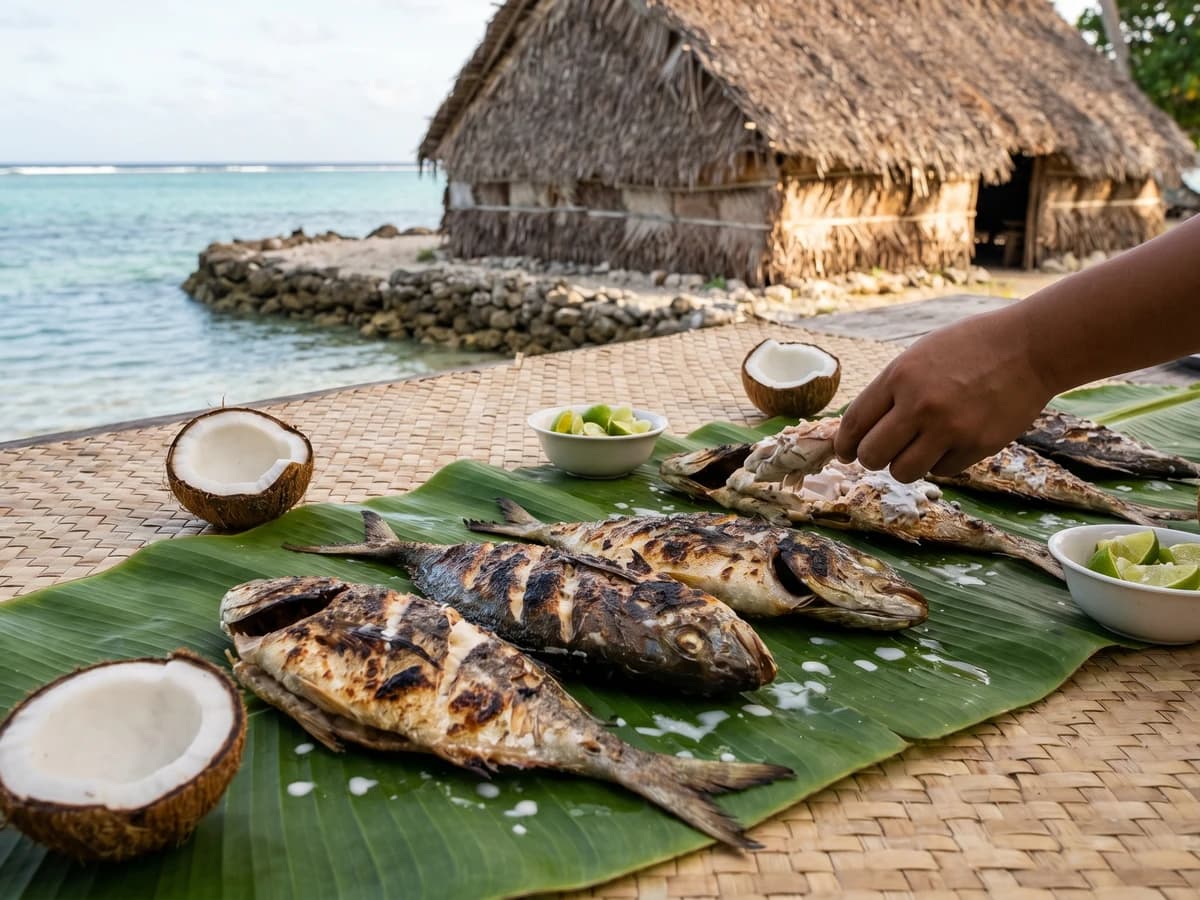
Tuvalu's tunu keeps the day's reef fish close to the fire and closer to the lagoon: salt, lime, coconut, and no fuss beyond sourcing it right.

Chef Juliette
John Dory has the delicacy of sole and the firmness of turbot. A light flouring, a quick butter sauté, and nut-brown beurre noisette show exactly why looks never mattered.