Culinary Explorer

A cooking platform built around craft, culture, and the stories behind what we eat.
Discover Culinary Explorer
Ichigo Shortcake (苺のショートケーキ, Strawberry Shortcake)

Ichigo Shortcake (苺のショートケーキ, Strawberry Shortcake)

Created by

A soft sponge, cold cream, and strawberries at their winter brightest. Ichigo shortcake looks ceremonial, but the whole cake rests on one plain thing: don't dry the sponge.

Desserts
Japanese
Christmas
Birthday
Celebration
45 min
Active Time
25 min cook3 hr total
Yield1 8-inch cake, 8 servings

The strawberries come first. In Japan, ichigo shortcake belongs to December as much as it belongs to birthdays, which sounds odd until you see winter strawberries, red, fragrant, and glistening fresh in their little boxes. This cake doesn't hide them. It frames them with soft sponge and cream, then has the manners to step back.

People fear the sponge. Good. A little respect keeps it tender. The one detail that decides the cake is not the decoration, not the piping, and certainly not making the cream stand like plaster. It is the egg foam. Warm the eggs gently with the sugar, whip them until thick and pale, then fold the flour and butter as if you're trying not to wake anyone. Knock the air out and the sponge turns firm. Keep the air and it eats like a cloud with good posture.

The syrup is not there to make the cake sweet. It keeps the sponge moist and lets the cream and fruit meet without one stealing from the other. We use whipped cream only softly sweetened, because the strawberry should still taste like strawberry. That restraint is the honmono part of this Western-born Japanese cake: nothing hidden, nothing heavy, just cream, fruit, and sponge in proper balance.

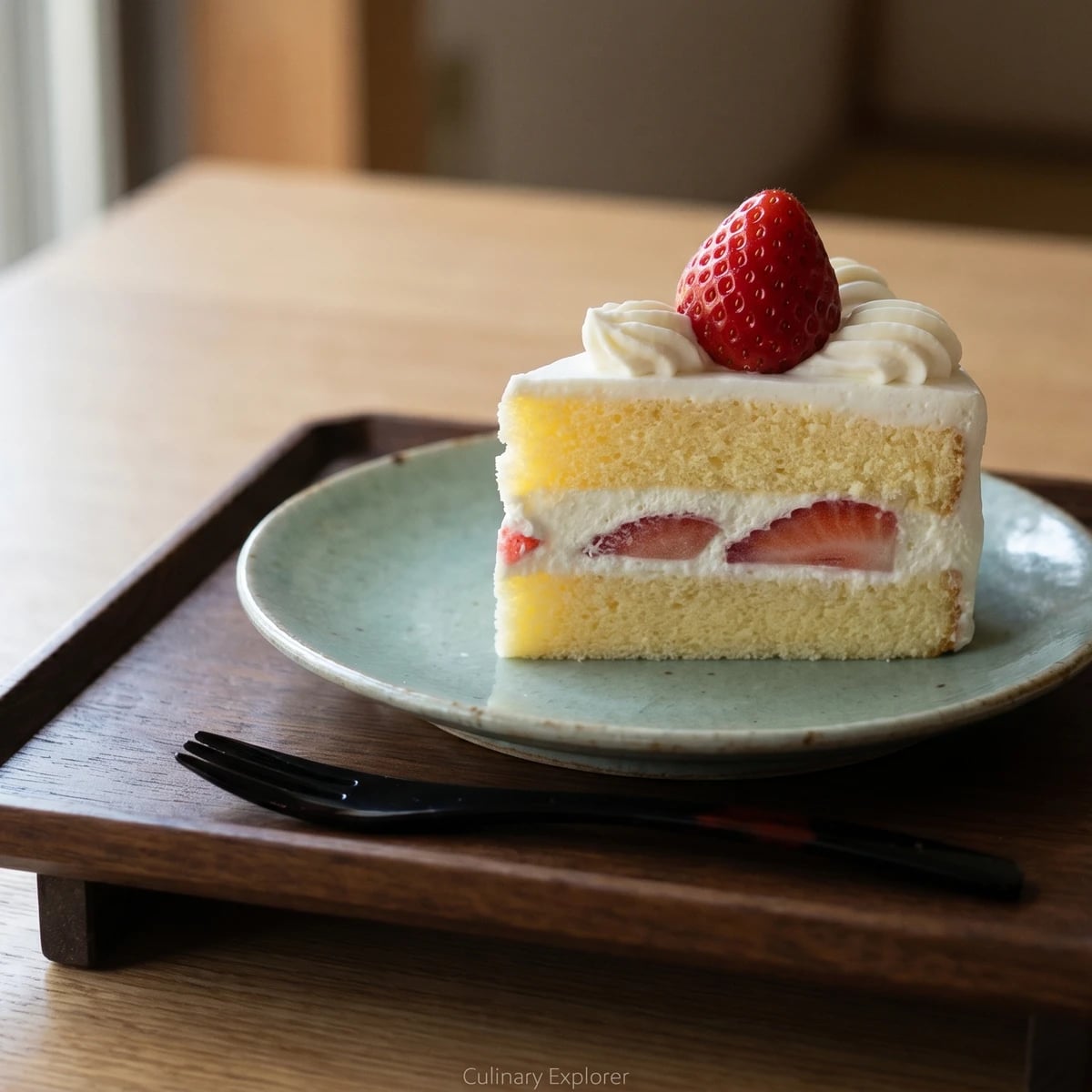
Serve it chilled, and cut it with a warm, wiped knife. The slice should show clean layers, red fruit against white cream, yellow sponge holding quietly between them. Leave the plate room. A celebration cake can still speak softly.

Japanese strawberry shortcake grew from yōgashi, Western-style confectionery adapted in Japan during the Meiji and Taishō periods. Fujiya, founded in Yokohama in 1910 by Rin'emon Fujii, helped spread decorated Christmas cakes, while the now-standard sponge, whipped cream, and fresh strawberry form became common after postwar refrigeration, dairy supply, and winter greenhouse strawberries improved. Its red-and-white colors also suited Japanese celebration, which helped the cake become the country's quiet standard for Christmas and birthdays.

The technique, the tradition, and the story behind every dish.

Discover Culinary Explorer

Ingredients

large eggs

Quantity

4

at room temperature

granulated sugar

Quantity

120g

cake flour

Quantity

120g

sifted twice

unsalted butter

Quantity

30g

melted

whole milk

Quantity

30ml

warmed

vanilla extract

Quantity

1 teaspoon

granulated sugar

Quantity

60g

for syrup

water

Quantity

80ml

for syrup

kirsch or lemon juice (optional)

Quantity

1 teaspoon

heavy cream

Quantity

500ml

very cold

powdered sugar

Quantity

40g

vanilla extract

Quantity

1 teaspoon

for cream

fresh strawberries

Quantity

450g

hulled, with 8 to 10 whole berries reserved for the top

Equipment Needed

  • 8-inch round cake pan
  • Parchment paper
  • Electric hand mixer or stand mixer
  • Fine-mesh sieve
  • Offset spatula
  • Long serrated knife
  • Pastry bag with plain or star tip, optional

Instructions

  1. 1

    Prepare the pan

    Heat the oven to 170 C. Line the bottom and sides of an 8-inch round cake pan with parchment, leaving the sides ungreased. The parchment releases the cake cleanly, and the ungreased wall gives the sponge something to climb.

  2. 2

    Warm the eggs

    Set the eggs and 120g sugar in a heatproof bowl over barely simmering water and whisk until the mixture feels warm, about 38 to 40 C. Warm eggs hold air more readily, which is why this small step gives the sponge its height without baking powder.

  3. 3

    Whip the foam

    Whip the warm egg mixture on high speed until thick, pale, and tripled, 6 to 8 minutes. When the whisk is lifted, the batter should fall in a ribbon that rests on the surface for a few seconds before sinking. That ribbon is your signal that enough air has been built into the batter.

  4. 4

    Fold the flour

    Sift the cake flour over the foam in three additions, folding with a broad spatula from the bottom of the bowl. Turn the bowl as you fold. You're mixing without pressing, because the flour must disappear while the air stays where it is.

  5. 5

    Add butter milk

    Stir the melted butter, warm milk, and vanilla together, then fold in a spoonful of batter to lighten it. Pour this loosened mixture back along the side of the bowl and fold just until glossy. Butter is heavy, so lightening it first keeps it from sinking straight to the bottom and making a dense layer.

  6. 6

    Bake the sponge

    Pour the batter into the pan and tap once on the counter to break only the largest bubbles. Bake 23 to 28 minutes, until the top is golden and springs back when touched lightly. Cool the cake upside down on a rack for 10 minutes, then unmold and cool completely. A warm cake melts cream, and then the knife has no chance.

  7. 7

    Make the syrup

    Simmer 60g sugar with 80ml water just until clear, then cool. Add kirsch or lemon juice if using. The syrup is a quiet safeguard: it moistens the sponge so the finished cake tastes tender after chilling, not dry from the refrigerator.

  8. 8

    Prepare strawberries

    Reserve the prettiest whole strawberries for the top. Slice the remaining berries about 5mm thick and blot their cut sides gently. Too much loose juice makes the cream slip, while a clean cut keeps the layers neat and bright.

  9. 9

    Whip the cream

    Whip the cold cream with powdered sugar and vanilla to soft medium peaks. It should hold a gentle line but still look smooth and supple. Overwhipped cream turns grainy and heavy, and this cake wants lightness, not architecture.

  10. 10

    Layer the cake

    Slice the sponge into two even layers with a long serrated knife. Brush the cut faces with syrup, spread a thin layer of cream, arrange sliced strawberries in an even single layer, then cover with another thin layer of cream. Set the top layer in place. Thin, even layers keep every bite balanced.

  11. 11

    Cover and chill

    Cover the cake with a modest coat of cream, smoothing the sides and top without fussing until the cream turns rough. Chill at least 1 hour. Cold sets the cream and syrup together, so the cake cuts cleanly and tastes like one thing rather than separate parts.

  12. 12

    Finish the top

    Pipe or spoon small mounds of cream around the top and set the reserved strawberries in an odd-numbered circle or cluster. Keep the center calm if the fruit is large. This is a celebration cake, yes, but it still benefits from ma, the space that lets the eye rest.

Chef Tips

  • Buy strawberries for fragrance before size. If they smell bright and sweet at the stem end, they're ready. If they look grand but smell of nothing, the cake will taste of cream and hope, which is a thin sort of feast.
  • Cake flour matters here because its lower protein keeps the sponge tender. If you only have all-purpose flour, replace 2 tablespoons of each cup with cornstarch and sift well. It isn't the same, but it is a sensible stand-in.
  • Use a hot, wiped knife for serving. Dip the blade in hot water, dry it, cut once, and wipe again. The layers stay clean because warm steel moves through cold cream instead of dragging it.
  • Don't oversweet the cream. Japanese shortcake is gentler than many Western cakes, and the strawberry should still have its own voice.

Advance Preparation

  • Bake the sponge one day ahead, cool it completely, wrap it well, and keep it at room temperature. A rested sponge slices more cleanly.
  • The syrup can be made three days ahead and refrigerated.
  • Assemble the cake 4 to 12 hours before serving. It needs time to settle, but after a full day the strawberries begin to weep into the cream.

Frequently Asked Questions

Nutrition Information

1 serving (about 200g)

Calories
460 calories
Total Fat
28 g
Saturated Fat
17 g
Trans Fat
1 g
Unsaturated Fat
10 g
Cholesterol
170 mg
Sodium
55 mg
Total Carbohydrates
45 g
Dietary Fiber
2 g
Sugars
32 g
Protein
7 g

Note: Chef personas and recipes are created with AI assistance. Cook with care: follow safe food-handling practices, check doneness with a thermometer when needed, and adapt for allergies and your kitchen.

Where cooking meets culture.

Culinary guides, cultural storytelling, and the editorial depth that makes cooking meaningful.

Discover Culinary Explorer

More from Yogashi: Japanese Cakes, Cheesecakes & Pudding

Browse the full collection