
Chef Klaus
Ähzezupp (Kölsche Erbsensuppe)
The Cologne pea pot earns its depth from soaked peas and cured pork bone, simmered slowly until the soup thickens itself and the meat falls clean from the knuckle.
A cooking platform built around craft, culture, and the stories behind what we eat.
Created by
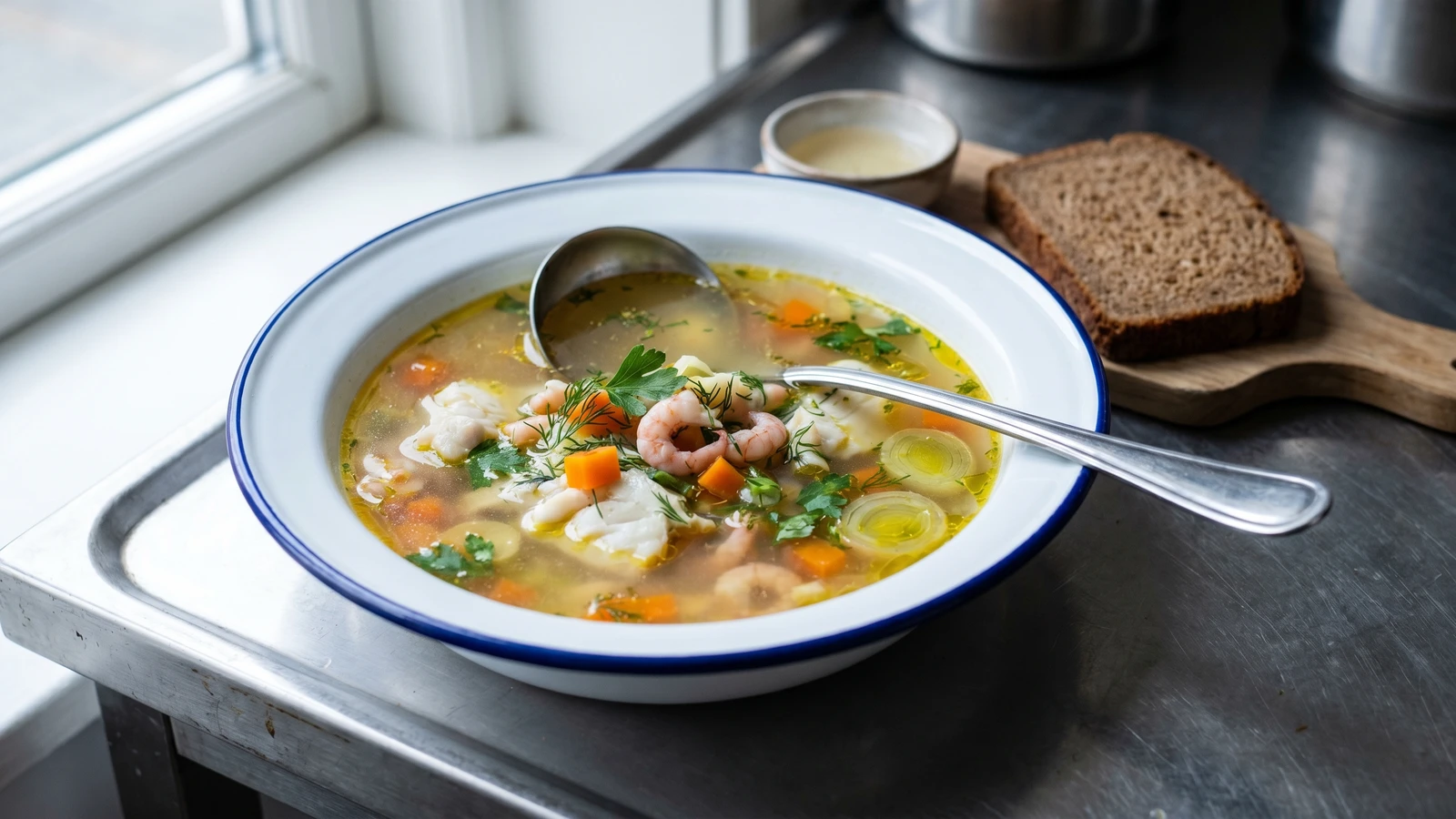
The North Frisian fish soup that starts with what most cooks throw away: shrimp shells, fish bones, leek, root vegetables, and a clear broth balanced sweet against sour.
Husumer Fischsuppe belongs to the North Sea coast, to Schleswig-Holstein, where the wind is sharp and the fish counter tells you what dinner is. This is weeknight food if you've saved the shells and bones, Sunday food if you bring the tureen to the table with rye bread beside it. Im Norden anders, im Süden anders: the south has dumplings and roasts, the north has fish, vinegar, dill, and broth clear enough to taste the sea without drinking it.
The argument is always over richness. Some coastal cooks finish fish soup with cream, some keep it lean and sour-bright, and around Husum the sweet against sour matters more than making it heavy. I keep it broth-based. A spoon of vinegar, a small pinch of sugar, and the sweetness from shrimp shells do the work. Das ist kein Bierzelt.
The technique that decides the soup is the stock. Simmer the fish bones and shrimp shells gently for twenty-five minutes, no longer, because fish bones give quickly and then turn bitter and chalky. Boil them hard and you've made cloudy punishment. Strain, then cook the vegetables in that stock before the fish goes in, because cod and pollock need minutes, not half an hour.
Weggeworfen wird nichts. The shells, trimmings, leek tops, and parsley stems are the larder here, not rubbish. Add the delicate fish at the end, taste sour, sweet, salt, and dill, then stop. Schön ist, was schmeckt.
Husum sits on the North Frisian coast of Schleswig-Holstein, a town tied to the North Sea fish trade and the shrimping grounds of the Wadden Sea, which became a UNESCO World Heritage site in 2009. Northern German fish soups grew out of the same thrift as the Hanseatic herring trade: fillets were sold, while heads, bones, shells, and trimmings stayed in the kitchen to make broth. The sweet-sour balance in many Schleswig-Holstein dishes reflects a northern preservation palate, where vinegar, sugar, salt, and smoke kept the larder useful through cold months.
Quantity
300g
peeled, shells reserved
Quantity
600g
cut into large pieces
Quantity
500g
gills removed
Quantity
1
sliced
Quantity
1
white part diced, green top reserved
Quantity
1
diced
Quantity
150g
diced
Quantity
1
Quantity
6
Quantity
4
Quantity
1 tablespoon
Quantity
150ml
Quantity
1.2 litres
Quantity
1 tablespoon, plus more to taste
Quantity
1 teaspoon
Quantity
1 teaspoon, plus more to taste
Quantity
to taste
Quantity
2 tablespoons
chopped
Quantity
2 tablespoons
chopped
Quantity
4 slices
| Ingredient | Quantity |
|---|---|
| raw North Sea shrimp or small prawns in their shellspeeled, shells reserved | 300g |
| white fish filletscut into large pieces | 600g |
| fish bones, heads, and trimmings from white fishgills removed | 500g |
| onionsliced | 1 |
| leekwhite part diced, green top reserved | 1 |
| carrotdiced | 1 |
| celeriacdiced | 150g |
| bay leaf | 1 |
| black peppercorns | 6 |
| parsley stems | 4 |
| butter | 1 tablespoon |
| dry white wine | 150ml |
| cold water | 1.2 litres |
| white wine vinegar | 1 tablespoon, plus more to taste |
| sugar | 1 teaspoon |
| fine salt | 1 teaspoon, plus more to taste |
| freshly ground black pepper | to taste |
| dillchopped | 2 tablespoons |
| flat-leaf parsleychopped | 2 tablespoons |
| dark rye bread (optional) | 4 slices |
Peel the shrimp and keep the shells in a bowl; the shells carry sweetness and colour, so throwing them away is throwing away the stock. Keep the peeled shrimp cold while you work, because they need only the last minute in the soup or they turn rubbery.
Rinse the fish bones and heads under cold water and cut away any gills, because gills make a stock taste muddy and bitter. Pat the bones dry enough that they don't splash in the pot. This is not fancy work. It is clean work.
Melt the butter in a wide pot and soften the sliced onion, leek top, and shrimp shells for 4 minutes without browning; gentle heat pulls sweetness from the shells, while hard browning makes the broth taste roasted instead of coastal. Add the fish bones, bay leaf, peppercorns, parsley stems, wine, and cold water.
Bring the pot just to a tremble, skim the grey foam, then lower the heat and simmer for 25 minutes. Runter mit der Temperatur. Fish bones give their gelatine and flavour quickly; after that they give bitterness, so don't punish them for an hour like beef bones.
Strain the stock through a fine sieve into a clean pot and press lightly on the shells, not hard, because squeezing the bones forces grit and bitterness into the broth. You should have about 1 litre. If you have more, reduce it briefly; if you have less, add a little water and move on.
Add the diced leek white, carrot, and celeriac to the strained stock and simmer until just tender, about 10 minutes. The vegetables go in before the fish because roots need time and fish does not; put everything in together and one of them will be wrong.
Stir in the vinegar, sugar, salt, and a few turns of black pepper, then taste the broth before the fish goes in. The balance should be sweet against sour, not sweet soup and not vinegar water. Würzen, Fett, Salz zum Schluss, but the broth must know where it's going before the delicate fish arrives.
Lower the fish pieces into the trembling broth and cook for 3 to 4 minutes, until the flakes just separate when nudged. Do not boil. Boiling tears the fish apart and dries it before the centre has had a fair chance.
Add the peeled shrimp for the last minute, only until firm and pink, then pull the pot off the heat and stir in the dill and parsley. Taste once more for vinegar and salt, because the herbs brighten the soup and change the edge. Serve with dark rye bread, and use the broth in the bowl, not down the sink.
1 serving (about 520g)
Culinary guides, cultural storytelling, and the editorial depth that makes cooking meaningful.
Discover Culinary ExplorerChef Klaus
The Cologne pea pot earns its depth from soaked peas and cured pork bone, simmered slowly until the soup thickens itself and the meat falls clean from the knuckle.

Chef Klaus
The Allgäu's Alpine cheese soup works only if the Bergkäse melts gently off the heat, where it turns smooth instead of stringy.

Chef Klaus
A firm egg dough, grated into tiny crumbs and cooked in clear broth: Allgäu kitchen thrift, warm in the bowl, and finished only when the Riebele keep their bite.

Chef Klaus
The Altmark wedding broth is a clear soup with no tricks: bones for depth, patient skimming for clarity, and small semolina dumplings that make it festive.