
Chef Klaus
Allgäuer Krautkrapfen
The Allgäu pan dish that makes a meal from noodle dough, winter kraut, onion, and fat: brown the cut sides first, then cook gently so the rolls hold.
A cooking platform built around craft, culture, and the stories behind what we eat.
Created by
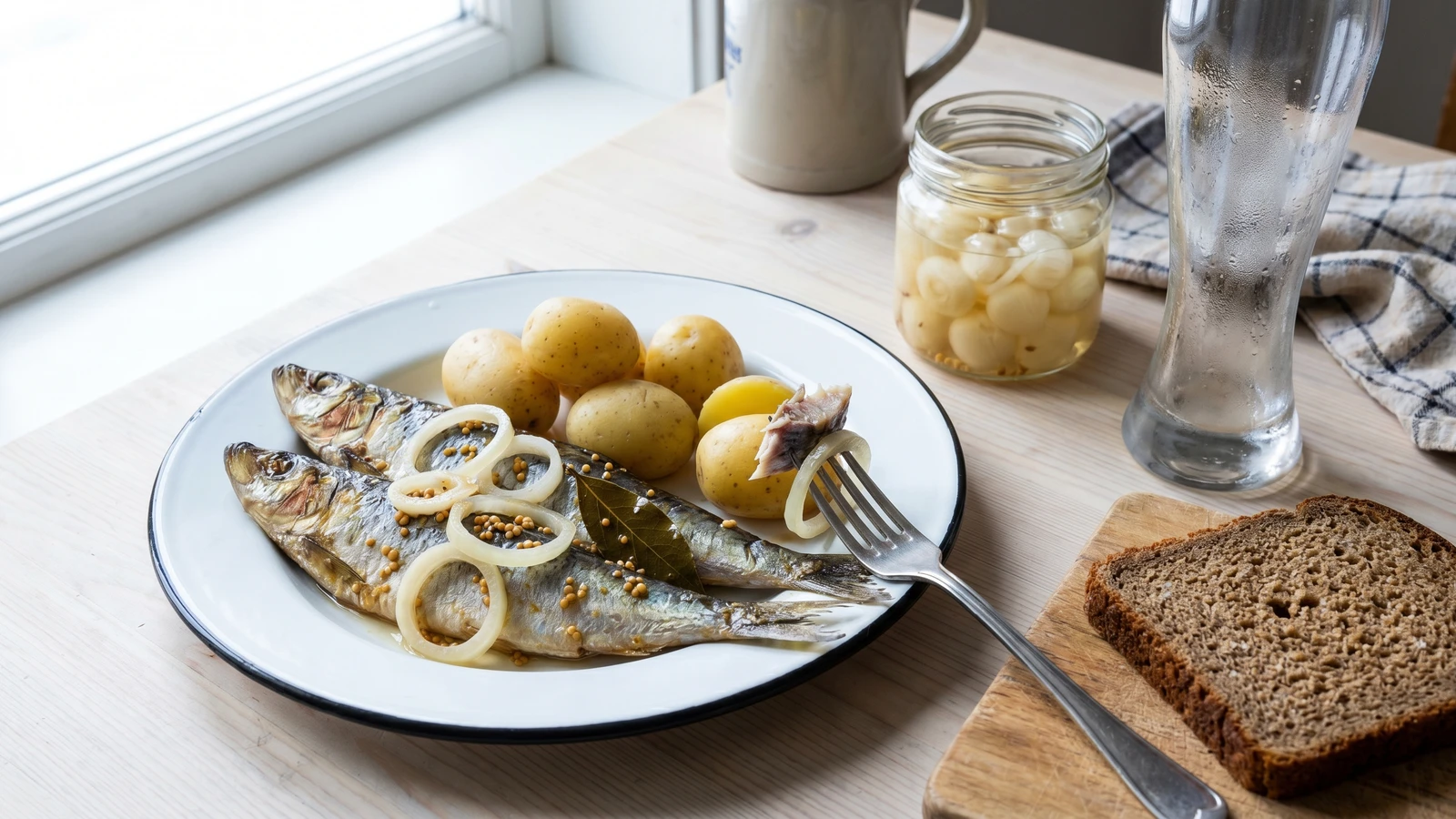
The northern coastal herring that works twice: fried first for a firm skin and deep flavour, then laid down in vinegar until onion, spice, and sourness do the rest.
Brathering belongs to the northern table, North Sea and Baltic, where herring was never just fish for tonight. It was food for the next days too. You flour it, fry it, and lay it in vinegar with onions, bay, mustard seed, and pepper until the sharpness has gone through the flesh. Cold with rye bread or boiled potatoes, it makes a weeknight meal from the larder. Das braucht seine Zeit.
The split is simple. On the coast, the fish stays plain and sharp, often whole, bones and all if the herrings are small enough. Inland cooks sweeten the liquor more, or add more spice because the fish has travelled and needs help. Im Norden anders, im Süden anders. I keep this one northern: sour enough to wake the fish, sweet enough not to punish you.
The technique that decides it is the frying. The herring must be dry, floured thinly, and browned properly before it sees the vinegar. If the coating is damp or pale, the marinade turns it woolly and sad. Fry it until the skin is firm and golden, then pour the hot spiced vinegar over the warm fish so the pores open and the sour liquor gets in. Nicht aus dem Glas. Make the fish, make the pickle, wait two days.
Brathering grew out of the North Sea and Baltic herring trade that fed the Hanseatic towns from the Middle Ages onward; herring was cheap, abundant, and easy to preserve with salt, smoke, or vinegar. Frying the fresh fish before pickling gave coastal households a short-term larder dish before modern refrigeration, different from barrel-salted Matjes or Bismarckhering. The dish remains strongest in northern Germany, where cold sour fish with potatoes or dark rye is everyday food, not festival theatre.
Quantity
8
gutted and scaled, heads removed if preferred
Quantity
1 teaspoon, plus more to taste
Quantity
to taste
freshly ground
Quantity
80g
Quantity
4 tablespoons
for frying
Quantity
3 medium
sliced into thin rings
Quantity
350ml
Quantity
350ml
Quantity
2 tablespoons
Quantity
1 teaspoon
Quantity
8
Quantity
4
Quantity
2
Quantity
1 small strip
Quantity
to serve
| Ingredient | Quantity |
|---|---|
| small fresh herringsgutted and scaled, heads removed if preferred | 8 |
| fine salt | 1 teaspoon, plus more to taste |
| black pepperfreshly ground | to taste |
| rye flour or plain flour | 80g |
| neutral oil or clarified butterfor frying | 4 tablespoons |
| onionssliced into thin rings | 3 medium |
| white wine vinegar or mild spirit vinegar | 350ml |
| water | 350ml |
| sugar | 2 tablespoons |
| yellow mustard seeds | 1 teaspoon |
| black peppercorns | 8 |
| allspice berries | 4 |
| bay leaves | 2 |
| lemon peel (optional) | 1 small strip |
| boiled potatoes or dark rye bread | to serve |
Rinse the gutted herrings quickly under cold water and dry them thoroughly inside and out. Dry fish browns; wet fish spits in the pan and leaves you with a pale skin that goes soft in the vinegar. Season the cavities and skins with the teaspoon of salt and a little black pepper, then leave them on a rack for 15 minutes while you make the pickle.
Put the onions, vinegar, water, sugar, mustard seeds, peppercorns, allspice, bay leaves, and lemon peel into a saucepan and bring it to a steady boil for 5 minutes. The onions need that short cooking so they lose the raw bite but keep their shape, and the spices need heat to give the vinegar something better than plain sourness. Taste it while it is hot: sharp first, then a small sweetness behind it.
Spread the flour on a plate and turn each herring through it, shaking off every loose patch. You want a thin dry coat, not a blanket. Too much flour breaks away in the pickle and muddies the liquor; just enough flour gives the skin a firm surface for the vinegar to work against.
Heat the oil or clarified butter in a wide frying pan over medium-high heat and fry the herrings in batches, 3 to 4 minutes per side, until the skin is golden, firm, and the fish is cooked through to the bone. Do not crowd the pan, because crowded fish drops the heat and sweats instead of frying. Runter mit der Temperatur only if the flour darkens before the fish is cooked; the coating should brown, not burn.
Lay the warm fried herrings in a shallow non-reactive dish, fitting them snugly but not crushing them. Pour the hot vinegar and onions over the warm fish until everything is covered. Warm fish takes the sour liquor better than cold fish, and fully covered fish keeps evenly and safely. If the top fish is exposed, weight it lightly with a small plate.
Cool the dish to room temperature, cover it, and refrigerate it for at least 24 hours, better 48. The vinegar needs time to move through the fried flesh, soften the small bones, and settle the onion into the fish. Serve cold or cool, never hot, with boiled potatoes or dark rye bread and some of the onions spooned over. Würzen, Fett, Salz zum Schluss: taste the liquor before serving and add a pinch of salt only if it needs it.
1 serving (about 300g)
Culinary guides, cultural storytelling, and the editorial depth that makes cooking meaningful.
Discover Culinary ExplorerChef Klaus
The Allgäu pan dish that makes a meal from noodle dough, winter kraut, onion, and fat: brown the cut sides first, then cook gently so the rolls hold.

Chef Klaus
Swabian egg pasta turned toward the apple cellar: fresh Spätzle tossed with browned butter, tart apples, cinnamon, and enough restraint to stay supper, not cake.

Chef Klaus
Hesse's pork goulash belongs to Apfelwein country: shoulder, onions, and tart cider cooked low until the cheap cut turns soft and the sauce lands sweet-sour, not sour-sweet.

Chef Klaus
The old sweet supper that saves yesterday's loaf: stale bread drinks eggy milk, the pan stays moderate, and butter browns the outside only after the centre has set.