
Chef Lesia
Banosh (банош, Carpathian cornmeal porridge)
Cornmeal and sour cream go over the flame pale and separate, then suddenly turn glossy, yellow, and almost stubborn. Stir one way only, the shepherds say, and listen.
A cooking platform built around craft, culture, and the stories behind what we eat.
Created by
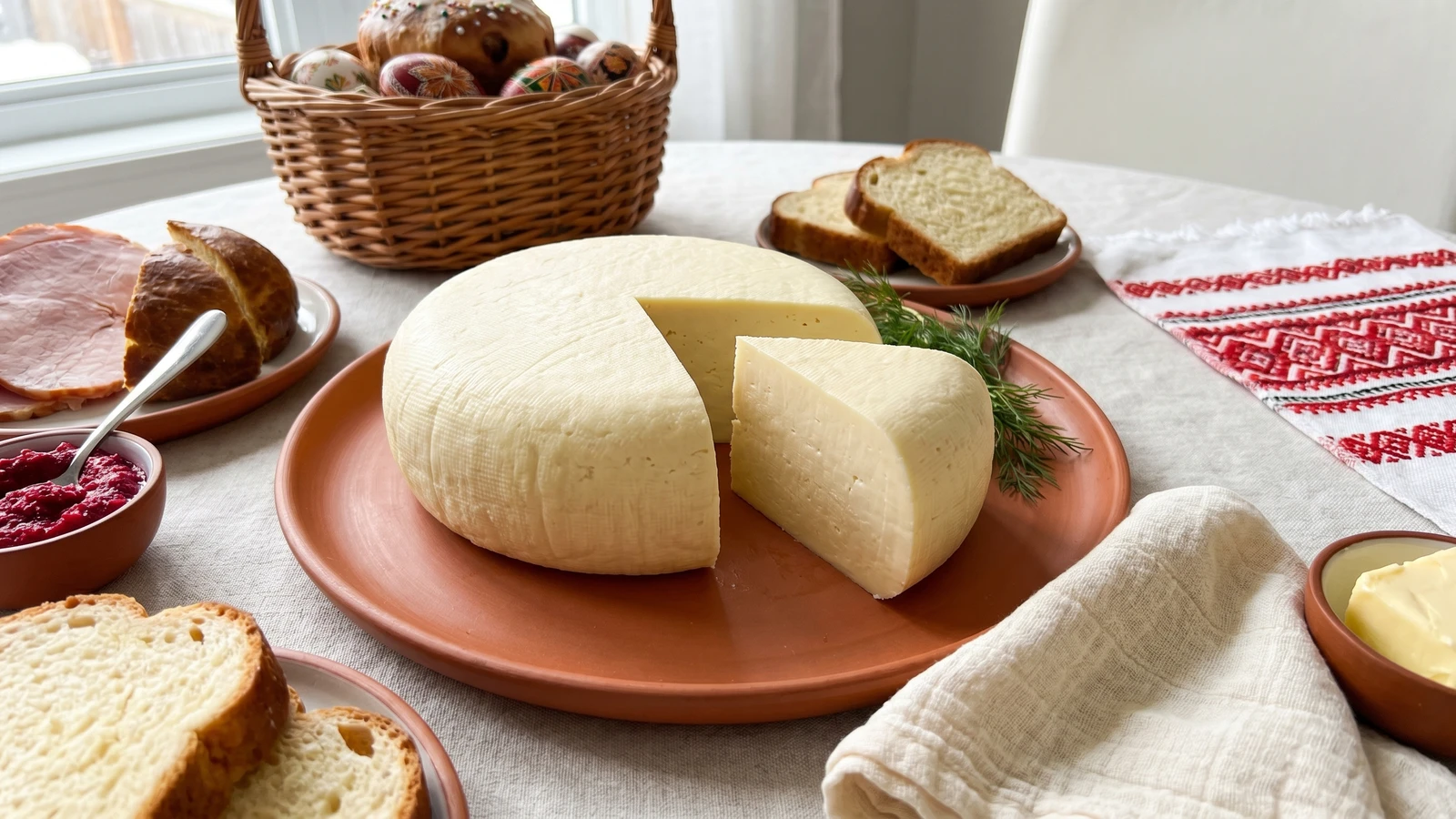
A dozen eggs disappear into milk and return as a pale Easter wheel, soft enough to slice, firm enough to travel in the basket beside paska and ham.
The strange beauty of hrudka is that eggs stop looking like eggs. They go into milk yellow and separate, then slowly gather into soft pale curds, a little sweet-smelling, a little custardy, until the pot sounds thicker under the spoon and the whey clears around them. Then you tie the whole trembling thing in cloth and let gravity make it into a wheel.
This is basket food, not show food. On Easter morning it sits beside paska, kovbasa, ham, butter, and khryn (beet horseradish), waiting to be blessed and carried home. You slice it cold, not hot. The bite is gentle: milky, egg-rich, faintly salted, the sort of thing that needs something sharp next to it so the table wakes up.
My southern steppe family didn't make hrudka the way the Carpathian and western Ukrainian kitchens do, so I came to it later, through women who could tell by the whey before they looked at the clock. Aunt Nadia would have written, "until it sounds right," and for once that is exactly the measurement. The one thing that decides the dish is heat: keep it low and patient so the curds gather tenderly. Rush it and you get rubber. Feed it slowly and it feeds you back.
Hrudka, also called syrek in some Carpathian and diaspora families, belongs especially to western Ukrainian, Lemko, Rusyn, and Zakarpattian Easter baskets, where eggs and dairy mark the end of the Lenten fast. Its name comes from the idea of a little lump or curd, and the dish sits in a wider Carpathian Easter table shared across borders without losing its local Ukrainian place. Soviet holiday life pushed many blessing-basket customs into private kitchens, which is why recipes like this often survived less in books than in cloths, pots, and grandmothers' hands.
Quantity
12
Quantity
1.5 litres
Quantity
120ml
Quantity
1 teaspoon
Quantity
1 tablespoon
Quantity
1/2 teaspoon
for a sweeter basket version
| Ingredient | Quantity |
|---|---|
| large eggs | 12 |
| whole milk | 1.5 litres |
| single cream or half-and-half | 120ml |
| fine sea salt | 1 teaspoon |
| sugar (optional) | 1 tablespoon |
| vanilla extract (optional)for a sweeter basket version | 1/2 teaspoon |
Set a deep sieve or colander over a bowl and line it with a clean double layer of cheesecloth or a thin cotton tea towel. Leave plenty of cloth hanging over the sides. Once the curds are ready, they won't wait politely while you start looking for string.
Crack the eggs into a bowl and beat them until no separate streaks of white remain. Add the salt, sugar if you want the gentler sweet version, and vanilla if your family leans that way. Both sweet and savoury versions sit honestly in Easter baskets; mine stays mostly savoury because I want it beside ham and khryn.
Pour the milk and cream into a heavy pot and warm over low heat until it feels hot to your finger but is not bubbling hard. Stir slowly across the bottom. You want a quiet pot, not a boiling one, because fierce heat makes the finished cheese tough before it has even had a chance.
Pour the beaten eggs into the hot milk in a slow stream, stirring all the time. Keep the heat low and stir from the bottom, patient and steady, until the mixture thickens, then breaks into soft curds and yellowish whey. The smell changes from raw egg to warm custard, and the spoon starts moving through little clouds instead of liquid. That is the moment.
Ladle the curds and whey into the lined sieve. Let the whey run through until the curds settle into a soft mound, then gather the cloth around them and twist gently. Don't wring it like laundry. You are shaping breakfast for Easter, not punishing it.
Tie the cloth tightly with kitchen string and hang it over a bowl, or set it in the sieve with a small plate and a light weight on top. Leave it in the fridge overnight until firm enough to slice. By morning it should hold together as a pale wheel with the cloth marks pressed into it.
Unwrap the hrudka and blot away any wet edges. Slice it cold with a thin knife and serve beside paska, ham, kovbasa, butter, and beet horseradish. A little dill on the plate is welcome; too much decoration is not. This is quiet food, and the feast around it does the shouting.
1 serving (about 95g)
Culinary guides, cultural storytelling, and the editorial depth that makes cooking meaningful.
Discover Culinary ExplorerChef Lesia
Cornmeal and sour cream go over the flame pale and separate, then suddenly turn glossy, yellow, and almost stubborn. Stir one way only, the shepherds say, and listen.

Chef Lesia
A benderyk is a crepe taught to hold its corners: soft pancake, peppery meat, egg-dipped edges fried crisp, and the same triangular confidence my hands learned at the varenyky table.

Chef Lesia
Raw potato turns sly the moment you grate it: wet, starchy, already darkening. Deruny reward speed, hot oil, and the courage to leave the edges alone until they crisp.

Chef Lesia
Pumpkin goes into the pot pale and stubborn, then gives itself up slowly to milk and millet until the whole breakfast turns deep orange, sweet, and spoon-thick.