
Chef Freja
Andelår med Rødkål
Slow-roasted duck legs with crisp, deeply golden skin, served with braised red cabbage and caramelized potatoes. The weeknight Danish duck that proves the best part of the bird is the one that takes its time.
A cooking platform built around craft, culture, and the stories behind what we eat.

Created by Chef Freja
Bone-in rib roast salted a full day ahead, seared in butter until the crust deepens, then slow-roasted to rosa pink and carved thick at the New Year's table with brun sovs from the pan.
December thirty-first. The table is set with the good glasses, the candles are lit, and somewhere in the kitchen a rib roast is resting under foil, gathering itself before the carving. This is nytaarsaften, New Year's Eve in Denmark, and the meal that closes the old year is not a casual spread. It's a proper sit-down dinner. The hojreb af okse, the standing rib roast, is its centerpiece.
This is a generous cut of beef, bone-in, salted a full day before it sees the oven. The salt draws moisture to the surface, then the meat reabsorbs it over hours, carrying flavor deep into the grain. You sear the roast hard in butter and oil until the crust is dark and fragrant, then drop the temperature and let the oven do the slow, patient work of bringing the interior to rosa, that perfect blush pink the Danes prize in a good roast. When you slice it at the table, thick and against the grain, the color should be even from edge to center with only the thinnest line of seared brown at the surface.
Pay attention to two things. First, the resting. If you cut too soon, the juices run out onto the board and the meat tightens and dries. Twenty minutes under foil, minimum. The joy of waiting is real here. Second, the brun sovs: the brown gravy built from the pan drippings, reduced with good stock, finished with a pour of cream. That's not an afterthought. It's part of the dish. You'll know when it's right.
Beef roasts became a fixture of Danish celebratory tables in the late 19th century, when the cooperative farming movement transformed Danish agriculture and freed smallholders to raise cattle for meat rather than solely for milk. Before this, pork and goose dominated the festive calendar. The hojreb, the standing rib cut left on the bone for presentation and flavor, gained its association with nytaarsaften in the early 20th century as Danish families sought a grander alternative to the flaeskesteg that belonged firmly to juleaften. The tradition of salting the roast a full day ahead is a technique borrowed from the older Danish practice of dry-curing pork, adapted for beef to season the meat to the bone.
Quantity
2.5 kg (3 to 4 ribs)
Quantity
2 tablespoons
Quantity
1 tablespoon
freshly cracked
Quantity
30g
Quantity
1 tablespoon
Quantity
4 sprigs
Quantity
3 cloves
lightly crushed, skin on
Quantity
2
Quantity
1½ tablespoons
Quantity
500ml
Quantity
100ml
Quantity
75ml
Quantity
to taste
Quantity
to taste
| Ingredient | Quantity |
|---|---|
| bone-in beef rib roast | 2.5 kg (3 to 4 ribs) |
| coarse sea salt | 2 tablespoons |
| black pepperfreshly cracked | 1 tablespoon |
| unsalted butter | 30g |
| neutral oil | 1 tablespoon |
| fresh thyme | 4 sprigs |
| garliclightly crushed, skin on | 3 cloves |
| dried bay leaves | 2 |
| plain flour | 1½ tablespoons |
| beef stock | 500ml |
| dry red wine | 100ml |
| double cream | 75ml |
| fine sea salt | to taste |
| black pepper | to taste |
The day before you cook, unwrap the roast and pat it completely dry with kitchen paper. Press the coarse salt firmly into every surface: the fat cap, the exposed meat, between the bones. Coarse salt is essential here, not fine. Fine salt dissolves too quickly and pulls moisture from the surface without giving the meat time to reabsorb it. Coarse crystals work slowly, drawing liquid out over hours, then that brine is drawn back in, carrying seasoning deep into the grain. Set the roast on a wire rack over a tray and leave it uncovered in the fridge for twenty-four hours. The circulating air dries the surface, and a dry surface is what gives you the crust tomorrow.
Two hours before you plan to cook, take the roast out of the fridge and set it on the counter. Press the cracked black pepper across the fat cap and the exposed surfaces. A cold roast from the fridge has a core temperature near zero, which means the outside overcooks while the center stays raw. Two hours at room temperature closes that gap. You want the meat to start closer to even so it finishes even: rosa from edge to center, not a grey ring around a cold pink core.
Heat the oven to 130 degrees Celsius. While it warms, set a heavy roasting pan or large cast iron skillet on the stove over high heat. Add the oil and butter together. Butter alone burns before you get a proper sear. Oil alone tastes like nothing. Together they give you the deep brown crust and the nutty richness you want. When the butter foams and begins to smell of hazelnuts, lay the roast in fat-side down. Sear for two to three minutes on each side until the surface is deeply bronzed and fragrant. Turn it with tongs, not a fork. A fork pierces the muscle and the juices run. Tuck the thyme sprigs, crushed garlic, and bay leaves around the meat in the final minute of searing. Let them toast in the hot fat.
Place the roast in the pan bone-side down. The bones act as a natural rack, lifting the meat off the surface and letting heat move underneath. Slide the pan into the oven and roast at 130 degrees until a meat thermometer pushed into the thickest part of the meat, not touching bone, reads 54 degrees Celsius. This will take roughly one and a half to two hours depending on the shape and starting temperature of your roast. The low heat is the whole point: it moves through the meat gently and evenly, so you end up with rosa pink throughout instead of a band of grey around a raw center. Patience here is everything.
When the thermometer reads 54 degrees, lift the roast from the pan and set it on a warm carving board. Remove the herb sprigs and garlic and set them aside. Cover the roast loosely with foil and leave it for a full twenty minutes. Don't skip this. Resting lets the muscle fibers relax and reabsorb their juices. If you carve too early, those juices flood the board and the meat tightens and dries. During the rest, the internal temperature will climb another three to five degrees from carry-over heat. At 54 out of the oven, you'll land at 57 to 58 after resting. That is rosa.
While the meat rests, set the roasting pan over medium heat on the stove. There will be caramelized drippings stuck to the bottom, and that is where all the flavor lives. Sprinkle the flour over the drippings and stir it through with a wooden spoon, scraping every dark bit from the pan. Cook the flour for one minute until it smells nutty and the raw taste is gone. Pour in the red wine and let it bubble hard for thirty seconds, lifting the last of the color from the surface. Add the beef stock gradually, stirring constantly to keep the sauce smooth. Let it simmer for eight to ten minutes until it thickens enough to coat the back of the spoon. Stir in the cream. Taste. Season with fine salt and pepper. Good brun sovs should taste of the roast itself: deep, beefy, with a quiet richness from the cream. Strain it through a fine sieve into a warm jug.
Stand the roast upright on the board. Run a sharp knife down along the bones to free them in one piece, following the curve of the bone closely so you lose no meat. Turn the boneless roast on its side and carve it into thick slices against the grain. Each slice should show the full blush of rosa pink from edge to center. Arrange the slices on a warm serving platter with the rib bones alongside for anyone who wants them. Spoon a little brun sovs over the meat and bring the rest to the table in its warm jug. This is the meal that closes the old year. Cooked with love. Tak for mad.
1 serving (about 310g)
Culinary guides, cultural storytelling, and the editorial depth that makes cooking meaningful.
Discover Culinary ExplorerChef Freja
Slow-roasted duck legs with crisp, deeply golden skin, served with braised red cabbage and caramelized potatoes. The weeknight Danish duck that proves the best part of the bird is the one that takes its time.

Chef Freja
The whole roasted duck of juleaften, stuffed with tart apples and dark prunes, slow-roasted for four patient hours until the skin crackles like something earned and the meat underneath gives way without resistance.
Chef Freja
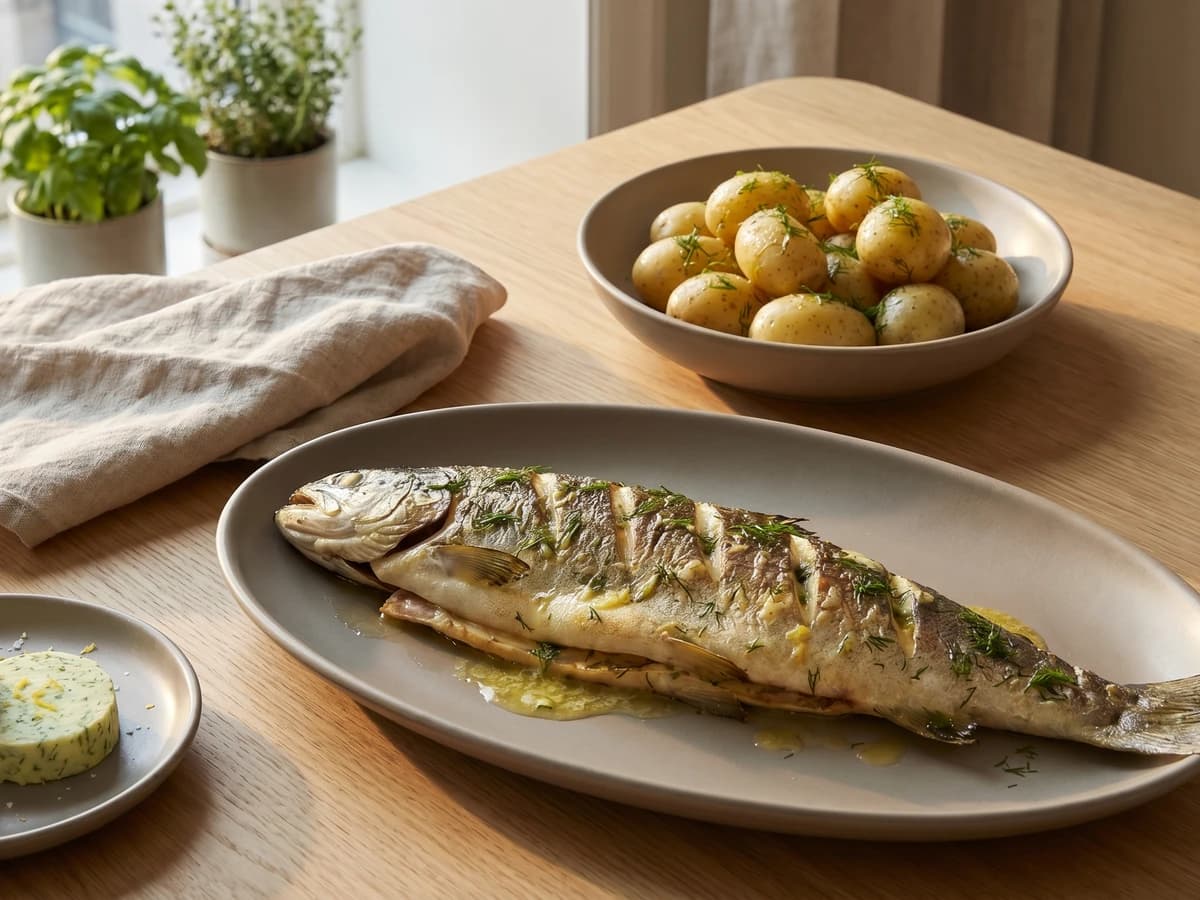
Whole sea trout baked with butter, lemon, and armfuls of dill, served beside the first nye kartofler of the season and a melting slab of dildsmor. The Danish summer table at its most generous.
Chef Freja
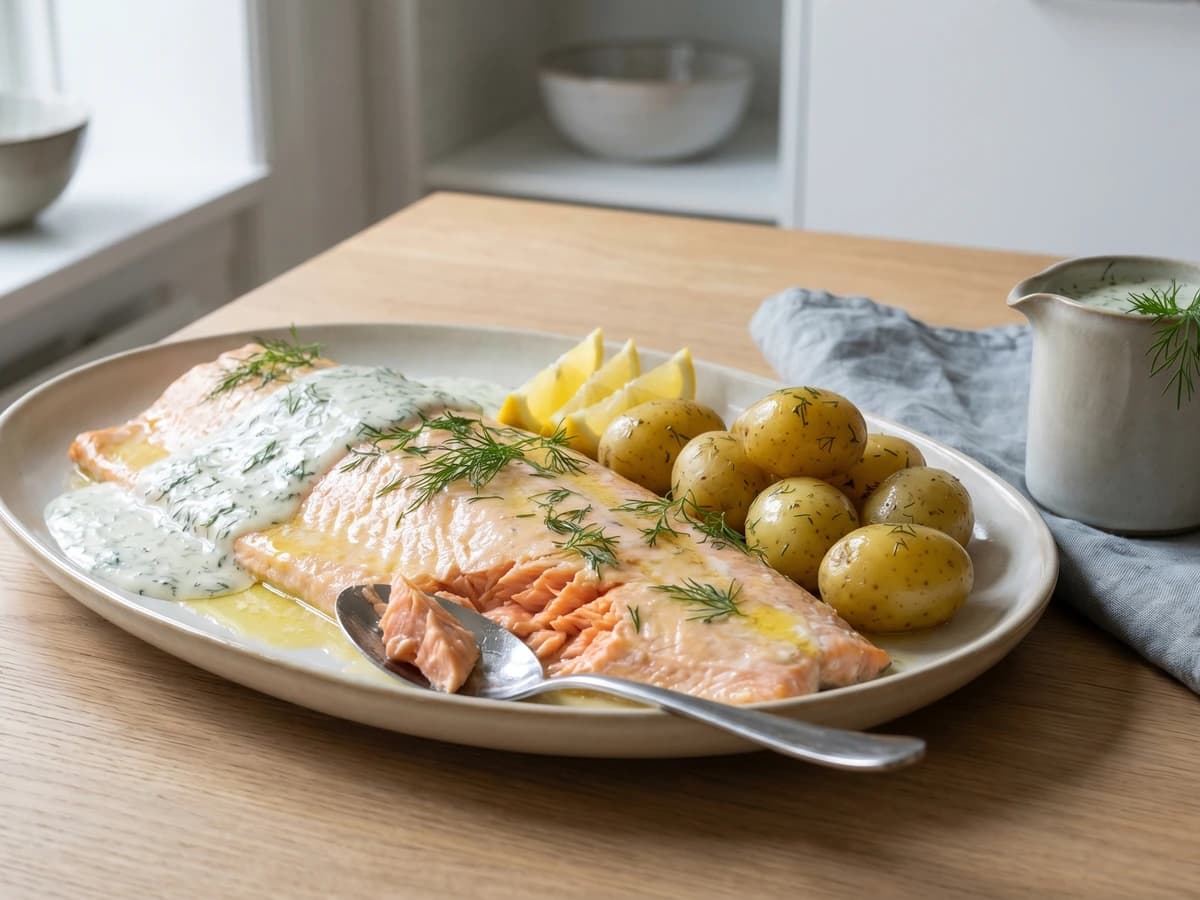
A side of salmon baked gently in butter and white wine, served warm with a bright dill cream sauce and the season's first nye kartofler. Late spring on a Danish table, cooked with love.