
Chef Lupita
Almendrados Conventuales Poblanos
Puebla's convent almond cookies, made from blanched almonds, sugar syrup, egg yolks, canela, and patient hands, the kind of sweet that belongs beside coffee in talavera, not in a plastic bakery box.
A cooking platform built around craft, culture, and the stories behind what we eat.
Created by
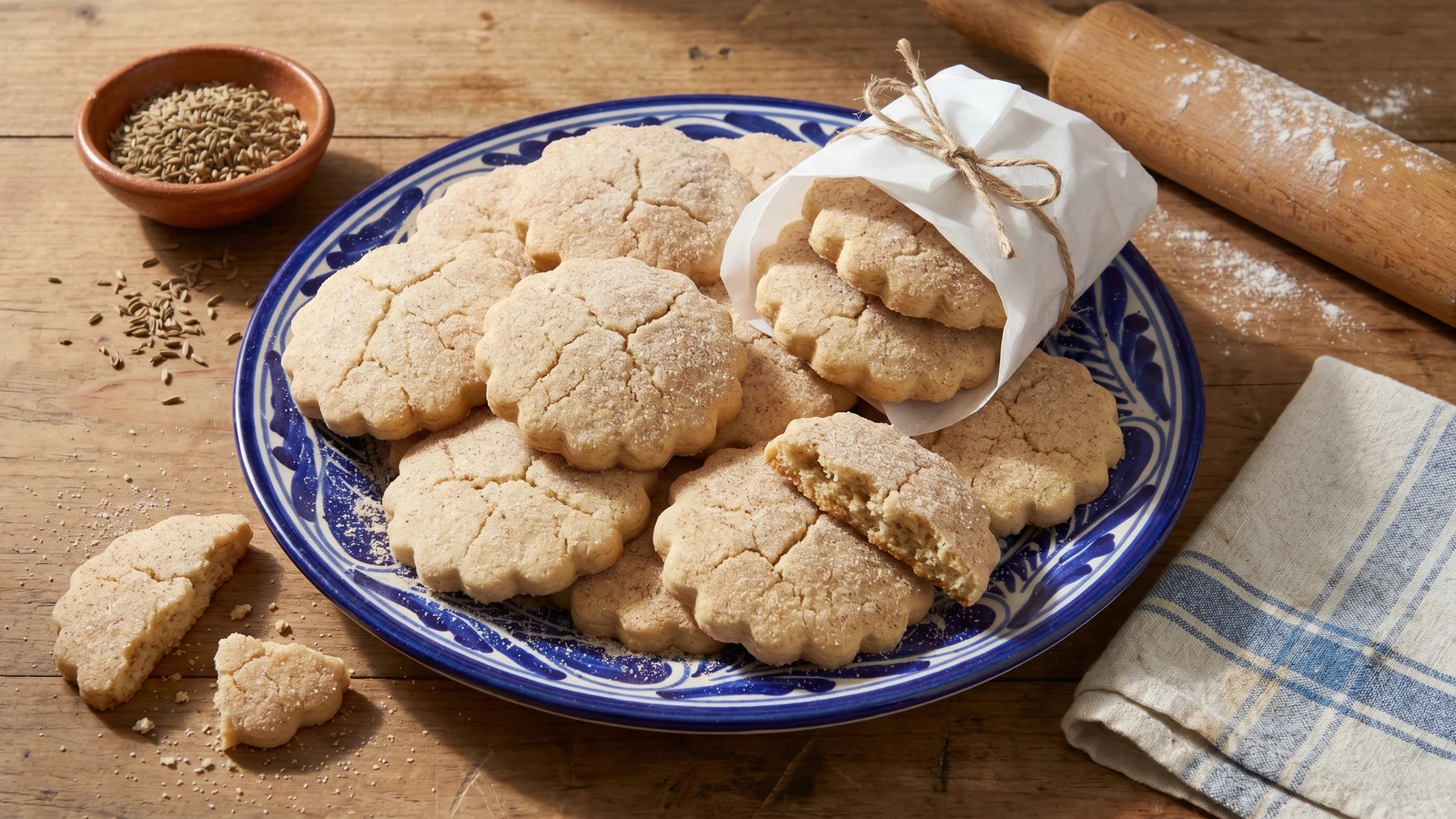
Puebla's convent-style anise hojarascas are lard-shortened cookies with a sandy crumb, rolled in canela sugar, made ahead for Christmas trays and wrapped in tissue for the gate sale.
Puebla, in the central highland valley around the old city of Puebla de los Ángeles, is where this conventual version belongs. Not every hojarasca in Mexico is poblana; Nuevo León and Coahuila guard their own Christmas tins. Cada estado, su propia cocina. This one speaks with convent sugar, anise, canela, wheat flour, fresh manteca de cerdo, and talavera on the table.
The defining ingredient is not chile. There is no chile here. Not all Mexican food wears chile, and anyone who thinks it must has not been paying attention. The perfume comes from anís verde and canela de Ceylán steeped into a dark little tea, then worked into harina de trigo with pork lard. The lard makes the dry-leaf crumb that collapses under your teeth. Butter makes another cookie. No me vengas con atajos.
I wrote this version in Puebla after talking to a woman whose aunt had sold dulces outside a convent gate near the old center. She pinched the dough and said, if it smears, too much fat; if it falls into dust, more tea. That is the teaching: feel before measuring. My mother used to say the same in Colonia Roma when she shaped polvorones for Christmas. Saber cocinar es saber vivir.
Puebla de los Ángeles was founded in 1531, and by the 17th century its convents were important sweet kitchens of New Spain, using wheat from the surrounding valleys, sugar from colonial mills, and spices such as canela and anise that arrived through Spanish trade. Hojarascas descend from the Iberian family of mantecados and polvorones, but in Mexico the dough took on local habits: pork lard for tenderness, cinnamon sugar on the outside, and anise infusion for scent. The strongest living hojarasca tradition today is northern, especially in Nuevo León and Coahuila, but this Puebla conventual version preserves the older colonial grammar of flour, fat, sugar, and spice.
Quantity
1 tablespoon
Quantity
1 small
Quantity
1/2 cup
Quantity
3 cups (360 grams)
plus more for dusting
Quantity
1/2 teaspoon
Quantity
1/2 teaspoon
Quantity
1 cup (200 grams)
cool room temperature
Quantity
1/2 cup (100 grams)
Quantity
1
room temperature
Quantity
3/4 cup
Quantity
2 teaspoons
| Ingredient | Quantity |
|---|---|
| whole anise seed (anís verde) | 1 tablespoon |
| Ceylon cinnamon stick (canela de Ceylán) | 1 small |
| water | 1/2 cup |
| all-purpose wheat flour (harina de trigo)plus more for dusting | 3 cups (360 grams) |
| fine sea salt | 1/2 teaspoon |
| baking powder | 1/2 teaspoon |
| fresh pork lard (manteca de cerdo)cool room temperature | 1 cup (200 grams) |
| granulated sugar | 1/2 cup (100 grams) |
| large egg yolkroom temperature | 1 |
| granulated sugar, for coating | 3/4 cup |
| ground Ceylon cinnamon (canela molida), for coating | 2 teaspoons |
Put the anise seed, cinnamon stick, and water in a small saucepan. Bring just to a simmer, cover, turn off the heat, and let it steep for 15 minutes. Strain and cool completely. The liquid should smell sweet, sharp, and clean, not medicinal. This is the perfume of the cookie, so do not replace whole anise seed with star anise. They are not the same thing.
Whisk the flour, salt, and baking powder in a bowl for a full 30 seconds. The baking powder must be evenly scattered through the flour or you will get bitter little pockets in the cookie. Convent baking looks plain until you understand how exact it is.
Beat the manteca de cerdo in a mixer bowl or with a wooden spoon until it looks lighter and satin-smooth, about 2 minutes. Add the 1/2 cup sugar and beat until the mixture is pale and soft. La manteca es el sabor. Butter will give you a different cookie, and shortening will give you a dull one.
Beat in the egg yolk. Add the flour mixture in two additions, sprinkling in 3 tablespoons of the cooled anise-cinnamon infusion as you mix. Stop when the dough gathers into soft clumps. Pinch a piece between your fingers: it should hold together without feeling sticky. If it crumbles into dry sand, add more infusion 1 teaspoon at a time. Do not knead it like bread. You want a tender, sandy crumb.
Divide the dough in half, pat each half into a disk, wrap well, and refrigerate for 30 minutes. Heat the oven to 325F. Line two sheet pans with parchment. The short rest lets the flour drink in the anise tea and firms the lard enough for clean cutting.
Dust the table lightly with flour. Roll one disk at a time to 1/4 inch thick. Cut with a 1 1/2 to 2 inch round or fluted cutter and set the cookies 1 inch apart on the sheet pans. Gather scraps gently and reroll once. If the edges crack badly, wait 5 minutes. Cold lard fractures. A patient cook learns that before ruining the dough.
Bake 14 to 16 minutes, rotating the pans once, until the cookies are set and the bottoms are barely golden. The tops should stay pale. If they brown like galletas comerciales, you went too far. Hojarascas take their name from dry leaves, and the bite should crumble cleanly under your teeth.
While the cookies bake, stir the 3/4 cup sugar with the ground canela in a shallow bowl. Let the baked cookies rest on the pan for 5 minutes, then roll them gently in the cinnamon sugar while still warm enough for the coating to cling. Move them to a rack and cool completely. They are fragile at first. Handle them like you paid for the flour yourself.
1 serving (about 22g)
Culinary guides, cultural storytelling, and the editorial depth that makes cooking meaningful.
Discover Culinary ExplorerChef Lupita
Puebla's convent almond cookies, made from blanched almonds, sugar syrup, egg yolks, canela, and patient hands, the kind of sweet that belongs beside coffee in talavera, not in a plastic bakery box.

Chef Lupita
Ciudad de Mexico's panaderia banderillas are long sticks of hojaldre pressed with sugar, baked until amber, and finished with a hard glaze for coffee at the kitchen table.

Chef Lupita
Mérida's pale egg-yolk-and-vanilla kisses, tiny cookies built on eight yolks and a perfume of orange blossom, sandwiched with guava paste and dusted heavy with powdered sugar.

Chef Lupita
Hidalgo's bisquet de nata carries Pachuca's mining history into the breakfast table: a Cornish-style bread softened by Mexican nata, split warm and eaten with café de olla.