
Chef Lupita
Almendrados Conventuales Poblanos
Puebla's convent almond cookies, made from blanched almonds, sugar syrup, egg yolks, canela, and patient hands, the kind of sweet that belongs beside coffee in talavera, not in a plastic bakery box.
A cooking platform built around craft, culture, and the stories behind what we eat.
Created by
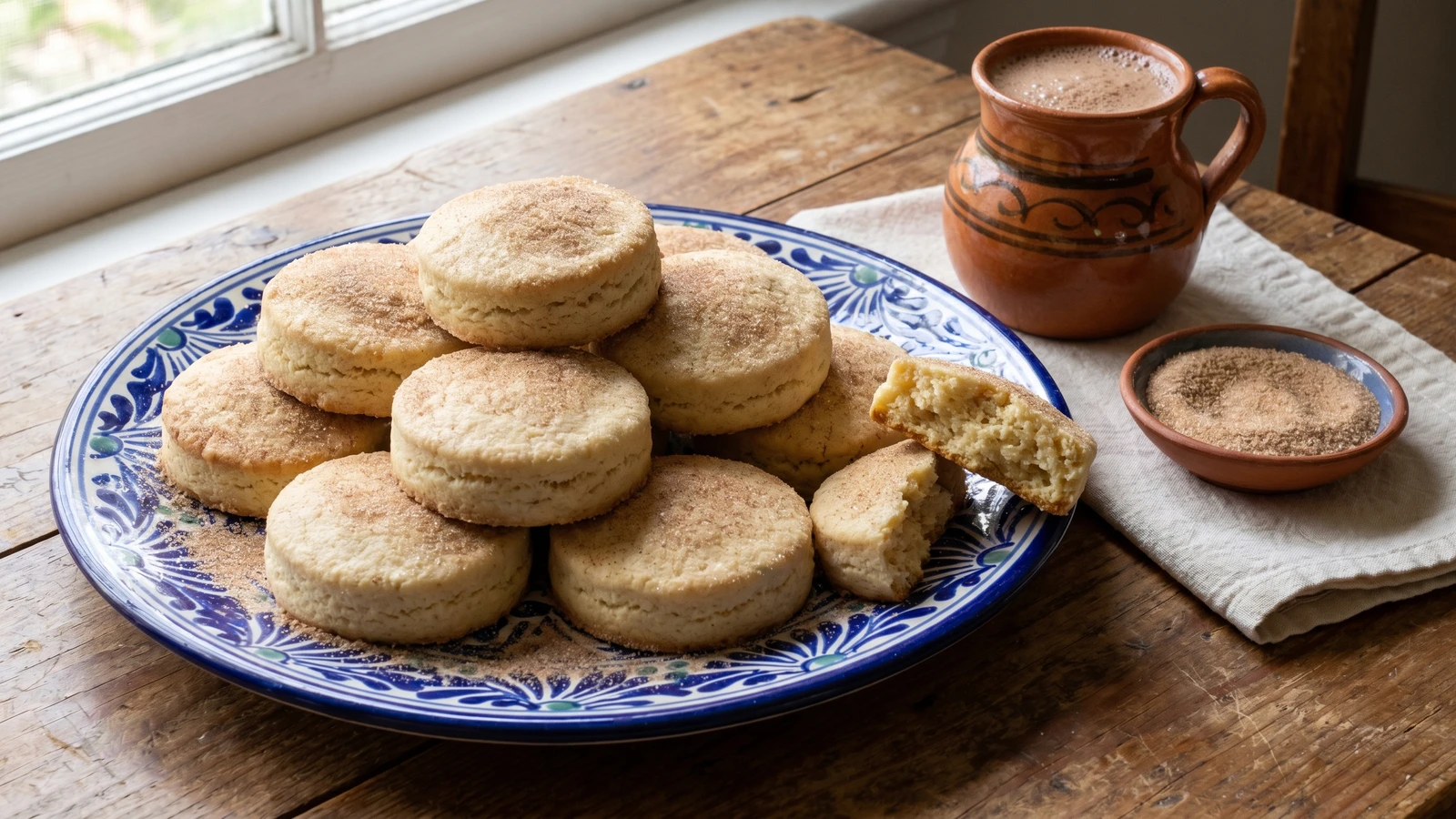
Puebla's holiday bizcochos are lard-rich flour biscuits scented with canela and anise, pressed into thick discs, sugared while warm, and made for chocolate, atole, and Noche Buena tables.
Puebla, in the central highlands between volcanoes and convent walls, owns these bizcochos de manteca. This is a flour pastry, not a corn antojito, and that matters. Puebla's colonial kitchens took wheat, sugar, canela, anise, and manteca de cerdo and turned them into holiday baking with a very specific crumb: tender, sandy, and strong enough to dip into chocolate caliente without collapsing like a weak cookie.
I first wrote this version after watching a señora near the Mercado de Sabores in Puebla measure lard with her fingers, not a scale. She knew the dough by touch. It should feel soft but not greasy, like masa that has learned to behave as pastry. The manteca is not decoration here. La manteca es el sabor. Use butter and you have made another biscuit. Use shortening and you have removed the point.
These are for Noche Buena, posadas, and the days when a house needs something that keeps well in a tin. The canela and anise do the perfume work, the sugar gives a dry sparkle, and the lard gives that clean break under the teeth. No me vengas con atajos. Cream the manteca properly, rest the dough, and bake them pale gold. Así se hace y punto.
Puebla's convent kitchens became major centers of Mexican pastry during the 17th and 18th centuries, when wheat flour, cane sugar, cinnamon, anise, and pork lard from Spanish colonial foodways met Indigenous household labor and local technique. Bizcochos de manteca belong to that colonial baking tradition, closer to the practical convent biscuit than to modern frosted cookies. In Puebla, they remain tied to Christmas and posada tables because they keep well, travel well, and pair naturally with chocolate de metate or atole.
Quantity
3 cups, plus more for dusting
Quantity
1 teaspoon
Quantity
1/2 teaspoon
Quantity
1 teaspoon
Quantity
1 teaspoon
lightly crushed
Quantity
1 cup
at cool room temperature
Quantity
3/4 cup
Quantity
2
at room temperature
Quantity
1
at room temperature
Quantity
2 tablespoons
Quantity
1 teaspoon
finely grated
Quantity
1 teaspoon
Quantity
1/3 cup
Quantity
1 teaspoon
| Ingredient | Quantity |
|---|---|
| all-purpose flour | 3 cups, plus more for dusting |
| baking powder | 1 teaspoon |
| fine sea salt | 1/2 teaspoon |
| ground canela de Ceylan or Mexican cinnamon | 1 teaspoon |
| anise seedlightly crushed | 1 teaspoon |
| fresh pork lard (manteca de cerdo)at cool room temperature | 1 cup |
| granulated sugar | 3/4 cup |
| large egg yolksat room temperature | 2 |
| large whole eggat room temperature | 1 |
| fresh orange juice | 2 tablespoons |
| orange zestfinely grated | 1 teaspoon |
| vanilla extract | 1 teaspoon |
| granulated sugar for coating | 1/3 cup |
| ground canela de Ceylan or Mexican cinnamon for coating | 1 teaspoon |
Whisk the flour, baking powder, salt, ground canela, and crushed anise seed in a bowl. Crush the anise lightly between your fingers or in a molcajete first. You want it awake, not powdered into dust.
In a large bowl, beat the manteca de cerdo with the 3/4 cup sugar for 4 to 5 minutes, until lighter in color and soft like thick cream. This is where the texture is built. If the lard is cold, it will clump. If it is melted, the dough will turn heavy. Cool room temperature is the point.
Beat in the egg yolks one at a time, then the whole egg. Add the orange juice, orange zest, and vanilla. The mixture may look slightly broken for a moment. Keep beating until it comes back together and smells of canela, citrus, and lard. That smell is Puebla's holiday table starting to speak.
Add the dry ingredients in two additions, mixing with a wooden spoon or your hand just until no dry flour remains. Do not knead it like bread. This dough should be tender. Press it together, cover the bowl, and rest it for 45 minutes at room temperature so the flour hydrates and the anise settles into the fat.
Heat the oven to 350F. Line two baking sheets with parchment. Roll the dough on a lightly floured table to about 1/2 inch thick. Cut into 2 1/2-inch rounds, or pinch off walnut-size pieces and press them into thick discs with your palm. They should look handmade, not factory-perfect.
Arrange the discs 1 inch apart. Bake 15 to 18 minutes, rotating the pans halfway through, until the bottoms are lightly golden and the tops stay pale. Do not chase brown color. A dark bizcocho tastes dry and tired. The lard should leave the crumb tender, not crisp like a cracker.
Stir the 1/3 cup sugar with the teaspoon of ground canela. Let the bizcochos cool on the pan for 5 minutes, then roll them gently in the cinnamon sugar while still warm. Warm cookies catch the sugar. Cold ones reject it. Let them finish cooling on a rack before storing.
Serve at room temperature with chocolate caliente, atole de vainilla, or cafe de olla. These are not frosted cookies and they do not need decoration. The crumb, the manteca, the canela, and the anise are the work. Recetas probadas y garantizadas.
1 serving (about 29g)
Culinary guides, cultural storytelling, and the editorial depth that makes cooking meaningful.
Discover Culinary ExplorerChef Lupita
Puebla's convent almond cookies, made from blanched almonds, sugar syrup, egg yolks, canela, and patient hands, the kind of sweet that belongs beside coffee in talavera, not in a plastic bakery box.

Chef Lupita
Ciudad de Mexico's panaderia banderillas are long sticks of hojaldre pressed with sugar, baked until amber, and finished with a hard glaze for coffee at the kitchen table.

Chef Lupita
Mérida's pale egg-yolk-and-vanilla kisses, tiny cookies built on eight yolks and a perfume of orange blossom, sandwiched with guava paste and dusted heavy with powdered sugar.

Chef Lupita
Hidalgo's bisquet de nata carries Pachuca's mining history into the breakfast table: a Cornish-style bread softened by Mexican nata, split warm and eaten with café de olla.