
Chef Jeong-sun
Aehobak-guk (애호박국, Korean Zucchini Soup)
A clean summer soup of Korean zucchini and salted shrimp, built on quick anchovy-kelp broth and finished before the half-moons lose their shape on a weeknight table.
A cooking platform built around craft, culture, and the stories behind what we eat.

Created by
A country winter jjigae from Chungcheong, built from hobakji, fermented ripe squash kimchi, and pork simmered low until thrift turns into a deep, sour broth.
Cook the month you're standing in. Hobakji-jjigae belongs to the back end of autumn and the hard part of winter, when the overgrown squash from the field has been salted and fermented instead of wasted. Country thrift again. A squash too big and coarse for a quick stir-fry becomes the thing that gives a pot its sourness, sweetness, and body.
Hobakji is closely associated with Chungcheong home cooking, where late-season overgrown squash was salted and fermented as a practical kimchi for winter storage. The stew made from it belongs to the same household logic as kimchi-jjigae: once a fermented vegetable passes its bright eating stage, it moves into the pot with pork, broth, and time. It is not a palace dish, and it does not need to borrow grandeur; its record is the field, the jar, and the winter table.
Quantity
450g
cut into 2-inch pieces if large
Quantity
250g
cut into bite-size pieces
Quantity
1 tablespoon
Quantity
1/2 medium
sliced thick
Quantity
2 cloves
minced
Quantity
1 teaspoon
Quantity
1 teaspoon
finely chopped if using saeujeot
Quantity
3 cups
Quantity
1/2 cup
strained
Quantity
1 teaspoon
Quantity
200g
cut into thick rectangles
Quantity
1
sliced on the diagonal
Quantity
2
cut into 2-inch lengths
Quantity
1/2 teaspoon
| Ingredient | Quantity |
|---|---|
| hobakji (fermented ripe squash kimchi)cut into 2-inch pieces if large | 450g |
| pork shoulder or pork bellycut into bite-size pieces | 250g |
| neutral oil | 1 tablespoon |
| onionsliced thick | 1/2 medium |
| garlicminced | 2 cloves |
| gochugaru (Korean chili flakes) (optional) | 1 teaspoon |
| saeujeot (salted shrimp) or soup soy saucefinely chopped if using saeujeot | 1 teaspoon |
| anchovy-kelp broth or rice-rinsing water | 3 cups |
| hobakji brinestrained | 1/2 cup |
| doenjang (fermented soybean paste) (optional) | 1 teaspoon |
| firm tofu (optional)cut into thick rectangles | 200g |
| green chilisliced on the diagonal | 1 |
| scallionscut into 2-inch lengths | 2 |
| toasted sesame oil (optional) | 1/2 teaspoon |
Taste one piece of hobakji and one spoon of its brine before you heat the pot. If it is very salty, rinse the pieces briefly and use only 1/4 cup brine. If it is pleasantly sour and not harsh, use the full 1/2 cup. 손맛 is real; I measure it anyway, because fermented squash changes from jar to jar.
Heat the oil in a heavy pot or ttukbaegi over medium heat. Add the pork and cook 5 to 6 minutes, turning until the edges lose their raw color and begin to brown. This first browning gives the broth body, so do not rush it into boiling water.
Add the onion and cook 3 minutes, just until it softens at the edges. Stir in the garlic, gochugaru, and saeujeot, cooking only 30 seconds. The chili should tint the pork fat red, not scorch. Scorched gochugaru tastes flat and bitter, and then no amount of simmering repairs it.
Add the hobakji, broth or rice-rinsing water, strained brine, and doenjang if using. Bring to a boil, then lower to a steady simmer. Cook uncovered 30 to 35 minutes, stirring now and then, until the squash turns soft enough to press with a spoon and the pork gives up its richness to the broth.
Slide in the tofu, if using, and simmer 5 minutes more. Do not stir hard after the tofu goes in. Shake the pot instead, because broken tofu clouds the broth and makes the stew look careless.
Taste the broth before you add anything. It should be sour first, savory second, with the sweetness of old squash still readable. If it needs salt, add 1/2 teaspoon soup soy sauce. If it is too sharp, simmer 5 minutes longer rather than adding sugar. Finish with green chili, scallions, and the sesame oil if you want it, then carry the pot to the table with hot rice.
1 serving (about 310g)
Culinary guides, cultural storytelling, and the editorial depth that makes cooking meaningful.
Discover Culinary ExplorerChef Jeong-sun
A clean summer soup of Korean zucchini and salted shrimp, built on quick anchovy-kelp broth and finished before the half-moons lose their shape on a weeknight table.
Chef Jeong-sun
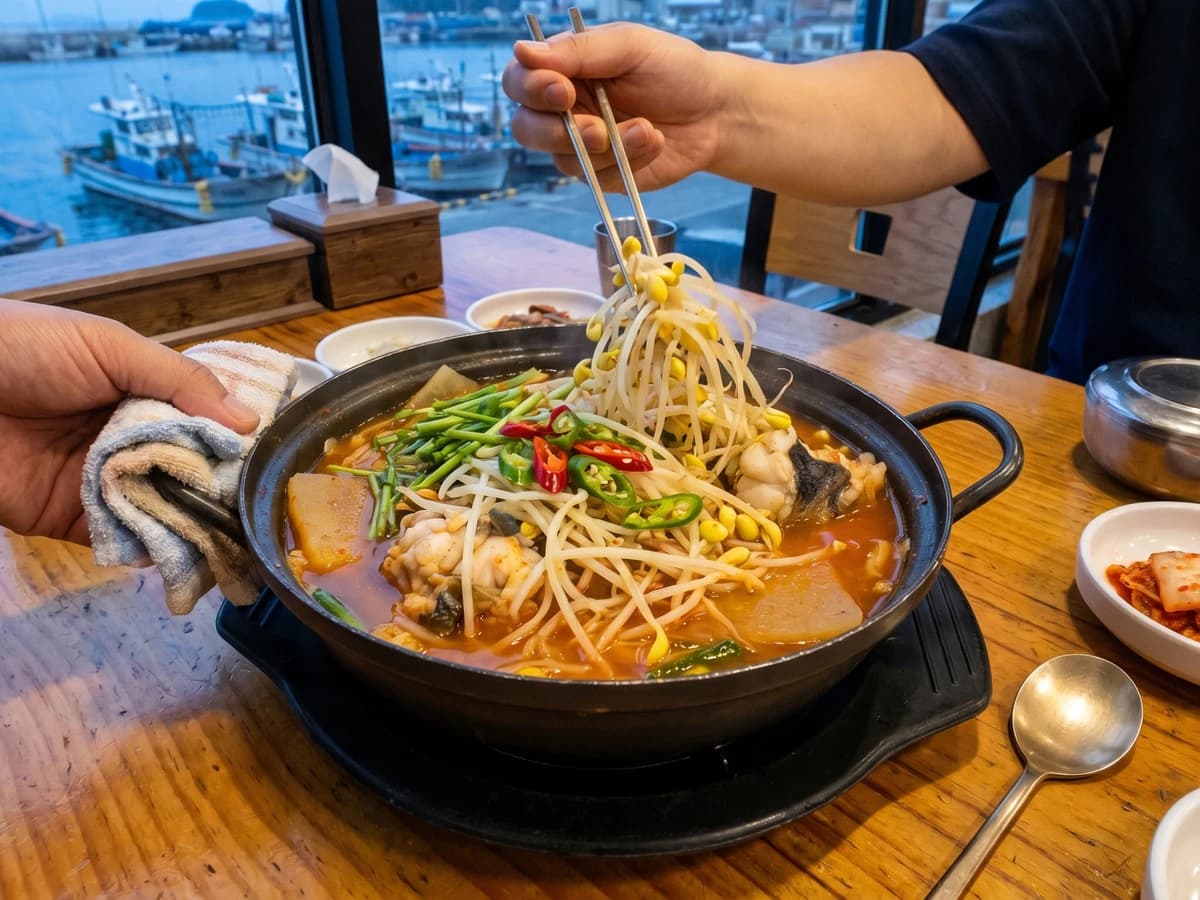
A Masan coast monkfish stew with firm white meat, gelatin at the bones, soybean sprouts for crunch, and a red broth seasoned to carry the fish, not bury it.

Chef Jeong-sun
A weeknight fish roe stew with radish and crown daisy in a clean spicy broth, where the whole success depends on adding the roe late enough that it sets tender, not chalky.

Chef Jeong-sun
Late-summer mallow leaves rubbed with salt until the bitter green water runs off, then simmered in a clean doenjang broth with dried shrimp, the quiet soup a Korean weeknight deserves.