
Chef Makoa
Baked ʻUlu Coconut Pudding (Hawaiian Ripe Breadfruit Custard)
Very ripe Hawaiian ʻulu, the canoe-crop breadfruit, mashed soft with coconut milk and sugar, then baked until the middle sets like a quiet custard.
A cooking platform built around craft, culture, and the stories behind what we eat.

Created by
Cool Hawaiian haupia, coconut milk set firm with pia or arrowroot and cut into white squares, the quiet sweet finish after kālua puaʻa, poke, laulau, and poi have fed the whole table.
My auntie used to watch the lūʻau table, the Hawaiian feast table, like she was guarding the tide. The kālua puaʻa had its salt and smoke, the poke had its limu and ʻinamona, the laulau had gone dark and tender in the leaf, and the poi sat there humble in the bowl. Then she would bring out haupia, those cool white squares, and the whole meal would come down soft. Hawaiʻi owns this one by name and by hand.
Haupia is not a loud dessert. It comes from niu, coconut, and pia, Polynesian arrowroot, two canoe-era foods our people knew how to work before supermarket cornstarch ever sat on the shelf. The why is simple: cook the coconut gently, thicken it slow, chill it until it holds. If you rush the heat, the starch gets grainy or loose. No blame the taro, my kumu would say for kalo, and the lesson walks over here too. No blame the haupia. Watch the pot.
Across the Triangle, the cousins have their own coconut sweets and starch puddings. Tahiti has poʻe, fruit and starch finished with coconut. The Cook Islands have poke, banana or pumpkin with arrowroot and coconut cream. Tonga has faikakai, soft dumplings under sweet coconut syrup. Same coconut-starch wisdom, different desserts, different islands. One ocean, one canoe, one root, but every hand has its own way.
Use fresh coconut milk if you can press it. Use good canned coconut milk if that's what you have. Eat what you have. Haupia belongs just as much beside a backyard lūʻau spread as it does in a container plate after a graduation party, cool from the fridge, cut a little crooked, everybody reaching for one more square.
Haupia belongs to Hawaiʻi, and the name preserves pia, the Polynesian arrowroot starch that traditionally set the coconut milk before cornstarch became the common pantry thickener in the plantation and supermarket years. Niu, coconut, and pia were part of the broad canoe-food knowledge carried and adapted across the ocean, though each island made its own sweets from that knowledge. Haupia's cousins are not the same dish: Tahitian poʻe, Cook Islands poke, and Tongan faikakai show the wider Polynesian grammar of starch, coconut, and feast food without blurring Hawaiʻi's square white pudding into somebody else's bowl.
Quantity
2 cans, 13.5 ounces each
well shaken
Quantity
1 cup
divided
Quantity
1/2 cup
Quantity
1/2 cup plus 2 tablespoons
cornstarch may stand in
Quantity
1/4 teaspoon
Quantity
as needed
rinsed and dried, for serving
| Ingredient | Quantity |
|---|---|
| full-fat unsweetened coconut milkwell shaken | 2 cans, 13.5 ounces each |
| cool waterdivided | 1 cup |
| granulated sugar | 1/2 cup |
| pia (Polynesian arrowroot) or arrowroot starchcornstarch may stand in | 1/2 cup plus 2 tablespoons |
| fine sea salt | 1/4 teaspoon |
| fresh ti leaves (lāʻī) or banana leaf (optional)rinsed and dried, for serving | as needed |
Line an 8-inch square pan with parchment, or wet the inside lightly with water so the haupia releases clean. If you have lāʻī, the ti leaf, save it for the serving board, not inside the pan. Haupia sets plain and white. That's its beauty.
Whisk the pia or arrowroot starch with 1/2 cup of the cool water until it looks smooth and milky, with no dry starch hiding at the bottom. Let it sit while you warm the coconut, then whisk it again right before it goes in. Starch settles fast, like it has somewhere else to be.
In a heavy saucepan, combine the coconut milk, the remaining 1/2 cup water, sugar, and salt. Set it over medium heat and stir until the sugar dissolves and the edges just begin to tremble. Don't boil it hard. You want the niu, the coconut, clean and sweet, not scorched.
Whisk the starch slurry once more, then pour it into the warm coconut in a slow stream while stirring constantly. Lower the heat and keep stirring 5 to 8 minutes, scraping the corners, until the haupia turns glossy, thick, and heavy enough that the whisk leaves a clear trail across the bottom of the pot.
Pour the thick haupia into the prepared pan and smooth the top with a wet spatula. Tap the pan once or twice to settle it, then let it cool until the surface is no longer hot. Cover and chill at least 4 hours, until firm all the way to the center.
Lift the haupia from the pan and cut it with a wet knife into small squares. Wipe and wet the knife between cuts if you want the edges clean. Set the squares on lāʻī or banana leaf, cool and plain, beside the feast or at the end of it. No need dress it up. Let the coconut speak.
1 serving (about 95g)
Culinary guides, cultural storytelling, and the editorial depth that makes cooking meaningful.
Discover Culinary ExplorerChef Makoa
Very ripe Hawaiian ʻulu, the canoe-crop breadfruit, mashed soft with coconut milk and sugar, then baked until the middle sets like a quiet custard.

Chef Makoa
A chewy, golden Hawaiʻi Local square from mochiko, butter, and coconut milk, baked in one pan until the edges pull crisp and the middle stays tender.

Chef Makoa
Soft squares of Hawaiʻi Local chichi dango, pale pink and white from the mochi-shop counter, baked with mochiko, milk, and coconut milk, then dusted until every sticky edge turns friendly.
Chef Makoa
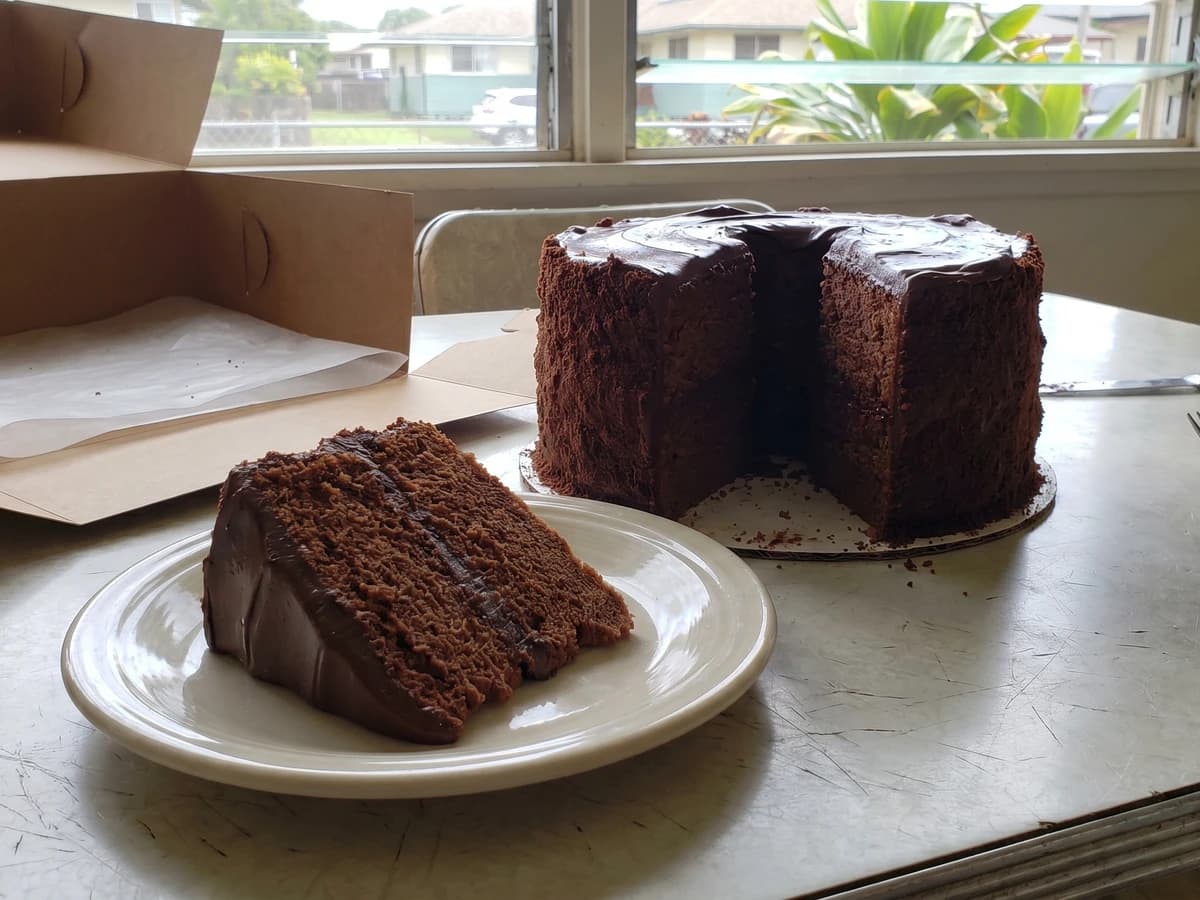
A Hawaiʻi Local chocolate-on-chocolate birthday cake: soft chiffon, cooked pudding icing, and cake crumbs pressed around the sides like the bakery case knew you were coming.