
Chef Takumi
Amerikan Doggu (アメリカンドッグ, corn dog)
A sausage on a stick, sweet batter, clean hot oil, and no cornmeal. Amerikan doggu is festival food made plain, with the batter thick enough to cling.
A cooking platform built around craft, culture, and the stories behind what we eat.
Created by
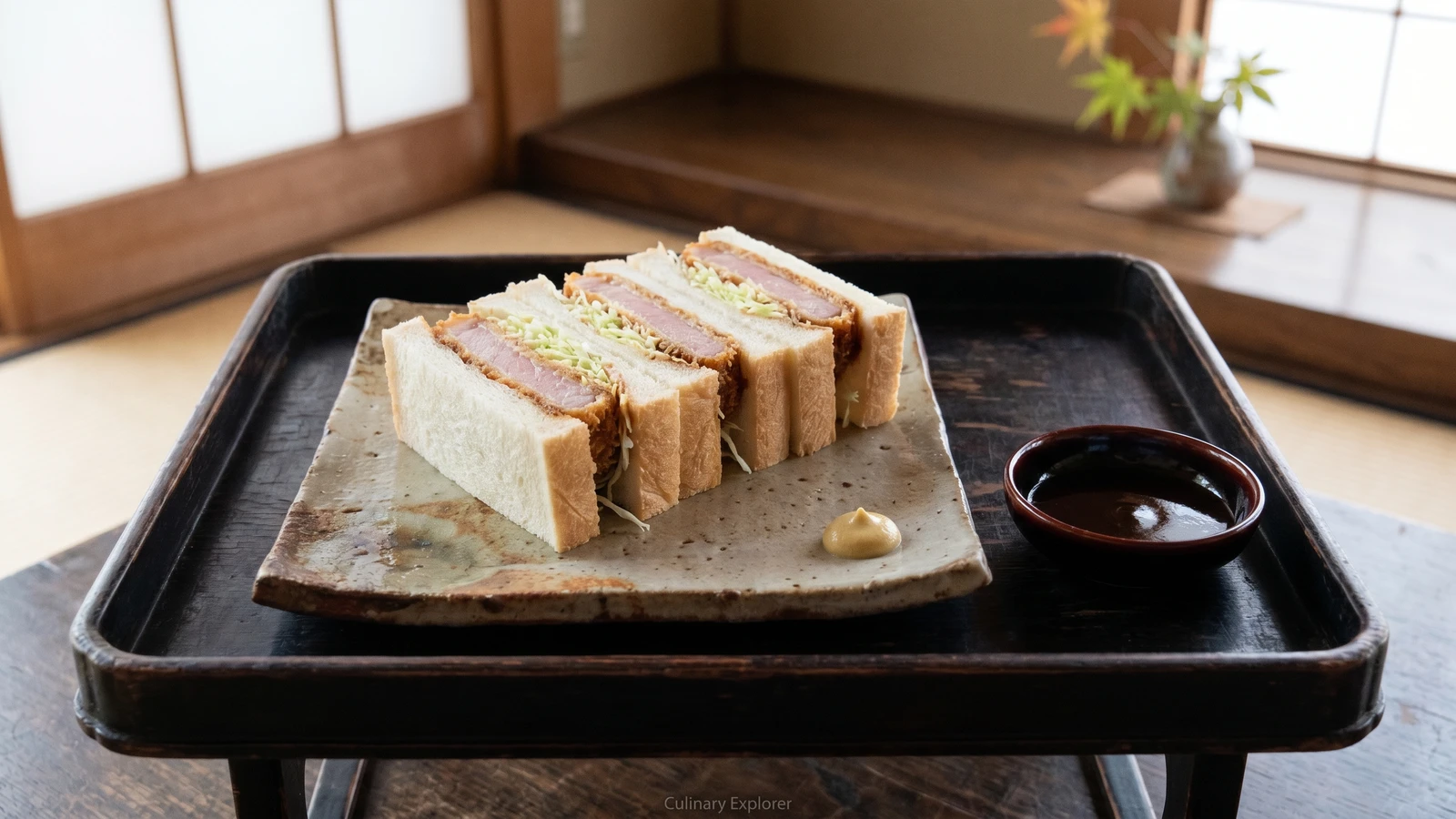
Thick ham, rough panko, soft shokupan, and a sharp bite of cabbage. Hamukatsu sando is not grand food. It is honest food, and the frying must stay crisp.
Ham looks too modest to be the center of a sandwich. That is exactly why hamukatsu sando works. A plain slice of cooked pork ham takes on a rough coat of panko, meets hot oil for a minute, and comes out crisp at the edges, warm in the middle, and ready for soft shokupan. No ceremony. No hiding.
There is no shun to rescue this one, so sourcing is the honest work: firm cooked ham sliced thick, bread with a tender crumb, and cabbage that still snaps. Watery deli ham will fight you. So will wet cabbage. The detail that decides the sandwich is dryness. Pat the ham dry, dry the cabbage harder than seems polite, and keep the oil hot enough that the panko crisps before the ham can slacken the crust.
This is yōshoku, Japanese Western-style cooking made ordinary, and ordinary food has standards of its own. Tonkatsu sauce gives the sweet-sour, soy-dark gloss, but use it with manners. Brush, don't drown. The point is a sandwich you can make on a weeknight and still recognize as honmono in its own lane: crisp ham, soft bread, clean cabbage, nothing hidden.
The suffix katsu comes from katsuretsu, the Meiji-era rendering of the English cutlet, first attached to yōshoku meat cutlets before settling into everyday Japanese speech. Hamukatsu spread as a cheap Shōwa-period snack after processed ham became widely available in postwar Japan, especially in lunch counters, izakaya, and sōzai prepared-food shops. When konbini chains expanded in the 1970s and 1980s, their packaged sandwiches helped keep the hamukatsu sando visible as a retro comfort food rather than a vanished counter dish.
Quantity
4 slices
about 1/2 inch / 12mm thick
Quantity
4 thick slices
8 to 10mm thick, patted dry
Quantity
1/4 cup
Quantity
1
Quantity
1 tablespoon
Quantity
1 1/2 cups
Quantity
about 3 cups
or enough for 1 inch depth
Quantity
1 1/2 cups
finely shredded
Quantity
1 tablespoon
Quantity
1 teaspoon
Quantity
3 tablespoons
plus more for serving
| Ingredient | Quantity |
|---|---|
| shokupan (Japanese milk bread)about 1/2 inch / 12mm thick | 4 slices |
| cooked pork ham8 to 10mm thick, patted dry | 4 thick slices |
| all-purpose flour | 1/4 cup |
| large egg | 1 |
| cold water | 1 tablespoon |
| fresh panko | 1 1/2 cups |
| neutral oilor enough for 1 inch depth | about 3 cups |
| green cabbagefinely shredded | 1 1/2 cups |
| Japanese mayonnaise | 1 tablespoon |
| Japanese karashi mustard (optional) | 1 teaspoon |
| Japanese tonkatsu sauceplus more for serving | 3 tablespoons |
Shred the cabbage as finely as you can, soak it in cold water for 5 minutes, then drain and spin or towel-dry it until no water clings to it. The cold water wakes the leaves and the drying matters more than the soaking. Wet cabbage is a small flood inside soft bread.
Trim the crusts from the shokupan if you want the clean konbini shape. Mix the mayonnaise with the karashi, if using, and spread it thinly on the inside faces of the bread. The fat slows the tonkatsu sauce from soaking into the crumb, and karashi cuts the sweetness without making a speech.
Pat the ham dry again. Set the flour, the egg beaten with cold water, and the panko in three shallow dishes. Coat each ham slice lightly in flour, shake off the excess, dip it in egg, then press it gently into the panko. Flour gives the egg something to hold. Panko gives the crust air. Press enough to attach it, not enough to crush it flat.
Pour oil 1 inch deep into a small heavy pot and heat it to 170 C / 340 F. Without a thermometer, drop in a few panko crumbs; they should sink for a moment, rise, and foam steadily. The ham is already cooked, so the oil's job is only to crisp the crust and warm the center before the ham gives off moisture.
Fry two ham slices at a time for 60 to 90 seconds per side, until the panko is evenly golden and sounds dry when lifted with chopsticks. Move them to an oil-draining rack, abura-kiri, or a wire rack set over a tray. Paper alone traps oil underneath, and the underside softens while you congratulate yourself too early.
Brush the upper face of each fried ham slice with tonkatsu sauce, keeping the coat thin. Lay cabbage on two slices of bread, stack two ham cutlets on each, then close with the remaining bread. The sauce belongs here, but too much makes the panko slack and hides the modest good thing you just made.
Set a light board on the sandwiches for 1 minute, just enough to settle the layers. Cut each sandwich into three bars with a serrated knife, wiping the blade between cuts so the face stays clean. Serve at once, with extra tonkatsu sauce in a small dish. Leave it room on the plate.
1 serving (about 370g)
Culinary guides, cultural storytelling, and the editorial depth that makes cooking meaningful.
Discover Culinary ExplorerChef Takumi
A sausage on a stick, sweet batter, clean hot oil, and no cornmeal. Amerikan doggu is festival food made plain, with the batter thick enough to cling.

Chef Takumi
Atsuyaki tamago sando looks like a trick of the kissaten counter, but it is only soft bread, clear dashi, patient eggs, and one brave warm cut.
Chef Takumi
A good chicken katsu sando is decided before assembly: pound the cutlet thin, fry it crisp, then sandwich it while the crumb still has its bite.

Chef Takumi
A Sapporo bakery roll with a plain secret: good chikuwa, tuna mayo that isn't wet, and soft bread wrapped loosely enough to rise around it.