
Chef Jeong-sun
Agwi-jjim (Braised Monkfish with Bean Sprouts)
Firm monkfish buried under crisp soybean sprouts, minari, and a red gochugaru sauce thickened at the end; Masan's market dish asks for heat, timing, and a steady hand.
A cooking platform built around craft, culture, and the stories behind what we eat.

Created by
A generous Korean seafood braise built on fresh crab, shrimp, squid, shellfish, and crisp soybean sprouts, tossed in a thick red sauce that clings without burying the sea.
Haemul-jjim starts at the fish stall, not at the stove. If the crab smells clean and briny, if the squid is glossy and firm, if the clams are shut tight, then you can cook this dish tonight. If the seafood is tired, cook something else. My teacher would have sent it back without a word.
This is a celebration dish, the kind that lands in the middle of the table and makes everyone reach carefully because the crab shells are hot and the sauce stains. It looks rough and generous, but it asks for discipline. The sauce must be bold, yes, but not so heavy with gochujang that every shellfish tastes the same. Let it taste like itself. The soybean sprouts must stay crisp, the squid must stay tender, and the starch must thicken the sauce at the end, not turn it gluey.
Notebook 41 says this plainly: cook the seafood in order. Crab and clams first, shrimp next, squid last. Tradition says to add the seafood and stir until done, but that is how good squid becomes rubber. 손맛 is real. I still measure it, so it can be handed on.
Haemul-jjim belongs to the modern Korean family of spicy jjim dishes, especially the seafood restaurants of the southern coast where abundant shellfish, crab, and squid meet a gochugaru-heavy sauce. Its closest well-known relative is Masan agwi-jjim, a monkfish and soybean sprout dish that became famous in the postwar decades around today's Changwon; mixed seafood versions spread through restaurant tables later as a more celebratory variation. This is not a palace dish, but a market and coastal restaurant dish, and it deserves the same careful record.
Quantity
1 large, about 600g, or 2 small
cleaned and cut into 6 pieces
Quantity
450g
deveined
Quantity
300g
cleaned, scored lightly, cut into wide strips
Quantity
400g
scrubbed and rinsed
Quantity
450g
rinsed, tails trimmed if desired
Quantity
1 medium
sliced 1/2 inch thick
Quantity
1 small
cut into thin matchsticks
Quantity
4
cut into 2-inch lengths
Quantity
80g
cut into 2-inch lengths
Quantity
2
sliced on the diagonal
Quantity
1 1/2 cups
Quantity
5 tablespoons
Quantity
2 tablespoons
Quantity
1 tablespoon
Quantity
1 tablespoon
Quantity
1 tablespoon
Quantity
1 tablespoon
Quantity
1 tablespoon maesil-cheong or 2 teaspoons sugar
Quantity
6 cloves
minced
Quantity
2 teaspoons
minced
Quantity
1/2 teaspoon
Quantity
2 tablespoons
Quantity
3 tablespoons
Quantity
1 tablespoon
Quantity
1 tablespoon
| Ingredient | Quantity |
|---|---|
| blue crabcleaned and cut into 6 pieces | 1 large, about 600g, or 2 small |
| large shell-on shrimpdeveined | 450g |
| squidcleaned, scored lightly, cut into wide strips | 300g |
| mussels or clamsscrubbed and rinsed | 400g |
| soybean sprouts (kongnamul)rinsed, tails trimmed if desired | 450g |
| onionsliced 1/2 inch thick | 1 medium |
| carrotcut into thin matchsticks | 1 small |
| scallionscut into 2-inch lengths | 4 |
| minari (Korean water celery) (optional)cut into 2-inch lengths | 80g |
| fresh red or green chiliessliced on the diagonal | 2 |
| anchovy-kelp broth or unsalted seafood stock | 1 1/2 cups |
| gochugaru (Korean chili flakes) | 5 tablespoons |
| soy sauce | 2 tablespoons |
| fish sauce or soup soy sauce (guk-ganjang) | 1 tablespoon |
| gochujang (Korean chili paste) | 1 tablespoon |
| doenjang (fermented soybean paste) | 1 tablespoon |
| rice wine or mirin | 1 tablespoon |
| maesil-cheong (green plum syrup) or sugar | 1 tablespoon maesil-cheong or 2 teaspoons sugar |
| garlicminced | 6 cloves |
| gingerminced | 2 teaspoons |
| black pepper | 1/2 teaspoon |
| potato starch | 2 tablespoons |
| cold water | 3 tablespoons |
| toasted sesame oil | 1 tablespoon |
| toasted sesame seeds | 1 tablespoon |
Scrub the mussels or clams and discard any with cracked shells. If a shellfish is open and does not close when tapped, throw it away. Rinse the crab pieces under cold water, removing any loose shell fragments. Pat the squid dry and score the inside lightly in a crosshatch before cutting it wide; the scoring helps the sauce cling and keeps the pieces from tightening into hard bands.
In a bowl, stir together the gochugaru, soy sauce, fish sauce or soup soy sauce, gochujang, doenjang, rice wine, maesil-cheong or sugar, garlic, ginger, and black pepper. Use only 1 tablespoon gochujang. The color should come mostly from gochugaru, because too much paste makes the sauce sweet, heavy, and dull.
Put the soybean sprouts in a wide heavy pot or deep skillet, then scatter the onion and carrot over them. Pour in the broth. The sprouts are not a garnish here; they are the bed that lifts the seafood from direct heat and releases enough water to make the braise without drowning it.
Nestle the crab pieces and mussels or clams over the vegetables. Spoon half the sauce over the top, cover, and cook over medium-high heat for 7 minutes. Do not stir hard yet. Let the shellfish open and let the crab give its flavor to the broth first.
Uncover and add the shrimp, squid, remaining sauce, scallions, and chilies. Lift and fold everything with tongs or two large spoons so the sauce reaches the bottom without crushing the seafood. Cover again and cook 4 to 5 minutes, just until the shrimp turn pink and the squid curls. This is the step people overcook. Stop while the seafood is still tender.
Stir the potato starch with the cold water until smooth. Uncover the pot, lower the heat to medium, and drizzle in the starch slurry while lifting the seafood and sprouts through the sauce. Cook 1 to 2 minutes, until the red sauce turns glossy and clings to the sprouts and shells. If it thickens too much, add 2 tablespoons water. If it is thin, cook one minute longer before adding more starch.
Turn off the heat. Fold in the minari if using, then drizzle with sesame oil and scatter sesame seeds over the top. Minari should wilt from the heat already in the pot, not cook down into nothing. Serve in the cooking pan or slide the whole mound onto a large platter, with rice, kimchi, and plenty of napkins for the crab shells.
1 serving (about 370g)
Culinary guides, cultural storytelling, and the editorial depth that makes cooking meaningful.
Discover Culinary ExplorerChef Jeong-sun
Firm monkfish buried under crisp soybean sprouts, minari, and a red gochugaru sauce thickened at the end; Masan's market dish asks for heat, timing, and a steady hand.

Chef Jeong-sun
A quick Korean rice bowl built on contrast: warm rice, cold popping flying-fish roe, chopped vegetables, gim, sesame oil, and the crisp rice bottom a hot stone bowl gives you.
Chef Jeong-sun
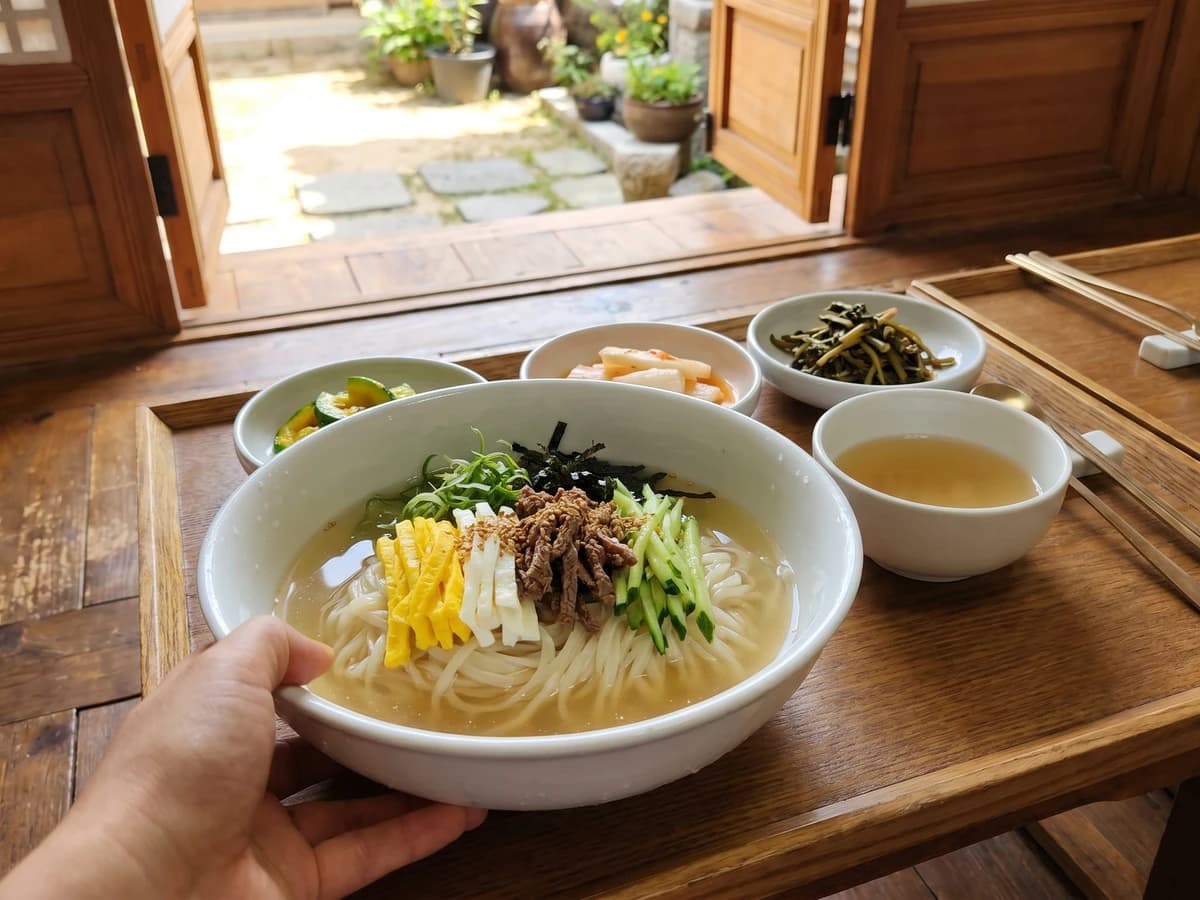
Andong's guest noodles, wheat and roasted soybean flour rolled thin, boiled and rinsed cold, then set in a clear chilled anchovy broth with careful strips of beef, egg, and cucumber.

Chef Jeong-sun
Andong's ritual-table rice served on an ordinary day: separate soy-sesame namul, warm rice, and clear radish soup, mixed without gochujang so every vegetable keeps its own voice.