
Chef Joost
Aspergesoep (Dutch White Asparagus Soup)
White asparagus is Limburg's spring clock, and this soup uses every pale stem and peeling to make wit goud, white gold, taste like the season it refuses to outlive.
A cooking platform built around craft, culture, and the stories behind what we eat.
Created by
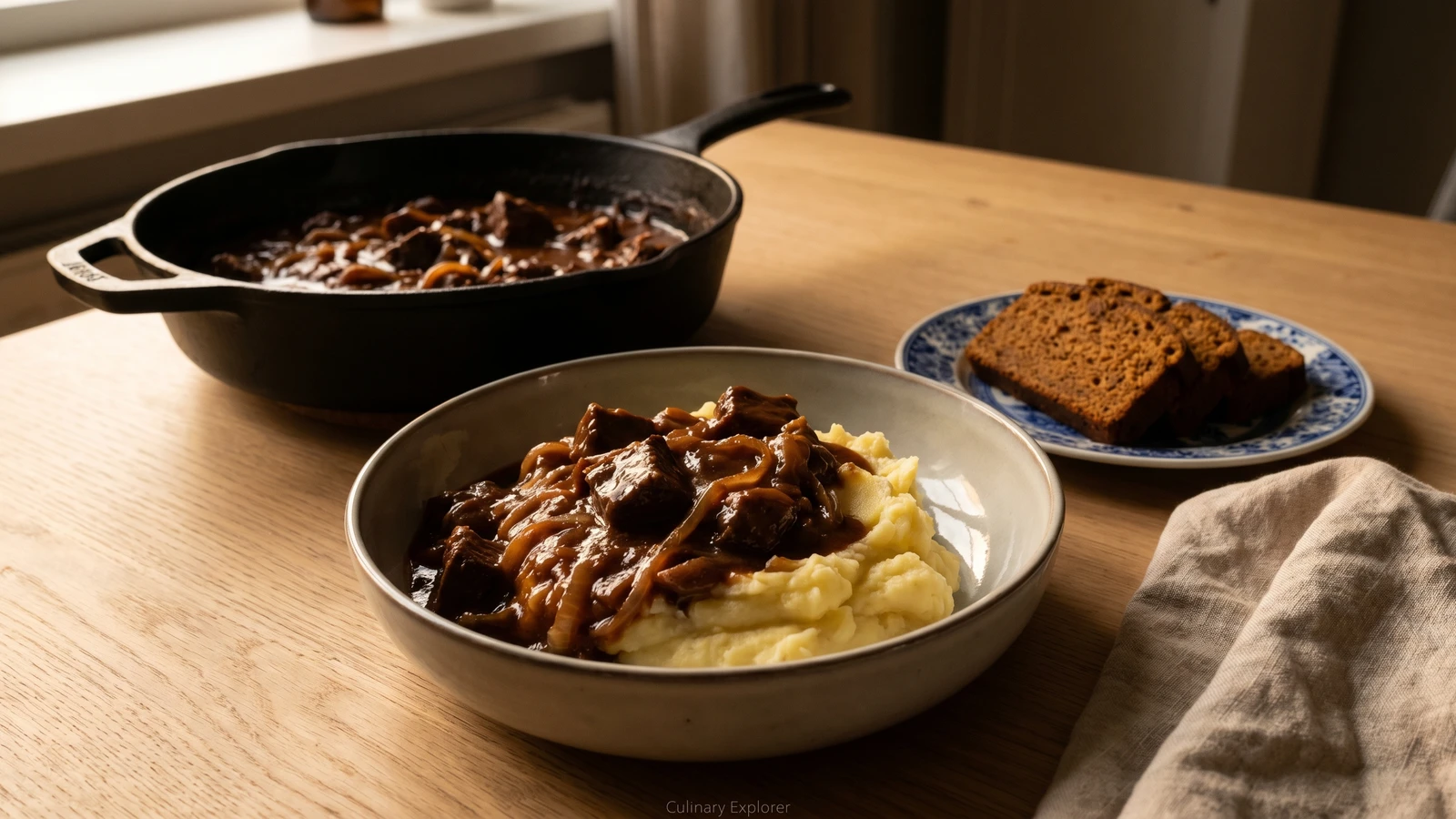
The name means chopped, but the soul is patience: beef, a mountain of onions, vinegar, bay, clove, and spiced cake melting into the old Dutch Christmas stew.
In my grandmother's second notebook, hachee sits in the winter pages, the ones that smell faintly of onions even now. Not because the paper remembers, no, because every Dutch family recipe book has one page where vinegar, bay leaf, clove, and patience have left their mark. At Christmas it came to table beside red cabbage and potatoes, darker than it had any right to be, with kruidkoek, spiced breakfast cake, melted into the sauce like a spice merchant hiding in plain sight.
But let me tell you a secret. Hachee sounds thoroughly Dutch because it behaves thoroughly Dutch: frugal, steady, a little suspicious of ornament. The name already tells you otherwise. It comes from French hachee, chopped, from hacher, to chop. It once spoke of cut-up meat made useful again; our version uses fresh stewing beef because modern prosperity has made leftovers scarce (a historical problem I accept without tears).
The kruidkoek is the cleverness. A slab of dark spiced cake, heavy with cinnamon, clove, ginger and syrup, thickens the sauce while giving it the sweet-sour depth old Dutch meat dishes love. Vinegar sharpens, onions sweeten, the cake gathers everything into a glossy brown gravy. Hou het altijd simpel, always keep it simple: brown well, cook the onions properly, let the pot murmur until the meat yields. Then stop fussing and let it rest. Hachee is better after it has slept.
Hachee entered Dutch food language through French hachee, from hacher, to chop, and early versions were a way to turn cut meat or leftovers into a spiced, acid-bright ragout. Dutch household cookery of the seventeenth and eighteenth centuries regularly paired meat with vinegar, onions, bay, clove and thickened sauces, a taste shaped by older medieval sweet-sour habits and the VOC-age trade that made cloves, mace and cinnamon ordinary pantry goods. The modern slice of kruidkoek, also called ontbijtkoek, breakfast cake, is a practical Dutch thickener: flour and syrup bind the gravy while the cake's spices make the stew taste older than the packet it came from.
Quantity
1 kg
cut into 4 cm pieces and patted dry
Quantity
50g
Quantity
2 tablespoons
Quantity
750g
thinly sliced
Quantity
2 teaspoons
divided
Quantity
to taste
Quantity
60ml
Quantity
350ml
Quantity
3
Quantity
5
Quantity
1 small blade or 1/4 teaspoon ground
Quantity
100g
crumbled
Quantity
to serve
Quantity
to serve
| Ingredient | Quantity |
|---|---|
| beef chuck or stewing beefcut into 4 cm pieces and patted dry | 1 kg |
| unsalted butter | 50g |
| neutral oil | 2 tablespoons |
| yellow onionsthinly sliced | 750g |
| fine sea saltdivided | 2 teaspoons |
| freshly ground black pepper | to taste |
| red wine vinegar or apple cider vinegar | 60ml |
| beef stock | 350ml |
| bay leaves | 3 |
| whole cloves | 5 |
| mace (optional) | 1 small blade or 1/4 teaspoon ground |
| kruidkoek or ontbijtkoekcrumbled | 100g |
| boiled potatoes or mashed potatoes (optional) | to serve |
| braised red cabbage (optional) | to serve |
Season the beef with 1 teaspoon salt and plenty of black pepper. Heat the butter and oil in a heavy braadpan or Dutch oven over medium-high heat, then brown the meat in batches until each piece has a dark crust on at least two sides. Do not crowd the pan. Pale beef makes a pale hachee, and no amount of kruidkoek can write the flavour back in later.
Lift the browned beef to a plate. Add all the onions to the same pan with the remaining 1 teaspoon salt, scraping the bottom as their juices begin to loosen the browned bits. Cook them for 20 to 25 minutes, stirring often, until the mountain collapses into soft gold. You are not frying them crisp; you are teaching them to become sauce.
Return the beef and its juices to the pan. Pour in the vinegar and scrape again, then add the beef stock, bay leaves, cloves, and mace if using. The liquid should come about two-thirds of the way up the meat. Bring it just to a simmer, cover with the lid slightly ajar, and cook over very low heat for 2 hours, stirring now and then along the bottom.
When the beef is nearly tender, crumble the kruidkoek into the pan and stir until it disappears into the liquid. Simmer uncovered for 30 to 45 minutes more, until the meat gives under a spoon and the sauce is dark, glossy, and thick enough to cling. Taste carefully. Add a splash more vinegar if it has become too sweet, or a little salt if the onions have softened the edge too much.
Fish out the bay leaves, cloves, and mace. Let the hachee rest off the heat for at least 20 minutes before serving, or cool it completely and refrigerate it for tomorrow. Serve with boiled potatoes or mashed potatoes and, if the table is feeling properly wintery, braised red cabbage. This is not garnish food. It wants a spoon and a hungry room.
1 serving (about 310g)
Culinary guides, cultural storytelling, and the editorial depth that makes cooking meaningful.
Discover Culinary ExplorerChef Joost
White asparagus is Limburg's spring clock, and this soup uses every pale stem and peeling to make wit goud, white gold, taste like the season it refuses to outlive.
Chef Joost
Pork, sweet soy, ginger, and patience: the Indo-Dutch braise that carried the colonial table into Dutch kitchens and made rice feel like Sunday dinner.
Chef Joost
Blinde vinken are not birds but a butcher's little joke: seasoned mince tucked into thin veal or beef, browned dark in butter, then braised until the jus tastes of onion, mace, and patience.

Chef Joost
Bruine bonensoep is the quieter winter cousin of snert: brown beans, rookworst, bacon and roots in a broth that stays spoonable, frugal, and deeply Dutch.