
Chef Lupita
Arroz a la Oaxaqueña
Oaxaca's red rice, stained with tomato and fried in lard, steamed with carrots, ejotes, black beans, and epazote. The side that anchors a Oaxacan family meal and earns its place beside the main.
A cooking platform built around craft, culture, and the stories behind what we eat.
Created by
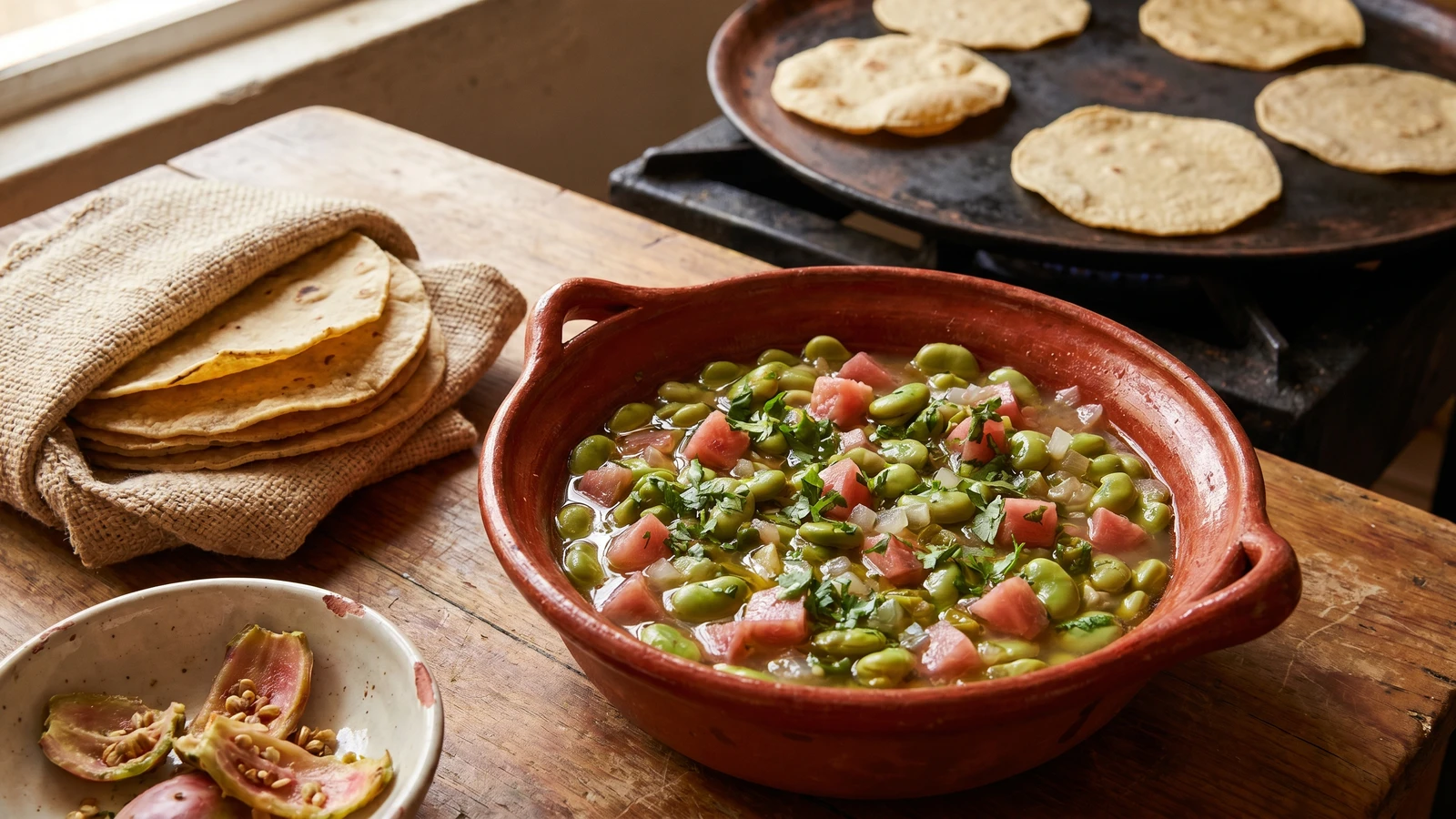
Hidalgo's Valle del Mezquital pot of tender fresh fava beans and sour xoconostle, fried first in manteca, sharpened with chile serrano, and served in barro with warm corn tortillas.
Hidalgo, Valle del Mezquital. This dish belongs to the dry central valley between Actopan, Ixmiquilpan, and Santiago de Anaya, where the nopal and the maguey are not decoration. They are food, fence, drink, fiber, medicine, and memory. This is Hñähñu country, and the kitchen knows how to make a meal from what the land gives without asking permission from anyone.
The ingredient that marks the dish is xoconostle, the sour prickly pear. Not sweet tuna. Xoconostle has its seeds gathered in the center and a firm tart flesh that cuts through the richness of the habas and the manteca. You cook it with chile serrano, onion, garlic, and epazote until the acid softens and the beans take on that clean sour edge. This is not a dish built on heat. Not all Mexican food is trying to burn your mouth. Some of it is trying to wake up a pot of beans.
I learned versions of this kind of guiso from women in the Mezquital who could look at a crate of xoconostles and tell you which ones were for caldo, which ones were for salsa, and which ones needed another day in the basket. Pregúntale a las señoras del mercado. They know before the cookbook knows. Fresh habas are seasonal, so when they are at the market, you cook them. When they are not, you cook something else. No me vengas con atajos.
Serve this in a plain clay cazuela with tortillas from the comal. It is a side dish, yes, but a serious one. Tart fruit, green legumes, pork lard, epazote, and corn. Cada estado, su propia cocina. Saber cocinar es saber vivir.
Habas, Vicia faba, arrived in central Mexico with Spanish agriculture in the 16th century, but Hidalgo's cooks folded them into older Hñähñu foodways built around maíz, nopal, maguey, quelites, chile, and seasonal wild or semi-cultivated plants. Xoconostle, especially varieties of Opuntia used in the Valle del Mezquital, belongs to the arid nopal landscape of central Mexico and is cooked into broths, salsas, and bean pots because its acidity replaces the need for lime or vinegar. The pairing of an Old World legume with a native sour cactus fruit is exactly how regional Mexican cuisine works: not frozen in time, but disciplined by place.
Quantity
2 pounds
shelled to about 2 to 2 1/2 cups
Quantity
3 medium
peeled, seed centers reserved, flesh diced
Quantity
2 tablespoons
Quantity
1/2 medium
finely chopped
Quantity
2
finely chopped
Quantity
2
stemmed and finely chopped
Quantity
1 teaspoon, plus more to taste
Quantity
1 1/2 cups
Quantity
1 large sprig
Quantity
1/3 cup
chopped
Quantity
for serving
| Ingredient | Quantity |
|---|---|
| fresh fava beans in podsshelled to about 2 to 2 1/2 cups | 2 pounds |
| xoconostlespeeled, seed centers reserved, flesh diced | 3 medium |
| manteca de cerdo | 2 tablespoons |
| white onionfinely chopped | 1/2 medium |
| garlic clovesfinely chopped | 2 |
| fresh chile serranostemmed and finely chopped | 2 |
| kosher salt | 1 teaspoon, plus more to taste |
| water | 1 1/2 cups |
| fresh epazote | 1 large sprig |
| fresh cilantro leaves and tender stemschopped | 1/3 cup |
| warm corn tortillas (optional) | for serving |
Shell the fresh habas from their pods and rinse them. If the beans are small, bright green, and tender, leave their skins on. If they are large, pale, or leathery, blanch them in salted water for 60 seconds, cool them, and slip off the thick outer skins. That little skin can turn the guiso tough and bitter. The señoras in the Valle del Mezquital sort by touch, not by a timer.
Trim both ends from the xoconostles and peel them with a small sharp knife. Cut each fruit lengthwise. Scoop the seed centers into a fine-mesh strainer set over a bowl, then press hard with a spoon to collect the sour juice. Discard the seeds. Dice the firm flesh into 1/2-inch pieces. Xoconostle is not sweet tuna. The seeds sit in the center and the flesh is tart, almost lemony. That acid is why this dish works.
Melt the manteca de cerdo in a 10- to 12-inch clay cazuela or heavy skillet over medium heat. Add the onion and cook until it turns translucent with a few golden edges, about 4 minutes. Add the garlic and chile serrano and stir for 1 minute, just until the chile smells green and sharp. Add the diced xoconostle, the reserved sour juice, and the salt. Fry for 5 to 6 minutes, pressing about a third of the xoconostle against the side of the cazuela so it breaks down into the fat. La manteca es el sabor. Oil will cook it, yes. It will not round the acid the same way.
Stir in the shelled habas so every bean is coated in the xoconostle base. Add the water and epazote. Bring to a steady simmer, then lower the heat and cook uncovered until the habas are tender and the liquid has reduced into a tart, lightly glossy broth. Peeled habas take 12 to 15 minutes. Tender unpeeled habas take closer to 20 minutes. Stir now and then so the beans cook evenly. This should be a guiso with a little broth, not a dry saute.
Remove the epazote sprig. Fold in the chopped cilantro and taste for salt. The finished guiso should taste green, tart, and earthy, with small beads of manteca on the surface and soft pieces of xoconostle between the habas. Serve it in the cazuela with warm corn tortillas. Do not add lime. The xoconostle already did that work. Así se hace y punto.
1 serving (about 205g)
Culinary guides, cultural storytelling, and the editorial depth that makes cooking meaningful.
Discover Culinary ExplorerChef Lupita
Oaxaca's red rice, stained with tomato and fried in lard, steamed with carrots, ejotes, black beans, and epazote. The side that anchors a Oaxacan family meal and earns its place beside the main.
Chef Lupita
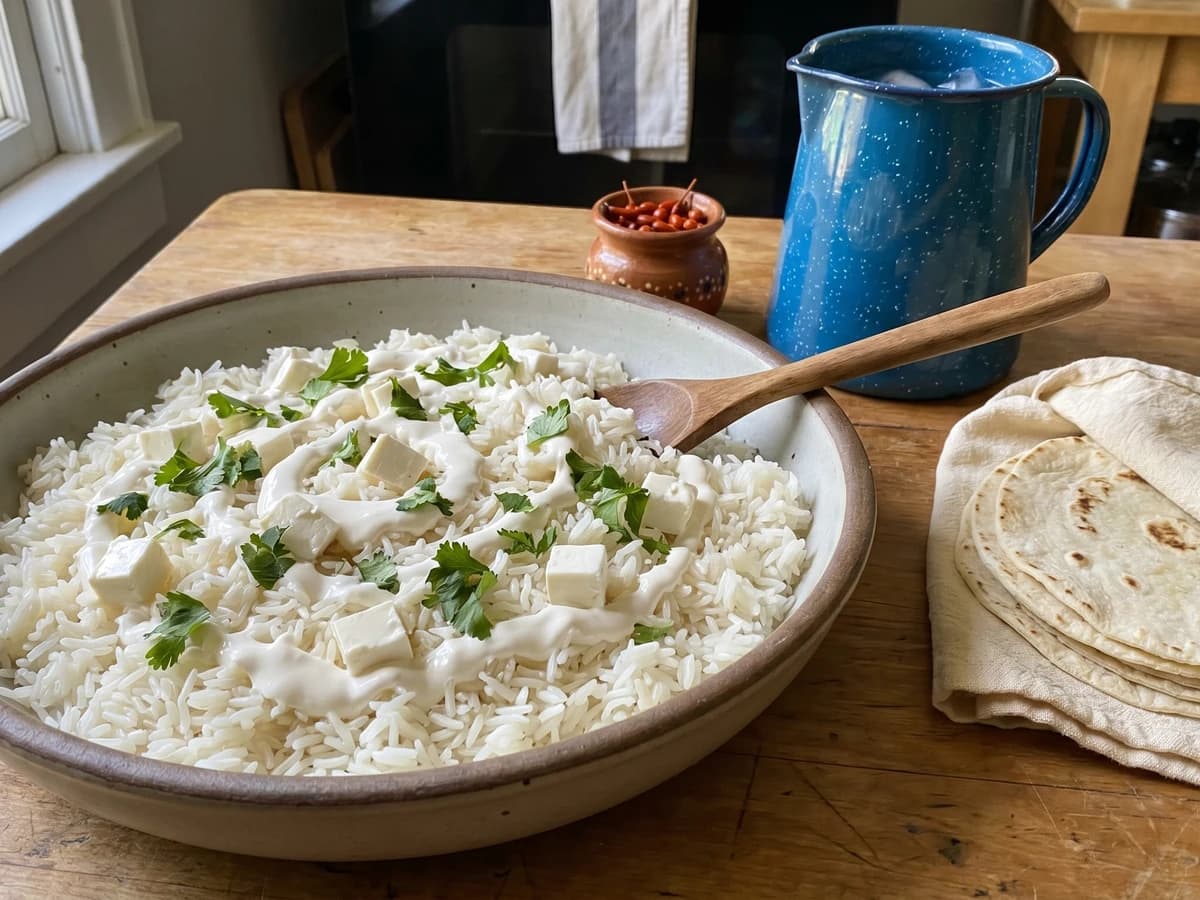
Sinaloa's home-cook white rice topped with cold cubes of cream cheese that soften into the warm grain, finished with crema and a sprinkle of chiltepin at the table. The trick that makes a side dish feel like a small luxury.
Chef Lupita
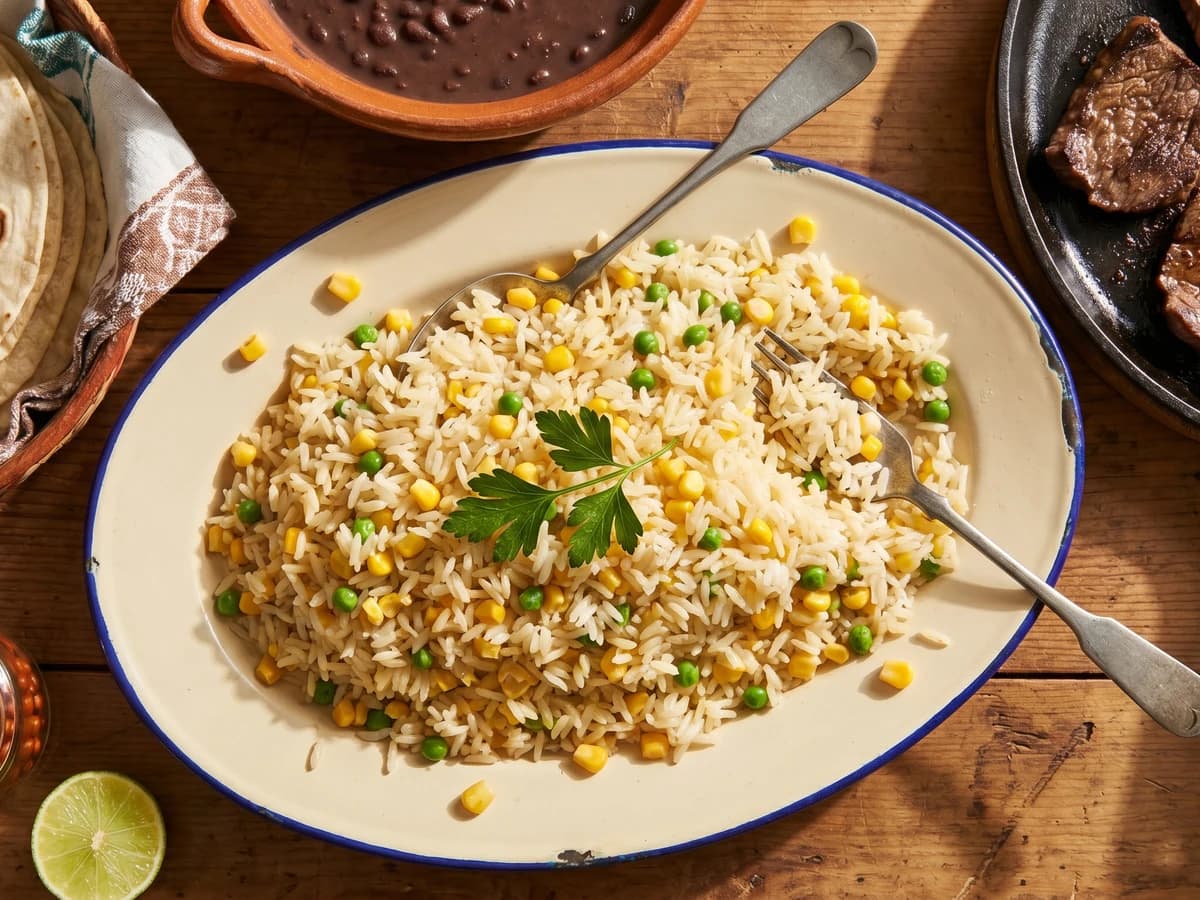
Sonora's white rice, toasted in butter and steamed with sweet corn and tender peas. The clean, quiet partner to a plate of carne asada, not the red rice of central Mexico.

Chef Lupita
Yucatán's white rice with sweet corn kernels, toasted in lard with garlic and onion. The quiet base that holds up against the peninsula's bold achiote-stained stews.