
Chef Takumi
Aji Fry (アジフライ, panko-fried horse mackerel)
Aji fry is weeknight fish with no mystery: fresh horse mackerel opened cleanly, breaded lightly, and fried until the panko crackles while the flesh stays sweet.
A cooking platform built around craft, culture, and the stories behind what we eat.
Created by
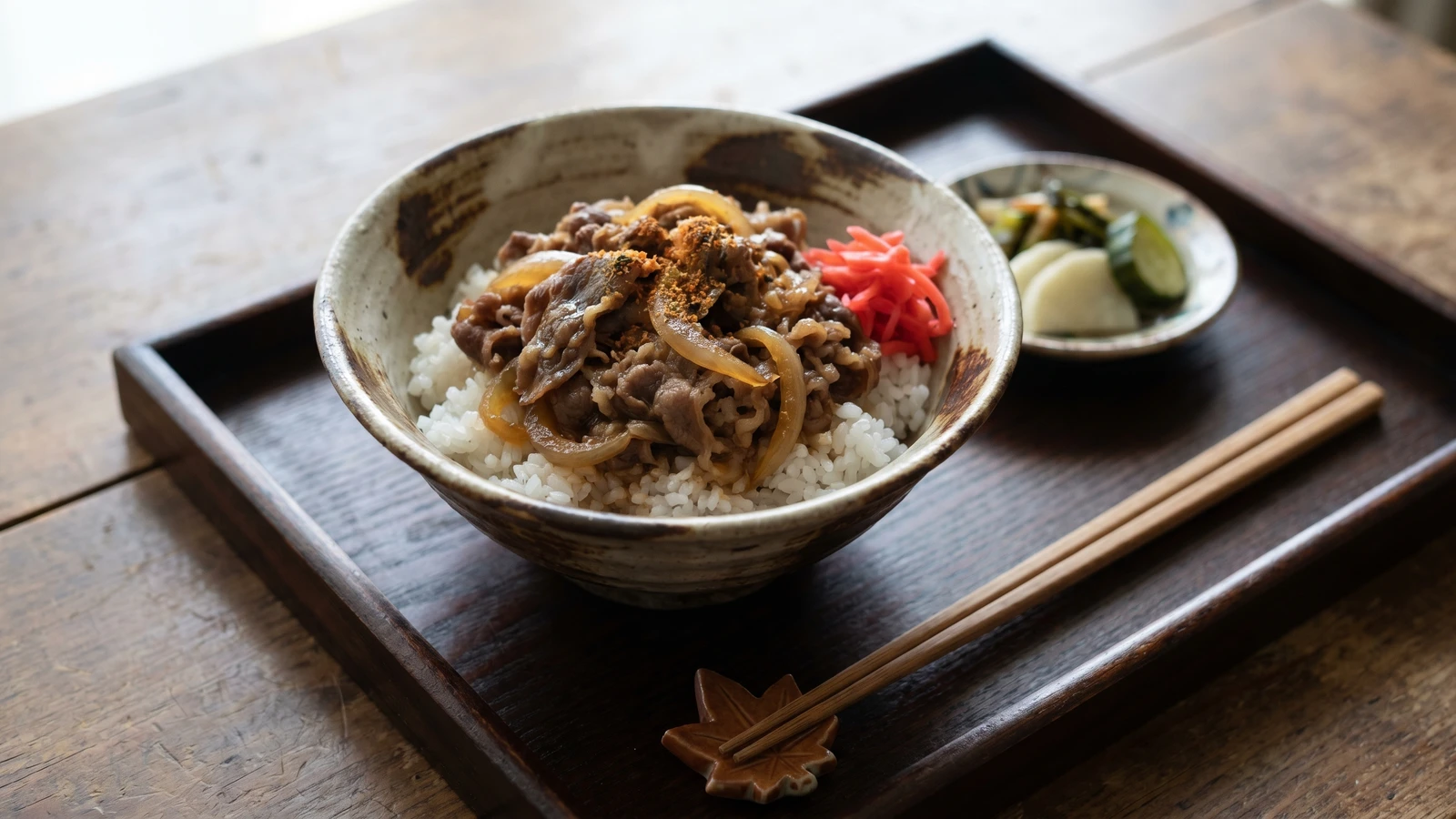
Gyūdon is weeknight washoku at its most direct: thin beef, sweet onion, a small pan of seasoned dashi, and hot rice waiting underneath.
Gyūdon looks like a bowl built for speed, and it is. That doesn't make it careless. The real thing depends on one plain detail: beef sliced so thin it softens in minutes, not chunks that need a long fight with the pot.
The onion goes first because it needs time to turn sweet and give itself to the broth. Then the beef slips in and simmers gently in dashi, soy, mirin, and sugar. Boil it hard and the meat tightens. Keep it quiet and the slices relax, drinking just enough seasoning while staying tender.
This is donburi, a meal in a bowl, rice below and topping above, quick enough for a weekday and honest enough for any table. The broth should be savory-sweet, not heavy. Spoon a little over the rice so it glistens, but don't drown it. We want the rice to carry the beef, not disappear under it. Leave it room.
Gyūdon grew out of gyūnabe, the beef hot pot that spread after Japan lifted its long-standing social taboo against meat in the early Meiji period. Yoshinoya, founded in Tokyo's Nihonbashi fish market in 1899, helped turn simmered beef over rice into a fast counter meal for workers. The modern bowl is closely tied to Tokyo lunch culture, where speed, price, and a sweet soy broth made it an everyday standard.
Quantity
2 large bowls
Quantity
250g
sliced paper-thin
Quantity
1 medium
thinly sliced with the grain
Quantity
3/4 cup
Quantity
3 tablespoons
Quantity
2 tablespoons
Quantity
1 tablespoon
Quantity
1 tablespoon
Quantity
1 teaspoon
grated
Quantity
for serving
Quantity
for serving
| Ingredient | Quantity |
|---|---|
| freshly cooked Japanese short-grain rice | 2 large bowls |
| thinly sliced beef ribeye, chuck roll, or short platesliced paper-thin | 250g |
| yellow onionthinly sliced with the grain | 1 medium |
| dashi | 3/4 cup |
| soy sauce | 3 tablespoons |
| mirin | 2 tablespoons |
| sake | 1 tablespoon |
| sugar | 1 tablespoon |
| fresh gingergrated | 1 teaspoon |
| beni shōga (red pickled ginger) (optional) | for serving |
| shichimi tōgarashi (optional) | for serving |
Have the rice cooked and hot before you start the topping. Gyūdon moves quickly, and the beef shouldn't wait in the pan while the rice finishes. Fluff the rice into deep donburi bowls, leaving the surface loose so the broth can settle between the grains.
In a wide skillet or shallow saucepan, combine the dashi, soy sauce, mirin, sake, sugar, and grated ginger. Bring it just to a simmer and stir until the sugar dissolves. Taste it now. It should be a little stronger than you want the finished bowl, because the onion and rice will soften it.
Add the sliced onion and spread it into an even layer. Simmer gently for 5 to 7 minutes, until the onion turns translucent at the edges but still keeps its shape. The onion goes in before the beef because it needs time to sweeten, and that sweetness is part of the sauce.
Separate the beef slices with your fingers and lay them over the onion. Keep the broth at a quiet simmer, turning the slices once or twice with chopsticks until the meat just loses its raw red color, about 3 to 5 minutes. A hard boil squeezes the beef tight and makes the broth cloudy.
Turn off the heat and let the beef sit in the broth for 2 minutes. This short rest lets the seasoning finish moving into the meat without cooking it hard. Skim any gray foam from the surface if you see it, because a clean broth makes a cleaner bowl.
Spoon the beef and onion over the hot rice, building a little height in the center. Ladle over just enough broth to gloss the rice and run down the sides, not enough to flood the bowl. Finish with a small tuft of beni shōga and, if you like, a light shake of shichimi tōgarashi.
1 serving (about 520g)
Culinary guides, cultural storytelling, and the editorial depth that makes cooking meaningful.
Discover Culinary ExplorerChef Takumi
Aji fry is weeknight fish with no mystery: fresh horse mackerel opened cleanly, breaded lightly, and fried until the panko crackles while the flesh stays sweet.
Chef Takumi
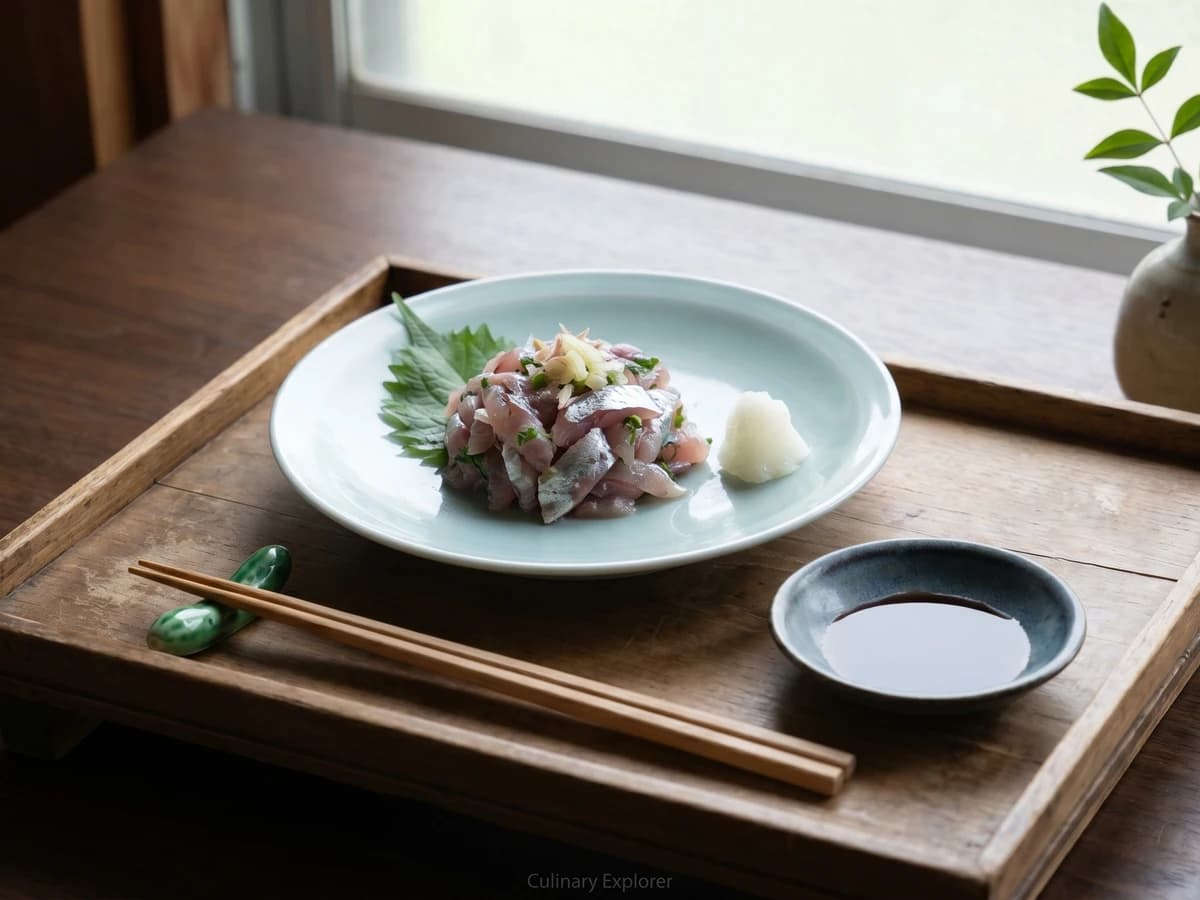
Summer horse mackerel, chopped just enough to catch ginger and scallion, becomes a cool, clean main dish with rice. The secret is fresh fish and a knife that does not bruise it.
Chef Takumi
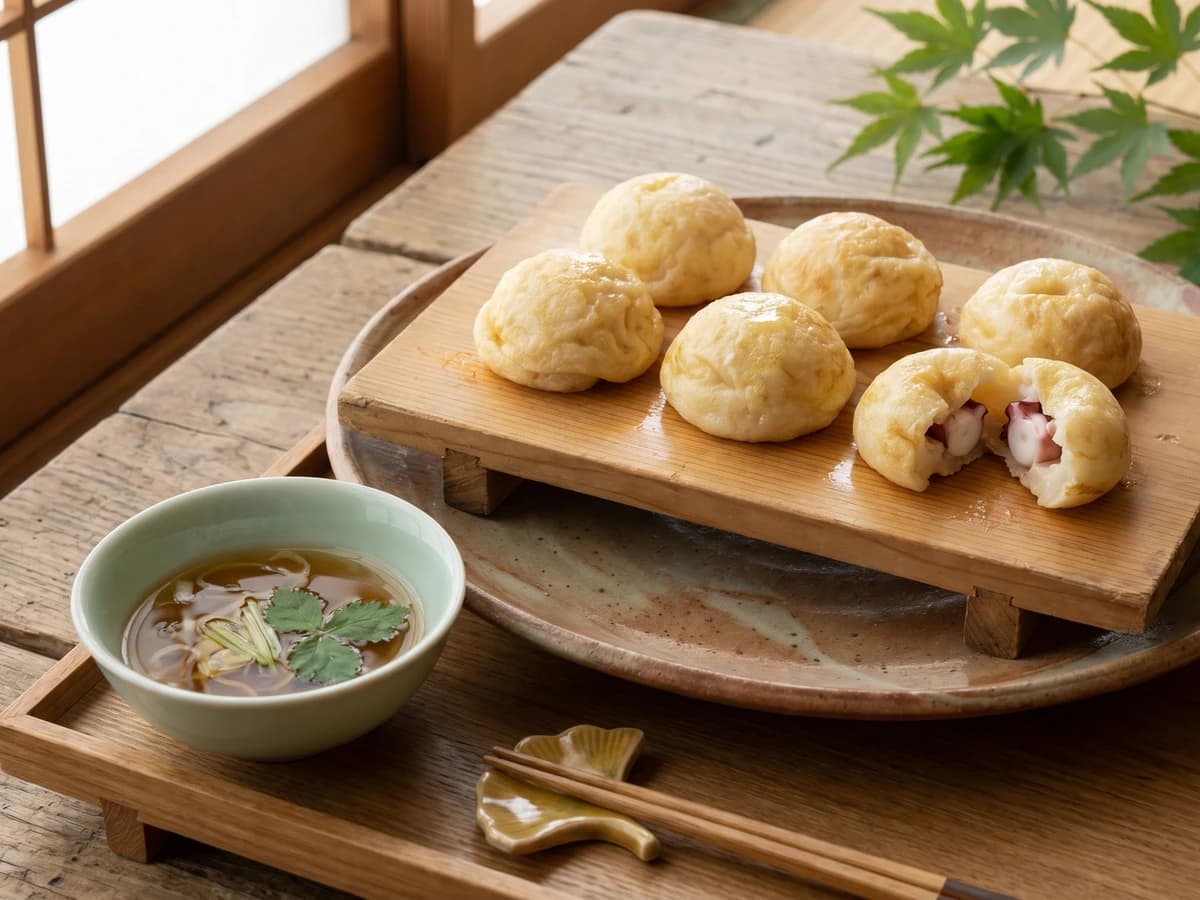
Akashi-yaki is not sauced takoyaki. It is egg-rich batter, tender octopus, and clear dashi, cooked pale and soft so each ball can be dipped like a small custard dumpling.

Chef Takumi
A whole anago looks like a test of nerve. It is mostly good sourcing, a dry skin, cold batter, and oil hot enough to leave the eel sweet under its lace.