
Chef Jeong-sun
Bibim-mandu (비빔만두, Spicy Mixed Dumplings)
Daegu market flat dumplings, crisp at the edges and soft in the middle, tossed with cold shredded vegetables and a measured gochujang-vinegar sauce that should bite, not bury the cabbage.
A cooking platform built around craft, culture, and the stories behind what we eat.
Created by
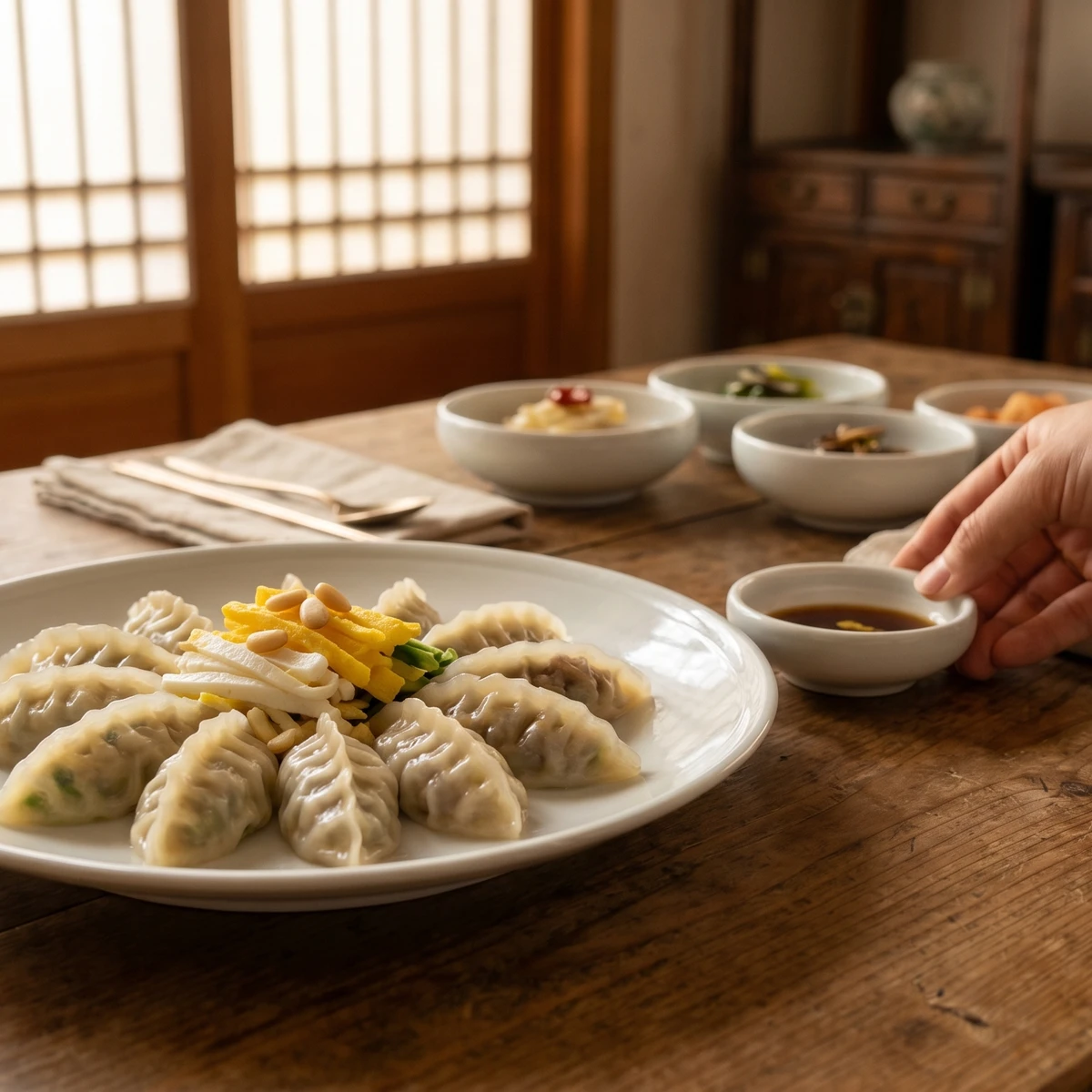
A summer court dumpling with thin wheat skins, beef, cucumber, and shiitake, pleated into ridged crescents to resemble prized haesam and served cool for a special table.
Gyuasang lives or dies by the knife and the pleat. The filling is not hard: beef, cucumber, shiitake, a little soy and sesame. But each piece must be cut fine enough to sit quietly inside a thin wrapper, and the crescent must be pinched into ridges so it looks like haesam (sea cucumber), the shape that gives the dish its old dignity.
My teacher made us salt the cucumber, squeeze it dry, then cook it for less than a minute. She would not accept wet filling. Water inside a dumpling is not generosity; it tears the skin and dulls the seasoning. Notebook 18 says 1 teaspoon fine salt for 300g cucumber, 15 minutes only. Longer and the cucumber loses its clear bite.
This is special-occasion food, but don't mistake that for display food. It belongs to a table where people notice care: thin skins, pale green cucumber, brown shiitake, beef seasoned just enough to taste like beef. You can buy dumpling wrappers if the day is crowded, but the ridged shape and the dry filling are not corners to cut. 손맛 is real. I still measure it, so it can be handed on.
Gyuasang, also called mimandu in royal-cuisine records, is associated with Joseon court cooking and summer service because cucumber is its central vegetable and the finished dumplings are often cooled before serving. Its ridged crescent shape imitates haesam (sea cucumber), a prized ingredient on upper-class and court tables, making the form part of the meaning rather than decoration. The dish is preserved today through Korean royal court cuisine teaching lineages, especially the records and demonstrations connected to Joseon banquet food.
Quantity
220g
plus more for dusting
Quantity
1/4 teaspoon
for the dough
Quantity
120ml
about 80 C
Quantity
2 teaspoons
Quantity
300g
seeded and cut into fine matchsticks
Quantity
1 teaspoon
for salting cucumber
Quantity
180g
minced finely
Quantity
4
soaked, squeezed dry, stems removed, caps finely chopped
Quantity
1 tablespoon
for the beef
Quantity
1 teaspoon
for the mushrooms
Quantity
2 teaspoons
divided
Quantity
1 teaspoon
divided
Quantity
2 cloves
minced very fine
Quantity
1
minced
Quantity
1/8 teaspoon
freshly ground
Quantity
1 teaspoon
lightly crushed
Quantity
1 large egg
white and yolk cooked separately, cut into fine strips
Quantity
1 tablespoon
halved lengthwise
Quantity
2 tablespoons
for dipping sauce
Quantity
1 tablespoon
Quantity
1 tablespoon
for dipping sauce
Quantity
1/2 teaspoon
for dipping sauce
Quantity
1 teaspoon
finely sliced, for dipping sauce
Quantity
pinch
for dipping sauce
| Ingredient | Quantity |
|---|---|
| all-purpose flourplus more for dusting | 220g |
| fine sea saltfor the dough | 1/4 teaspoon |
| hot waterabout 80 C | 120ml |
| neutral oil | 2 teaspoons |
| Korean or Persian cucumbersseeded and cut into fine matchsticks | 300g |
| fine sea saltfor salting cucumber | 1 teaspoon |
| beef sirloin or ribeyeminced finely | 180g |
| dried shiitake mushroomssoaked, squeezed dry, stems removed, caps finely chopped | 4 |
| soy saucefor the beef | 1 tablespoon |
| soy saucefor the mushrooms | 1 teaspoon |
| toasted sesame oildivided | 2 teaspoons |
| sugardivided | 1 teaspoon |
| garlicminced very fine | 2 cloves |
| scallionminced | 1 |
| black pepperfreshly ground | 1/8 teaspoon |
| toasted sesame seedslightly crushed | 1 teaspoon |
| egg jidan (optional)white and yolk cooked separately, cut into fine strips | 1 large egg |
| pine nuts (optional)halved lengthwise | 1 tablespoon |
| soy saucefor dipping sauce | 2 tablespoons |
| rice vinegar | 1 tablespoon |
| waterfor dipping sauce | 1 tablespoon |
| sugarfor dipping sauce | 1/2 teaspoon |
| scallionfinely sliced, for dipping sauce | 1 teaspoon |
| toasted sesame seedsfor dipping sauce | pinch |
Stir the flour and 1/4 teaspoon salt in a bowl. Pour in the hot water while stirring with chopsticks, then add the oil and knead 6 to 8 minutes until smooth. Hot water makes a softer, more elastic skin, which matters because gyuasang is pleated tightly. Cover and rest 30 minutes so the flour hydrates and rolls thin without fighting you.
Split the cucumbers lengthwise, scrape out the watery seed core, and cut the flesh into matchsticks about 3cm long and 2mm thick. Toss with 1 teaspoon fine salt and rest 15 minutes, then rinse once and squeeze firmly in a clean towel. The cucumber must bend, not leak. Wet cucumber tears dumpling skins and weakens the filling.
Season the minced beef with 1 tablespoon soy sauce, 1 teaspoon sesame oil, 1/2 teaspoon sugar, garlic, scallion, black pepper, and crushed sesame seeds. In a separate bowl, season the chopped shiitake with 1 teaspoon soy sauce, 1 teaspoon sesame oil, and 1/2 teaspoon sugar. Keep them separate because beef and mushroom take seasoning differently; one bowl would make both muddy.
Heat a lightly oiled skillet over medium heat. Cook the beef, breaking it small, until no pink remains and the juices have cooked off, 3 to 4 minutes. Transfer to a bowl. Cook the shiitake 2 minutes until glossy and dry. Last, cook the squeezed cucumber only 40 to 60 seconds, just until bright and barely softened. Cool everything completely before mixing, or the wrapper will soften before it reaches the steamer.
Combine the cooled beef, shiitake, and cucumber. Taste a small spoonful. It should be savory and clean, with cucumber still reading clearly. If it tastes flat, add 1/4 teaspoon soy sauce, not a heavy pour. Court dumplings are not mild because they are timid; they are mild because each ingredient is meant to remain itself.
Divide the rested dough into 24 pieces, about 14g each. Roll each piece into a thin oval, about 9cm long and 7cm wide, dusting lightly with flour. Keep the rest covered as you work. Thin is important, but not transparent; a wrapper that tears during pleating is too thin for this filling.
Place 1 level tablespoon filling in the center of each oval. Fold into a crescent and pinch the edge closed, then make small tight pleats along the sealed side so the dumpling looks ridged like haesam (sea cucumber). Press out trapped air as you seal. Air pockets swell in the steamer and split the skin, and then all the careful knife work is lost.
Line a steamer with damp cotton cloth or perforated parchment. Arrange the dumplings with space between them and steam over medium heat for 7 to 8 minutes, until the skins turn slightly translucent and firm. Do not boil the steamer violently. Strong heat makes the ridges slump and the skins blister.
Lift the dumplings out and let them cool to room temperature, or chill 20 minutes for a summer table. Stir together the dipping sauce: 2 tablespoons soy sauce, 1 tablespoon rice vinegar, 1 tablespoon water, 1/2 teaspoon sugar, sliced scallion, and a pinch of sesame seeds. Garnish with fine jidan strips and pine nuts if using. Serve the dumplings cool, not icy, so the wheat skin stays tender.
1 serving (about 145g)
Culinary guides, cultural storytelling, and the editorial depth that makes cooking meaningful.
Discover Culinary Explorer
Chef Jeong-sun
Daegu market flat dumplings, crisp at the edges and soft in the middle, tossed with cold shredded vegetables and a measured gochujang-vinegar sauce that should bite, not bury the cabbage.

Chef Jeong-sun
Thin slices of white fish stand in for dumpling wrappers, folded around a restrained beef and mushroom filling, then steamed until pale, tender, and worthy of a summer dinner table.

Chef Jeong-sun
A modern market dumpling filled with pork seasoned in the galbi manner: soy, pear, garlic, sesame, and scallion, folded thin so the wrapper stays tender and the meat still tastes of meat.

Chef Jeong-sun
Gangwon-style potato dumplings with a bouncy, near-translucent wrapper made from grated raw potato and starch, wrapped around pork and garlic chives, then steamed until tender and glossy.